.jpg)
.jpg)
Planning Guides
Bhutan Country Guide
Mysterious and magical, the mountain kingdom of Bhutan
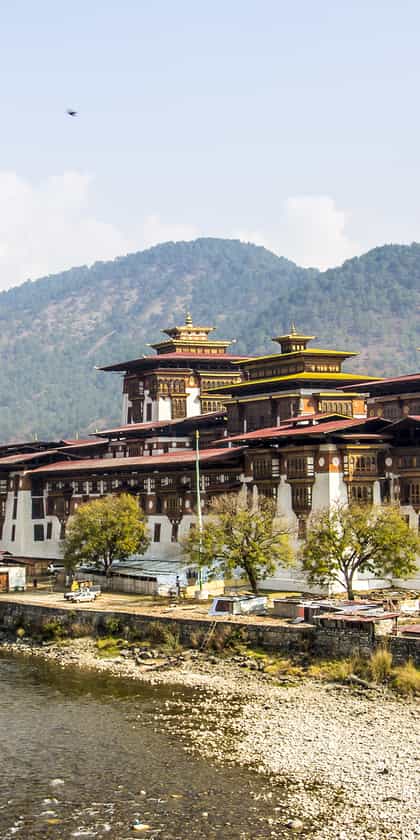
Bhutan
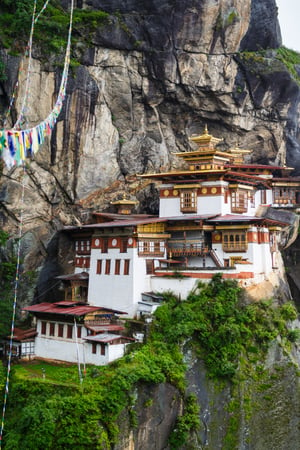
Cliffside temples, hidden valleys and Himalayan serenity – a visit to Bhutan is peace and mystery rolled into one.

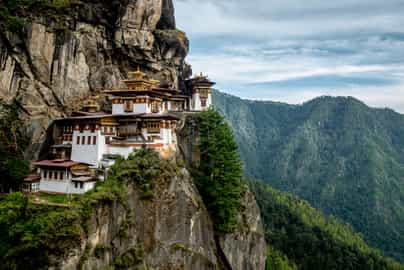
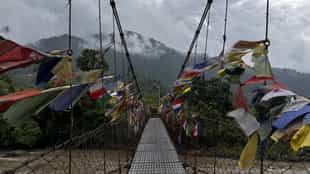
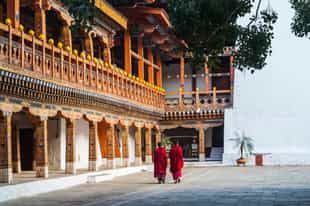
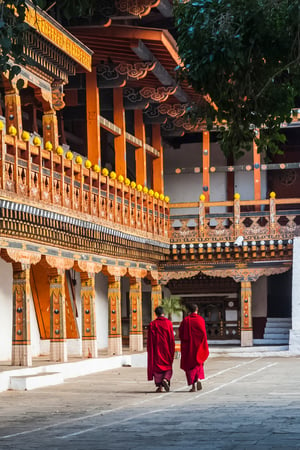
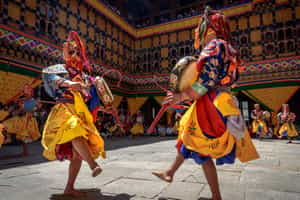
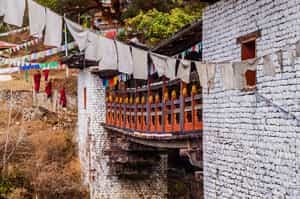
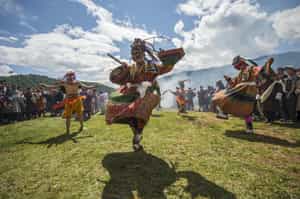
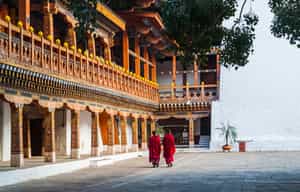
Mysterious, mystical and probably the closest you’ll ever get to Shangri-La (and inner peace), the Kingdom of Bhutan enchants all who are lucky enough to cross its vertiginous borders. Nestled between Tibet and India, landlocked by sky-skimming Himalayan peaks and closed to foreign travellers until 1974, it’s been easy for the country to safeguard its culture from outside eyes – and what a culture it is. This is a land where Buddhist traditions reign supreme and ruby-robed monks chant dawn choruses alongside iconic prayer flags; where archery is a national sport, and where flamboyant festivals and mask-dancing are a way of life. Add to this the tiered, mist-wreathed rice paddies, precipitous, magnificent dzongs, and heart-palpitating journeys along mountain passes and luscious valleys - and you’ve got yourself a unique holiday that you probably didn’t know existed. And really, who can fail to fall in love with a country that measures itself through Gross National Happiness?

There’s stupendous scenery and an armful of divine hotels and lodges, but the thing that will really make your trip is the people. Quick with a smile (and an armful of Buddhist blessings), they are some of the most endlessly genuine and welcoming in the world.

Bhutan’s festivals are truly fabulous to behold. From fire dancing to convivial folk songs and midnight processions, anything goes, and timing your visit to coincide with a celebration is worth it.

A daily fee is in place to protect the pristine environment and culture. At the moment, it’s around $250, and although guides, transport, sightseeing and most entrance fees are included, it can push up the price of your trip quickly and sharply if you’re not expecting it.
Start with a recommended trip or create one from scratch
Get advice and suggestions to make this your perfect trip.
or call us on: +1 (646) 542 0667
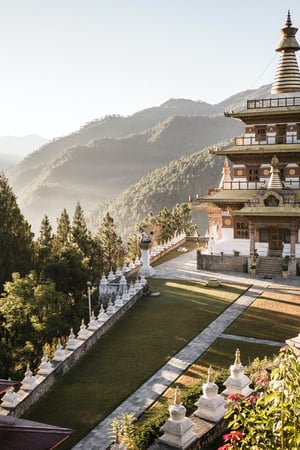
Pick your favourites out of a bouquet of bucolic valleys where you can hike between tranquil monasteries and admire scenes straight out of a Bhutan guide.
,url-https%3A%2F%2Fassets.waybird.com%2Fcdn-cgi%2Fimage%2Fwidth%3D12%2Cformat%3Dauto%2Fhttps%3A%2F%2Fassets.waybird.com%2Fimages%2Fmap%2Fpin-primary-outlined.png(89.635329,27.47618),url-https%3A%2F%2Fassets.waybird.com%2Fcdn-cgi%2Fimage%2Fwidth%3D12%2Cformat%3Dauto%2Fhttps%3A%2F%2Fassets.waybird.com%2Fimages%2Fmap%2Fpin-primary-outlined.png(90.746176,27.556643),url-https%3A%2F%2Fassets.waybird.com%2Fcdn-cgi%2Fimage%2Fwidth%3D12%2Cformat%3Dauto%2Fhttps%3A%2F%2Fassets.waybird.com%2Fimages%2Fmap%2Fpin-primary-outlined.png(89.819273,27.628839),url-https%3A%2F%2Fassets.waybird.com%2Fcdn-cgi%2Fimage%2Fwidth%3D12%2Cformat%3Dauto%2Fhttps%3A%2F%2Fassets.waybird.com%2Fimages%2Fmap%2Fpin-primary-outlined.png(90.164112,27.489075)/auto/600x400?access_token=pk.eyJ1IjoidGltYnVrdHV0cmF2ZWwiLCJhIjoiY2poMGw1eHpkMmRkbDJ6bW8xYWZ5OGpjYyJ9.PYvAO7lUJ40SOpGvwmQLqw&attribution=false&logo=false)
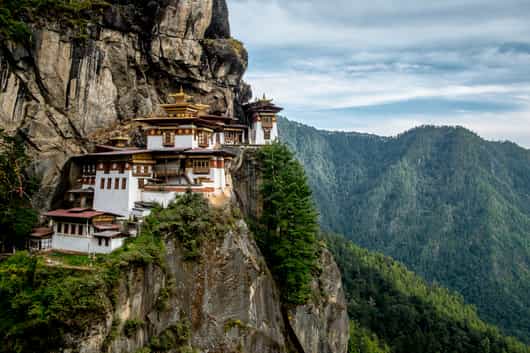
Bhutan
A cliff-top monastery, misty forests, and a charming town make for a magical intro to the kingdom.
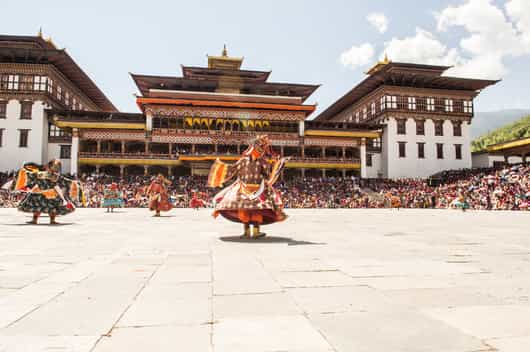
Bhutan
A young capital city with a beating heart and a unique brew of modernity and tradition.
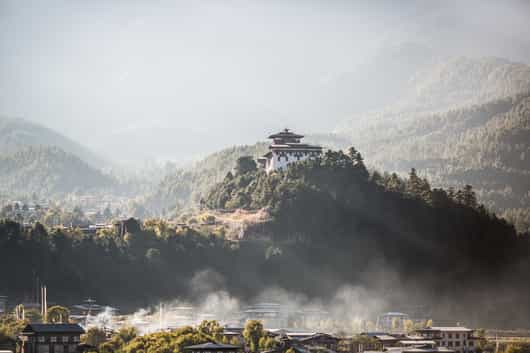
Bhutan
Uncover the country’s spiritual DNA in the stunning, Swiss-style valleys of Central Bhutan.
Although there is practically no bad time to explore this tiny, alpine country, we recommend a trip between October and December when the skies are piercingly clear. The hiking is incredible and in November, rare black-necked cranes arrive in Phobjikha Valley where they remain until Winter ends in February. With the advent of Spring, the temperatures are glorious and Rhododendrons start to bloom in the valleys. By May, the humidity rises but there are fewer visitors, which is a definite plus. Monsoon season begins in June and although the rain doesn't always spoil daytime activities, the conditions aren't ideal for trekking and you should always have a raincoat on hand. Hiking becomes popular again in September with temperatures reaching 25°C (the mountains are always cooler though) and the fabulous Thimphu Tshechu festival lights up the otherwise quaint capital.

Dry Season — a quieter time to visit
Dry Season — a quieter time to visit
Dry Season — one of the best times to visit
Dry Season — one of the best times to visit
Dry Season — one of the best times to visit
Wet Season — a quieter time to visit
Wet Season — not the best time to visit
Wet Season — not the best time to visit
Wet Season — a good time to visit
Dry Season — one of the best times to visit
Dry Season — one of the best times to visit
Dry Season — a good time to visit
Bhutan is a biodiversity hotspot and happens to be the first and only carbon-negative country in the world. The pint-sized kingdom is home to 90 species of mammals, 770 species of bird and at least 5,400 species of plants. The lush tropical forest in the southern lowlands is where you’ll find tigers, rhinos, clouded leopards and sloth bears. The forests of the temperate zone are the stomping ground of leopards, goral and serow among others. In the north of the country, the four-footed residents of the Himalayan mountains are similar to the species found across the Tibetan Plateau, including the enigmatic snow leopard, blue sheep, marmot, Tibetan wolf and Himalayan musk deer. In total there are 10 national parks and wildlife sanctuaries in Bhutan. While it is possible to visit these, infrastructure is quite limited.

Paro is the only international airport in Bhutan. Visitors arriving in Paro will have to fly with one of two airlines, Drukair or Bhutan Airlines, and there are good connections from India, Nepal, Singapore and Thailand. There are also domestic connections within Bhutan to Yonphula, Bumthang and Gelephu. Upon your arrival in Bhutan, you will be greeted and assisted to your onward connections. You will be looked after from that point on until you are transferred back to the airport in time for your departure flight.
Please consult your personal physician and/or a travel clinic preferably 6 weeks prior to your departure. Vaccine requirements vary based on your country of origin, your travel itinerary and previous vaccination history. It is best to consult with your physician or the CDC website for guidelines. Important vaccinations to consider and which may either be required or recommended are: Diphtheria, Tetanus, Typhoid, Hepatitis A and Polio, among others. Malaria We advise that you consult a medical practitioner at least six weeks prior to travel. Bhutan has a low malaria risk in the southern parts of the country. We suggest taking malaria prophylactics before, during and after your visit if you are visiting a known malarial region. Please consult a medical professional regarding which prophylactics will be suitable for you. High Altitude Much of Bhutan is at high altitude and this could affect your comfort levels while on holiday. Altitude sickness can affect anyone and may do so with varying degrees of severity. If you are going to be travelling at high altitude, we advise you to consult with your doctor before travelling, especially if you have a known heart or other relevant condition. To reduce the chances of being affected by altitude sickness please drink plenty of water and take things slowly so your body may acclimatise with ease. The tap water is unsafe to drink and bottled water is recommended.
Money The currency used in Bhutan is the Ngultrum (Nu.), which is fixed to the value of the Indian Rupee. You are able to use US dollars at handicraft shops and a selection of hotels (so best check beforehand), and you’re able to exchange dollars at all banks. However, small grocery stores and bars don’t allow dollars to be used. Credit and debit cards are accepted in some hotels and shops, while Visa and Mastercard are more widely accepted across Bhutan. Please note, cards without a magnetic strip aren't accepted. Using your credit or debit card, you are able to withdraw up to Nu. 30,000 per day but be sure to inform your respective bank before you travel to avoid a block on your card. Gratuities In Bhutan, hotels and restaurants include a service charge of between 10 - 20% on the bill, so there is little expectation for an additional tip. If you feel inclined to give an extra amount, it is at your discretion. Tipping isn’t typical in local Bhutanese life but as tourism has grown, it has started to become expected by some guides and drivers. If you choose to tip, a suggested amount to tip would be - Wildlife guides: 42 USD per day Guides: 30 USD per day Local accompanying guides: 12 - 15 USD per person per day Drivers. 6-8 USD per person per day Porters: 1 USD per bag
Insurance It is a condition of booking that you carry the correct comprehensive travel and medical insurance to cover yourself, as well as any dependents/travelling companions for the duration of your trip. This insurance should include cover in respect of, but not limited to, the following eventualities: Compulsory Insurance: a. Emergency evacuation expenses b. Medical expenses c. Repatriation expenses Recommended Insurance: a. Cancellation or curtailment of trip b. Damage/theft/loss of personal luggage, money and goods"
All travellers to Bhutan must possess a passport valid for a minimum of 6 months from the date of departure. All travellers also require a visa retained prior to arriving in the country. Visas are processed through an online system and when booking a trip to Bhutan with us your visas will be arranged by our partners based in Bhutan. The current visa fee is $40 per person. You are required to send the photo page of your passport to us no later than 4 weeks prior to your arrival. Once the visa is approved, we will email you a copy of the visa approval letter, which you must carry with you. You will be required to present your visa approval letter in order to board the flight to Bhutan and upon arrival at Paro Airport, the visa will be stamped in your passport. Visitors who intend to travel to or through India before or after Bhutan are advised to apply for a multiple entry visa online.
Climate Being a country of deep valleys and mountainside villages, Bhutan has a climate of polar opposites. In its northern regions where mountain peaks rise to a height of 7,000m, the weather reaches similar temperatures to the arctic and receives show in winter (December - February); while in the south, the weather is hot and humid in the summer (June - August), but still gets chilly in the winter. Bhutan is at its best in the spring (March - May) and in the autumn months (September - November) when the temperatures are at a pleasant middle ground, but you should never leave those winter woolies out of your suitcase. Dress Code Bhutan is a deeply religious country of the Bhuddist faith and many locals opt for a formal approach to their attire, often wearing traditional dress. It’s recommended that you pack accordingly with long skirts/trousers, long-sleeved shirts and high necklines, all of which works for keeping warm as well. At temples, dzongs and other religious sites, it’s especially important to cover your arms and legs - and remember to remove any hats. Of course, dressing for the weather is important too, so be sure to layer up and mind the chill in the air even when it seems sunny. What to Pack What you need on a trip to Bhutan depends on what you plan to do, but as it’s such a small country, you’ll often experience a smattering of different weather/activities. Take a look at our list to get you started: • Sturdy but comfortable sandals & walking shoes/hiking boots (preferably waterproof) • Multiple pairs of socks (thick and thin) • Thick, waterproof jacket • Long-sleeved shirts, thermal vests and other warm items • Sunglasses, sunscreen & a wide-brimmed hat • Day pack for hikes/village visits • Small umbrella - a larger one might be confiscated • Toiletries • Reading material • Plug adaptors and charging equipment Most lodges will have a small medical and first aid kit, but we recommend bringing your own supply of essentials - cough medicine, plasters, vitamins, aspirin and paracetamol, and anything else you use on a regular basis. Luggage Please check with your airlines for the specific luggage restrictions relevant to your flight schedule. Many international airlines have a baggage allowance of 20kgs or more per person and commercial airlines generally permit two pieces of checked luggage per person. The carry-on bag must be of such dimensions and weight as set by the airlines. Passengers travelling on Bhutan Airlines are allowed checked baggage with a combined weight of 30kg and carry-on baggage may not exceed 7 kgs. Electricity Bhutan operates on a 220-240V supply voltage with round, two or three-pin power outlets available in hotel rooms. One of the most useful items to carry with you is a universal adapter to ensure you can use your electronics. There are electrical appliance shops in Bhutan but they are unlikely to have what you are looking for, so it’s best to buy such items before you travel.
We’re big believers in leaving a positive impact in the countries in which we operate. We’re proud to donate $50 for every booking to projects focusing on female empowerment, tech education, conservation, and so much more.
Our dream is to empower our guests to travel with a purpose.
So far, we’ve donated $107,000 to projects across the globe.


Why travel with Timbuktu?

We've been crafting one-of-a-kind journeys since 2014 — over 2,500 trips across 40+ countries, each one built from scratch around your interests and dreams.

Our team only recommends places they've slept in, eaten in, and happily keep going back to. Condé Nast Traveler named 11 of them Top Travel Specialists in 2026, and Travel+Leisure made three A-List Advisors.

Travel+Leisure's readers voted us the World's No.1 Tour Operator in 2024 and No.2 in 2025 — the travel industry's biggest readers' award, judged by people who actually travel.

$50 from every booking goes to female empowerment, tech education, and conservation projects across the countries we love. We have donated $78,000 so far – and it's going up!

Your travel specialist is with you the whole way, dreaming up the trip, building the itinerary, checking you in, and answering the 2am question from the other side of the world..

We are rated 4.9 out of 5 from 992 verified Feefo reviews. And these are the words of people who actually went, not us talking about ourselves.
11 Condé Nast Traveler Top Travel Specialists 2026

No. 1 & No. 2 Tour Operator in Travel + Leisure's Best Awards 2024 & 2025

Best Booking Platform in Women's Health Travel Awards 2025

Travel Specialist voted as Latin America A-List Travel Advisor 2025
"Timbuktu can take relatively complex and slightly amorphous travel plans and transform them into a well-organized, perfectly tailored trip."