Travel and Leaisure Worlds Best Awards for number 1 tour operator in the world 2024 and number 2 tour operator in the world 2025
We're one of the World's Best Tour Operators!
Voted No.1 in 2024 and No.2 in 2025 by Travel+Leisure
Experiences

What to do in Bhutan

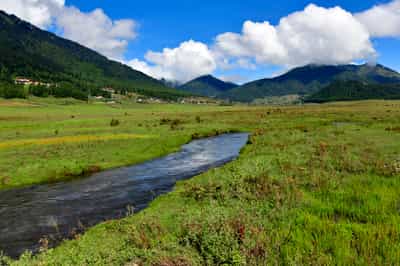
Visit the Gangtey Goemba in the Phobjikha Valley

Discover Gangtey Goemba Gangtey Goemba is perched on a forested hill overlooking the green expanse of the whole Phobjikha Valley. In 1613, the grandson and reincarnation of Pema Lingpa, Pema Thinley founded the Nyingma temple here, which has grown into today’s Gangtey Goemba. It serves as the seat of the ninth reincarnation of the body of the Terton (treasure discoverer) Pema Lingpa.

Walk along the Gangtey Nature Trail in Gangtey

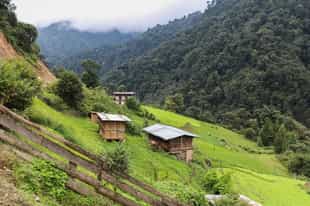
Gangtey Nature Trail The Gangtey Valley, also known as the Phobjikha Valley, is a glacial valley in mystical Bhutan. Walk along the Gangtey Nature Trail, quite popular amongst the visitors to the valley. Crossing streams and rhododendron gardens you cross Sumchubara village, afterwards you enter the Pine covered forest, which opens at a canopy that affords fabulous views of the valley. Further down, the trail passes the village of Khewang and later you will cross the Nake Chu where you will be picked up by your car. Head along a sloping pathway that takes you through towering bushes of jade-hued bamboo. At the end of the bamboo enclave lies a small group of village houses, built in the distinct Bhutanese style featuring elevated platforms, carved timber windowpanes and wood-lined arched roofs.During the spring months, the woodlands on either side of the Valley look particularly stunning, cloaked in crimson, violet and candy-floss coloured rhododendrons. In the winter months, the Valley is blanketed in pearly white snow, on which caramel-horned yaks graze. As you move upwards, you will pass ancient rhododendron forests and soaring trees whispering the ancient secrets of this mystical region. Stop for a Bhutanese-inspired lunch with magnificent views of the Valley and the sacred monasteries below. Head down to the tranquil village of Kumbu, where you can choose to end your walk, or carry on to the deep valley floor and the Shedra, a renowned and mystical place of teaching. You may even be lucky enough to spot some Himalayan Black bear, Red Panda or Tibetan fox, as many of our guests have experienced.

Visit the Yathra weaving centre in Bumthang

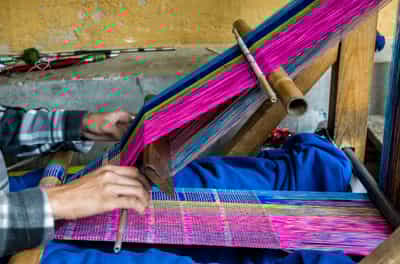
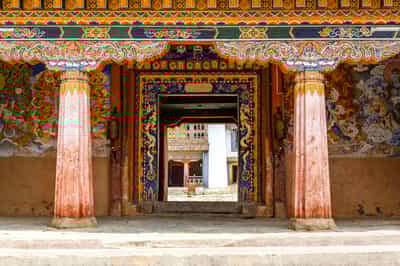
The Yathra Weaving Centre in Chumey is the main sales outlet for the 240+ households of the 13 villages in Bumthang who depend on the sale of traditional yathra for their livelihood. A craft passed down from mother to daughter, the weavers use yak and sheep wool to create a thick fabric which is ideal for the cold weather of Bumthang. Traditionally, each house in Chumey valley has its own loom and girls will learn to weave at a very young age.

Visit the Black-necked Crane Education Centre

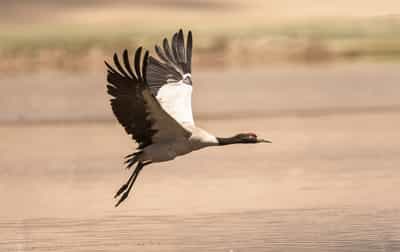
The Black-necked Crane Information Centre The rare black-necked crane is highly honoured in the Himalaya region. These majestic birds migrate from Tibet to Bhutan in late autumn each year, predicting the end of harvesting season and the onset of farmer relocations to the warmer, lower valley. Known as Thrung Thrung Keh Narp, literally translating to thin, tall and black necked, over 300 of these avian wonders soar to the warmer Phobjikha Valley in the winter months, looping over the Gangtey Goenpa Monastery three full times, both when they arrive and when they leave. Bhutanese folklore attributes this mystifying and perplexing behaviour to the birds paying reverence to the three sacred jewels of Buddhism, as well as asking for protection throughout their stay. Traditional stories tell the tale of a pair of cranes that choose to stay behind each year, offering themselves to the Valley for their thanks and wellbeing. The Royal Society for Protection of Nature manages The Crane Centre, which displays material on the cranes and their environment, as well as guiding conservation awareness operations on this threatened bird. A great time to visit Gangtey, the hilltop village, is in the winter months, especially November, when the Black-necked Crane Festival occurs in the courtyard of Gangtey Goenpa, with local songs, dramas and masked dances celebrating the endangered bird in fine Bhutanese fashion. crane information centre gangtey bhuta2

Embark on the picturesque Longteng hike in Gangtey

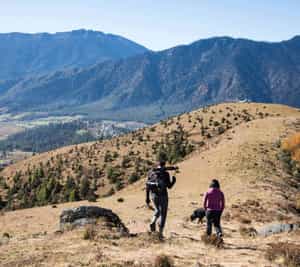
The Longtey Hike After an early breakfast, guests embark on the Longtey Hike. It is a 30 minute drive from Phobjikha to the starting point in Longtey village on the East-West highway. Start by walking downwards following the path to the right of the road. The path will lead through bush bamboo towards a small cluster of village houses. There are beautifully coloured rhododendron forests on both sides of the valley, and in the winter months, yaks graze in the area. Continue straight through the village upwards until you reach the start of mystifying old-growth rhododendron forest. The last part through the forest is slightly steeper uphill until you reach the pass with impressive views of the Gangtey Goemba, the Shedra, the lodge and the rest of the valley down below. Before you continue on the path as it slopes down the valley towards the idyllic Kumbu village. It is possible to get picked up from here, or you may continue down to the Shedra or all the way down to the valley. Difficulty Level: Moderate Walking time: 4 hr Attraction: Longtey village & Kumbu village

Visit Mebar Tsho (The Burning Lake) in Bumthang

In this lake Terton Pema Lingpa, the reincarnation of Padmasambhava, was said to have discovered religious treasure in the 12th century. Mebar Tsho is less a lake and more a gorge in one of the many glistening rivers that run through Tang valley. This sacred lake is visited by many Bhutanese during auspicious days to offer butter lamps. With an extensive array of prayer flags blowing in the wind, it is known to be one of the holiest places for Buddhist pilgrimage.

Make a pilgrimage to the Chimi Lhakhang temple

The Temple of the Divine Madman Located on a round hillock on the edge of the Punakha Valley, Chimi Lhakhang was built in 1499 by the 14th Drukpa hierarch, Ngawang Choegyel, after the site was blessed by ‘the Divine Madman’ the maverick saint, Drukpa Kunley. Famously known as the temple of fertility, the lhakhang draws local people, from near and far, to receive blessings from the lama (monk). The local people also bring their new-borns to be named here. The lhakhang is truly a revered and blessed space for many. Many childless couples make a devout pilgrimage to the lhakhang in the hope that they will be honoured with a wang, or a blessing from the lama. Woman entering the temple, who are hoping to conceive, are made to carry a wooden phallus around the temple three times. The lhakhang is about a 30-minute walk through fields from Sopsokha on the main road to Punakha.

Visit the golden Shakyamuni Buddha, Thimphu

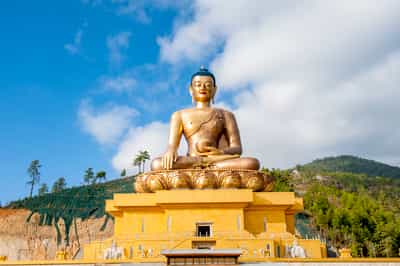
visit the Buddha Dordenma. This gigantic Shakyamuni Buddha statue is filled with over 100,000 smaller Buddha statues, each like the Buddha Dordenma itself, made of bronze and gilded in gold. At a height of 51.5 m (169 ft), it is one of the tallest Buddha statues in the world. The statue fulfils an ancient prophecy dating back to the 8th century CE, discovered by Terton Pema Lingpa, the Religious Treasure Discoverer of the time. It is said to bring peace and happiness to the entire world.

Visit the memorial chortens of Dochula Pass

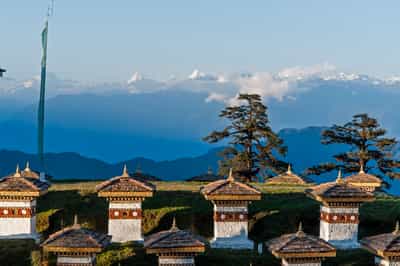
Dochu La is an incredible Bhutanese mountain pass peaking at 3 140 m (10 301 ft) above sea level. Boasting exceptional views of the snow-capped eastern Himalaya on clear days, the pass links the capital city of Thimphu and Punakha. Stop to see the Druk Wangyal Chortens, where 108 memorial stupas and chortens stand in honour of Bhutanese soldiers slain in the insurgency against Bodo militants from India. The Queen Mother, Ashi Dorji Wangmo Wangchuck, commissioned the shrine in 2003 after King Jigme Singye Wangchuck overcame the insurgents. From here you can opt to hike through beautiful forests down to the Lampelri Botanical Garden or for something more strenuous, hike up to the Lungchutse Temple through thick woodlands of broad hemlock trees. At the foot of the temple lies a rich bamboo underbrush and dense juniper shrubs flourishing against a backdrop of the Himalaya. One of Bhutan’s highest peaks, Gangkhar Puensum, and the world’s highest unclimbed mountain, can also be seen from here. Alternatively view the nearby monastery, Druk Wangyal Lhakhang, built in reverence of the king.

Tshewang ceremony and breakfast

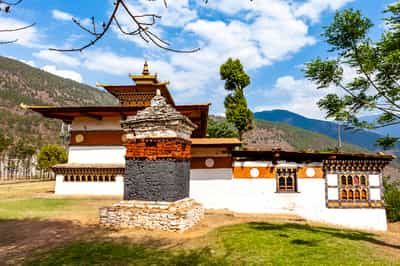
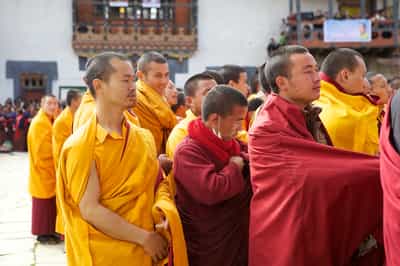
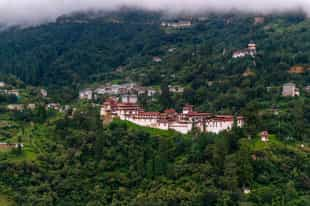
Tshewang ceremony and breakfast Experience the profound nature of the Bhutanese people in Gangtey’s most renowned hermitage on a morning tour to the 17th century Gangtey Goenpa Monastery, offering guests a spiritual experience amid crimson clad monks. The Monastery is situated in the Black Mountain region on a jade-hued woodland hill with spectacular views of the entire Phobjikha Valley below. Fine Bhutanese architecture features lower whitewashed walls, intricately carved wooden accents interlaced with ruby tones that dominate the upper and middle façade and a flat layered timber roof with rainbow fringes leading up to a gold embossed dome, shining under the Bhutanese sun. Built on the hilltop by Gyalse Rigdzin Pema Thinley, the progeny and reincarnation of treasure finder Pema Lingpa, the Goenpa is an important monastery of the Nyingmapa school of Buddhism. Partake in a Tshewang prayer ceremony, alongside monks, lamas and teachers of the dharma, wishing for personal empowerment and a fulfilling healthy life. The ceremony ends with the lighting of pale butter candles and a personal blessing from the Tulku, a reincarnated master, followed by a private tour of the holy shrine. Enjoy a Bhutanese inspired breakfast within the Monastery complex, overlooking the lush Valley below.

Walk within the walls of the ancient Punakha dzong

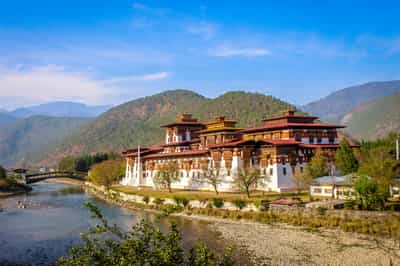
Constructed in 1637, the Punakha Dzong was the second fortress Dzong built in the country. Translated to mean ‘palace of great happiness or bliss’, its towering white walls form a beautiful contrast to the surrounding greens and blues. Celebrated as one of Bhutan’s oldest, largest and most striking fortified monasteries, the Punakha Dzong holds an important relic over which many wars were fought with the Tibetans. The Dzong holds a sacred place in the hearts of all Bhutanese. The first National Assembly was held here in 1953, as well as the royal wedding between King Jigme Khesar Namgyel Wangchuck and Queen Jetsun Pema in 2011. It is also the winter home of the central monastic body, and all of Bhutan’s kings are crowned here before they can take their throne in the capital city of Thimphu. Punakha Dzong’s magnificence is especially striking in the spring when the lilac-coloured jacaranda trees are in full bloom.
Previous Next
-89 - -60 of 77 experiences
Where To Go
Pin Icon

Namibrand, Namibia