Travel and Leisure Worlds Best Awards for number 1 tour operator in the world 2024 and number 2 tour operator in the world 2025
We're one of the World's Best Tour Operators!
Voted No.1 in 2024 and No.2 in 2025 by Travel+Leisure
Experiences

What to do in Bhutan

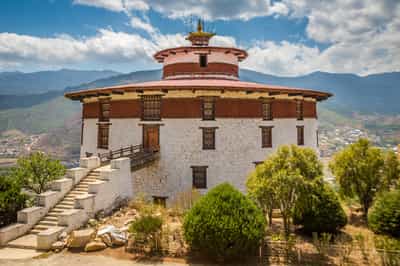
Visit the historical watch tower of Ta Dzong, Paro

Visit Ta Dzong or the national museum, where a spectacular collection of religious Thangka paintings, art, relics and postage stamps are on display.

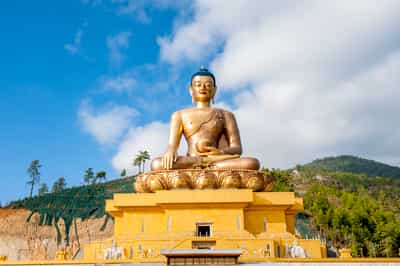
Visit the golden Shakyamuni Buddha, Thimphu

visit the Buddha Dordenma. This gigantic Shakyamuni Buddha statue is filled with over 100,000 smaller Buddha statues, each like the Buddha Dordenma itself, made of bronze and gilded in gold. At a height of 51.5 m (169 ft), it is one of the tallest Buddha statues in the world. The statue fulfils an ancient prophecy dating back to the 8th century CE, discovered by Terton Pema Lingpa, the Religious Treasure Discoverer of the time. It is said to bring peace and happiness to the entire world.

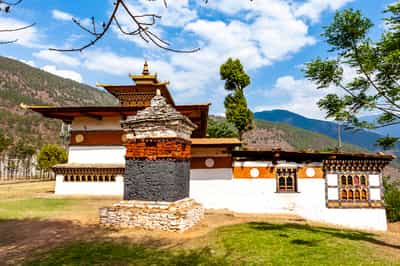
Make a pilgrimage to the Chimi Lhakhang temple

The Temple of the Divine Madman Located on a round hillock on the edge of the Punakha Valley, Chimi Lhakhang was built in 1499 by the 14th Drukpa hierarch, Ngawang Choegyel, after the site was blessed by ‘the Divine Madman’ the maverick saint, Drukpa Kunley. Famously known as the temple of fertility, the lhakhang draws local people, from near and far, to receive blessings from the lama (monk). The local people also bring their new-borns to be named here. The lhakhang is truly a revered and blessed space for many. Many childless couples make a devout pilgrimage to the lhakhang in the hope that they will be honoured with a wang, or a blessing from the lama. Woman entering the temple, who are hoping to conceive, are made to carry a wooden phallus around the temple three times. The lhakhang is about a 30-minute walk through fields from Sopsokha on the main road to Punakha.

Visit the Gangtey Goemba in the Phobjikha Valley

Discover Gangtey Goemba Gangtey Goemba is perched on a forested hill overlooking the green expanse of the whole Phobjikha Valley. In 1613, the grandson and reincarnation of Pema Lingpa, Pema Thinley founded the Nyingma temple here, which has grown into today’s Gangtey Goemba. It serves as the seat of the ninth reincarnation of the body of the Terton (treasure discoverer) Pema Lingpa.

Meet local residents at a Paro Valley farmhouse

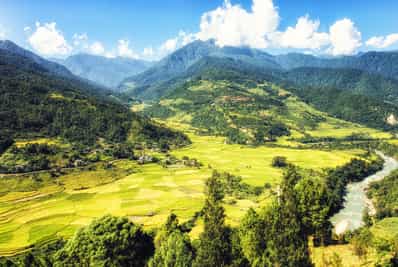
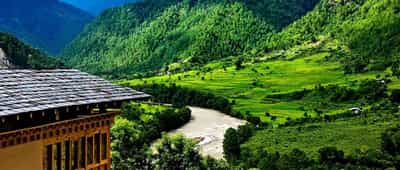
Farmhouse visit in Paro Rich in history, the beautiful Paro Valley is a place where time stands still. In addition to a thriving commercial farming industry, the region is known for subsistence farming using time-honoured methods. Known fondly as the ‘rice bowl’ of the Bhutanese kingdom, the Paro Valley grows large amounts of red rice, the staple starch of the nation, farmed on its fertile fields and terraces. The region’s commercial enterprises and family-owned farms also yield copious amounts of millet, wheat, apples, potatoes, as well as a range of seasonal vegetables native to the area. End a fruitful day in the fields sharing an authentic Bhutanese farm dinner with the farmers and their families, washing it all down with Ara, the local rice wine.

Visit the Yathra weaving centre in Bumthang

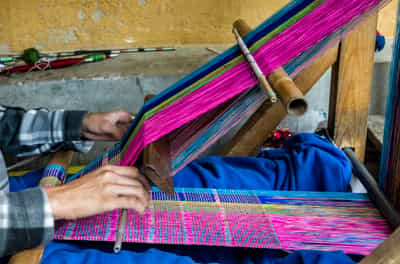
The Yathra Weaving Centre in Chumey is the main sales outlet for the 240+ households of the 13 villages in Bumthang who depend on the sale of traditional yathra for their livelihood. A craft passed down from mother to daughter, the weavers use yak and sheep wool to create a thick fabric which is ideal for the cold weather of Bumthang. Traditionally, each house in Chumey valley has its own loom and girls will learn to weave at a very young age.

Visit the memorial chortens of Dochula Pass

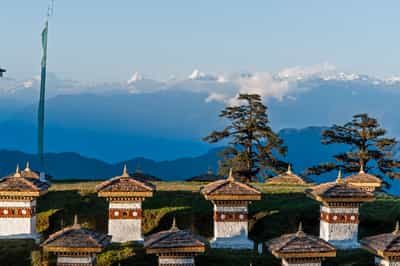
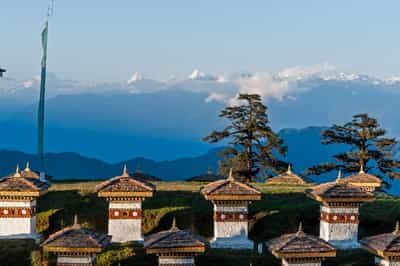
Dochu La is an incredible Bhutanese mountain pass peaking at 3 140 m (10 301 ft) above sea level. Boasting exceptional views of the snow-capped eastern Himalaya on clear days, the pass links the capital city of Thimphu and Punakha. Stop to see the Druk Wangyal Chortens, where 108 memorial stupas and chortens stand in honour of Bhutanese soldiers slain in the insurgency against Bodo militants from India. The Queen Mother, Ashi Dorji Wangmo Wangchuck, commissioned the shrine in 2003 after King Jigme Singye Wangchuck overcame the insurgents. From here you can opt to hike through beautiful forests down to the Lampelri Botanical Garden or for something more strenuous, hike up to the Lungchutse Temple through thick woodlands of broad hemlock trees. At the foot of the temple lies a rich bamboo underbrush and dense juniper shrubs flourishing against a backdrop of the Himalaya. One of Bhutan’s highest peaks, Gangkhar Puensum, and the world’s highest unclimbed mountain, can also be seen from here. Alternatively view the nearby monastery, Druk Wangyal Lhakhang, built in reverence of the king.

Walk along the Gangtey Nature Trail in Gangtey

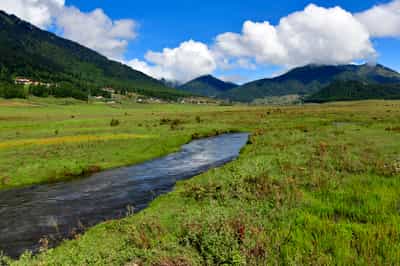
Gangtey Nature Trail The Gangtey Valley, also known as the Phobjikha Valley, is a glacial valley in mystical Bhutan. Walk along the Gangtey Nature Trail, quite popular amongst the visitors to the valley. Crossing streams and rhododendron gardens you cross Sumchubara village, afterwards you enter the Pine covered forest, which opens at a canopy that affords fabulous views of the valley. Further down, the trail passes the village of Khewang and later you will cross the Nake Chu where you will be picked up by your car. Head along a sloping pathway that takes you through towering bushes of jade-hued bamboo. At the end of the bamboo enclave lies a small group of village houses, built in the distinct Bhutanese style featuring elevated platforms, carved timber windowpanes and wood-lined arched roofs.During the spring months, the woodlands on either side of the Valley look particularly stunning, cloaked in crimson, violet and candy-floss coloured rhododendrons. In the winter months, the Valley is blanketed in pearly white snow, on which caramel-horned yaks graze. As you move upwards, you will pass ancient rhododendron forests and soaring trees whispering the ancient secrets of this mystical region. Stop for a Bhutanese-inspired lunch with magnificent views of the Valley and the sacred monasteries below. Head down to the tranquil village of Kumbu, where you can choose to end your walk, or carry on to the deep valley floor and the Shedra, a renowned and mystical place of teaching. You may even be lucky enough to spot some Himalayan Black bear, Red Panda or Tibetan fox, as many of our guests have experienced.

Stand at the highest pass of Bhutan, Chele La

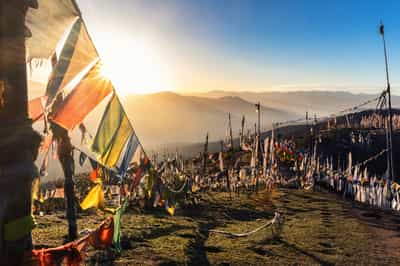
A fluttering line of prayer flags leads the way on the highest road pass in the mountainous kingdom of Bhutan, the Chele La pass, at a dizzying 3 988 m (13 084 ft) above sea level. This two-hour drive provides spectacular scenery along this rugged mountain road to the start of the hiking trail to the Kila Goemba, a cliffside nunnery. At this high altitude, the temperate drops and the air becomes clearer as you get closer to the pass. The winter months offer particularly beautiful views of the surroundings as you pass by trickling waterfalls, dense forests and alabaster snow en route to the hiking trail. Head off early morning with a packed picnic basket and reach the northern head of the trail as the morning fog lifts, revealing each soaring mountain peak in quick succession. Set off on foot along trails north of the pass and discover even more magnificent views, including some of the world’s highest mountain peaks. The towering Himalayan crowns of Jumolhari at 7 314 m (23 996 ft), Jichu Drake at 6 794 m (22 290 ft) and the world’s third highest mountain, Kangchenjunga, at 8 586 m (28 170 ft) will be revealed as you climb. In addition to the views, keep an eye out for a variety of mountain birds, including the elusive blood pheasant. Enjoy a picnic breakfast at a stone meditation cabin high in the mountains and admire the unobstructed views in every direction before descending the slope to Kila Goemba, which is widely considered to be Bhutan’s oldest nunnery. Visit the many armed god of compassion housed in the temple and continue down the forest trail onto the main road, where your vehicle will be waiting for you.

Walk within the walls of the ancient Punakha dzong

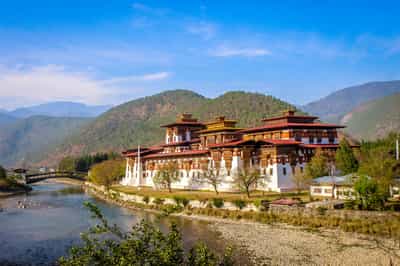
Constructed in 1637, the Punakha Dzong was the second fortress Dzong built in the country. Translated to mean ‘palace of great happiness or bliss’, its towering white walls form a beautiful contrast to the surrounding greens and blues. Celebrated as one of Bhutan’s oldest, largest and most striking fortified monasteries, the Punakha Dzong holds an important relic over which many wars were fought with the Tibetans. The Dzong holds a sacred place in the hearts of all Bhutanese. The first National Assembly was held here in 1953, as well as the royal wedding between King Jigme Khesar Namgyel Wangchuck and Queen Jetsun Pema in 2011. It is also the winter home of the central monastic body, and all of Bhutan’s kings are crowned here before they can take their throne in the capital city of Thimphu. Punakha Dzong’s magnificence is especially striking in the spring when the lilac-coloured jacaranda trees are in full bloom.

Visit the Black-necked Crane Education Centre

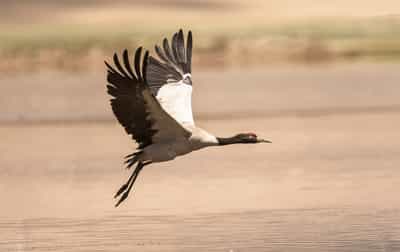
The Black-necked Crane Information Centre The rare black-necked crane is highly honoured in the Himalaya region. These majestic birds migrate from Tibet to Bhutan in late autumn each year, predicting the end of harvesting season and the onset of farmer relocations to the warmer, lower valley. Known as Thrung Thrung Keh Narp, literally translating to thin, tall and black necked, over 300 of these avian wonders soar to the warmer Phobjikha Valley in the winter months, looping over the Gangtey Goenpa Monastery three full times, both when they arrive and when they leave. Bhutanese folklore attributes this mystifying and perplexing behaviour to the birds paying reverence to the three sacred jewels of Buddhism, as well as asking for protection throughout their stay. Traditional stories tell the tale of a pair of cranes that choose to stay behind each year, offering themselves to the Valley for their thanks and wellbeing. The Royal Society for Protection of Nature manages The Crane Centre, which displays material on the cranes and their environment, as well as guiding conservation awareness operations on this threatened bird. A great time to visit Gangtey, the hilltop village, is in the winter months, especially November, when the Black-necked Crane Festival occurs in the courtyard of Gangtey Goenpa, with local songs, dramas and masked dances celebrating the endangered bird in fine Bhutanese fashion. crane information centre gangtey bhuta2

Hike up to the Taktsang monastery in Paro

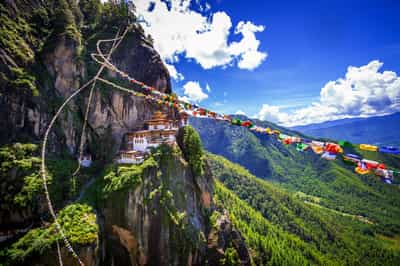
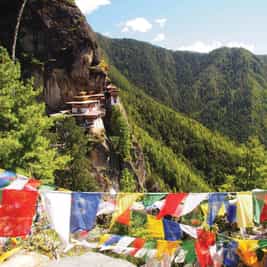
Hike to Tiger’s Nest Popularly known as the Tiger’s Nest, Paro Taktshang is a revered temple and monastery built in 1692. The sacred structure sits at 3,120m (10,240ft) above sea level, perched on the edge of a cliff in the upper Paro Valley. Shrouded in folklore and myth, the monastery consists of four temples adorned with Buddhas, cotton tapestries and frescos of enlightened beings. The holiest site in Bhutan, this ‘tigers lair’ pays homage to Guru Padmasambhava, the initiator of Buddhism in Bhutan. Legend has it that the Guru flew from Tibet on the back of a mystical tigress and landed on the steep cliff to meditate in a cave. In the late 17th century, the monastery was constructed around the cave by Gyalse Tenzin Rabgye, who was universally believed to be the reincarnation of the Guru. Numerous miracles are associated with the monastery, such as sightings of mysterious flowers that appear in the air, only to disappear before touching the ground. The Guru has also been spotted both inside and outside the cave at the same time. The hike to the temple, and back, takes around five hours and travellers will pass through a dense forest and emerge on the edge of a rocky chasm, where they will need to climb down to a trickling waterfall and then back up the cliff face to the monastery on the other side. Added to its rich history, the monastery boasts magnificent views over green valleys and mountain ranges.

Visit Mebar Tsho (The Burning Lake) in Bumthang

In this lake Terton Pema Lingpa, the reincarnation of Padmasambhava, was said to have discovered religious treasure in the 12th century. Mebar Tsho is less a lake and more a gorge in one of the many glistening rivers that run through Tang valley. This sacred lake is visited by many Bhutanese during auspicious days to offer butter lamps. With an extensive array of prayer flags blowing in the wind, it is known to be one of the holiest places for Buddhist pilgrimage.

Hike to the Khamsum Yulley Namgyal Chorten

Walk to the three storey lhakhang, a recent addition to Bhutan‘s string of architecturally splendid buildings, which is located approximately 20-minutes from the Punakha suspension bridge. Built by Her Majesty the Queen Ashi Tshering Yangdon, the Khamsum Yuelley Namgyal Chorten houses representations of the tantric form of Buddhist deities that subjugate enemies and ward off harmful influences on the people of Bhutan. Built for the protection of the country and the present King, the chorten also offers impressive views of the valley below.

Embark on the picturesque Longteng hike in Gangtey

The Longtey Hike After an early breakfast, guests embark on the Longtey Hike. It is a 30 minute drive from Phobjikha to the starting point in Longtey village on the East-West highway. Start by walking downwards following the path to the right of the road. The path will lead through bush bamboo towards a small cluster of village houses. There are beautifully coloured rhododendron forests on both sides of the valley, and in the winter months, yaks graze in the area. Continue straight through the village upwards until you reach the start of mystifying old-growth rhododendron forest. The last part through the forest is slightly steeper uphill until you reach the pass with impressive views of the Gangtey Goemba, the Shedra, the lodge and the rest of the valley down below. Before you continue on the path as it slopes down the valley towards the idyllic Kumbu village. It is possible to get picked up from here, or you may continue down to the Shedra or all the way down to the valley. Difficulty Level: Moderate Walking time: 4 hr Attraction: Longtey village & Kumbu village

See the Sangchhen Dorji Lhendrup Lhakhang Nunnery

A sacred and revered space Balanced on a spur amongst pine trees, boasting breathtaking views of the Punakha Valley, gleams the magnificent structure of the Sangchhen Dorji Lhuendrup Lhakhang Nunnery. Steeped in tradition and culture, this temple houses a 4.2 m (14 ft) bronze statue of Avalokiteshvara, made by local Bhutanese artisans. Other sacred statues include those of The Buddha, Guru Rinpoche, Zhabdrung Ngawang Namgyel, Tsela Namsum, and the 21 Taras. Constructed as a Buddhist College, the temple complex houses 120 nuns and is a permanent school of higher learning and a meditation centre. Apart from religious training, the nunnery also provides vocational training such as tailoring, embroidery, statue making and thangka painting.

Hike to the Tango Goemba monastery for a picnic

Enjoy a short hike to Tango Goempa Monastery, initially built in the 13th century, and perfected by the 4th temporal ruler in 1688. Tango literally translates to ‘horse head’ in honour of the main idol, Hayagriva, consecrated in the Monastery. Legend states that a lama heard the echo of a horse neigh in the direction of the cliffs, only for the crags to take the form of the god Tandin, consumed by flames. It was prophesised that a monastery and temple would be built on the site and dedicated to meditation and prayer. Walk through an iridescent violet and crimson rhododendron woodland for about an hour to the Monastery. Revealing a rich history with saints once meditating within its walls during times of war, today the Monastery serves as a Buddhist university with nearly 300 monk scholars in residence. Walk around the Drolay loop, pass by Drolay Goemba meditation centre and end with unparalleled views of the Cheri Monastery, surrounding mountain ranges and the city of Thimphu, meaning ‘the meadow of pearls’, before enjoying a picnic in the Jigme Dorji National Park.

Participate in a traditional blessing ceremony

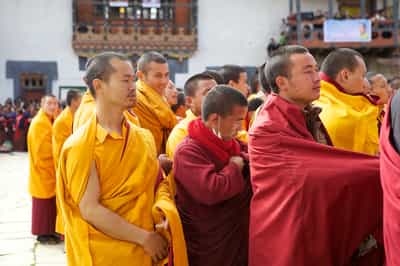
Become immersed in Bhutanese culture Take part in a traditional Tshewang (blessing) ceremony held by a Bhutanese monk in a temple or nunnery for personal empowerment and wish fulfilment. ‘Tse’ meaning ‘life’ and ‘wang’ being ‘blessing’, the ceremony is believed to bring about a long and healthy life. The prayer will be approximately 30-minutes, during which you can make an offering by lighting butter lamps at the monastery altar. Sit with the lama (monk) as he performs the mystical rituals and prayers, entering into a humbling and safe trance to the deep rumbling notes of his voice. The sacred ceremony gently ends with the monk giving his blessings and assisting in a private circuit of the holy shrine. Special occasions, such as weddings, dedications and engagements, can also be celebrated. Please speak to your preferred travel specialist.

Tshewang ceremony and breakfast

Tshewang ceremony and breakfast Experience the profound nature of the Bhutanese people in Gangtey’s most renowned hermitage on a morning tour to the 17th century Gangtey Goenpa Monastery, offering guests a spiritual experience amid crimson clad monks. The Monastery is situated in the Black Mountain region on a jade-hued woodland hill with spectacular views of the entire Phobjikha Valley below. Fine Bhutanese architecture features lower whitewashed walls, intricately carved wooden accents interlaced with ruby tones that dominate the upper and middle façade and a flat layered timber roof with rainbow fringes leading up to a gold embossed dome, shining under the Bhutanese sun. Built on the hilltop by Gyalse Rigdzin Pema Thinley, the progeny and reincarnation of treasure finder Pema Lingpa, the Goenpa is an important monastery of the Nyingmapa school of Buddhism. Partake in a Tshewang prayer ceremony, alongside monks, lamas and teachers of the dharma, wishing for personal empowerment and a fulfilling healthy life. The ceremony ends with the lighting of pale butter candles and a personal blessing from the Tulku, a reincarnated master, followed by a private tour of the holy shrine. Enjoy a Bhutanese inspired breakfast within the Monastery complex, overlooking the lush Valley below.

Visit the Thimphu Weekend Farmers Market

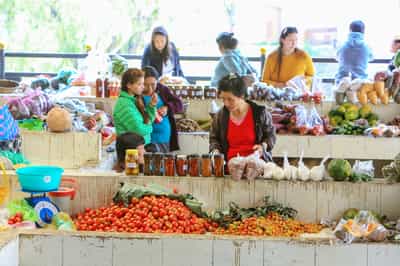
Immerse yourself in a sensory experience at the Thimphu farmers market, on the western bank of the Wang Chu River. Drawing in Thimphu’s residents, the market comes alive with colourful stalls brimming with local and imported goods, friendly locals eager to chat and vendors happy to stuff your bags with arts, crafts and delicious food products. On the upper level of the market, relish contemporary and traditional Bhutanese dishes, infused with spices and savoury herbs that waft throughout the market. The lower levels are a feast of international dishes sure to awaken a taste sensation. Watch crimson clad monks browsing through glimmering brass cymbals and trumpets as you peruse antique brass, woven textiles, incense, fruit, vegetables, clothing, handicrafts and jewellery. Keep your camera handy for excellent photographic opportunities.

Walk across the iconic Punakha suspension bridge

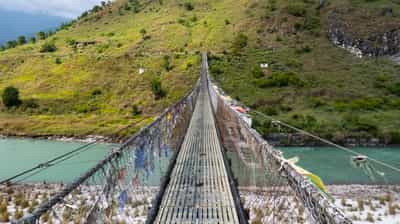
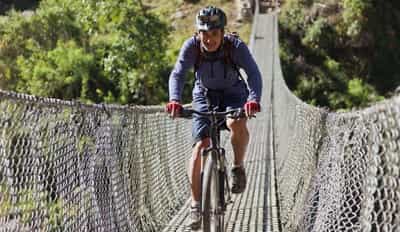
Bhutan’s longest suspension bridge of its kind Stretching across the majestic Pho Chu river, the Punakha suspension bridge is 180 m (590 ft) in length, making it one of the longest suspension bridges in the country. Strongly strengthened with iron chains and metal netting, this extraordinary bridge adorned in fluttering prayer flags, connects Punakha Dzong to the surrounding villages, and offers a great view of the glistening stream below. The Khamsum Yuelley Namgyal Chorten is located approximately 20-minutes from the bridge.

Learn about the ancient living culture of Bhutan

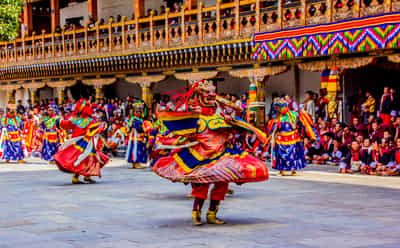
A colourful and exciting affair The Punakha Tshechu festival is one of Bhutan’s most popular celebrations. A colourful and exciting affair, a ‘tshechu’ includes a masked dance performances with great religious or historical importance. Typically taking place in February or March, the Punakha Tshechu festival follows the three days of the Drubchen Tshechu festival. Celebrated over several days, the Punakha Tshechu festival features an array of dances performed by monks in beautiful costumes and masks. The local people are kept entertained between dances by atsaras, clowns whose expressive masks and postures are an indispensable element in the festivities. They confront the monks, toss out salacious jokes, and distract the crowd with their antics whenever the religious dances begin to grow tedious, keeping the mood joyous. The Punakha Tshechu festival is one of the best ways to witness and experience the ancient living culture of Bhutan. The unfurling of the Thongdrol (a large silk painting) of Guru Rinpoche on the last day is a highlight of the festival for local communities. A true celebration of tradition and culture, Bhutan’s array of year-round festivals aim to bring local people together, from across the country, to share stories and pass on traditions. Tshechus are held in most valleys, at different times of the year, based on the Bhutanese lunar calendar. It is recommended to speak to your preferred travel specialist to confirm your travel dates coincide with the confirmed date of the festival you wish to attend.

Visit the memorial chortens of Dochula Pass

Dochu La is an incredible Bhutanese mountain pass peaking at 3 140 m (10 301 ft) above sea level. Boasting exceptional views of the snow-capped eastern Himalaya on clear days, the pass links the capital city of Thimphu and Punakha. Stop to see the Druk Wangyal Chortens, where 108 memorial stupas and chortens stand in honour of Bhutanese soldiers slain in the insurgency against Bodo militants from India. The Queen Mother, Ashi Dorji Wangmo Wangchuck, commissioned the shrine in 2003 after King Jigme Singye Wangchuck overcame the insurgents. From here you can opt to hike through beautiful forests down to the Lampelri Botanical Garden or for something more strenuous, hike up to the Lungchutse Temple through thick woodlands of broad hemlock trees. At the foot of the temple lies a rich bamboo underbrush and dense juniper shrubs flourishing against a backdrop of the Himalaya. One of Bhutan’s highest peaks, Gangkhar Puensum, and the world’s highest unclimbed mountain, can also be seen from here. Alternatively view the nearby monastery, Druk Wangyal Lhakhang, built in reverence of the king.

Try your eye at Bhutan’s national sport in Punakha

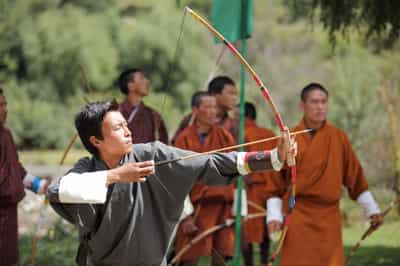
Try your eye at Bhutan’s national sport Archery is the national sport of Bhutan, and even more so, a nationwide obsession, and can be watched in any part of the country over the weekend. Enjoyed as a group activity, targets are typically set approximately 145 m (475 ft) from the archer, making for a fun experience suited for the whole family. Every village in Bhutan sports an archery field, and no festival or celebration is complete without a game. Traditional tournaments between villages are battles for honour, and include an array of feasts and prizes.

Trek to one of Bhutan’s largest lakes in Punakha

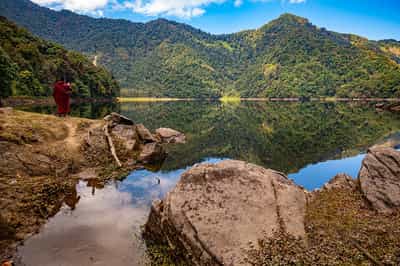
Trek to one of Bhutan’s largest lakes Sitting at an elevation of 2 130 m (6 988 ft) above sea level, Hokatsho Lake is approximately 9 km (5.5 mi) from Punakha Valley. Drive through bustling villages before reaching the 15th century temple, Chorten Nyeabu. This is where the hike (approximately two to three hours) to Hokatsho Lake begins. From here, the path follows a man-made irrigation channel almost all the way to the beautiful lake tucked between dense jungle vegetation. As you proceed upwards, the jungle around you comes to life with the sounds of insects and birds. Upon reaching the lake, a small path leads down to the water, offering magnificent views of the peaceful and untouched surrounds. Legend has it, the Hokatsho Lake never overflows owing to the continuous drainage through an opening believed to have been created by the lake’s deity. The opening was formed after a demon threatened to flood the area. ‘Hokatsho’ directly translates to “lake with a hole or opening”.

Spot the native and migratory birds of Punakha

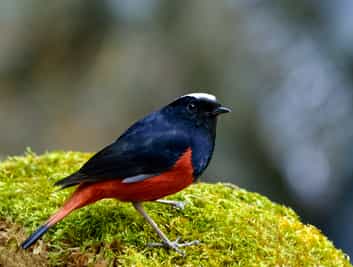
An avid birdwatchers paradise The last remaining great Himalaya kingdom of Bhutan boasts magnificent mountain scenery, exceptional architecture and colourful culture. Recognised as one of the world’s few carbon-negative countries, with almost 70% of Bhutan covered in dense forest, the country features a staggering variety of landscapes, as well as an incredible array of flora and fauna. Not forgetting about the country’s prolific bird life. Ideal for first-time or serious birders, Punakha’s unique landscape of mountains, hills, rivers and forests offers the perfect landscape to search for native and migratory species in the area. At times, bird calls might lead you to sightings of the common kestrel, Pallas’s fish eagle, crested kingfisher, white-bellied heron, chestnut-headed tesia, slender-billed oriole, plumbeous water redstart, and white-capped redstart, to name a few.

Cycle off-road for adventure in Punakha

Cycle off-road for an exhilarating adventure Immerse yourself exploring Punakha Valley’s sacred, forested landscapes off-road, on two wheels. Ideal for beginners to experienced riders, there are an array of mountain bike routes to choose from. With a selection of easy-going, non-technical single tracks as well as a wide mix of extreme, adrenaline-pumping off-road trails, mountain-bike riders of all levels are welcome.

Navigate rapids on the Pho Chu river from Punakha

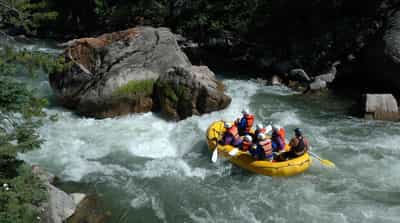
Navigate rapids on this exhilarating adventure The Pho Chu river, which translates to ‘male’ or ‘father’ river, is fed by glaciers in the Lunana region. Its 16 km (9.9 mi) course is loaded with 15 different rapids, ranging from class 2 to 4, making it a favourite amongst thrill-seeking adventurers. The Mo Chu river, which translates to ‘female’ or ‘mother’ river, originates from the northern hills of Laya and Lingzhi. Although calmer than its counterpart, the Mo Chu too offers an exciting rafting opportunity for those trying out the sport for the first time. Covering 10 km (6.2 mi) with 10 rapids graded class 2, this gentle journey is perfect for the whole family. At the confluence between Pho and Mo Chu lies the Punakha Dzong, and thereafter the main river is known as the Punatsang Chu river. On your rafting journey you will witness breathtaking views of sub-tropical scenery, plus secluded stretches of serene sparkling water.

Trek to Jangchu Lakha, Paro

Following breakfast, you’ll embark on your trek along a well-defined trail, passing through Tibetan refugee settlements. Ascend through a forest of blue pine and silver birch to Jilli La (3580m), where you’ll enjoy magnificent views back down the Paro Valley. Continue your trek through conifer and rhododendron forests, with the chance to glimpse the snow-capped Jomolhari peak. You’ll pass by yak herder settlements before reaching your campsite at Jangchu Lakha (3780m), set in a stunning valley.

Trek to Janye Tsho, Paro

After exploring around beautiful valley, walk down to Jimi chu and climb up to Janey Tsho where we camp at scenic spot surrounded by dwarf rhododendron trees.
Previous Next
1 - 30 of 78 experiences
}
Where To Go
Pin Icon

Namibrand, Namibia