We're one of the World's Best Tour Operators!
Named three years running in Travel+Leisure World's Best, including No.1 in 2024
Go beyond the dazzling cities on one of our holidays in Japan, seeing the country at its most authentic and wildly beautiful, from the slopes to the coast – and your fair share of temples.
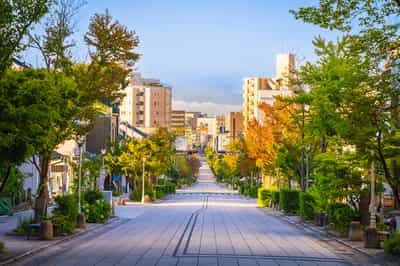
Nagano grew up around Zenkoji, a 1,400-year-old temple that houses Japan's first Buddhist statue – although nobody's actually seen it since the seventh century. Even the replica only comes out once every six or seven years, so what draws millions here isn't the viewing but the doing. And that doing is descending into a tunnel beneath the altar to find the 'Key to Paradise' by touch alone, or rising before dawn to kneel on the stone approach as the head priest passes, touching prayer beads to the foreheads of gathered worshippers. Stay overnight in one of 39 shukubo temple lodgings and you'll be woken for the o-asaji morning service, then served shojin ryori – the delicious vegetarian cuisine that once fuelled monks on mountain pilgrimages. Those monks were heading to Togakushi, a highland site where five shrines are connected by forest trail. The approach to Okusha (the innermost shrine) passes through an avenue of 400-year-old cedars, their trunks so vast they block out the sky. Afterwards, settle into a soba restaurant and watch your noodles arrive bocchi-mori style – five horseshoe bundles arranged on a handmade bamboo tray, one for each shrine in the forest above.
Japan's smallest main island is, in many ways, its most rewarding. Shikoku moves at a gentler pace to the mainland and it’s here that white-cloaked pilgrims still walk the 1,200-kilometre, 88-temple trail associated with the monk, Kūkai, and locals offer tea and rice cakes to passing strangers in the tradition of osettai. Shikoku Island also manages to squeeze a lot into its compact size: Tadao Ando's underground museums on the art islands of the Inland Sea, the ancient hot springs at Dōgo Onsen, and Kagawa's innumerous udon shops. Head south to Kōchi and the mood shifts entirely: wild Pacific coastline, bonito seared over straw flames, and the raucous Hirome Market. This is Japan for those who've done the big names and want to know what the rest of the country is really like.
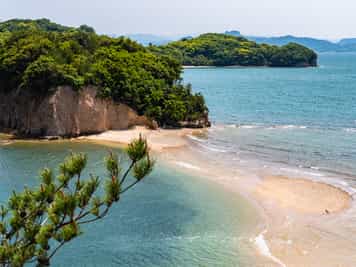
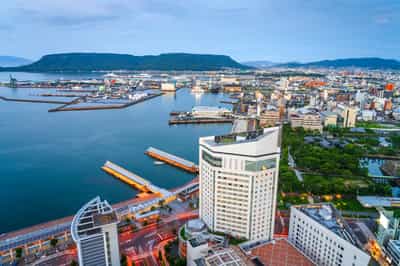
Kagawa's laid-back capital earns its keep as far more than a ferry terminal to the art islands. Ritsurin Garden, an exquisite stroll through 300-year old hand-pruned pines, is reason enough to linger and at its loveliest in the soft light just after the gates open at sunrise. From the port, boats slip across the Inland Sea to Naoshima, where Tadao Ando buried an entire museum underground to house five Monet Water Lilies in pure natural light, and to Teshima, home to what might be the most moving art space on the planet. Takamatsu is also proper udon country – Kagawa even rebranded itself the 'Udon Prefecture' and with 600-odd shops serving laden bowls, the only difficulty is choosing which queue to join before breakfast. Shodoshima island, a short ferry hop away, adds 400-year-old soy sauce breweries and olive groves to the mix. Delightful and delicious!
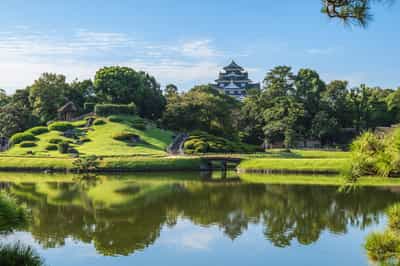
Japan has its showstoppers, and then it has Okayama – a city that holds its aces without ever needing to brag. Korakuen Garden, one of the country's three great landscape gardens, looks across the Asahi River toward the brooding Okayama Castle, nicknamed the Crow Castle for its ink-dark walls. Both are at their finest in autumn when the maples blaze and the garden stays open after dark for illuminated evening strolls. Beyond the city centre, the Edo-era canals of Kurashiki's Bikan Historical Quarter warrant an afternoon of laidback wandering, while a cycle through the Kibiji Plain will take you past ancient burial mounds and the long covered corridor of Kibitsu Shrine. And then there’s Okayama's (mouth-watering) food. Barazushi, a riot of Seto Inland Sea harvest piled onto vinegared rice, was essentially an act of culinary defiance against a feudal lord's austerity decree. Pair it with a muscat-flavoured craft pour from Doppo Brewery and you'll understand why this sunny corner of Japan is such a delight.
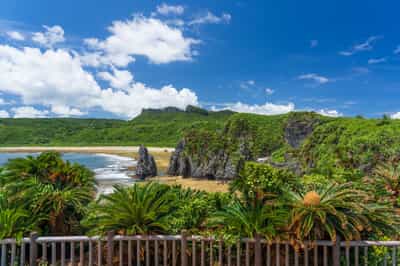
Far, far away from the bright lights of Tokyo, Okinawa occupies the southernmost scatterlings of Japan, where an unbelievably blue East China Sea laps onto its shores. It’s one of the world’s original Blue Zones and, aside from health and longevity, the Main Island has plenty to occupy your time: watch the UNESCO-listed Shuri Castle being rebuilt using traditional joinery; watch, mesmerised, as whale sharks and manta rays swim overhead at the Churaumi Aquarium; and take a sobering walk amongst the thousands upon thousands of names at the Peace Memorial Park & Museum. It’s worth going beyond the well-known too. Think trundling through the tunnels of ancient fukugi trees in a traditional water buffalo cart; visiting a traditional awamori distillery; and, if you’re around in the autumn, watching the ever-competitive Naha Tug-of-War.
The word ‘dreamy’ might be a tad overused in travel literature, but when you discover waters so distinctly blue that they named a colour after them, it might just deserve the adjective... Just 40 kilometres off the coast of Okinawa’s capital, Kerama is a national park made up of 22 islands, where off-shore reefs boast almost unbelievable visibility, the beaches are straight off the pages of a magazine, and turtles are frequent visitors. Even further-flung, Kume Island is famed for Hate no Hama, a surreal 7 kilometre sandbar only reachable by boat, alongside some of the best beaches in Japan, gorgeous, hand-woven silks and a surplus of prawns. These waters also happen to host epic humpback whale sightings, between January and March, when mothers and calves enjoy them as much as the humans.
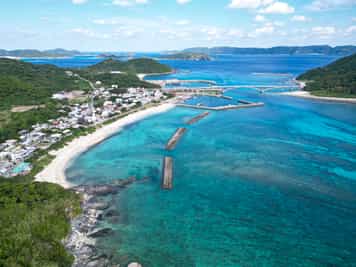
From Okinawa Main Island, set your compass south and you’ll end up on the golden shores of Miyako Island. Actually a cluster of islands linked by increasingly longer bridges (including the 3,540-metre-long Irabu Bridge), Miyako boasts some of the loveliest beaches in Asia (really!) with bleached-white sands and, importantly, not another soul in sight. And if you hear talk of 17END, it’s the local nickname for one of the most photogenic stretches on the island. The waters here are a sensational blue thanks to the almost total lack of rivers and snorkelling is possible right from the shore, where sea turtles are often spotted. Also on the coastline is Higashi-Hennazaki, a narrow cape with the Pacific on one side and the East China Sea on the other, and, if you can drag yourself away from the water, the interior is lush with row upon row of sugar cane fields. In a place like this, your cares seem to just drift away...
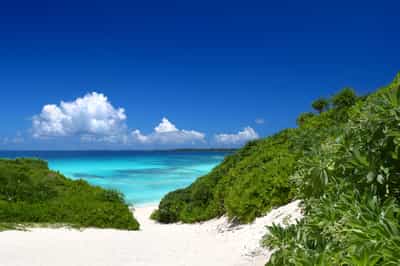
An archipelago of tiny, picturesque islands, each one more unique than the last, the Yaeyama Islands are, quite simply, spectacular. Ishigaki is the main hub where flights and ferries operate from, but that doesn’t mean it ranks any lower in the beauty stakes. Head for Kabira Bay where glass-bottomed boats float over the turquoise waters and coral reef. Taketomi Island, on the other hand, is a preserved Ryukyu village with white sand streets and aged houses, best explored by bicycle or water buffalo cart (the buffalo usually know the route better than the driver!). Iriomote Island is almost all jungle and home to the endangered Iriomote wildcat, which was only discovered in 1965 and is found nowhere else on Earth. In fact, natural wonders abound, from ‘star sand’ beaches and disappearing islands, to tumbling falls (only reachable by kayak and a jungle trek) and incredible congregations of manta ray.


Namibrand, Namibia