Travel and Leaisure Worlds Best Awards for number 1 tour operator in the world 2024 and number 2 tour operator in the world 2025
We're one of the World's Best Tour Operators!
Voted No.1 in 2024 and No.2 in 2025 by Travel+Leisure
Destinations

Where to go in Laos

Visit Laos to discover clandestine villages, glimmering temples and natural splendour, including cruises on the mighty Mekong River.

Luang Prabang

Graceful sights and picturesque surrounds make this chocolate-box town an enduring delight.
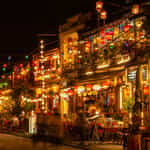
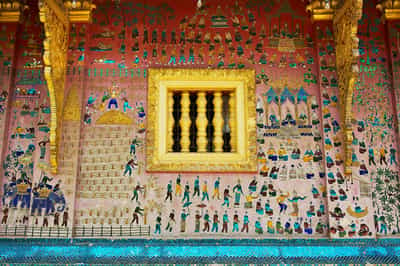
If Laos has (mostly) escaped the gaze of the world, the one place that perhaps hasn’t is the ancient royal capital of Luang Prabang. Perched on the sacred confluence of the Mekong and Nam Khan rivers, it’s the third largest town in the country with a population of 20,000 - although standing on the sleepy streets will make you wonder if they got the census count right! It’s also, undeniably, the darling of Laos. The 1,500-year old history has resulted in a romantic mix of architecture and culture, and the old town is full of plaited bamboo houses, uber-cool French villas-cum-boutique-hotels, and 33 gilded wats, their gold-leaf Buddhas shimmering in the sun. In the morning, watch the robed monks flood the streets for their daily alms, and in the afternoon, pick a street-side café for an iced coffee. But don’t let the charms of the centre hold you hostage for the rural fringes are just as attractive. Fifty shades of green merge in a circle of mountains, forest and rolling countryside, and trekking, mountain-biking, kayaking and adventuring are all up for grabs.

Champasak

A bundle of adventure-inducing sights, dynasty ruins and gorgeous scenery in Laos' sleepy south.
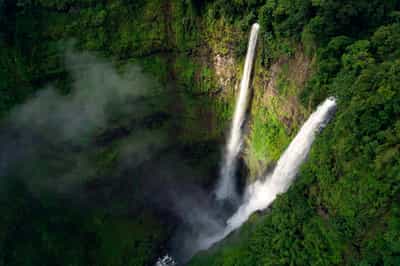
Home to UNESCO-listed wonders, glorious jungle, and soaring waterfalls, Champasak is more than enough reason to head south in Laos. The name Champasak refers to both the town (sleepy, riverside, small) and the province, the capital of which is Pakse. For 200 years (c.1713 to 1904), Champasak town was the seat of an independent kingdom in Laos, and the faded grandeur of a once royal city is still evident. But the star of the show down here is the graceful ruin of Wat Phu Champasak. Often thought to be the blueprint for Angkor Wat, the temple was built at the zenith of the Khmer Empire, and dedicated to the Hindu God, Shiva. Framed by the Phou Khao Mountains and much of it covered in fragrant frangipani, the temple perhaps isn’t as large or gasp-worthy as Angkor Wat, but it’s soulful, fascinating and hugely worthy of a trip. Otherwise, there’s plenty more to do ‘down south’, from boat trips around the magical 4,000 Islands archipelago to kayaking on the Mekong (eyes peeled for the endangered freshwater Irrawaddy dolphins).

Vang Vieng

Scenery from the gods and bucket-loads of adventure: welcome to the new Vang Vieng.
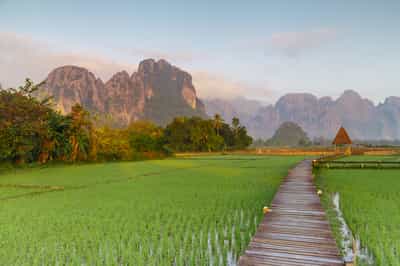
Making headlines as a secret base of the CIA and a partied-out backpacker nirvana, Vang Vieng has had its fair share of revivals. Today, it’s latest reinvention has put it on the map as something of an adventure capital – with a dose of gorgeous, tapestry-esque scenery alongside. The limestone mountains offer craggy hiking trails with staggering views to reward yourself with at the end (try the popular Pha Ngern or Nam Xay viewpoints), and the cave networks make for superb climbing opportunities with everything from beginner-ready outcrops to challenging peaks. For a watery exploration, hire a kayak and take to the river, tackling a rapid or two if you dare, or enjoy the tranquility of the ice-blue lagoons. If your adventure quota is just fine thank you, don’t write off Vang Vieng just yet. The gentle countryside lends itself just as well to strolls through the paddy fields and there are plenty of opportunities to visit Hmong villages. And that wonderful river? Perfect for gazing at over a cocktail or two we say…

Vientiane

Forget all preconceptions of a humming capital city and embrace Laos’ languid capital ‘village’
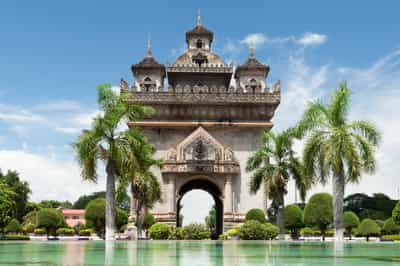
If Asian capitals are anything to go by, you might expect Vientiane to be stuffed full of glimmering skyscrapers, powerhouse companies and an air of the chaotic. Well, not quite… Everything about Vientiane is chilled-out, calm, and as cool as several cucumbers, from its languid location on the banks of the Mekong River to the boulevards of French architecture and relaxed cafes. Markets take precedence over shopping malls (although there are a few more to be found in recent years) and you’re more likely to spot a vegetable patch than a high-rise in the city centre. History-wise, it was made the capital of Laos in 1563, but war and invasions were never far away and the following centuries were largely beset with trouble until the French appeared in 1899. Today, visitors can learn a little of the country’s history and culture at the National Museum, the Pha That Luang, a glimmering golden temple and the most important national monument in the country, and at the Wat Si Saket, the only temple to survive the Siamese occupation – and home to a mere 2000 Buddhas!

Nong Khiaw

Pack a sense of adventure and enjoy the country’s most seductive scenery from this beautiful town.
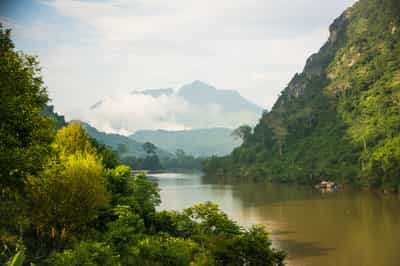
To picture Nong Khiaw is to imagine one of the most beautiful locations in the world – and whilst that might sound a tad dramatic, it’s all true. 3 hours from Luang Prabang by road, the area is all limestone-dotted scenery and vertiginous mountains stretching so high into the sky you can’t see their tops. The town itself is red-roofed and serene, located right on the banks of the languid, lazy, Nam Ou River. So far, so beautiful – but what is there to do? Nong Khiaw is about adventure and getting into the great outdoors. Rent a bicycle and peddle through the local villages, home to the Hmong and Khmu minorities, float down the river on a bamboo raft, and scramble through the incredible network of caves that were used by villages to shelter from the American bombings. At the end of the day, lace up your hiking boots to summit Phadeng Peak. This area is still pretty far off the main tourist trail, so get there quickly and you’ll be soaking up those views in splendid solitude.

Muang La

An almost-forgotten corner of Laos to switch off, explore secret corners and escape.
A few days in Muang La, surrounded by the gentle burbling of the Nam Pak River and the acres of unspoilt scenery, is guaranteed to send your shoulders south and your chill-factor north. There’s not much to do in this countryside idyll and in fact, it’s overlooked by most – and that’s exactly why we would recommend a stay. As you wind through the green hills and rice paddies, it’s clear that life is unhurried and largely traditional: villagers spend their days tending to the land and hunting for food, and in the more remote Ikho and Hmong communities, the practise of spirit calling still exists. For visitors, there are plenty of trekking, hiking and biking trails to explore as well as more gentle walking paths, all of which are carefully planned and respectful to the environment and communities. In the evening, make your way down to the hot springs and join the villagers as they bathe in the warm water, float on bamboo rafts, and catch up with gossip from the neighbouring locales.

Pakbeng

A lovely, sleepy stop on the famous Mekong River circuit, hidden away in the forests of northern Laos.
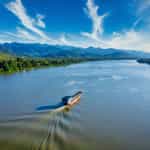
If you find yourself in Pakbeng, you’re probably enjoying a leisurely, languid cruise along the Mekong River. Hidden away in a sleepy corner of north-west Laos, right on the confluence of the Nam Beng and the Mekong, the town has, for many centuries, been a favoured stopover on the river circuit. Today, you’re more likely to find tourists looking for lunch than exotic merchant dealers, but it’s convenience is still hard to beat. It’s located almost exactly halfway between the Thai border and Luang Prabang on a particularly beautiful stretch of the river where the mountains almost scrape the sky and chocolate-coloured waters swirl peacefully around tiny fishing boats. Most visitors stay for a night, and the restaurants and bars above the main street offer a perfect vantage point over the ebb and flow of the water and its accompanied happenings. The next morning, rise early and join the tribal Hmong and Tai people for their daily shop in the central market. Then, it’s back onto your longtail to float off into the horizon…
Where To Go
Pin Icon

Namibrand, Namibia