
Portugal

Portugal Trips & Tours

Portugal

Travel and Leaisure Worlds Best Awards for number 1 tour operator in the world 2024 and number 2 tour operator in the world 2025
We're one of the World's Best Tour Operators!
Voted No.1 in 2024 and No.2 in 2025 by Travel+Leisure

Portugal Trips & Tours

Sun-drenched coasts, melodic fados, and a taste of vintage charm...Portugal is a dream.
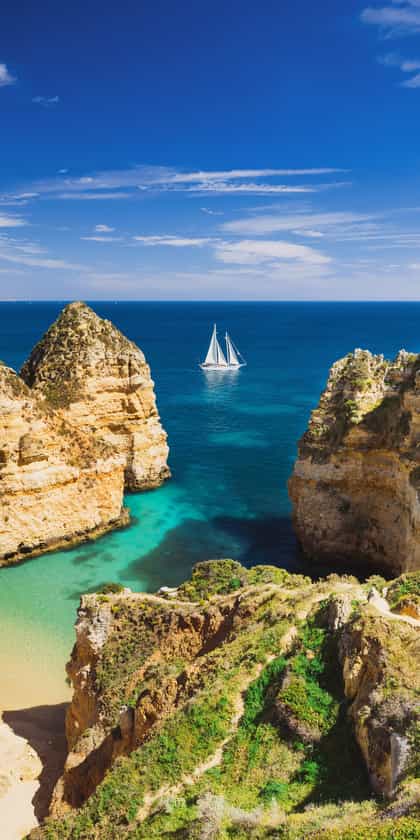
A pint-sized nation on the Iberian Peninsula, Portugal bursts with character and contrast. From the rugged, wave-lashed cliffs of the Algarve, to the rolling vineyards of the Douro Valley where Port wine comes to life, Portugal is as picturesque as they come. With its vintage trams and tiled facades, Lisbon hums to the soulful strains of fado, while Porto flaunts its medieval charm alongside a distinctly modern energy. In between, you have the allure of Sintra's fairytale castles, the historical charm of Coimbra, and the rich, untouched beauty of the Azores.
Best time to visit

When to go on a Portugal Trip

Excellent
Good
Mixed

Need to know and faqs

Portugal Safaris and Holidays

Essential information before you leave
International flights Portugal's main international airports are Lisbon (LIS), Porto (OPO), and Faro (FAO). Lisbon and Porto are the main hubs for trans-Atlantic and European flights. If you're flying from other areas, you might transit through major European hubs like London, Paris, or Frankfurt before arriving in Portugal. As with most international travel, booking online can often secure the best rates. Consider using flight comparison websites to find the most suitable options. Domestic travel Portugal has an extensive and efficient rail network connecting major cities and regions, which can be a scenic and comfortable alternative to flying. Cities like Lisbon and Porto have excellent public transport systems, including metros, buses, and trams. Renting a car is a popular option for exploring more remote areas, especially in the Algarve region.
There are no vaccinations required to enter Portugal. However, please consult your personal physician and/or a travel clinic preferably 6 weeks prior to your departure. Vaccine requirements vary based on your country of origin and your travel itinerary and your previous vaccination history. It is best to consult with your physician or the CDC website for guidelines. The tap water quality is good enough to drink but many locals prefer bottled water. General safety in Portugal is good but around popular tourist sites and on public transport, petty crimes like pickpocketing are very common. It’s also useful to be aware of the standard tourist scams like overpricing. Communication Portugal Country Code: +351 Calling overseas from Portugal: From a landline dial 010, followed by the country code, area code, and the phone number. e.g., To call the USA: 010 1 [Area Code] [Phone Number] When calling from a cell phone dial +, followed by the country code, area code, and the phone number. e.g., To call the USA: +1 [Area Code] [Phone Number]
Portugal uses the Euro as its currency and ATMs are widely available in cities and tourist hotspots. Major credit cards are widely accepted, especially at hotels, restaurants and stores, however, It's advisable to have some cash on hand, particularly for smaller purchases. Gratuities Gratuities are not compulsory or expected; rather it is a reward for excellent service. If you are pleased with the service you receive, you are more than welcome to tip. This is usually done at the end of your stay. You may tip the staff individually, give the tip to the manager to distribute, or do both. Gratuities suggestions: Restaurants: It's common to leave a tip of 5-10% if you're satisfied with the service. In some restaurants, a service charge is included in the bill, but this is not very common. Taxis: Rounding up to the nearest euro or adding a small tip (5-10%) is appreciated. Hotels: You might tip bellhops or cleaning staff a few euros for good service.
It is a condition of booking that you carry the correct comprehensive travel and medical insurance to cover yourself, as well as any dependents/traveling companions for the duration of your trip. This insurance should include cover in respect of, but not limited to, the following eventualities: Compulsory Insurance: a. Emergency evacuation expenses b. Medical expenses c. Repatriation expenses Recommended Insurance: a. Cancellation or curtailment of trip b. Damage/theft/loss of personal luggage, money and goods
In Portugal, the requirements for a visa depends on the purpose of your visit. European citizens can travel without a visa as Portugal is part of the Schengen Agreement. Non-European citizens can travel to Portugal with a 90-day Schengen Visa, which can be extended to a 180-day visa. It's essential to have a passport valid for at least three months beyond your planned date of departure from the Schengen Area. Visa applications often require proof of travel insurance, accommodation, return tickets, and financial means. Visa applications should typically be submitted to the nearest Portuguese embassy or consulate in your home country. Schengen Entry/Exit System (EES) The EU has introduced a new Entry/Exit System (EES) for non-EU passport holders entering the Schengen area. It’s designed to make borders more secure and keep a record of who’s coming and going, but it does mean a few extra steps on your first arrival: • On your first entry into the Schengen zone, travellers aged 12 and over will need to: - Have their passport scanned - Provide fingerprints and have a photo taken by a border officer - Answer a few straightforward questions (such as your reason for travel, where you’ll be staying, and for how long) • Children under 12 will simply have a photo taken. • There’s no cost for this process and you don’t need to register in advance. Once completed, your details are valid for three years and will be automatically recognised on future trips. • Exemptions: The EES does not apply if you are transiting through or if you hold an EU passport. Please allow a little extra time at border control for this on your first entry.
Climate Portugal enjoys a Mediterranean climate, which means it experiences mild, rainy winters (October to March) and hot, dry summers (April to September). However, there are regional differences and the south receives the most sun, while the north receives the most rain. Here is a brief guide on what to pack for a trip to Portugal: Seasonally appropriate clothing including light, breathable clothing in spring and summer and warmer items including trousers, sweaters and a jacket during autumn and winter . Layers are key due to varying temperatures throughout the day. Comfortable walking shoes Include a more formal outfit or two for upscale restaurants or nights out, especially in cosmopolitan areas like Lisbon or Porto. Sunhat, sunglasses, sunscreen and swimwear. A small backpack or crossbody bag for day trips, keeping valuables secure and allowing you to carry essentials like water, snacks, and a camera. Reusable water bottle Camera, memory cards, batters, chargers and adapters. Portugal uses Type F power sockets, and the standard voltage is 230V. Portable power bank While Portugal is fairly relaxed in terms of dress code, modest attire is recommended when visiting religious sites like churches or monasteries.
Travel with a purpose

We're proud to be making a positive impact

We’re big believers in leaving a positive impact in the countries in which we operate. We’re proud to donate $50 for every booking to projects focusing on female empowerment, tech education, and conservation.

Our dream is to empower our guests to travel with a purpose.

So far, we’ve donated $78,000 to projects across Africa.

As Seen in

11 Condé Nast Traveler Top Travel Specialists 2025

Condé Nast Traveler

No. 1 & No. 2 Tour Operator in Travel + Leisure's Best Awards 2024 & 2025

Travel + Leisure

Best Booking Platform in Women's Health Travel Awards 2025

Women's Health

Travel Specialist voted as Latin America A-List Travel Advisor 2025

Latin America A-List Travel Advisor

"Timbuktu can take relatively complex and slightly amorphous travel plans and transform them into a well-organized, perfectly tailored trip."


Forbes
AFAR
The Daily Telegraph
Vogue
Glamour
BBC
Oprah Magazine
Natural Geographic