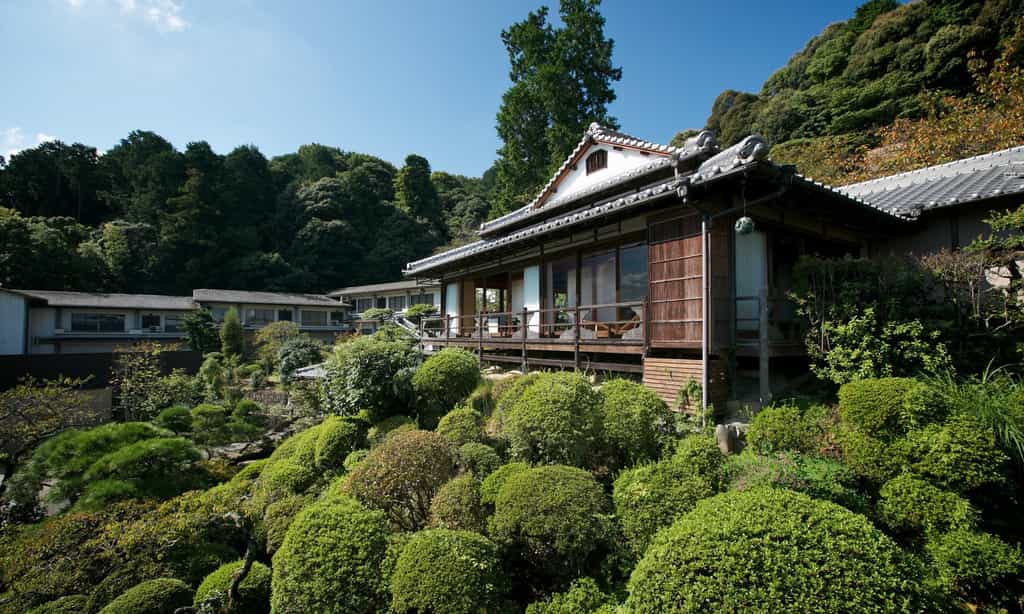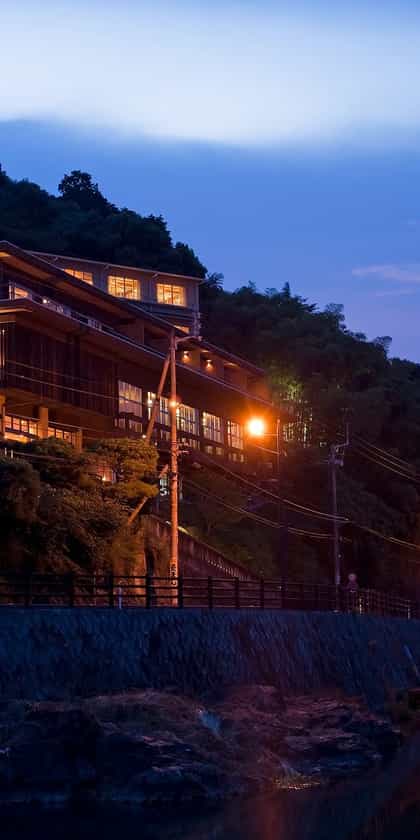

In the pilgrimage town of Kotohira, just at the foot of the forested Mount Zozu in a quiet, unhurried corner of Shikoku, sits a ryokan that's been welcoming travellers since 1627. Originally an inn for pilgrims visiting the revered Konpirasan shrine, Kotohira Kadan has hosted Japan's literary greats, imperial family members and countless souls who arrive to climb the famous 1,368 stone steps to pray. Today, it's a layered property that sprawls across hillside gardens with heritage cottages, renovated guest wings and Konpira Onsen's skin-softening hot spring water known locally as 'The Great Beauty's Bath'.
/133.82137573551557,34.18767160704877,6/600x400?access_token=pk.eyJ1IjoidGltYnVrdHV0cmF2ZWwiLCJhIjoiY2poMGw1eHpkMmRkbDJ6bW8xYWZ5OGpjYyJ9.PYvAO7lUJ40SOpGvwmQLqw&attribution=false&logo=false)
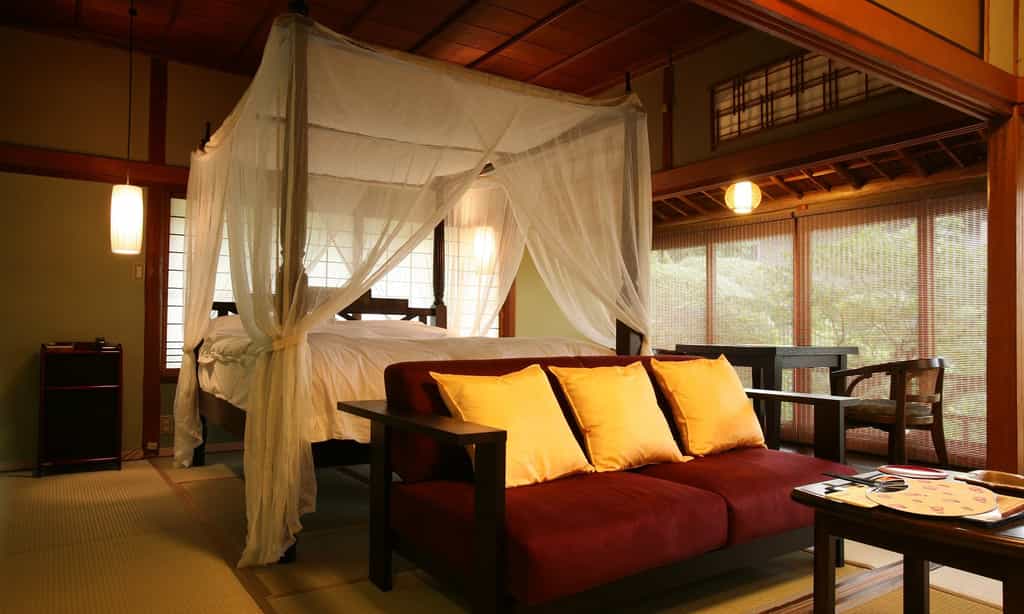
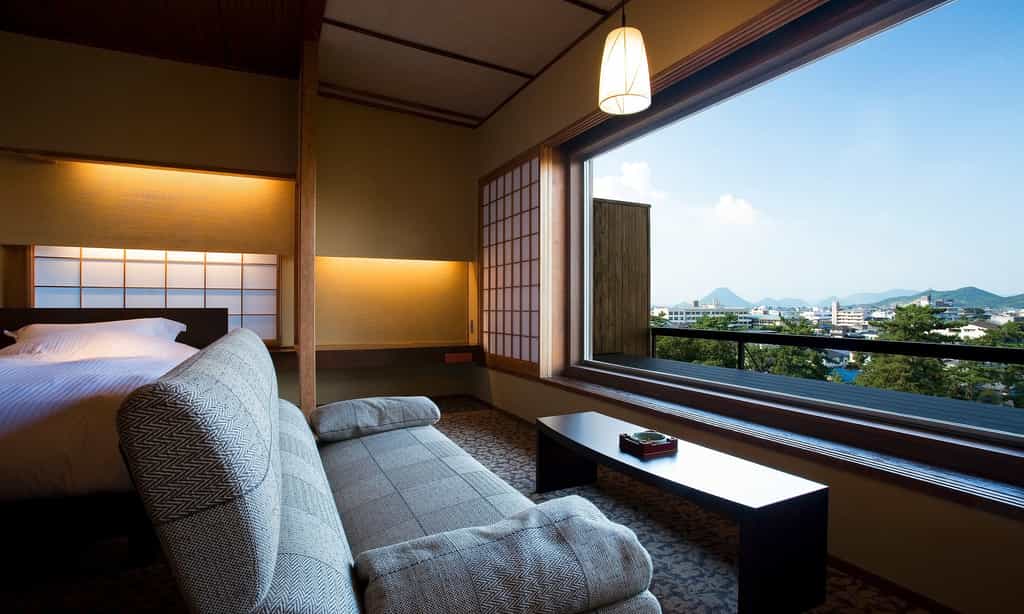
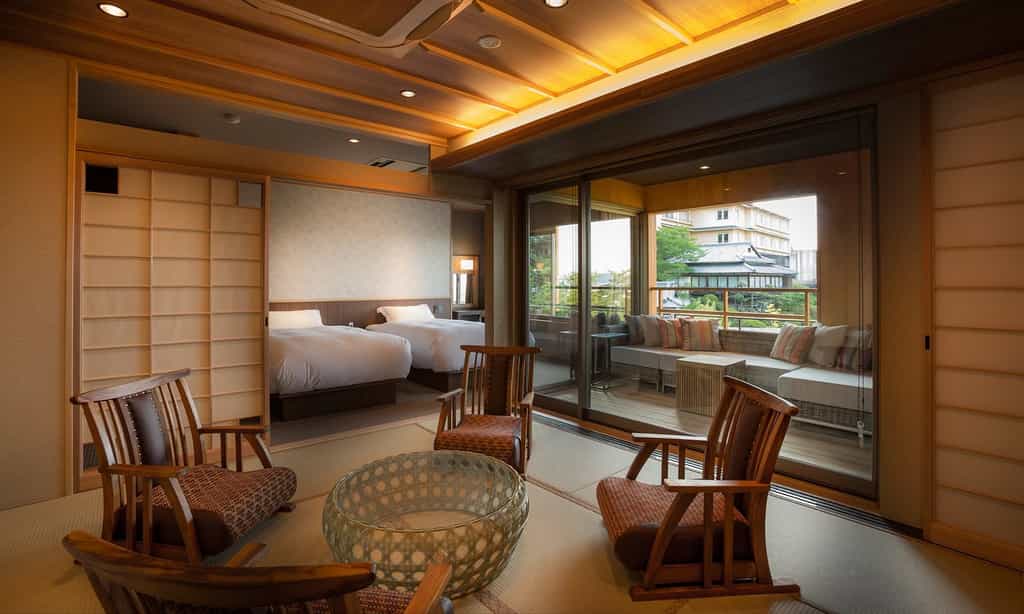
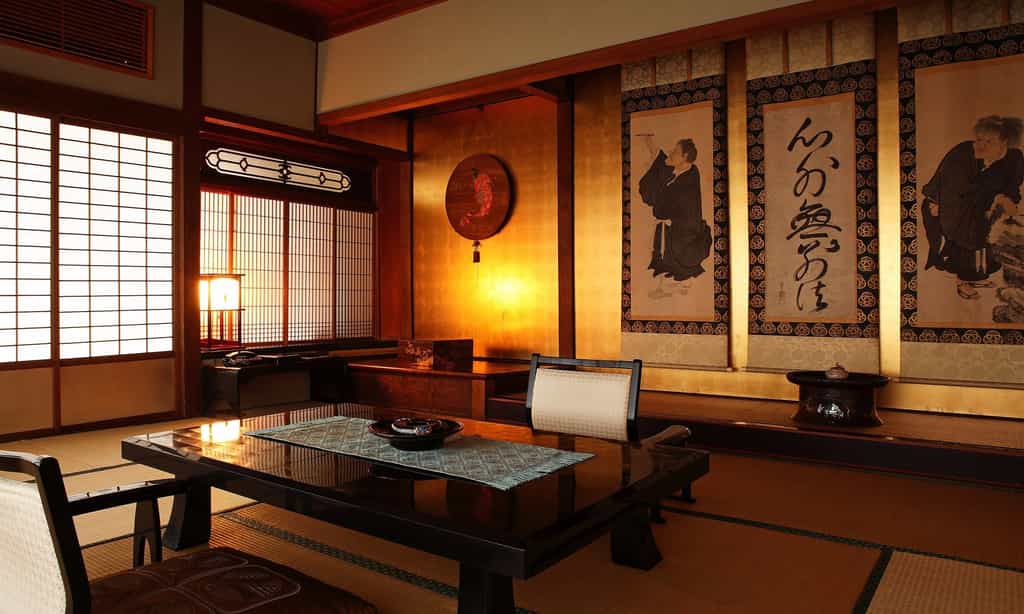
The property is divided into distinct wings, each with its own character. Fujimidai's east-facing rooms look out to the Asan mountains and several have hinoki wood tubs on their terraces. Shogetsu Terrace offers more contemporary Western-style rooms with panoramic views. Then, Sansuikaku sits beside the garden with Japanese-Western rooms and access to the private forest-surrounded bath, Mori no Yu. But the real treasures are the three heritage cottages – Enjukaku, Choseiden and Sentei – tucked into the garden and adorned with beautiful artworks, fusuma paintings and carved timber ceilings that date back generations.

Staying in rooms once used by famous novelists and feudal lords, with ancient painted fusuma screens and hanging scrolls, is a truly original experience.

There's a pathway from the property that leads directly to the old Kanamaru-za kabuki theatre and onwards to Konpirasan and it's a far more atmospheric route than the main tourist approach from town.

The property is spread across several buildings and you'll need to walk outdoors between some of them, which is fine in fair weather but worth knowing if the rain rolls in.
Kotohira Kadan can be booked with Timbuktu as part of a tailor-made Japan trip, rather than as a standalone room reservation. Start online, customising one of our recommended Japan trips featuring Kotohira Kadan or get advice and suggestions from one of our Japan specialists who will design the trip around your dates, check availability and handle every booking for you.
Stays at Kotohira Kadan start from around $210, or US$210, per person per night as part of a tailor-made trip. The exact price depends on your travel dates, room type and the shape of the rest of your itinerary. A Timbuktu travel specialist can give you an accurate quote for your dates.

Michelin-starred gardens, Inland Sea islands and noodles worth rearranging a whole itinerary for.