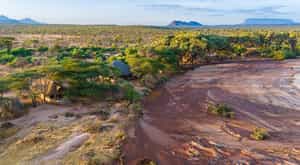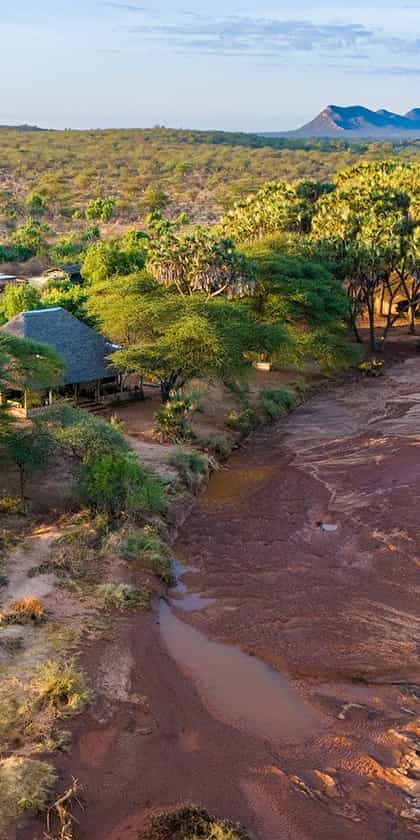

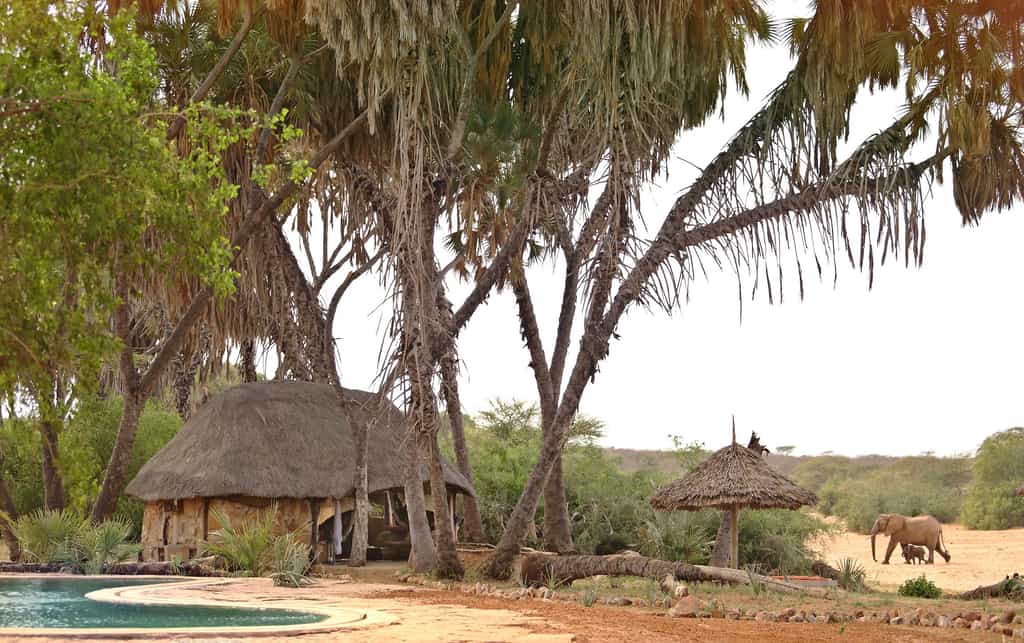
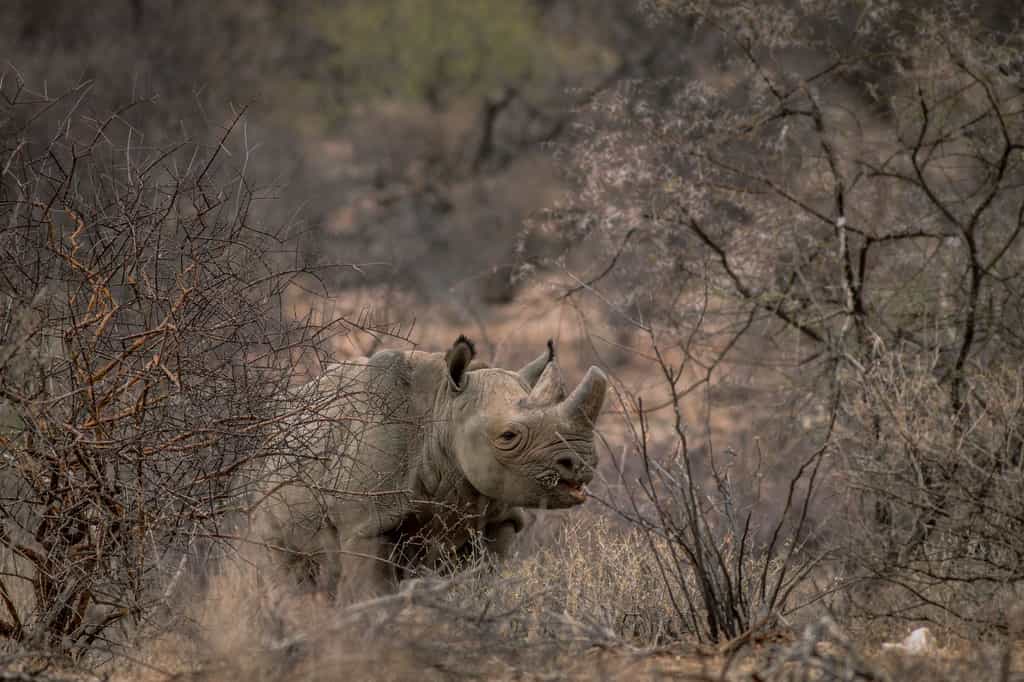
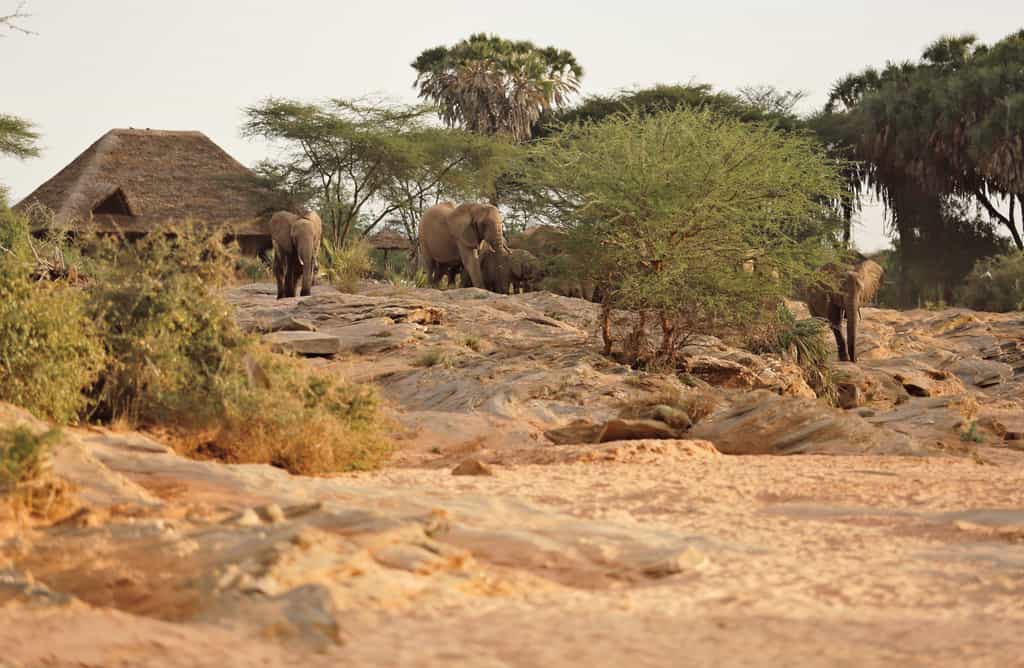
Saruni Rhino is a charming rhino tracking camp in the northern reaches of Kenya. It gives guests the once-in-a-lifetime experience of tracking one of Samburu's most famous members, the black rhino, on foot. The exclusive camp, which sleeps only eight (or ten) is situated in the Sera Community Conservancy, which as of 2019, is home to 10 relocated black rhino who were put here for safekeeping, and 6 more who were born in the Sanctuary. The critically endangered species hasn’t been seen in northern Kenya for over three decades. Bravo to Saruni for turning back the clock.
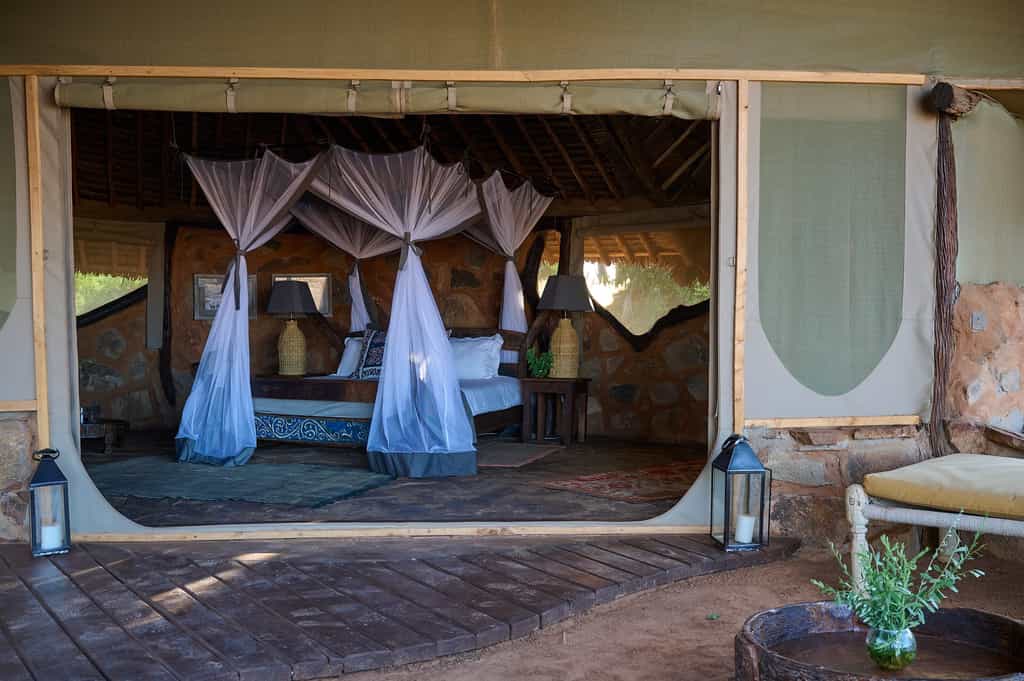
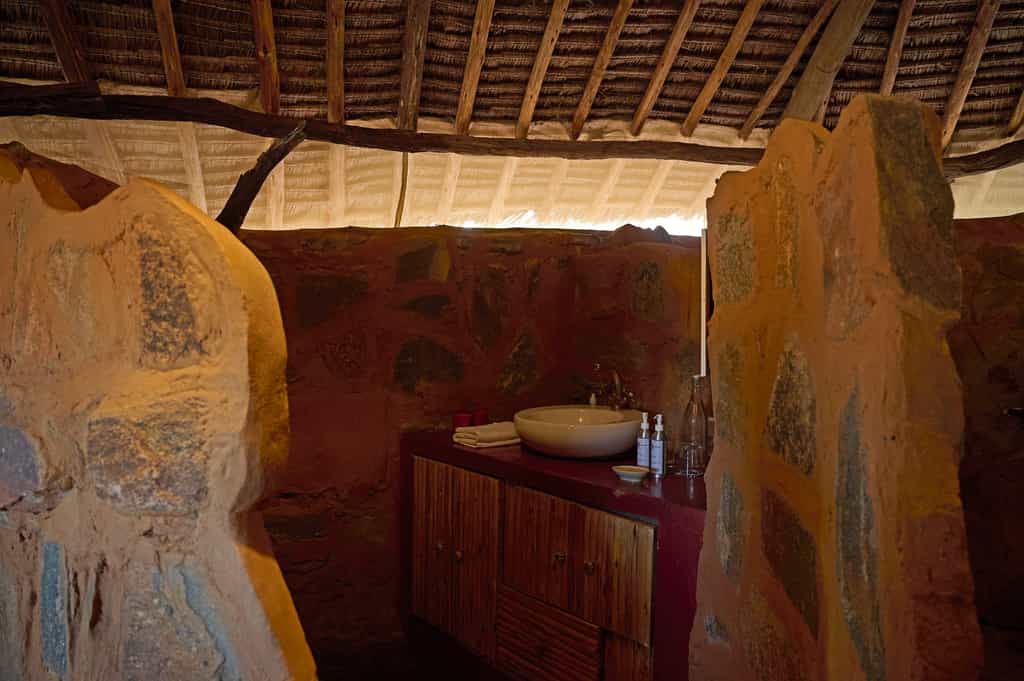
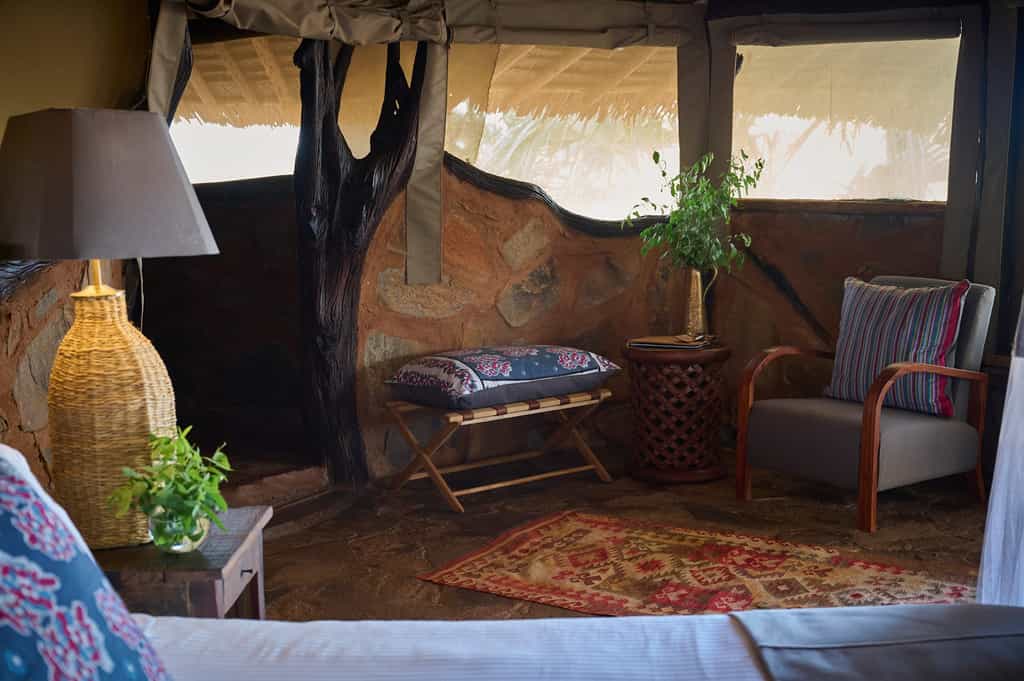
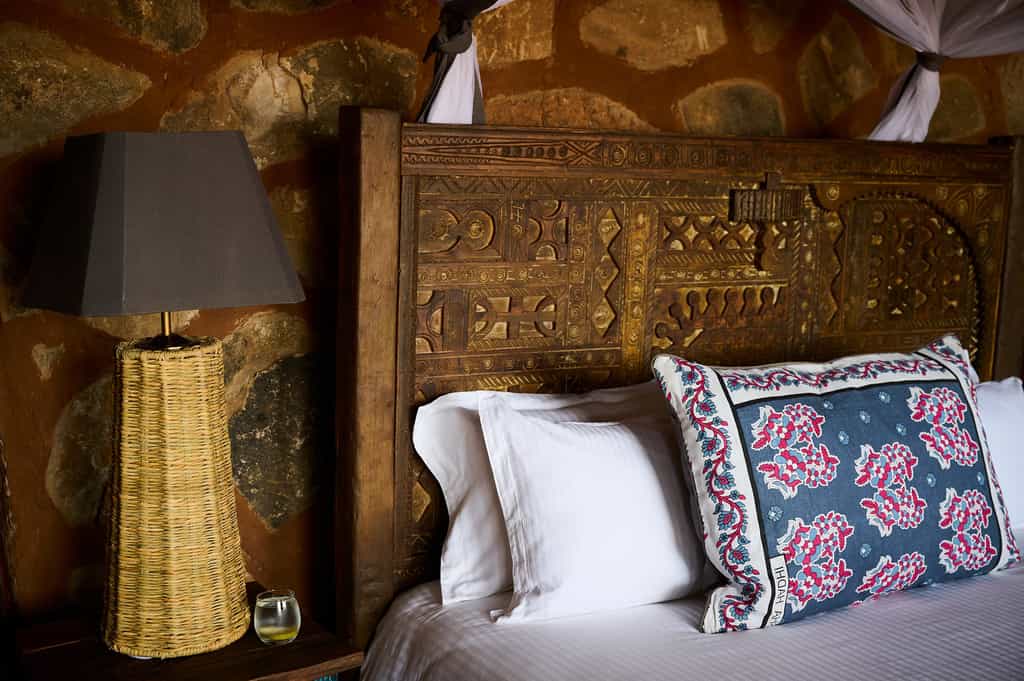
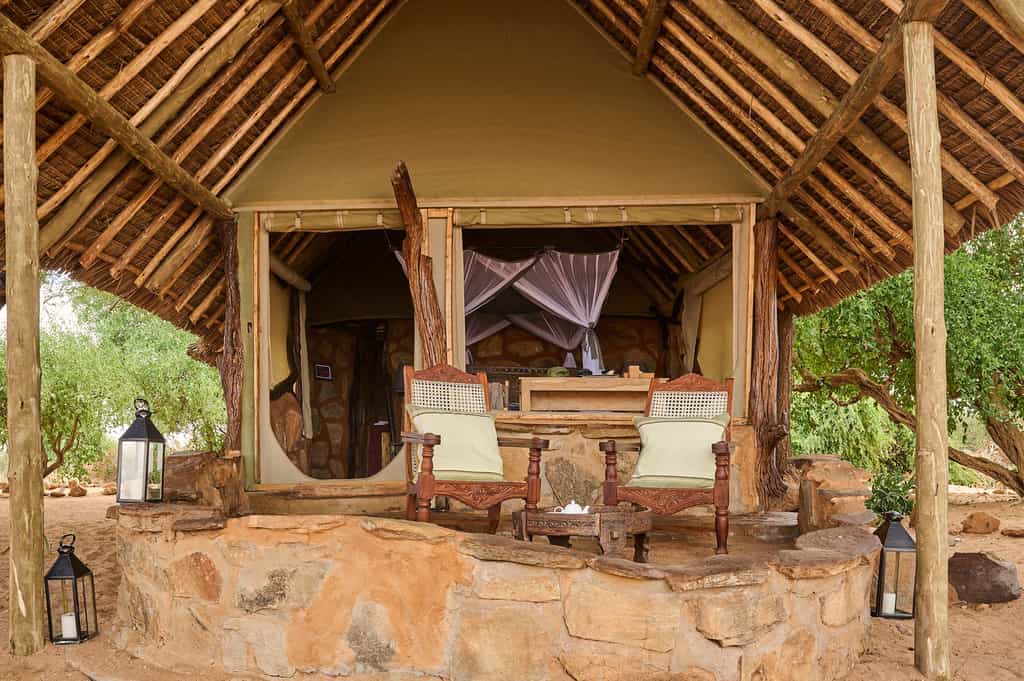
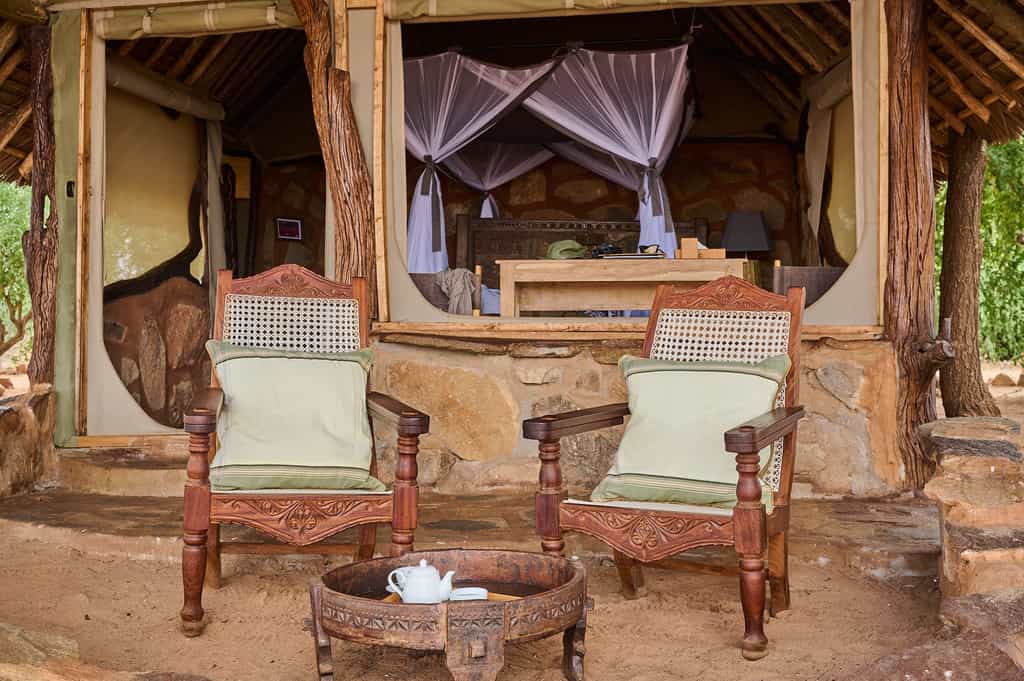
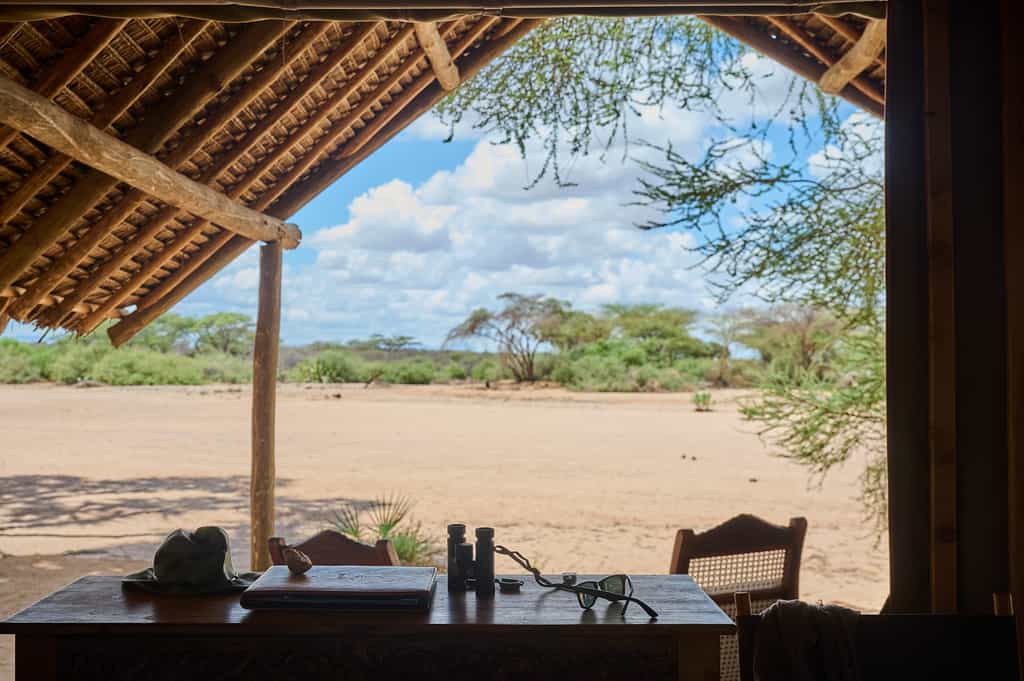
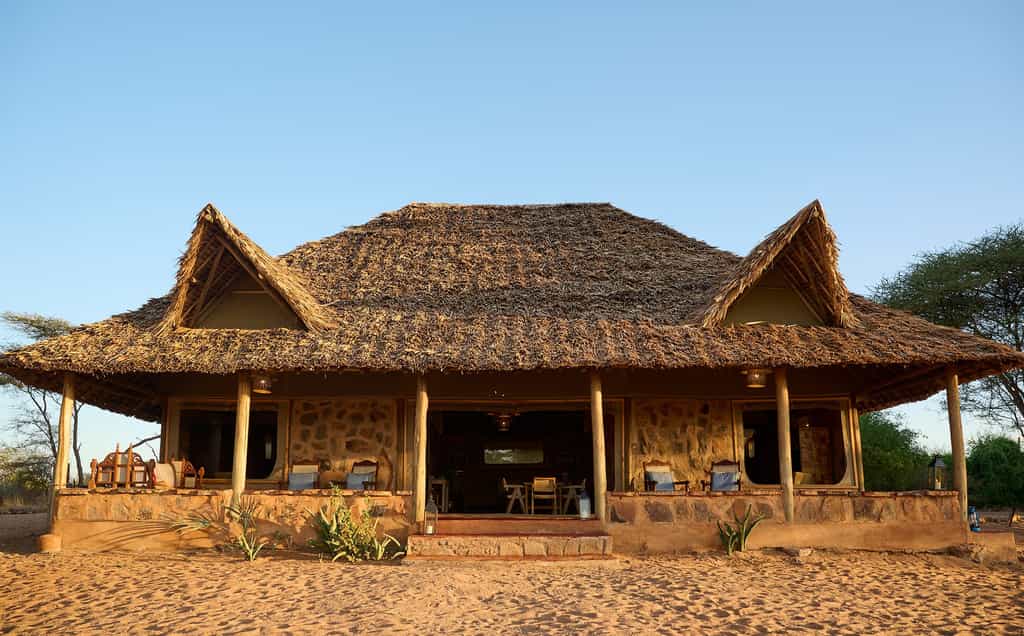
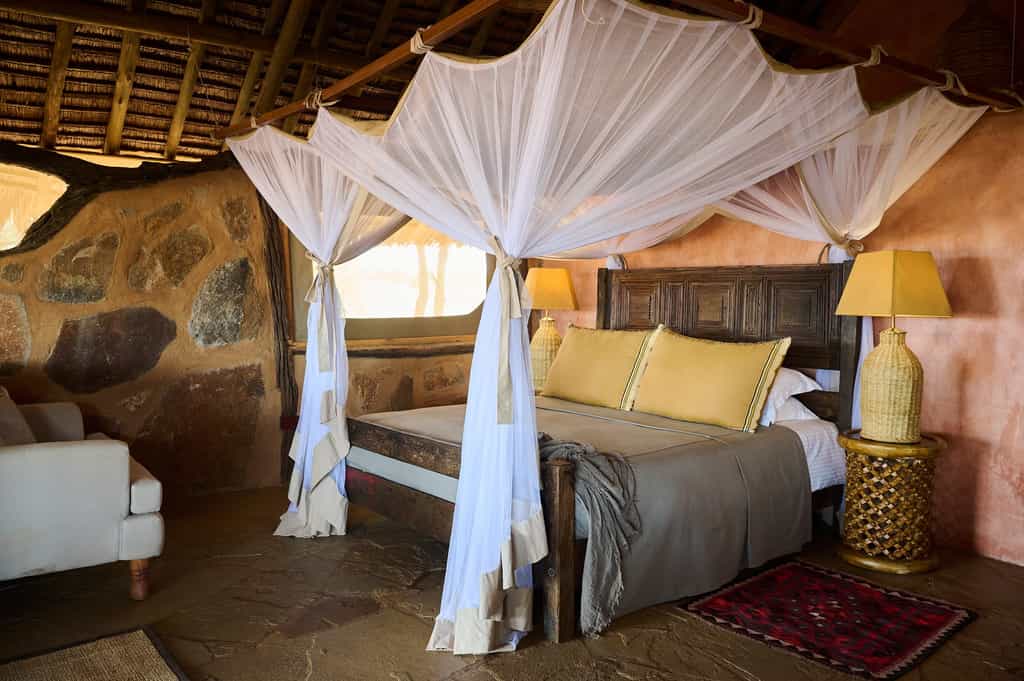
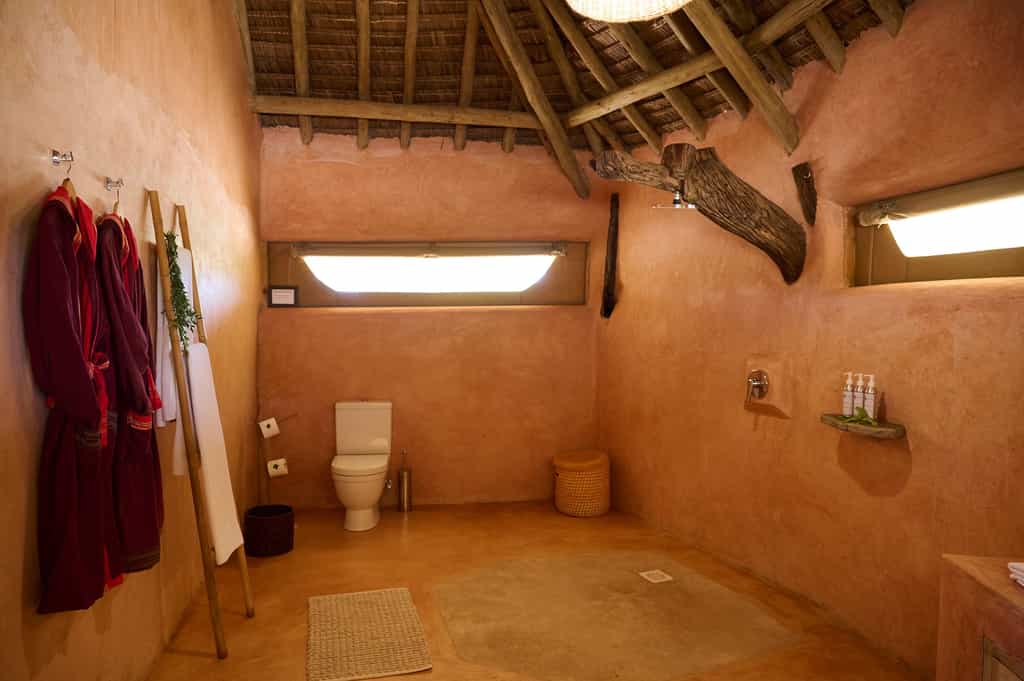
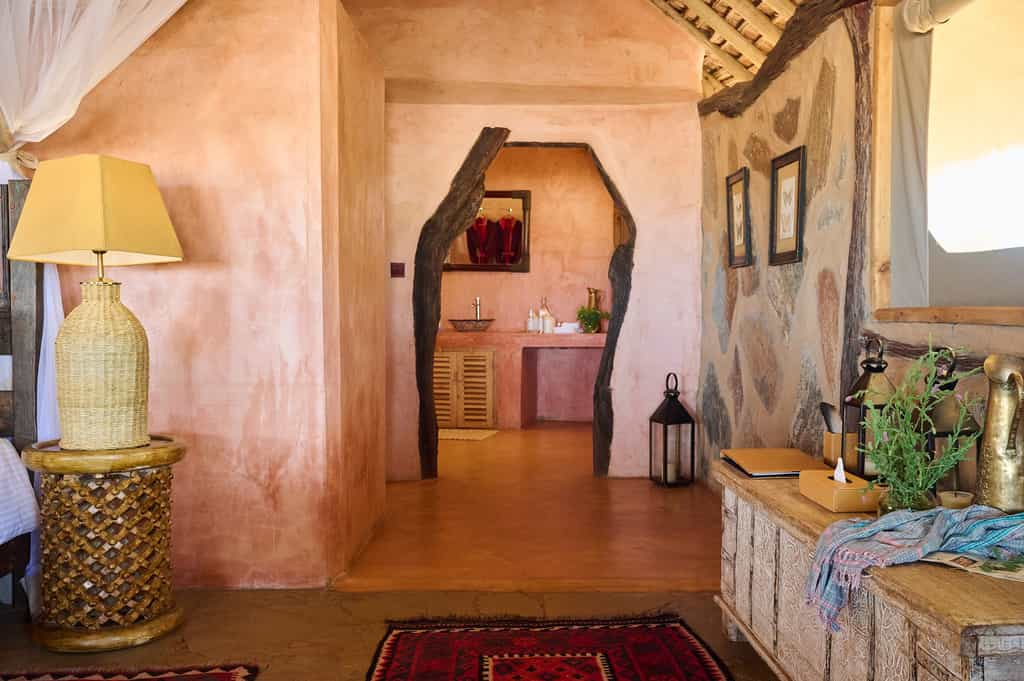
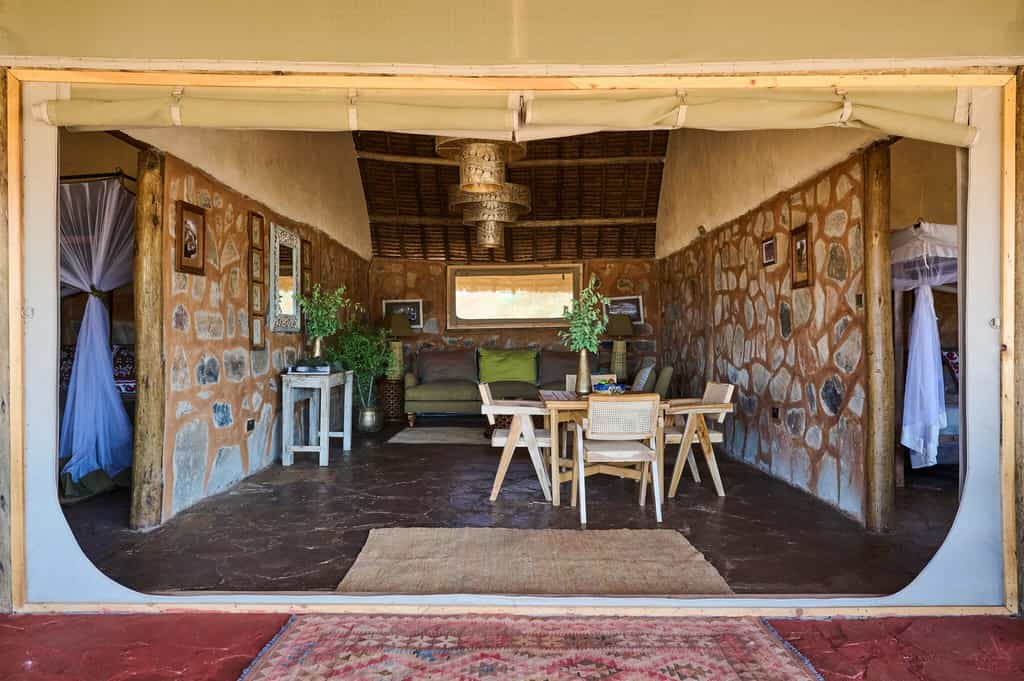
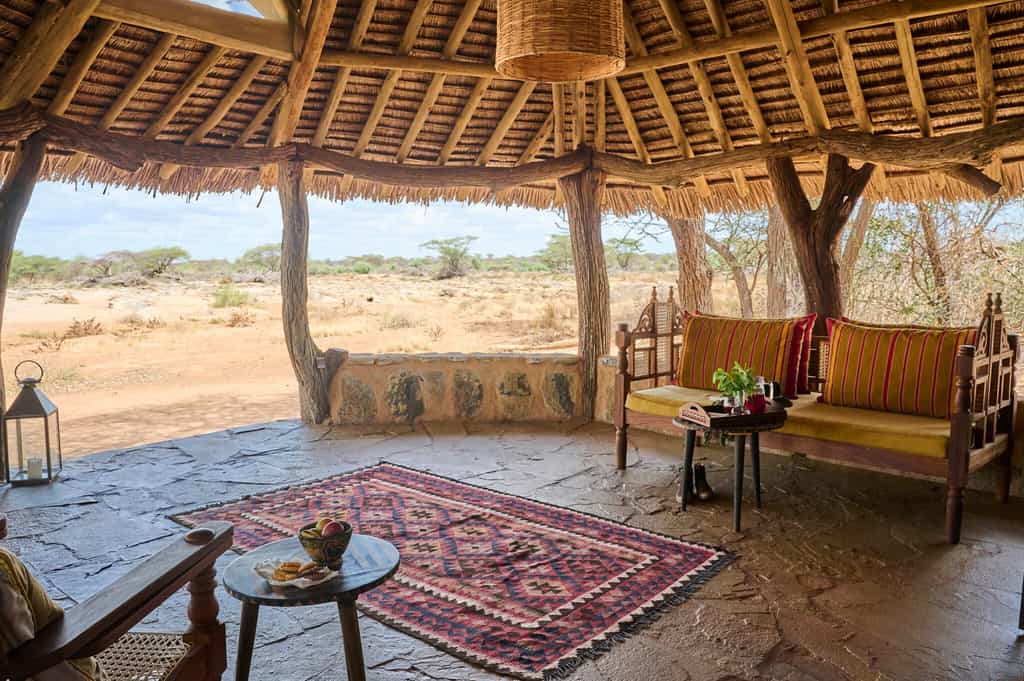
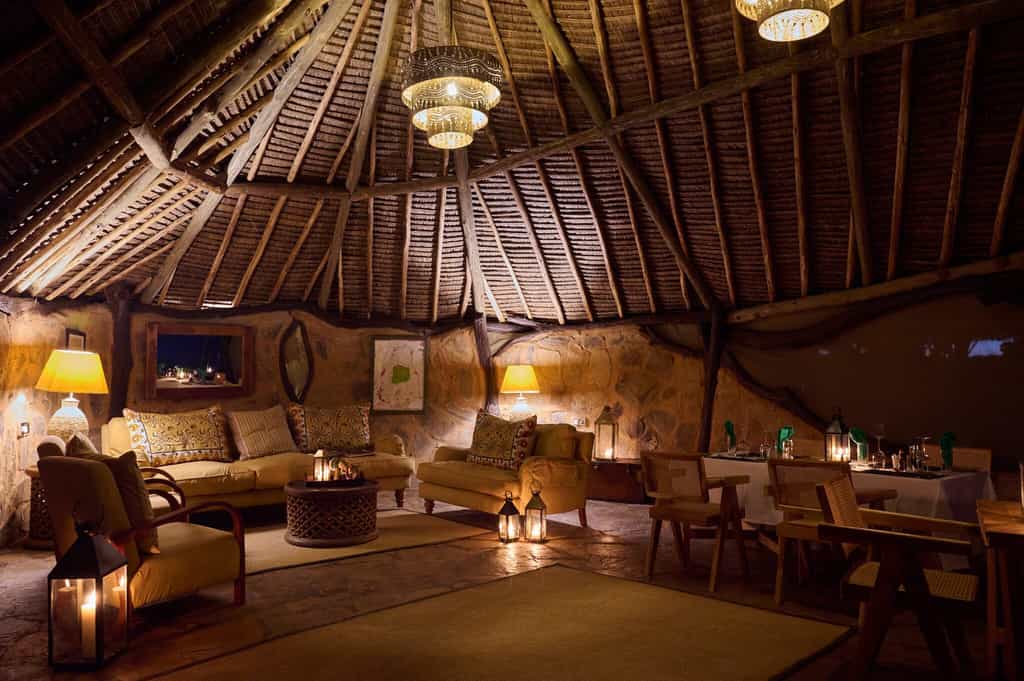
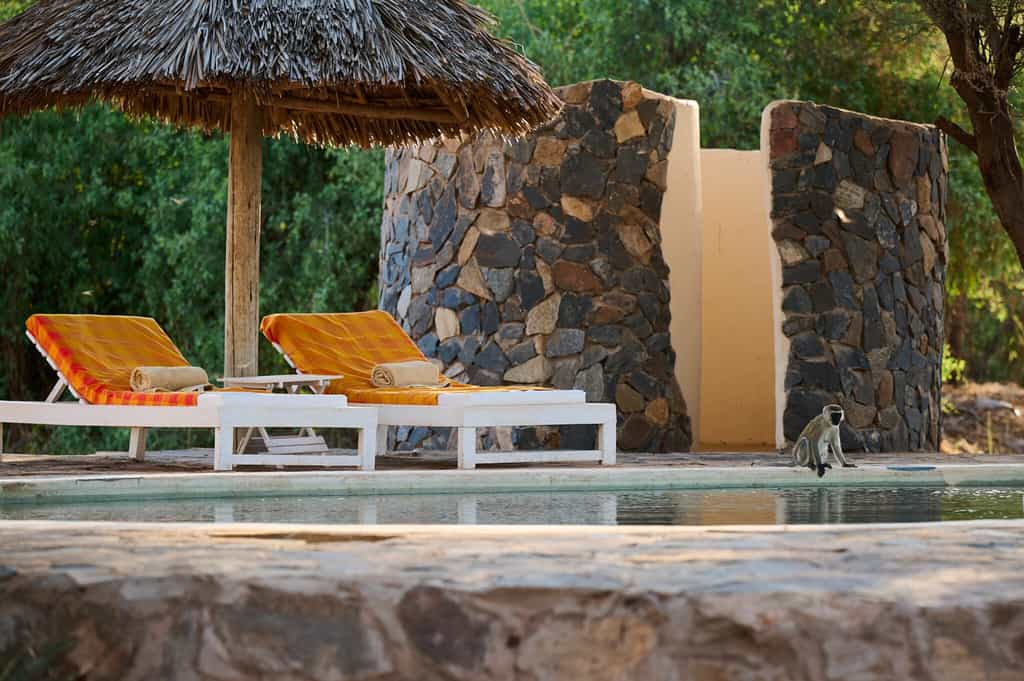
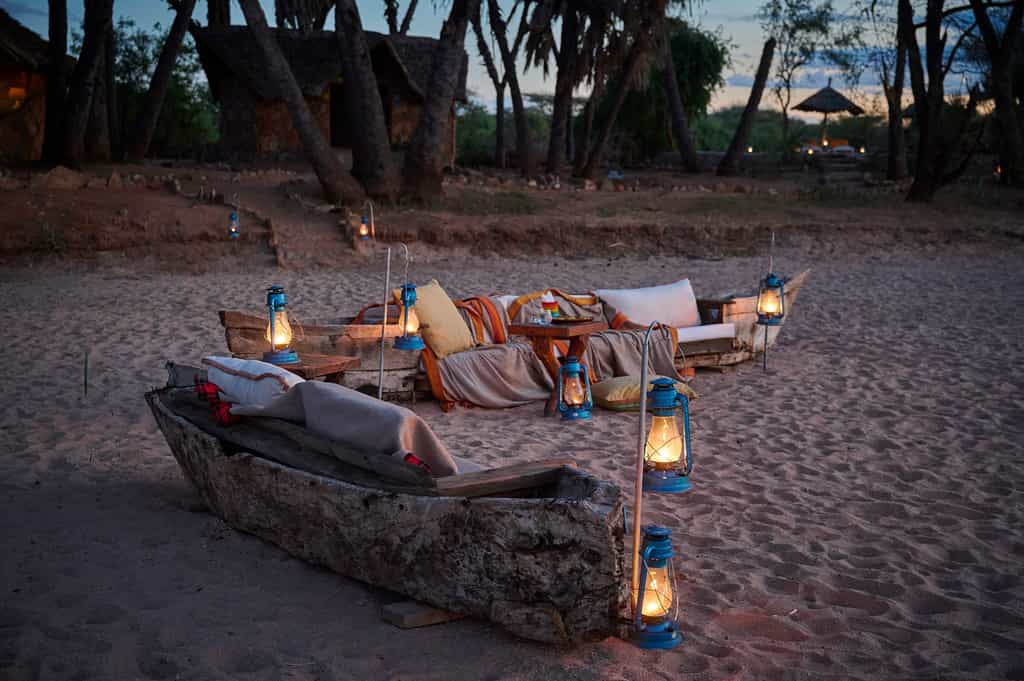
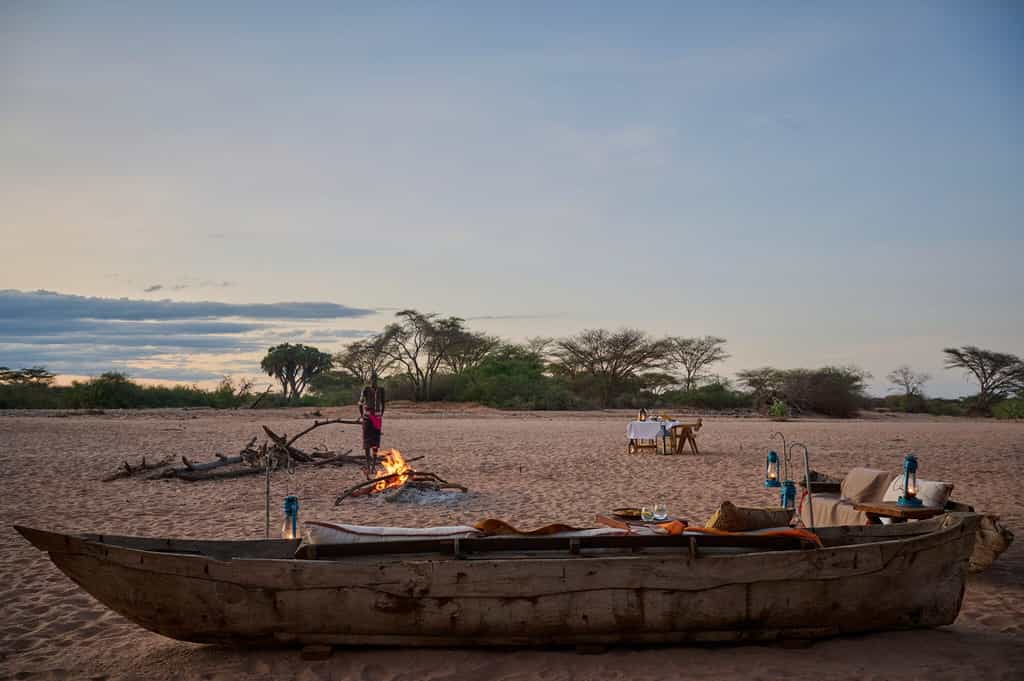
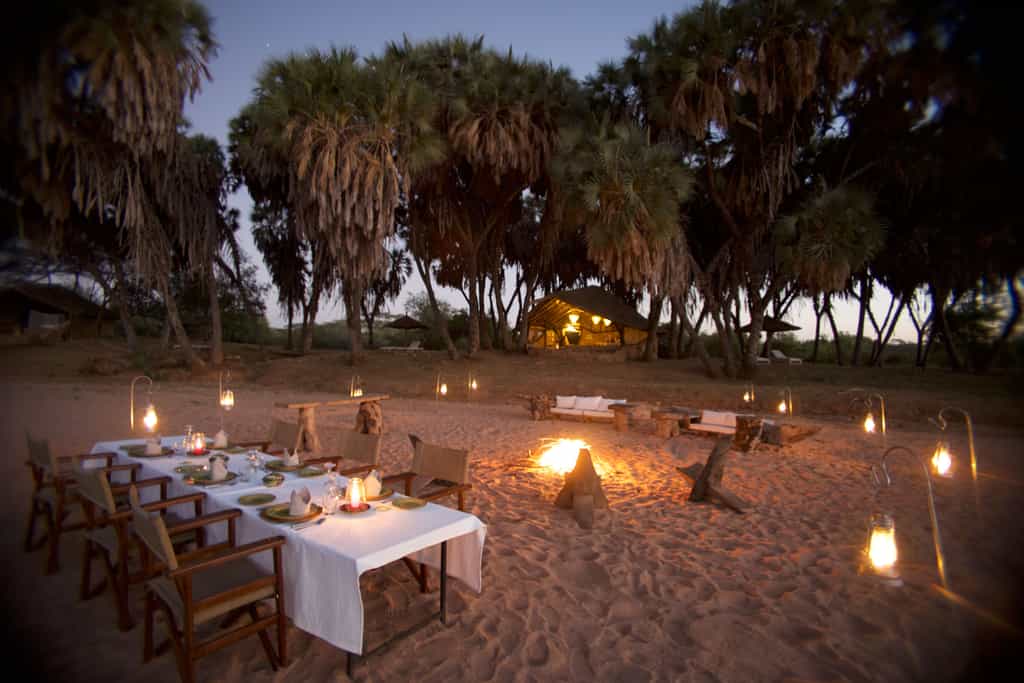
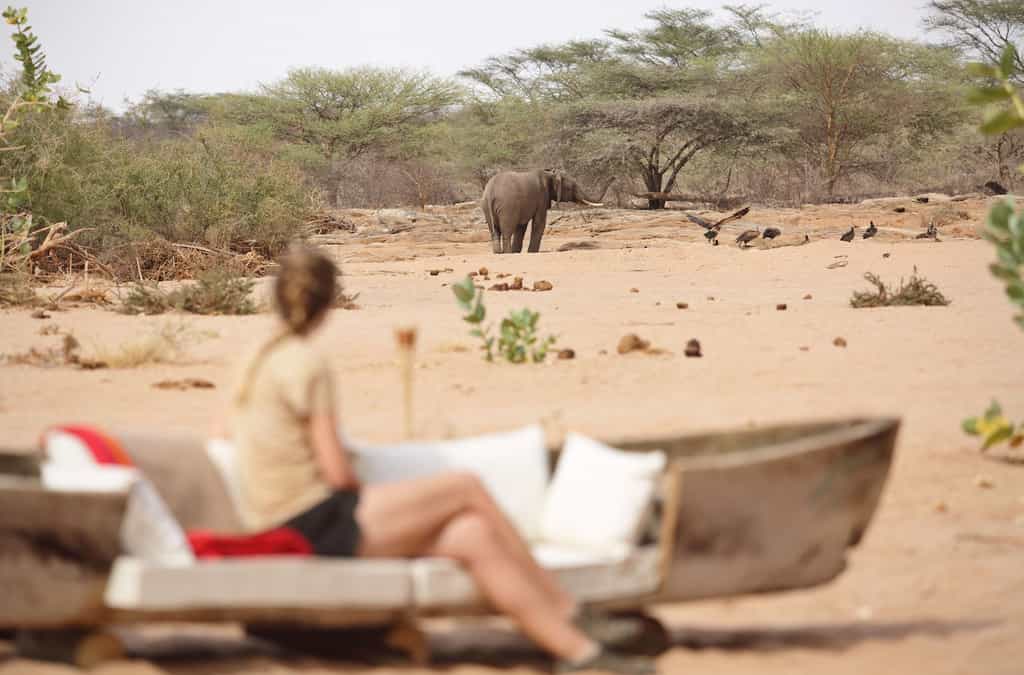
The three stone bandas are some of the finest we’ve seen in the bushcamp game. Sure, you won’t find every luxury but that’s not what it’s about. Architecturally, they’re a marvel. We love that they’re open-fronted (with canvas roll-downs for nighttime) and the river sand has been incorporated in the design of the viewing deck area. The quilted bedspreads on the king-size beds are a nice touch, so is the sofa in a boat that’s alongside the sun loungers on the dry river bank.
Start with a recommended trip or create one from scratch
Saruni Rhino Camp can be booked with Timbuktu as part of a tailor-made Kenya trip, rather than as a standalone room reservation. Start online, customising one of our recommended Kenya trips featuring Saruni Rhino Camp or get advice and suggestions from one of our Kenya specialists who will design the trip around your dates, check availability and handle every booking for you.
Stays at Saruni Rhino Camp start from around $550, or US$550, per person per night as part of a tailor-made trip. The exact price depends on your travel dates, room type and the shape of the rest of your itinerary. A Timbuktu travel specialist can give you an accurate quote for your dates.
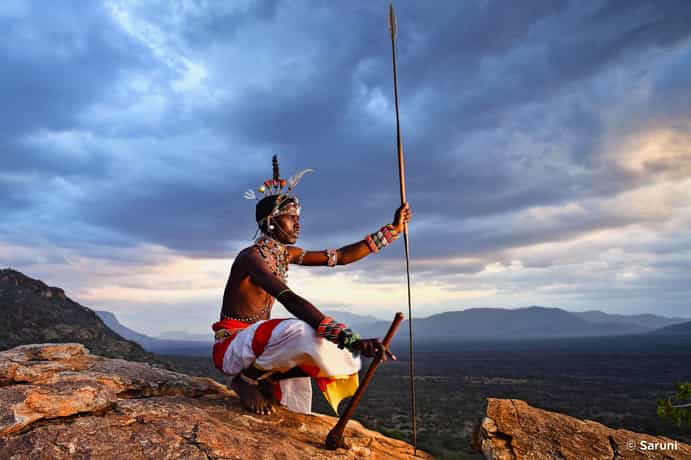
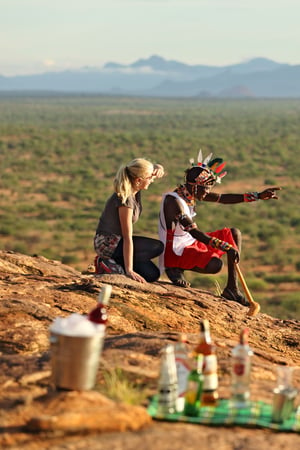
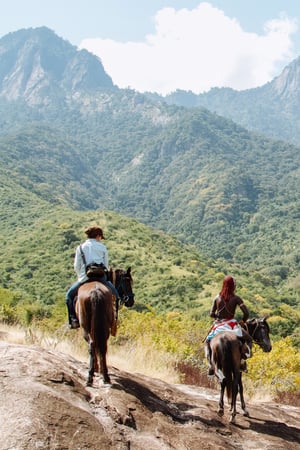
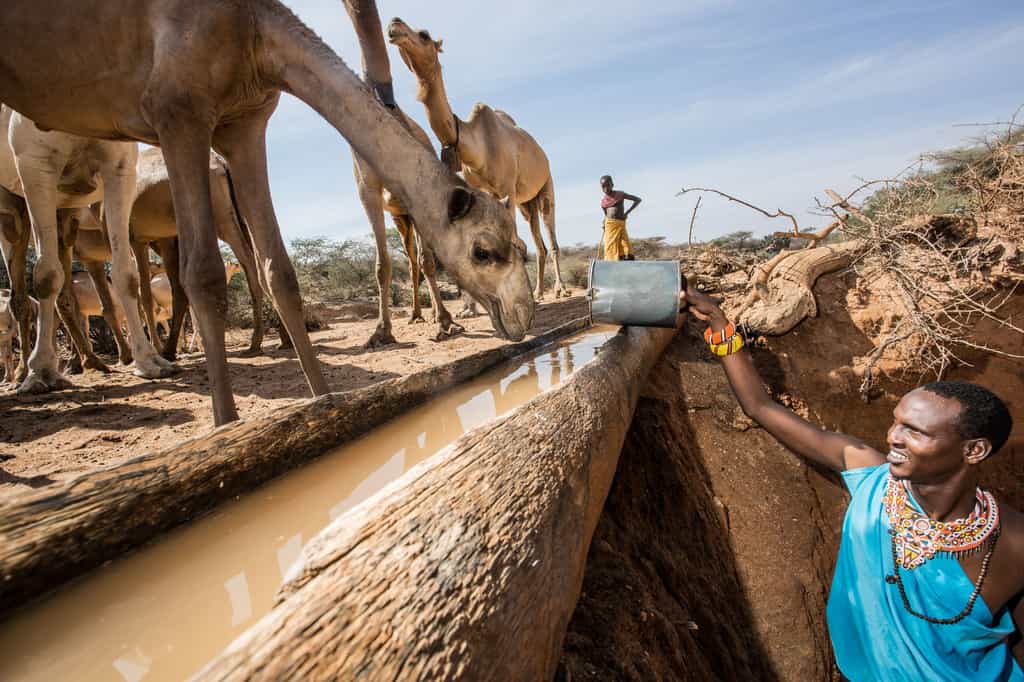
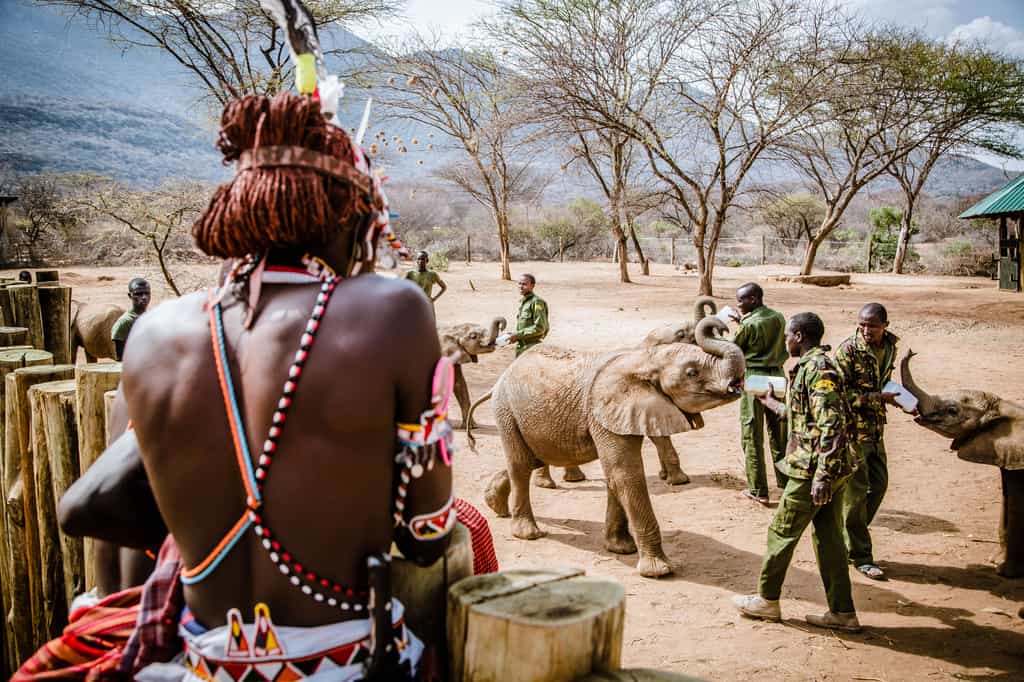
Discover the culture of the Samburu and traverse dramatic desert terrain on horse- and camel-back.


/37.43042,1.03421,6/600x400?access_token=pk.eyJ1IjoidGltYnVrdHV0cmF2ZWwiLCJhIjoiY2poMGw1eHpkMmRkbDJ6bW8xYWZ5OGpjYyJ9.PYvAO7lUJ40SOpGvwmQLqw&attribution=false&logo=false)