/138.43329362435213,36.73449665349938,3/600x400?access_token=pk.eyJ1IjoidGltYnVrdHV0cmF2ZWwiLCJhIjoiY2poMGw1eHpkMmRkbDJ6bW8xYWZ5OGpjYyJ9.PYvAO7lUJ40SOpGvwmQLqw&attribution=false&logo=false)
Akan Tsuruga Bessou Hinanoza
Best Hotels In Japan
Unparalleled hospitality from high-rise suites to charming ryokans
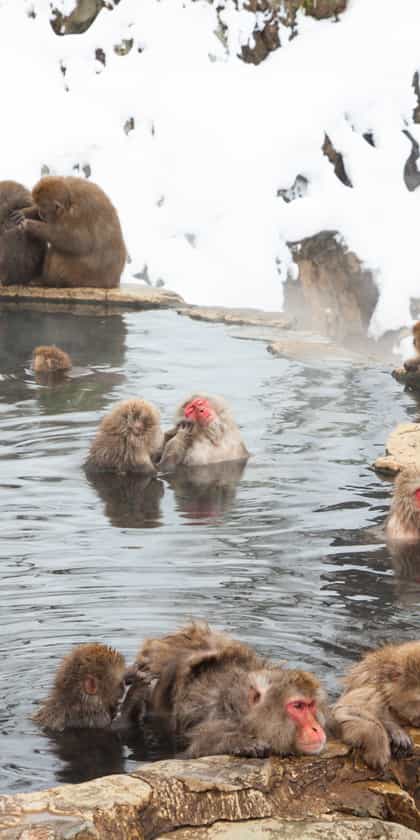

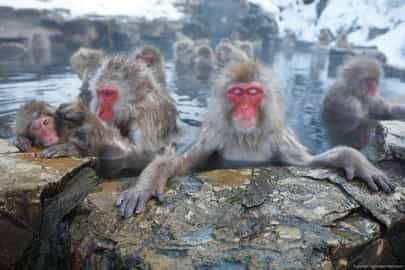
Tucked into the foothills of the Japanese Alps, Yudanaka and its neighbour Shibu Onsen have drawn pilgrims, poets and weary samurai to their therapeutic waters for over 1,300 years. The haiku master Issa Kobayashi was so taken with the place he was given a house here – and you'll understand why on a wander through the lantern-lit streets as steam curls from the doorways. At your ryokan, you’ll be handed a brass key that unlocks the town's nine public soto-yu, each with its own mineral composition and curative claims. Collect a red stamp at each bath and then climb the steps to Shibutaka Yakushi shrine for the final seal to fulfill a tradition locals believe wards off illness and brings long life. And to complete the scene, follow a forest trail to Jigokudan, where wild macaques have been soaking in volcanic pools since 1962 – quite possibly the only hot spring regulars more committed than the pilgrims.
<p class="rte-paragraph">Yudanaka Onsen has a long history as a hot spring resort, dating back hundreds of years. Although it has seen development in recent years, it still retains its traditional atmosphere. Right inside the station is the Kaede no Yu public bath, allowing visitors to start enjoying the area's hot spring water immediately upon arrival. There is a free footbath located just outside the station for travelers not quite ready to completely submerge in the water. Yudanaka is also well known for being the starting point for a visit to the Jigokudani Monkey Park, home to Japan’s famous Snow Monkeys, who bathe in the park's natural hot springs. Jigokudani literally means ‘hell’s valley’ due to the steam and boiling water that bubbles out of small crevices in the frozen ground, and it is in the baths of this boiling water that the resident Japanese Macaques like to soak in on. The monkeys live in large social groups, and it can be quite entertaining to watch their interactions. Accustomed to humans, they can be observed from very close and almost completely ignore their human guests.</p>
Wet Season
wet Season
Dry Season
Dry Season
Dry Season
Dry Season
Dry Season
Dry Season
Dry Season
Dry Season
Dry Season
Wet Season
11 Condé Nast Traveler Top Travel Specialists 2025

No. 1 & No. 2 Tour Operator in Travel + Leisure's Best Awards 2024 & 2025

Best Booking Platform in Women's Health Travel Awards 2025

Travel Specialist voted as Latin America A-List Travel Advisor 2025

"Timbuktu can take relatively complex and slightly amorphous travel plans and transform them into a well-organized, perfectly tailored trip."