Bologna Trips & Tours
Bologna
Bologna is what happens when a city is too busy being brilliant to bother being famous. Medieval towers, ancient porticoes and a food culture the rest of Italy defers to.
Bologna
Bologna is what happens when a city is too busy being brilliant to bother being famous. Medieval towers, ancient porticoes and a food culture the rest of Italy defers to.

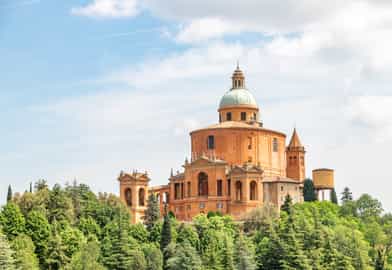
“Best-kept secret” is a cliché of the terrible travel brochure kind, but, maybe Bologna really is? The rust-red city is home to the oldest university in Europe, 21 medieval towers, the unfinished Basilica di San Petronio, bars serving espresso by day and Negroni by night and, at almost 60 kilometres long, the longest trail of arched porticoes in the world. There’s also an excellent Modern Art museum and fabulous views of the lush Apennine hills from the Asinelli Tower, but it’s in the kitchens that Bologna really comes alive. Here, ragù is folded through tagliatelle (and don’t call it bolognese!), tortellini are served in broth, and juicy mortadella is sliced thick and served alongside nutty Parmigiano Reggiano and boards of focaccia. Straight to Piazza Maggiore it is…
Get advice and suggestions to make this your perfect trip.
or call us on: +1 (646) 542 0667

Everyone from food connoisseurs to history buffs will find their bliss in Bologna. The city is the birthplace of tantalising dishes like tagliatelle al ragù and tortellini, which you can enjoy at a charming trattoria in the middle of Bologna's medieval heart.

Leave the sightseeing behind for a bit and head for the alleyways of Quadrilatero, Bologna's oldest market, where you'll find authentic, longstanding trades and savour some of the finest street food in Italy. You can even learn to make pasta as they have done for centuries.

Keep in mind that Bologna is a university city with students bustling about, so take your time to explore its quieter corners on foot or make like a local and hop on a bicycle.
Wet Season — a good time to visit
Tortellini in brodo season is in full force. Tiny hand-folded parcels floating in golden meat broth – and chilled weather to enjoy it in too.
Blood oranges and radicchio fill Mercato delle Erbe, ready to flavour drinks and dishes around the city.
Corno alle Scale opens for skiing. Just an hour's drive south, it’s a little-known Apennine ski option on Bologna's doorstep.
Wet Season — a good time to visit
Bologna’s snowiest month, enjoy an excellent quiet moment in the food capital with little competition at the mortadella counter.
Carnevale season peaks across Emilia-Romagna and Cento's carnival (twinned with Rio) is a short drive north – it’s one of Italy's most spirited.
Bollito misto, tortellini in brodo, ragù…The rich, slow-cooked dishes Bolognese kitchens do best in the cold are front and centre.
Wet Season — a good time to visit
The first signs of spring may appear including Colli Bolognesi vineyards in shades of green again. Wineries reopen to visitors without the summer heat or autumn harvest crowds.
Enjoy good walking weather under the porticoes – Bologna's 62km of covered arcades are UNESCO-recognised, and unique in Europe for both scale and beauty.
Hiking opens again in the Parco dei Gessi Bolognesi – think chalky outcrops, wildflowers and weather a few degrees warmer than the damp city centre.
Dry Season — one of the best times to visit
Enjoy sunny days sitting around 18-20°C, wisteria draped on courtyard walls, and piazzas fully alive again after winter.
The Portico walk up to the Sanctuary of San Luca is properly lovely – 3.8km of 666 arches climbing out of the city through emerging greenery.
Spring produce is in full swing including asparagus, artichokes, wild garlic, and the first strawberries. Tortelloni fillings turn lighter and herbier.
Dry Season — one of the best times to visit
Enjoy idyllic hiking weather. The Via degli Dei historic trail from Bologna to Florence begins right at Piazza Maggiore, which is walkable end-to-end.
Rose gardens at Villa Ghigi and Giardini Margherita come into bloom, and the city's parks are at their most colourful.
Neighbourhood sagre (small food festivals) kick off across the Colli Bolognesi – weekend village affairs with Pignoletto and piadina.
Dry Season — a good time to visit
By mid-June, temperatures can reach up to 30°C with sticky Po Valley humidity setting in. The porticoes suddenly earn their shade again.
In late June, enjoy Il Cinema Ritrovato when restored masterpieces are screened nightly in Piazza Maggiore under stars.
Vines flower across the Colli Bolognesi while Zola Jazz & Wine brings live music into the vineyards on warm summer evenings.
Dry Season — a good time to visit
The humidity is heavy in July but this also means rain is rare, while the hills south of the city become a sensible afternoon escape.
Piazza Maggiore's nightly free film screenings make a fantastic evening activity – thousands gather on the warm stone after sunset.
Heirloom and local tomatoes come in properly so Bolognese ragù and tagliatelle al pomodoro hit their summer best.
Dry Season — a quieter time to visit
August is Bologna’s hottest month and many locals disappear for Ferragosto (vacation) on the 15th so the city feels rather deserted.
The open-air cinema in Piazza Maggiore continues through mid-August, still one of the best activities for balmy evenings.
Find a cooler refuge in the Apennines, just an hour south where hill villages like Savigno and Monteveglio are around 5-8°C cooler and blissfully peaceful.
Dry Season — one of the best times to visit
The summer heat starts to subside, and the city’s energy returns with the university students but crowds decrease.
Grape harvest begins across the Colli Bolognesi with Pignoletto, Barbera, Merlot and Cabernet coming in. Wineries welcome visitors for the vendemmia.
Porcini mushrooms arrive from the Apennines, and trattoria menus shift into autumn territory with tagliatelle ai funghi and richer sauces.
Wet Season — one of the best times to visit
Undoubtedly the city’s most photogenic month, soft, golden light streams across the red brick porticoes.
Tartufesta in the Apennine villages begins in late October, exploding with markets, delicious white truffles and Lambrusco to match.
Pumpkin tortelloni (tortelloni di zucca) appear on menus – one of the city's finest autumn dishes, made with butter, sage and balsamic.
Wet Season — a good time to visit
Bologna’s wettest and most humid month, fog rolls into the Po Valley and rain is fairly common.
Cioccoshow fills Piazza XX Settembre with Italian chocolate artisans – a dense, happy mid-November distraction from the rain.
White truffle season hits its stride and Savigno's weekends are worth the 30-minute drive for seriously shaved tartufo bianco.
Bologna Jazz Festival runs from late-October through mid-November with a whole host of international acts across historic venues.
Wet Season — a good time to visit
The weather is rather chilly and grey, but Christmas lights stretch under the Two Towers and across Piazza Maggiore.
Panettone and pandoro season arrives – historic bakeries like Paolo Atti & Figli do their festive production especially well.
Corno alle Scale (a 1 hour drive away) offers the season's first ski days – a low-key Apennine weekend escape.


Why travel with Timbuktu?

We've been crafting one-of-a-kind journeys since 2014 — over 2,500 trips across 40+ countries, each one built from scratch around your interests and dreams.

Our team only recommends places they've slept in, eaten in, and happily keep going back to. Condé Nast Traveler named 11 of them Top Travel Specialists in 2026, and Travel+Leisure made three A-List Advisors.

Travel+Leisure's readers voted us the World's No.1 Tour Operator in 2024 and No.2 in 2025 — the travel industry's biggest readers' award, judged by people who actually travel.

$50 from every booking goes to female empowerment, tech education, and conservation projects across the countries we love. We have donated $78,000 so far – and it's going up!

Your travel specialist is with you the whole way, dreaming up the trip, building the itinerary, checking you in, and answering the 2am question from the other side of the world..

We are rated 4.9 out of 5 from 997 verified Feefo reviews. And these are the words of people who actually went, not us talking about ourselves.
11 Condé Nast Traveler Top Travel Specialists 2026

No. 1 & No. 2 Tour Operator in Travel + Leisure's Best Awards 2024 & 2025

Best Booking Platform in Women's Health Travel Awards 2025

Travel Specialist voted as Latin America A-List Travel Advisor 2025

"Timbuktu can take relatively complex and slightly amorphous travel plans and transform them into a well-organized, perfectly tailored trip."











.jpg)
,url-https%3A%2F%2Fassets.waybird.com%2Fcdn-cgi%2Fimage%2Fwidth%3D12%2Cformat%3Dauto%2Fhttps%3A%2F%2Fassets.waybird.com%2Fimages%2Fmap%2Fpin-primary-outlined.png(11.714830595549063,44.593064131610184),url-https%3A%2F%2Fassets.waybird.com%2Fcdn-cgi%2Fimage%2Fwidth%3D12%2Cformat%3Dauto%2Fhttps%3A%2F%2Fassets.waybird.com%2Fimages%2Fmap%2Fpin-primary-outlined.png(12.088365720991577,44.53044254666877),url-https%3A%2F%2Fassets.waybird.com%2Fcdn-cgi%2Fimage%2Fwidth%3D12%2Cformat%3Dauto%2Fhttps%3A%2F%2Fassets.waybird.com%2Fimages%2Fmap%2Fpin-primary-outlined.png(11.780748558862442,44.49910647822683),url-https%3A%2F%2Fassets.waybird.com%2Fcdn-cgi%2Fimage%2Fwidth%3D12%2Cformat%3Dauto%2Fhttps%3A%2F%2Fassets.waybird.com%2Fimages%2Fmap%2Fpin-primary-outlined.png(12.044420412115986,44.483432125146315),url-https%3A%2F%2Fassets.waybird.com%2Fcdn-cgi%2Fimage%2Fwidth%3D12%2Cformat%3Dauto%2Fhttps%3A%2F%2Fassets.waybird.com%2Fimages%2Fmap%2Fpin-primary-outlined.png(11.912584485489216,44.49910647822683)/auto/600x400?access_token=pk.eyJ1IjoidGltYnVrdHV0cmF2ZWwiLCJhIjoiY2poMGw1eHpkMmRkbDJ6bW8xYWZ5OGpjYyJ9.PYvAO7lUJ40SOpGvwmQLqw&attribution=false&logo=false)