
We're one of the World's Best Tour Operators!
Named three years running in Travel+Leisure World's Best, including No.1 in 2024
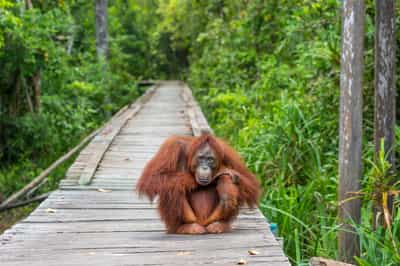
Kalimantan, or Indonesian Borneo, represents nearly 30% of Indonesia’s land area yet only 6% of the population lives here. It attracts even fewer international visitors and you could travel for weeks without seeing another foreigner. In the absence of people you’ll find vast swathes of remote, impenetrable jungle and tangled mangroves, and in place of highways and cars, snaking rivers and traditional klotok boats. The human dimension to all this wilderness is the Dayak villages that line the river’s edge. The Dayak people are former head-hunting tribes who live off the forest and over 50 different groups speak different languages. Kalimantan is, however, most famous for the endangered rust-furred orangutan of Tanjung Puting National Park and gliding along the river, watching them swing between the trees – and spotting proboscis monkeys too – is a wild and powerful experience.
With all its luscious rainforest and tropical swamps, Tanjung Puting National Park in south Kalimantan (Indonesian Borneo) is about as wild as wild can be. It is best known as a conservation haven for the Bornean orangutan and is one of the last places on earth where these magnificent apes still thrive. A century ago, it was thought there were over 230,000 orangutans left in the wild; today, it’s estimated to be around 105,000 making them an endangered species. Most visitors will spend two nights on a liveaboard riverboat and drift along the meandering Sekonyer River to feeding stations and the iconic Camp Leakey, a rehabilitation centre for orangutans that offers the chance to see the apes in a semi-wild setting. Otherwise, trek through the jungle and look for them on foot alongside other species like proboscis monkeys, gibbons and clouded leopards. If you would like to hike, consider visiting from July to September when it’s usually dry with consistent temperatures.


Namibrand, Namibia