
We're one of the World's Best Tour Operators!
Named three years running in Travel+Leisure World's Best, including No.1 in 2024
The heartland of Indonesia and its most densely-populated island, Java overflows with vibrant cities (including the capital, Jakarta) and a beautiful history. Urban centres are balanced with pretty terraced rice paddies, the towering Mount Bromo volcano, and ancient temples that are reminiscent of past kingdoms, including Borobudur, the largest Buddhist temple in the world. In Yogyakarta, artists, batik painters, puppeteers and dancers meet, whilst East Java offers blissed-out beaches and verdant landscapes that force you to slow down and take a moment to recalibrate. With this blend of cultural heritage, a thriving modern side and sensuous scenery, Java really is Indonesia in a nutshell.
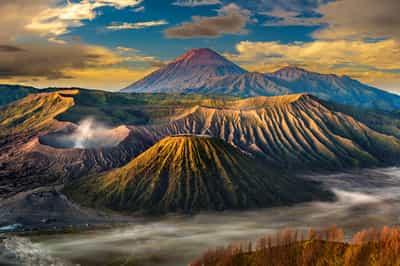
Ethereal and stunningly beautiful, the lunar-like landscapes of Bromo Tengger Semeru National Park aren’t known as one of Indonesia’s most spectacular sights for nothing. An amazing five volcanoes lurch out of the ancient Tengger caldera, a 10-kilometre erg (sand sea) of volcanic ash and sand that can be explored on jeep tours and sandboarding expeditions. Mount Semeru is the highest volcano – and one of the most active – but it’s Mount Bromo, the smallest, that most choose to climb. It’s an early start, but ascending at sunrise affords the best views as the first light of day paints the landscape below and illuminates the peak of Semeru in the distance. On the way up, you’ll come across indigenous Tenegger horseman and villagers clad in traditional clothes and going about daily life.
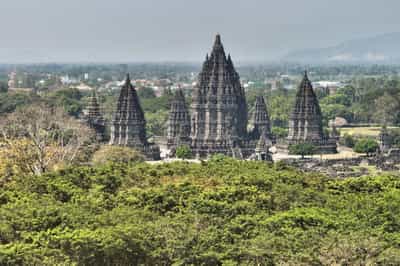
Situated in central Java, Yogyakarta – often referred to by locals as Jogja – positively hums with traditions, art, and history. An important education centre and a hub for classical Javenese art forms, it’s also the only Indonesian city that is still ruled by a monarchy and age-old customs merge with a bustling energy to create a unique and beguiling atmosphere. Visitors can delve into the royal history at the Kraton (palace) where sultans once reigned and cultural arts continue to thrive; catch a puppet show in the courtyard or a Javenese poetry reading in the pavilion. Outside the city walls, Borobudur is the gateway to the world's largest Buddhist temple complex. Decorated with 504 stone hewn Buddha statues in an intricate mandala pattern, it’s deeply soulful and a glimpse of times past. And before you leave, make sure to watch a performance of the Ramayana Ballet against a backdrop of the illuminated Prambanan Temple. Simply magical.
Indonesia's capital has everything you might expect from a sprawling metropolis: impressive skyscrapers, hooting motorbikes, shiny shopping malls and 10 million people of all ethnicities. It’s fast, furious and you’ll either love it or hate it, but don’t make up your mind just yet… There’s a fantastic jazz scene, a selection of brilliant art galleries, and plenty of high-rise hotels with glitzy roof terraces for evening drinks. When you’ve had enough of the modern, take a journey through Indonesia’s past starting at the National Museum of Indonesia. The building itself is modelled on a Greek temple and the airy courtyard is filled with priceless statues. Just across the road is the National Monument, a 132-metre high tower built to commemorate the country’s struggle for Independence and a short Uber ride away is Old Batavia, the city’s old town and a great spot for a coffee and a spot of people-watching. It’s this dynamic to and fro between the ancient and the uber-mod that gives Jakarta its unique character; and we love it!

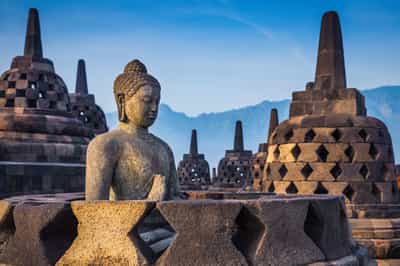
Most people find themselves in Magelang for one reason alone, and that’s to visit Borobadur, the largest Buddhist temple in the world. A UNESCO World Heritage Site, it’s thought to have been built sometimes between AD 778 and AD 856, some 300 years before Angkor Watt and 200 years before Notre Dame. The enormous complex is in the shape of a mandala ( a geometric aid to meditation), hewn from two million blocks of stone, and arranged in spectacular, wedding-cake like tiers. It’s Indonesia’s most iconic sight and you’ll need at least half a day to explore fully – with a little time to battle the crowds, both domestic and international. If you have long enough, hike to the top of nearby Setumbu Hill at sunrise and watch as the magnificent complex is illuminated by the sun’s first rays.
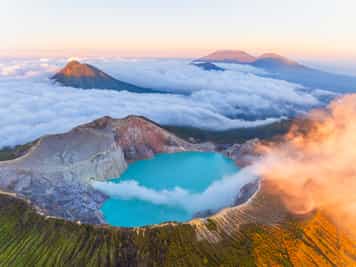
At 2,300-metres above the sea level at its highest point, the Ijen complex was formed around 300,000 years ago by earth-shuddering volcanic activities. The region is dominated by three volcanic cones – Ijen, Merapi and Raung – and surrounded by yellow rocks, thickly-forested alpine areas and a few hardy coffee plantations and villages. But the plateau’s most extraordinary sight is the vibrant turquoise crater lake that appeared after Ijen’s last eruption in 1999. In the early hours of the morning, blue ‘flames’ can be seen jumping from the lake and by noon, the turquoise colour intensifies to a jewel-like shimmer that makes for stunning photographs. The highly acidic conditions are also ideal for sulphur to form and, as dawn breaks, Ijen’s ‘sulphur miners’ drag their empty sleds to the top to start mining from the crater walls. It’s a gruelling process and humbling to watch.
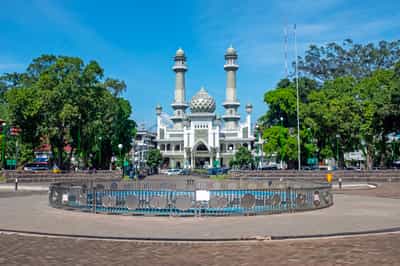
Pretty, green and with a very attractive climate, the town of Malang was established in the late 18th century by coffee-growing Dutch plantation owners as a place to retire to when the steamy lowland temperatures became too much. Surrounded by volcanoes, it’s one of the most beautifully situated cities in Java and the remnants of the elegant Dutch architecture and colonial villas only add to the charming atmosphere. Wander the streets of the old Dutch Quarter and look out for the cathedral, school, and hotel (and the Chinese temple!), or cycle to the traditional bird and flower markets. Outside the town, enjoy the countryside with visits to tea plantations, apple- and flower-picking in the town of Batu on the slopes of Mount Welirang and Mount Arjuna, or discovering hidden temples from ancient kingdoms. Malang is also a base climbs up Mount Bromo, famous for its stunning sun rises and beautiful surroundings.


Namibrand, Namibia