Travel and Leaisure Worlds Best Awards for number 1 tour operator in the world 2024 and number 2 tour operator in the world 2025
We're one of the World's Best Tour Operators!
Voted No.1 in 2024 and No.2 in 2025 by Travel+Leisure
Experiences

What to do in Liuwa Plain

Go on a birding safari in Liuwa Plain

With some 334 species recorded (and counting), birding in Liuwa is a real treat.
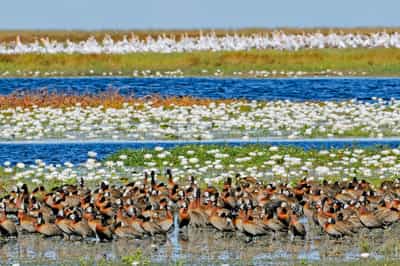
The birdlife in Liuwa is extraordinary, and it’s not unusual to spend hours at a single waterhole, simply watching the avian comings and goings. Depending on the time of year, expect to see hundreds of pelican, wattled or crowned crane, geese and smaller waterbirds. Other "specials" include pink-billed and clapper larks and white-cheeked bee-eaters, and the park is also home to grey crowned cranes, recently classified as Endangered due to population decline. Keep cameras ready for the raptors too, including bateleur and martial eagles and greater kestrel.

Game drives in Liuwa Plains

Discover the hidden corners and unique wildlife of Zambia’s most remote park.
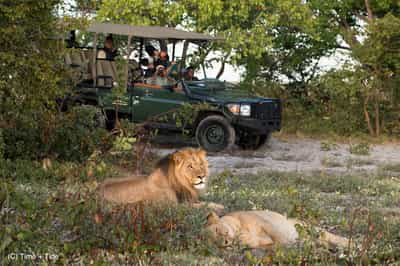
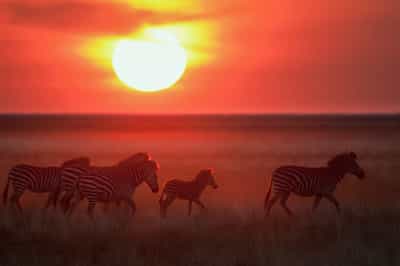
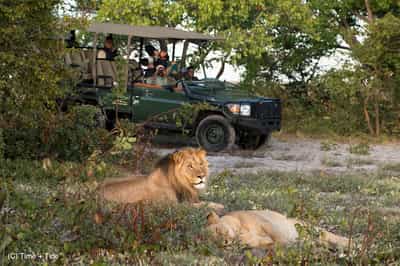
The honey-coloured grasslands of Liuwa Plains are vast, and undoubtedly best explored by vehicle under the wing of a seasoned guide. As happens at most Zambian camps, you’ll head out on drives twice a day, one early in the morning and one in the afternoon. As you traverse the land, keep your eyes peeled for the ever-present predators including lion, cheetah, leopard and the famous packs of 50-plus hunting hyena. And don’t forget the blue wildebeest, zebra, red lechwe, eland and tsessebe either….

Walking safaris in Liuwa Plains

Explore on foot to immerse yourself totally in this beautiful wilderness.
Zambia is home of the walking safari, and exploring Liuwa Plains on foot will certainly not disappoint. Wander along glittering streams, through shady patches of forest and across the vast plains as the sun pops its head above the horizon. A walking safari here isn’t so much about chasing animals, but about enjoying your surroundings, taking it slow and simply "being" in nature.

Wildebeest migration in Liuwa Plains

Witness the second-largest wildebeest migration on the continent.
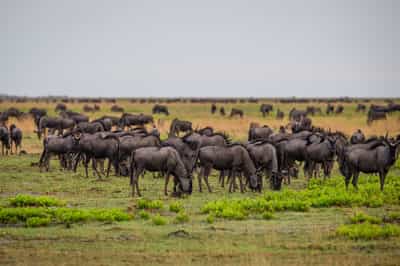
It’s not termed the "Small Serengeti" for nothing – Liuwa Plains does in fact host the second-largest Great Migration on the continent, when the wilderness throngs with between 40,000 and 50,000 harrumphing blue wildebeest. Combined with the vast, china-blue skies and waving grasslands, you could be excused for thinking you really were in the Serengeti, although perhaps a rather more wild and remote version, without the hordes of people.

Go on a canoe safari in Liuwa Plain

Paddle down the shallow rivers with wildlife all around you.
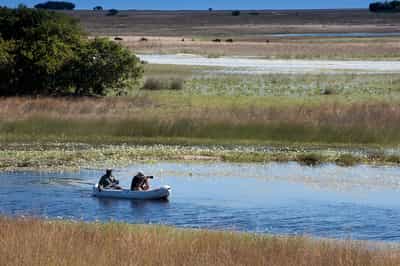
A special activity offered exclusively from King Lewanika Lodge (the first permanent safari camp in Liuwa Plains), canoeing in the rivers around the lodge is a real treat. Between late January and early April, the lands flood temporarily with water, producing pretty, reed-fringed rivers, just deep enough for canoeing. And when you’ve finished paddling, cool off with a refreshing dip – there’s not a hippo or a crocodile in sight.

Kuomboka Ceremony

Witness the spectacular ceremonial procession of the Lozi king
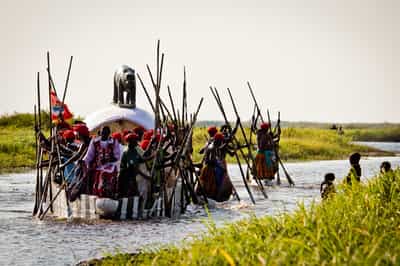
Literally meaning "to get out of water" in the Lozi language, the Kuomboka is the traditional ceremony held annually to mark the movement of the king to higher ground at the beginning of the rains. It’s a time of great celebration, and the ceremony is conducted to the pounding of drums, while the paddlers, resplendent in animal skins, dance and sing. For a chance to catch sight of the king’s barge, complete with a life-sized replica of an elephant (the king's symbol), book your safari for March/April. The ceremony is, however, dependent on the floods and dates cannot be guaranteed.

Tracking predators in Liuwa Plains

Join the local researchers in their crucial conservation of large carnivores.
A vast and highly productive wildlife area, Liuwa Plains is a crucial large-carnivore conservation area. Join the researchers of the Zambian Carnivore Programme (ZCP), a non-profit team dedicated to conserving large carnivores and the ecosystems they reside in, and spend the morning tracking wild dog, cheetah, hyena and lion. Learn about the behaviours of the different species, how the various prides and packs interact, and get some interesting insights into the fantastic work the team does.
Where To Go
Pin Icon

Namibrand, Namibia