
We're one of the World's Best Tour Operators!
Named three years running in Travel+Leisure World's Best, including No.1 in 2024
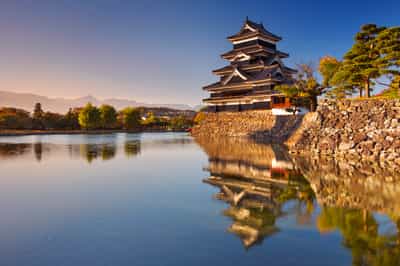
Ringed by the Japanese Alps and just 80 minutes from Tokyo by shinkansen, Nagano feels like a different Japan entirely. This is where soba-kiri was thought up, the 1,400-year-old Zenkoji Temple welcomes pilgrims into a pitch-black underground passage to touch the 'Key of Enlightenment', and macaques bathe in steaming onsen pools. The black-walled Matsumoto Castle – Japan's oldest surviving five-tiered tower – anchors a cultured city of craft storehouses and mineral springs, while up in Togakushi, soba restaurants serve noodles in five neat bundles on handmade bamboo trays, one for each sacred shrine in the forest above. Winter brings world-class skiing and spring sees cherry blossoms against castle backdrops. But in the end, Nagano's real draw is the depth that is behind every spectacle…
In years gone by, reaching Matsumoto required a perilous journey through mountainous terrain, which was as challenging as it was awe-inspiring. Now, this beauty spot in the heart of the Japanese Alps is readily accessible by train! Once a strategic stronghold in the Edo period, Matsumoto is brimming with history and fine architecture. The city's crown jewel, Matsumoto Castle — its striking black and white figure has earned it the nickname, Crow Castle — is one of Japan's original and most beautiful castles, providing a glimpse into the Age of the Samurai. Matsumoto buzzes with artistic energy, best seen in its museums and galleries, including the Matsumoto City Museum of Art. Gastronomes can savour local specialties like soba noodles and even learn to make them from scratch. Venture beyond the city to breathe in the fresh Alpine air, explore serene walking trails, and visit quaint towns nestled in the mountains.
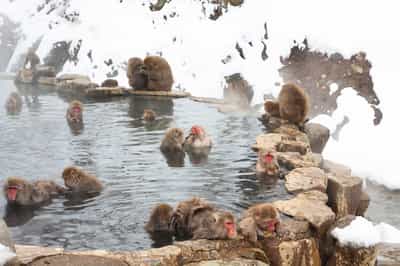
Tucked into the foothills of the Japanese Alps, Yudanaka and its neighbour Shibu Onsen have drawn pilgrims, poets and weary samurai to their therapeutic waters for over 1,300 years. The haiku master Issa Kobayashi was so taken with the place he was given a house here – and you'll understand why on a wander through the lantern-lit streets as steam curls from the doorways. At your ryokan, you’ll be handed a brass key that unlocks the town's nine public soto-yu, each with its own mineral composition and curative claims. Collect a red stamp at each bath and then climb the steps to Shibutaka Yakushi shrine for the final seal to fulfill a tradition locals believe wards off illness and brings long life. And to complete the scene, follow a forest trail to Jigokudan, where wild macaques have been soaking in volcanic pools since 1962 – quite possibly the only hot spring regulars more committed than the pilgrims.
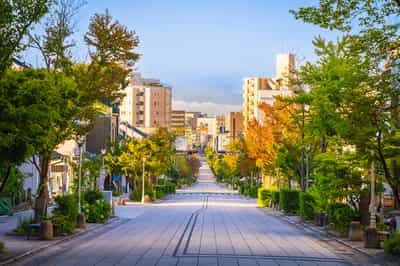
Nagano grew up around Zenkoji, a 1,400-year-old temple that houses Japan's first Buddhist statue – although nobody's actually seen it since the seventh century. Even the replica only comes out once every six or seven years, so what draws millions here isn't the viewing but the doing. And that doing is descending into a tunnel beneath the altar to find the 'Key to Paradise' by touch alone, or rising before dawn to kneel on the stone approach as the head priest passes, touching prayer beads to the foreheads of gathered worshippers. Stay overnight in one of 39 shukubo temple lodgings and you'll be woken for the o-asaji morning service, then served shojin ryori – the delicious vegetarian cuisine that once fuelled monks on mountain pilgrimages. Those monks were heading to Togakushi, a highland site where five shrines are connected by forest trail. The approach to Okusha (the innermost shrine) passes through an avenue of 400-year-old cedars, their trunks so vast they block out the sky. Afterwards, settle into a soba restaurant and watch your noodles arrive bocchi-mori style – five horseshoe bundles arranged on a handmade bamboo tray, one for each shrine in the forest above.


Namibrand, Namibia