Travel and Leaisure Worlds Best Awards for number 1 tour operator in the world 2024 and number 2 tour operator in the world 2025
We're one of the World's Best Tour Operators!
Voted No.1 in 2024 and No.2 in 2025 by Travel+Leisure
Experiences

What to do in Punakha

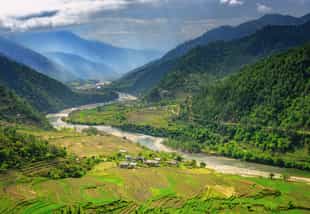
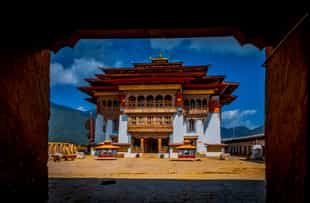
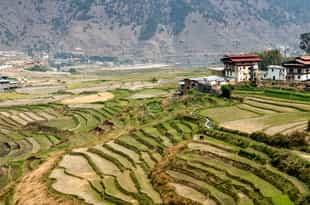
Ensconced by forested mountains, Punakha is as picturesque as they come. You can make the most of this setting on hikes, mountain bike rides and rafting expeditions down one of its beautiful rivers. Punakha also boasts one of the most auspicious dzongs (forts) in the country, which cuts a striking figure with its golden peaks. Depending on the time of year, a colourful and vibrant Tsechu (Mask Dance Festival) might be taking place.

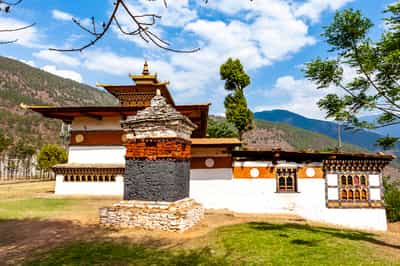
Make a pilgrimage to the Chimi Lhakhang temple

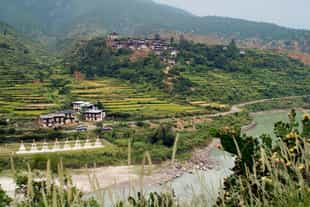
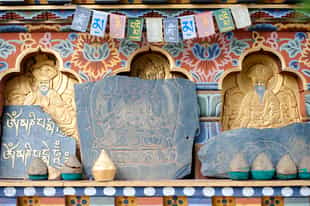
The Temple of the Divine Madman Located on a round hillock on the edge of the Punakha Valley, Chimi Lhakhang was built in 1499 by the 14th Drukpa hierarch, Ngawang Choegyel, after the site was blessed by ‘the Divine Madman’ the maverick saint, Drukpa Kunley. Famously known as the temple of fertility, the lhakhang draws local people, from near and far, to receive blessings from the lama (monk). The local people also bring their new-borns to be named here. The lhakhang is truly a revered and blessed space for many. Many childless couples make a devout pilgrimage to the lhakhang in the hope that they will be honoured with a wang, or a blessing from the lama. Woman entering the temple, who are hoping to conceive, are made to carry a wooden phallus around the temple three times. The lhakhang is about a 30-minute walk through fields from Sopsokha on the main road to Punakha.

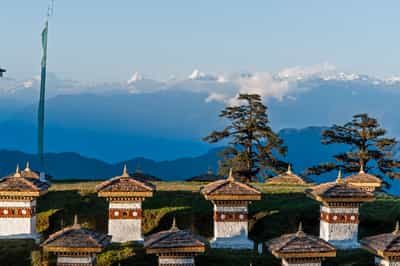
Visit the memorial chortens of Dochula Pass

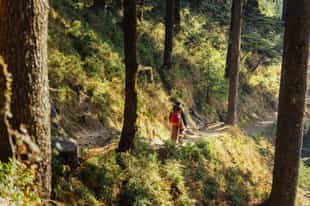
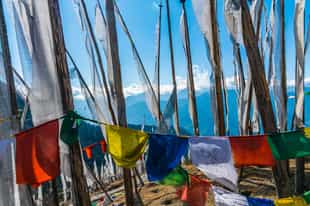
Dochu La is an incredible Bhutanese mountain pass peaking at 3 140 m (10 301 ft) above sea level. Boasting exceptional views of the snow-capped eastern Himalaya on clear days, the pass links the capital city of Thimphu and Punakha. Stop to see the Druk Wangyal Chortens, where 108 memorial stupas and chortens stand in honour of Bhutanese soldiers slain in the insurgency against Bodo militants from India. The Queen Mother, Ashi Dorji Wangmo Wangchuck, commissioned the shrine in 2003 after King Jigme Singye Wangchuck overcame the insurgents. From here you can opt to hike through beautiful forests down to the Lampelri Botanical Garden or for something more strenuous, hike up to the Lungchutse Temple through thick woodlands of broad hemlock trees. At the foot of the temple lies a rich bamboo underbrush and dense juniper shrubs flourishing against a backdrop of the Himalaya. One of Bhutan’s highest peaks, Gangkhar Puensum, and the world’s highest unclimbed mountain, can also be seen from here. Alternatively view the nearby monastery, Druk Wangyal Lhakhang, built in reverence of the king.

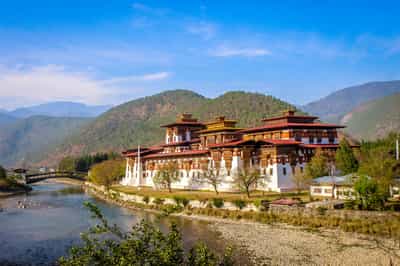
Walk within the walls of the ancient Punakha dzong

Constructed in 1637, the Punakha Dzong was the second fortress Dzong built in the country. Translated to mean ‘palace of great happiness or bliss’, its towering white walls form a beautiful contrast to the surrounding greens and blues. Celebrated as one of Bhutan’s oldest, largest and most striking fortified monasteries, the Punakha Dzong holds an important relic over which many wars were fought with the Tibetans. The Dzong holds a sacred place in the hearts of all Bhutanese. The first National Assembly was held here in 1953, as well as the royal wedding between King Jigme Khesar Namgyel Wangchuck and Queen Jetsun Pema in 2011. It is also the winter home of the central monastic body, and all of Bhutan’s kings are crowned here before they can take their throne in the capital city of Thimphu. Punakha Dzong’s magnificence is especially striking in the spring when the lilac-coloured jacaranda trees are in full bloom.

Hike to the Khamsum Yulley Namgyal Chorten

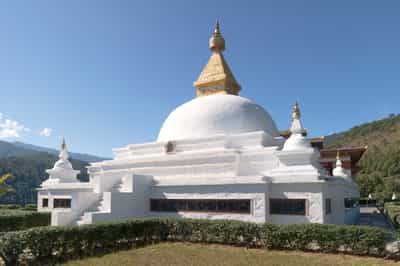
Walk to the three storey lhakhang, a recent addition to Bhutan‘s string of architecturally splendid buildings, which is located approximately 20-minutes from the Punakha suspension bridge. Built by Her Majesty the Queen Ashi Tshering Yangdon, the Khamsum Yuelley Namgyal Chorten houses representations of the tantric form of Buddhist deities that subjugate enemies and ward off harmful influences on the people of Bhutan. Built for the protection of the country and the present King, the chorten also offers impressive views of the valley below.

See the Sangchhen Dorji Lhendrup Lhakhang Nunnery

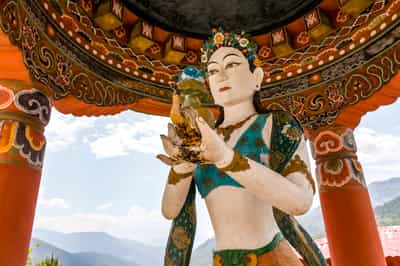
A sacred and revered space Balanced on a spur amongst pine trees, boasting breathtaking views of the Punakha Valley, gleams the magnificent structure of the Sangchhen Dorji Lhuendrup Lhakhang Nunnery. Steeped in tradition and culture, this temple houses a 4.2 m (14 ft) bronze statue of Avalokiteshvara, made by local Bhutanese artisans. Other sacred statues include those of The Buddha, Guru Rinpoche, Zhabdrung Ngawang Namgyel, Tsela Namsum, and the 21 Taras. Constructed as a Buddhist College, the temple complex houses 120 nuns and is a permanent school of higher learning and a meditation centre. Apart from religious training, the nunnery also provides vocational training such as tailoring, embroidery, statue making and thangka painting.

Participate in a traditional blessing ceremony

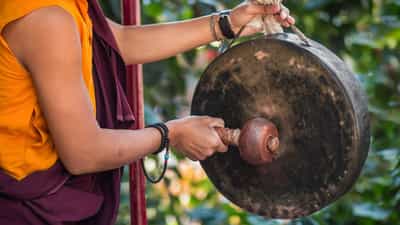
Become immersed in Bhutanese culture Take part in a traditional Tshewang (blessing) ceremony held by a Bhutanese monk in a temple or nunnery for personal empowerment and wish fulfilment. ‘Tse’ meaning ‘life’ and ‘wang’ being ‘blessing’, the ceremony is believed to bring about a long and healthy life. The prayer will be approximately 30-minutes, during which you can make an offering by lighting butter lamps at the monastery altar. Sit with the lama (monk) as he performs the mystical rituals and prayers, entering into a humbling and safe trance to the deep rumbling notes of his voice. The sacred ceremony gently ends with the monk giving his blessings and assisting in a private circuit of the holy shrine. Special occasions, such as weddings, dedications and engagements, can also be celebrated. Please speak to your preferred travel specialist.

Walk across the iconic Punakha suspension bridge

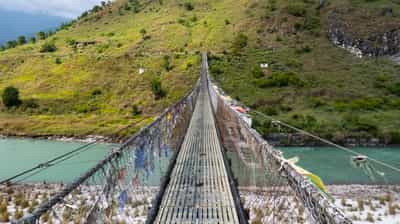
Bhutan’s longest suspension bridge of its kind Stretching across the majestic Pho Chu river, the Punakha suspension bridge is 180 m (590 ft) in length, making it one of the longest suspension bridges in the country. Strongly strengthened with iron chains and metal netting, this extraordinary bridge adorned in fluttering prayer flags, connects Punakha Dzong to the surrounding villages, and offers a great view of the glistening stream below. The Khamsum Yuelley Namgyal Chorten is located approximately 20-minutes from the bridge.

Learn about the ancient living culture of Bhutan

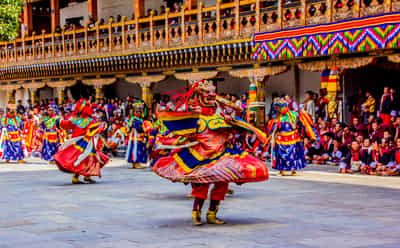
A colourful and exciting affair The Punakha Tshechu festival is one of Bhutan’s most popular celebrations. A colourful and exciting affair, a ‘tshechu’ includes a masked dance performances with great religious or historical importance. Typically taking place in February or March, the Punakha Tshechu festival follows the three days of the Drubchen Tshechu festival. Celebrated over several days, the Punakha Tshechu festival features an array of dances performed by monks in beautiful costumes and masks. The local people are kept entertained between dances by atsaras, clowns whose expressive masks and postures are an indispensable element in the festivities. They confront the monks, toss out salacious jokes, and distract the crowd with their antics whenever the religious dances begin to grow tedious, keeping the mood joyous. The Punakha Tshechu festival is one of the best ways to witness and experience the ancient living culture of Bhutan. The unfurling of the Thongdrol (a large silk painting) of Guru Rinpoche on the last day is a highlight of the festival for local communities. A true celebration of tradition and culture, Bhutan’s array of year-round festivals aim to bring local people together, from across the country, to share stories and pass on traditions. Tshechus are held in most valleys, at different times of the year, based on the Bhutanese lunar calendar. It is recommended to speak to your preferred travel specialist to confirm your travel dates coincide with the confirmed date of the festival you wish to attend.

Try your eye at Bhutan’s national sport in Punakha

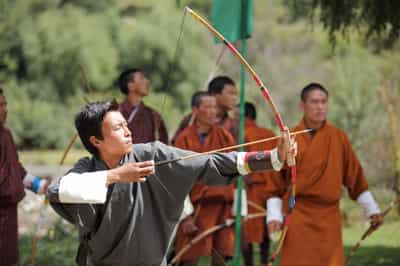
Try your eye at Bhutan’s national sport Archery is the national sport of Bhutan, and even more so, a nationwide obsession, and can be watched in any part of the country over the weekend. Enjoyed as a group activity, targets are typically set approximately 145 m (475 ft) from the archer, making for a fun experience suited for the whole family. Every village in Bhutan sports an archery field, and no festival or celebration is complete without a game. Traditional tournaments between villages are battles for honour, and include an array of feasts and prizes.

Trek to one of Bhutan’s largest lakes in Punakha

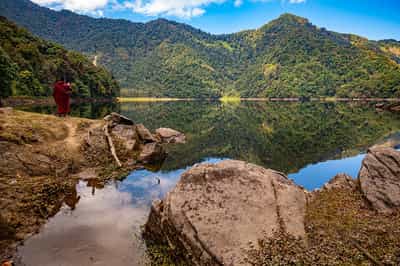
Trek to one of Bhutan’s largest lakes Sitting at an elevation of 2 130 m (6 988 ft) above sea level, Hokatsho Lake is approximately 9 km (5.5 mi) from Punakha Valley. Drive through bustling villages before reaching the 15th century temple, Chorten Nyeabu. This is where the hike (approximately two to three hours) to Hokatsho Lake begins. From here, the path follows a man-made irrigation channel almost all the way to the beautiful lake tucked between dense jungle vegetation. As you proceed upwards, the jungle around you comes to life with the sounds of insects and birds. Upon reaching the lake, a small path leads down to the water, offering magnificent views of the peaceful and untouched surrounds. Legend has it, the Hokatsho Lake never overflows owing to the continuous drainage through an opening believed to have been created by the lake’s deity. The opening was formed after a demon threatened to flood the area. ‘Hokatsho’ directly translates to “lake with a hole or opening”.

Spot the native and migratory birds of Punakha

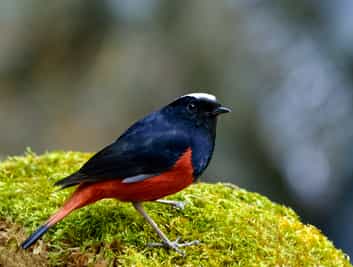
An avid birdwatchers paradise The last remaining great Himalaya kingdom of Bhutan boasts magnificent mountain scenery, exceptional architecture and colourful culture. Recognised as one of the world’s few carbon-negative countries, with almost 70% of Bhutan covered in dense forest, the country features a staggering variety of landscapes, as well as an incredible array of flora and fauna. Not forgetting about the country’s prolific bird life. Ideal for first-time or serious birders, Punakha’s unique landscape of mountains, hills, rivers and forests offers the perfect landscape to search for native and migratory species in the area. At times, bird calls might lead you to sightings of the common kestrel, Pallas’s fish eagle, crested kingfisher, white-bellied heron, chestnut-headed tesia, slender-billed oriole, plumbeous water redstart, and white-capped redstart, to name a few.

Cycle off-road for adventure in Punakha

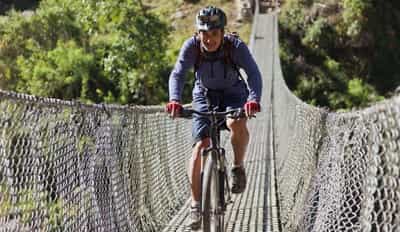
Cycle off-road for an exhilarating adventure Immerse yourself exploring Punakha Valley’s sacred, forested landscapes off-road, on two wheels. Ideal for beginners to experienced riders, there are an array of mountain bike routes to choose from. With a selection of easy-going, non-technical single tracks as well as a wide mix of extreme, adrenaline-pumping off-road trails, mountain-bike riders of all levels are welcome.

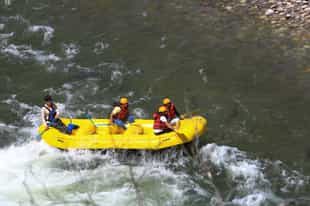
Navigate rapids on the Pho Chu river from Punakha

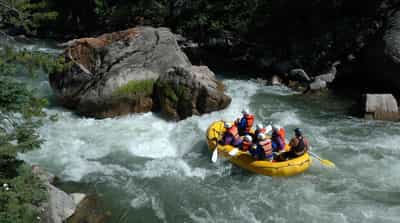
Navigate rapids on this exhilarating adventure The Pho Chu river, which translates to ‘male’ or ‘father’ river, is fed by glaciers in the Lunana region. Its 16 km (9.9 mi) course is loaded with 15 different rapids, ranging from class 2 to 4, making it a favourite amongst thrill-seeking adventurers. The Mo Chu river, which translates to ‘female’ or ‘mother’ river, originates from the northern hills of Laya and Lingzhi. Although calmer than its counterpart, the Mo Chu too offers an exciting rafting opportunity for those trying out the sport for the first time. Covering 10 km (6.2 mi) with 10 rapids graded class 2, this gentle journey is perfect for the whole family. At the confluence between Pho and Mo Chu lies the Punakha Dzong, and thereafter the main river is known as the Punatsang Chu river. On your rafting journey you will witness breathtaking views of sub-tropical scenery, plus secluded stretches of serene sparkling water.
Where To Go
Pin Icon

Namibrand, Namibia