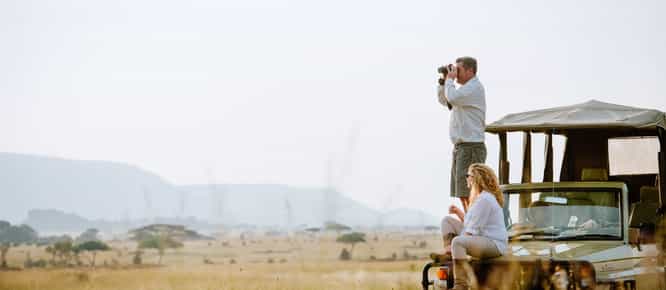
Discover Southern Tanzania’s Safari Secrets Off the Beaten Path
Planning a safari to Tanzania? Fantastic choice! While everyone talks about the Great Migration in the north (and believe us, it’s spectacular), we want to let you in on a place that holds a special spot in our hearts: the incredible south. You’ll find a different kind of magic here – wilder, more remote, and deeply authentic. Here are our safari secrets when it comes to going on a Southern Tanzania safari.
Northern versus Southern Tanzania safari
Western and Southern Tanzania safaris are often overlooked, when it comes to planning a safari holiday in East Africa. But if you’re not dead set on having to see the Great Migration, we wholeheartedly believe that Southern Tanzania safaris offer top-notch off the beaten track wildlife experiences.
And we’re willing to prove it too, without detracting from the inspirational experiences you’ll encounter in the world-famous Serengeti, along the banks of Lake Manyara, or within Ngorongoro Crater.
Needless to say, it’s simple to combine a safari along the Northern and Southern Tanzania circuits thanks to regular scheduled flights between Dar es Salaam, all of Tanzania’s national parks, and the Swahili Coast.
If you’re still undecided though, check out our detailed guide to the best national parks in Tanzania.
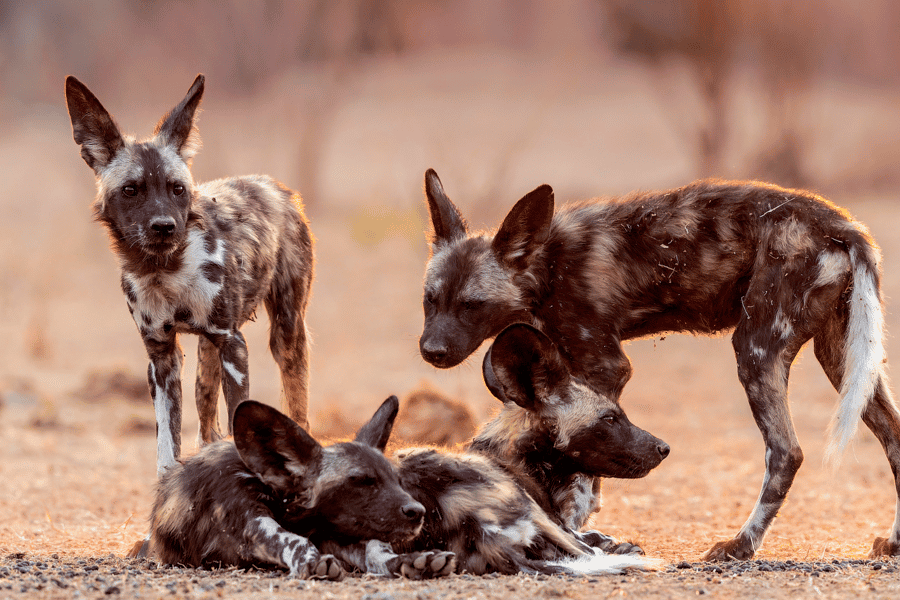
Spot wild dogs on safari in Southern Tanzania
Why we love Southern Tanzania safaris
- This is where you’ll find Africa’s oldest conservation area – formerly known as Selous Game Reserve, it’s now also made up of Nyerere National Park.
- On a Southern Tanzania safari, you’ll see wildlife species not found elsewhere in the country, like the Puku antelope in Katavi National Park, and a greater chance of seeing sable and greater kudu, as well as a whole host of unique bird species.
- Selous Game Reserve and Nyerere National Park are home to the world’s largest population of endangered African wild dog.
- Wildlife is more dispersed across these larger national parks and is less habituated to safari vehicles, giving you a more authentic wildlife experience.
- As the Southern Tanzania safari circuit is not as popular or widely developed, there’s a sense that this part of the country is wilder, offering more of a ‘real’ safari experience that appeals to adventurous travellers.
- It’s the perfect destination to escape the crowds for a more intimate safari experience with a lower density of tourists and fewer lodges and safari camps within the national parks.
- Besides traditional game drives, Southern Tanzania offers walking safaris, water-based safaris, and fly camping opportunities.
If that’s not enough to convince you, keep reading for our full guide on what to see and do on a magical Southern Tanzania safari – and why we recommend it so highly.
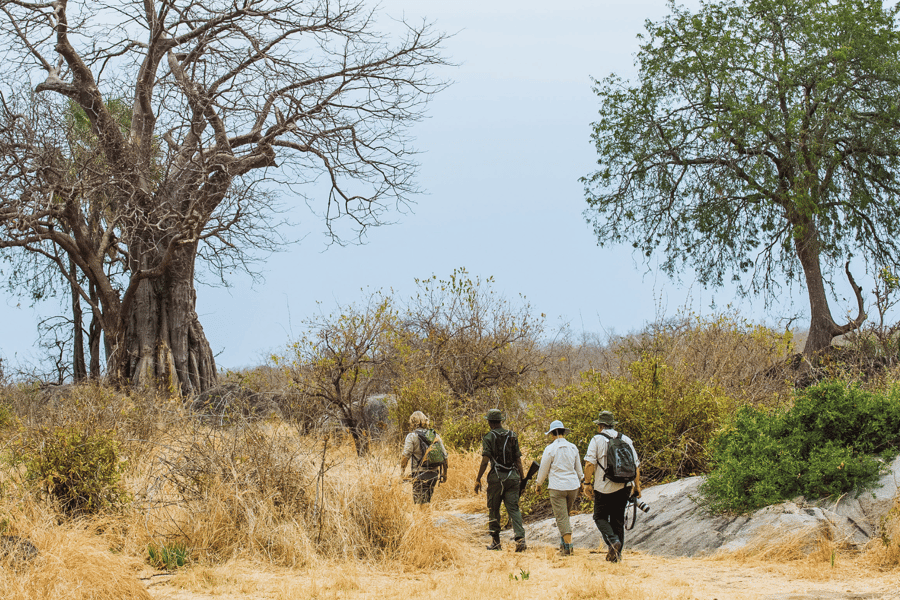
Go on a walking safari in Ruaha National Park
Ruaha National Park
Those in the know say that Ruaha National Park is Tanzania’s best-kept safari secret. And we’re here to agree. It’s the best East African safari destination if you’re looking for an uncrowded experience in one of Tanzania’s biodiversity hotspots.
An abundance of wildlife and birdlife find respite in the dappled shade of the riverine acacia forest outlining the Ruaha River, which runs through the Great Rift Valley. This is one of the top places in the country to do a guided walking safari, and along the way, you’ll likely stop to admire towering baobabs, many of which are hundreds of years old.
Ruaha National Park gives you a real sense of remoteness (even though you can easily hop on a regular scheduled or private charter from Dar es Salaam, Zanzibar or Serengeti National Park). And, that’s precisely what makes it so special. You won’t find fly-in-and-out ‘day trippers’ or crowds here, and in our books, this is one of its greatest appeals.
Ruaha National Park boasts unrivalled biodiversity in terms of flora and fauna as it sits along the convergence zone of the southern and eastern African ecosystems. This has earned it the title of a global biodiversity hotspot. A visit here will reveal how plant and animal species adapt to ever-changing climatic conditions. It’s no wonder then, that the park has been lauded for its conservation efforts since it was established in 1964.
This is the Tanzanian national park to make a beeline for if you want to witness large elephant herds and prides of lion. In fact, it’s home to 10% of the world’s lion population, alongside bat-eared fox, and striped hyena. We love that you can track endangered African wild dog during denning season in June. And with some 570-odd endemic and migratory bird species during the wet season (short rains: November to December; long rains: March to April), twitchers revel in Ruaha’s sightings. They can expect to see Pel’s fishing owl, great white pelican, crowned crane, and marabou stork, amongst many others.
Even though Ruaha is the second-largest national park in Tanzania (after Nyerere National Park, formerly Selous Game Reserve), you’ll only find a handful of fellow travellers staying at the park’s 20-odd safari camps and lodges, some of which are only open seasonally. Many of these safari-goers are repeat visitors to the country, who have already checked the northern safari circuit off their bucket list – and are looking for a slower and more gentle safari experience.

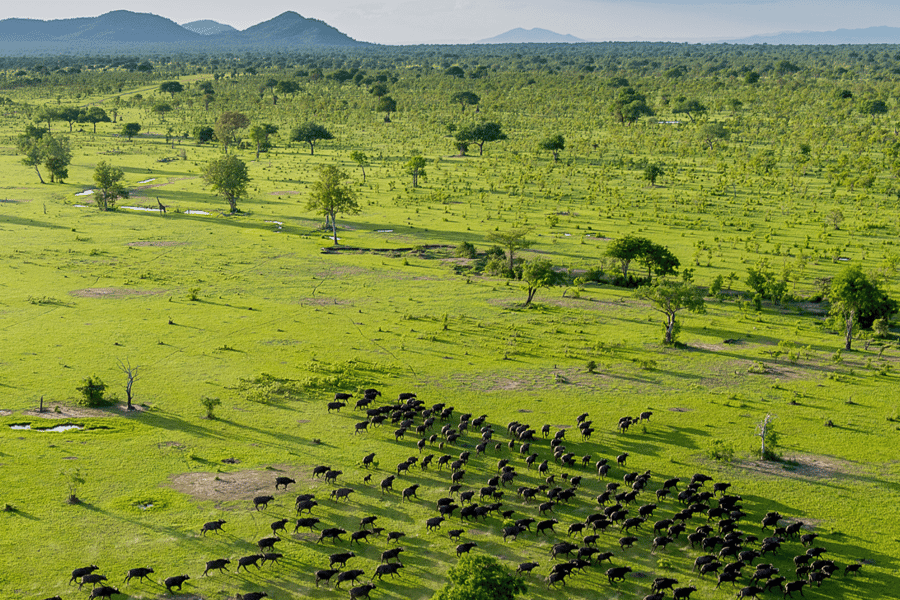
Witness the great herds of Selous Game Reserve
Selous Game Reserve and Nyerere National Park
Don’t get confused between ‘Selous Game Reserve’ and ‘Nyerere National Park’, while planning your Southern Tanzania safari. Though they’re part of the same ecosystem and collectively hold UNESCO World Heritage Site status (for their conservation value, sheer size and important wildlife populations), they’re actually two distinct areas.
Historically, Selous Game Reserve was Tanzania’s oldest and largest protected area, tracing its roots back to 1896 and measuring some 50 000 km².
In 2019, the northern part of the Selous Game Reserve was given national park status under the management of Tanzania National Parks Authority (TANAPA), and was renamed after Tanzania’s first President, Julius Kambarage Nyerere. This new park is enormous in its own right, measuring 30,893 km² – to put that into perspective, that’s still larger than 70 countries from around the world.
The remaining southern section (some 20,000 km²) has held onto the original name of Selous Game Reserve. Today, this part is managed by the Tanzania Wildlife Management Authority (TAWA). Much like its northern neighbour, its primary focus is also conservation and wildlife-viewing safaris.
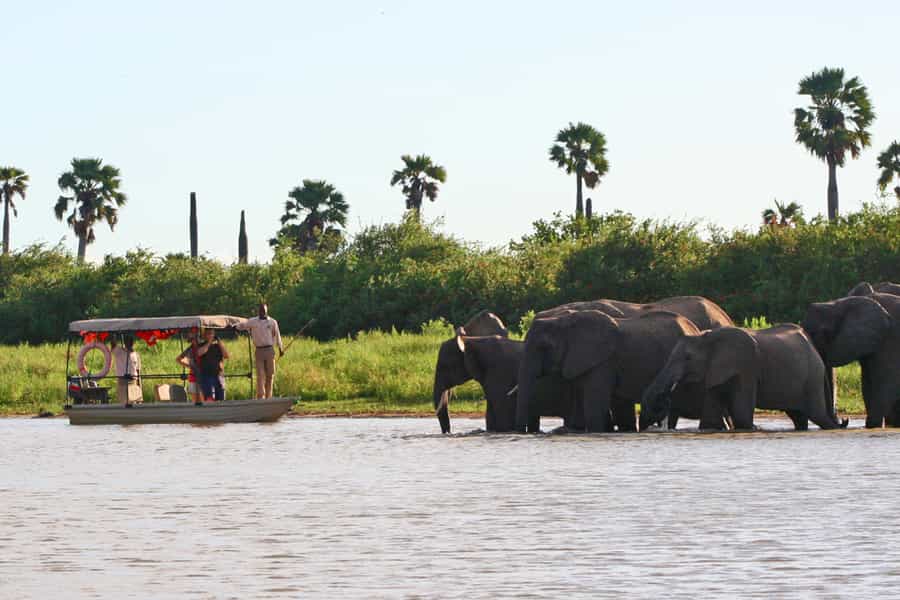
See elephants on a boating safari in Nyerere National Park
Nyerere National Park (formerly part of Selous Game Reserve)
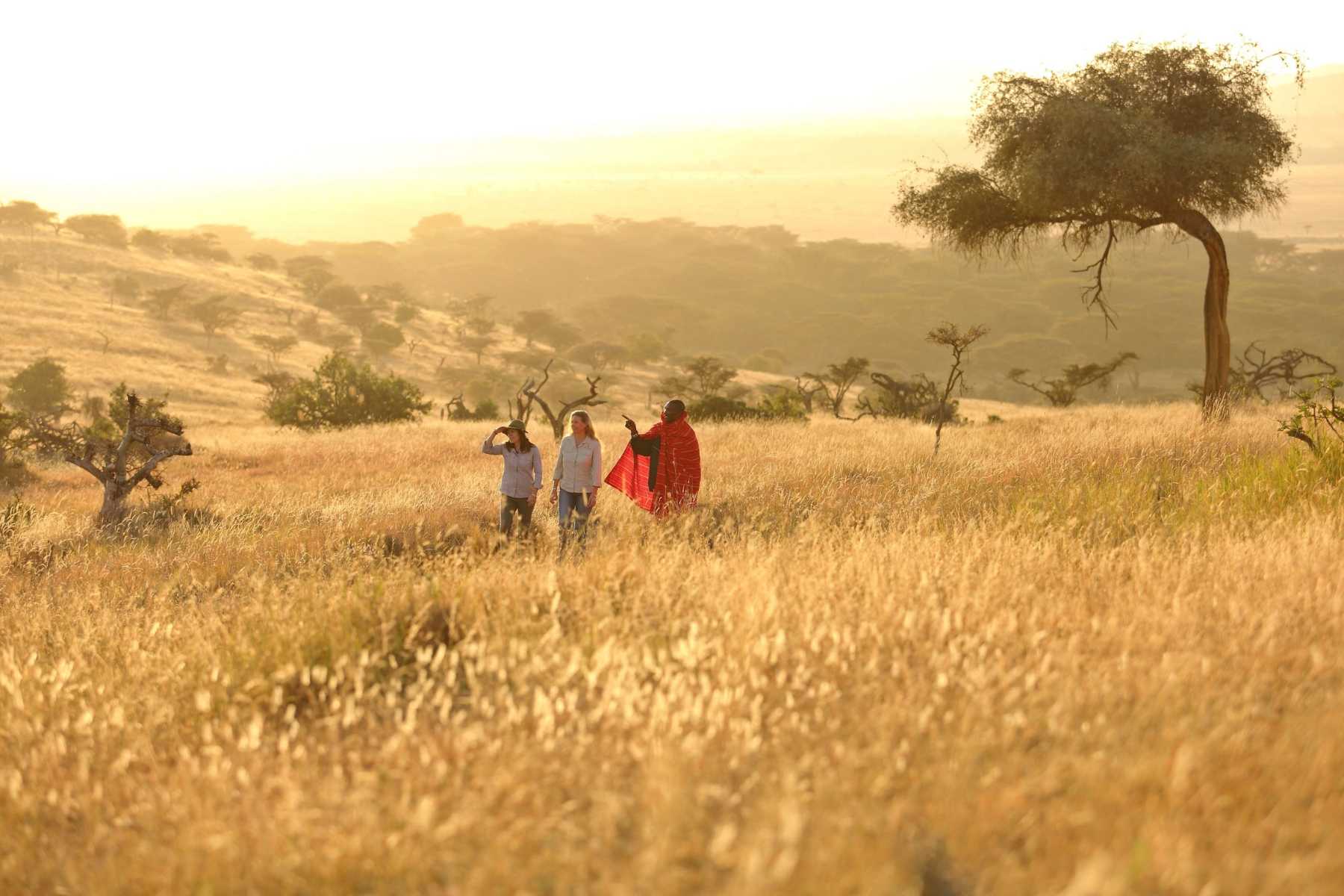
The area now designated as Nyerere National Park famously pioneered walking safaris in the country, so you’d be missing out if you didn’t descend from the height of your 4×4 safari vehicle to peer at the world at your boots. It’s an opportunity to see the iridescent sparkle of a dung beetle, the intricate lacework of a spider’s web, an abandoned termite mound, and learn about wildlife tracks as you listen to your guide narrate the stories of the bush.
But perhaps Nyerere National Park is best known for its water safaris along the 600km-long Rufiji River – said to be among the best boat-based safaris in Africa – even more so when the sun is shimmering off the water and you’re sipping on a cold sundowner. The floodplains and tributaries of Tanzania’s longest river system shift and change with the seasonal rains, unveiling a luscious riverine landscape that’s forever in flux.
As the waterways expand to create new channels, sandbanks and seasonal lakes, each visit unveils a new perspective of this watery ecosystem. Hippos yawn before submerging beneath the water’s surface, Nile crocodile silently slip from sun-drenched banks to float with the current, elephant come for an afternoon splash – and all to the song of some 440 bird species.
Die-hard safari enthusiasts make their way to Nyerere National Park with high hopes of tracking African wild dog, particularly during denning season (between June and August) when they can snap pictures of pups that are communally raised by the pack. Sunrise and sunset game drives are the best time to see these endangered canines that cover extensive tracts of land on the hunt for prey and territory. The national park is a safe-haven for the world’s largest population of African Wild Dog, with some 2 000 of these so-called ‘painted wolves’ within its borders.

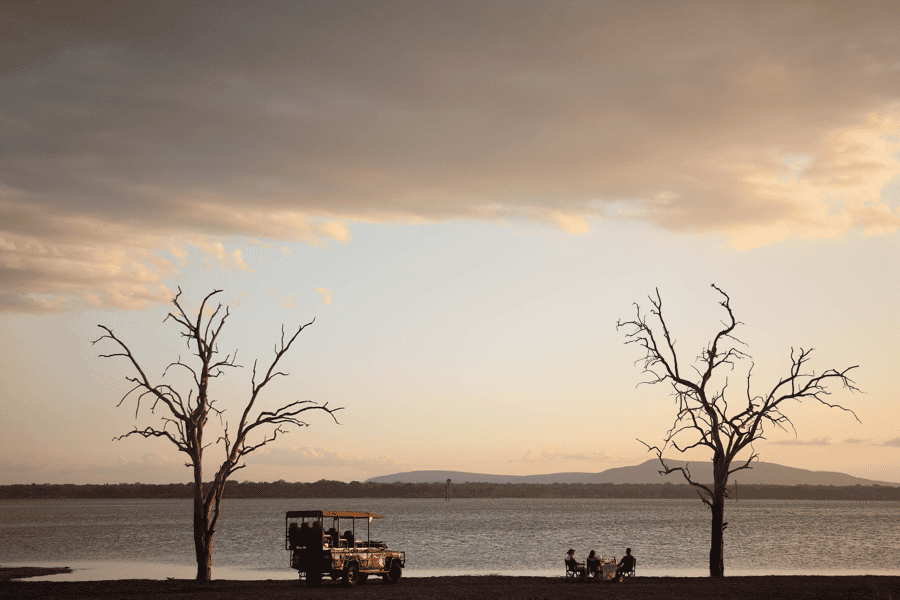
Enjoy sundowners after a game drive in Tanzania
Southern Tanzania travel tips from our team
Katavi National Park: To truly get off the beaten path during your Southern Tanzania safari, add Katavi to your itinerary. It promises an exclusive experience, especially as it’s one of the least visited national parks in the country. Katavi is famed for its dramatic dry season wildlife spectacles with staggering numbers of hippos jostling for space in the shrinking pools.
Fly-in safaris: Due to vast distances and, at times challenging road conditions (even more so during the wet season), it’s less common to drive between national parks in southern Tanzania. This makes fly-in safaris a popular choice. We can easily help you tailor-make an off-the-beaten-track in Southern Tanzania safari that includes transfer flights.
Longer transfers: That being said, transfers between airstrips and safari camps may take a little longer due to the size of the parks and as there are fewer accommodation options. Which is why we always suggest embracing the journey as part of your adventure. Think of it as having two additional game drives thrown in before you even arrive.
Budget: The costs of a Southern Tanzania safari are potentially higher because of these factors, and also because safari lodges are usually smaller and offer more exclusivity.
The dry season: June to October is the optimal time for wildlife sightings in Southern Tanzania as animals converge along remaining sources of water before the rains return. Some safari camps in Southern Tanzania may close temporarily during the heavy rains (mid-March to May) due to accessibility – but there’s no need for you to worry about that, as we’ll handle everything.
A journey into Southern Tanzania’s safari circuit offers a counter-narrative to the well-documented wonders of the north. It invites you to explore the wilder (and quieter) Ruaha and Nyerere national parks at a much slower pace – just as a safari holiday should be.

Latest blogs


As seen in