Travel and Leaisure Worlds Best Awards for number 1 tour operator in the world 2024 and number 2 tour operator in the world 2025
We're one of the World's Best Tour Operators!
Voted No.1 in 2024 and No.2 in 2025 by Travel+Leisure
Destinations

Where to go in Botswana

A king among safari destinations, you’ll be wowed by every corner of Botswana, from the wildlife-filled Okavango Delta to the stark beauty of the Makgadikgadi Pan.
Okavango Delta

Pristine natural beauty, incredible wildlife and varied activities make for a safari superstar.
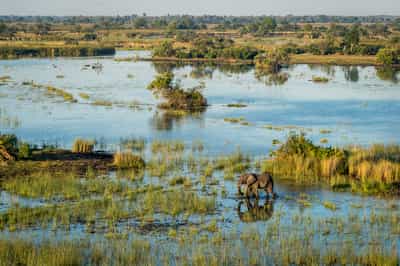
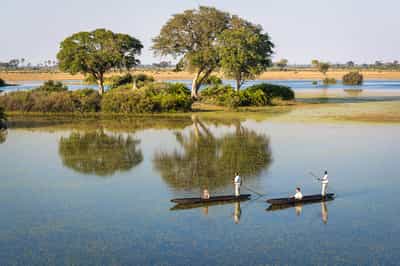
The Okavango Delta is a fluke of nature. In fact, it shouldn’t really exist. Spilling out over the Kalahari Desert, the wetland was formed about 50,000 years ago, when a sudden tectonic shift in northern Botswana interrupted the Okavango River’s flow towards the ocean. Now, where once there was a parched desert, a myriad of floodplains, channels and palm-strewn islands exist, supporting some of the largest and most diverse populations of birds and animals in Africa. These islands are essentially great big time capsules, and exploring them on an Okavango Delta safari is like exploring natural history – a place unchanged for thousands of years and the very definition of "wilderness".

Chobe

A place for unrivalled elephant sightings in Botswana and serene boat cruises along the mighty Chobe River.
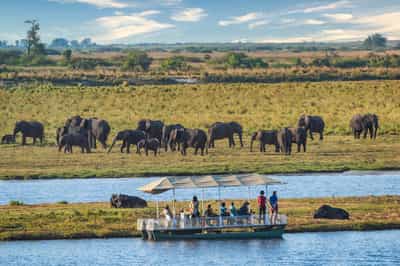
If you love elephants (and who doesn't?), then the Chobe River should be top of your must-see list. The area hosts one of the largest concentrations of elephants in Africa, and a drive through the Chobe National Park ensures many sightings of these gentle pachyderms. The Chobe River makes up the northern border of Botswana and Namibia and winds through a vast open floodplain that supports incredible concentrations of wildlife such as wildebeest, buffalo, zebra, impala and, of course, the many predators that follow the herds. One of the best ways to experience the river is on a serene Chobe boat safari for an eye-level encounter with the beasts and birds.

Makgadikgadi

A vast, shimmering salt pan of horizon-bending landscapes where the magic is in the minimalism.
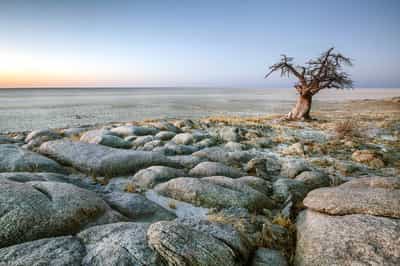
The Makgadikgadi Pan in Botswana is essentially waterless and arid for much of the year, yet it remains one of the most beautiful, haunting and intriguing landscapes in Africa. Part of the Kalahari Basin, the milky white pan covers an area of 12 000 square kilometers—one of the largest salt pans in the world. With shimmering horizons that bend to infinity, this place is the definition of isolation. During years of good rain, the two largest pans—Sowa and Ntwetwe—flood and attract wildlife such as zebra and wildebeest on the grassy plains. Thousands of flamingos colour the pale white at Sowa and Nata Sanctuary—a natural wonder that people come from all over to see.

Central Okavango

Where uber-stylish lodges offer a range of iconic experiences and exceptional wildlife is the cherry on top

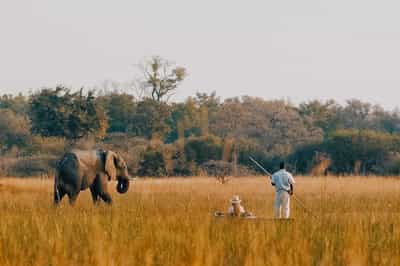
The Okavango in a nutshell, the central Delta offers an all-singing, all-dancing safari experience you probably thought only existed in travel documentaries. A network of vast, private concessions peppered with papyrus-fringed waterways, vast floodplains, waterholes and beautiful forests, vehicle numbers are incredibly low – and animal numbers, incredibly high. We’ll let you do the maths, but it’s safe to say that wildlife sightings are frequent and fantastic whether you’re seeking out big cats, looking to tick off a lifer from your bird list, or simply having fun counting the elephants that lumber across the floodplains. To really make the most of the terrain and its inhabitants, most lodges offer a combination of land and water excursions allowing for game drives, walks, mokoro safaris and boating trips, and, with no restrictions on timings, night drives. Then there are the lodges and tented camps dotted sparingly around the concessions. These are some of the continent’s smartest safari camps, where exceptional style and luxury is as much of a given as a light footprint and top-notch sustainability credentials. Welcome to the Delta!
Khwai

An affordable Delta option with wildlife as diverse as the landscape and a smattering of unique lodges
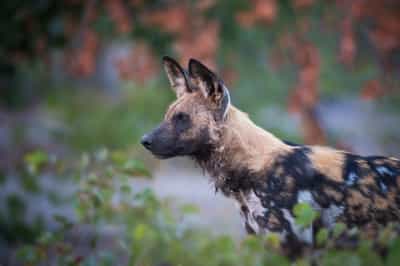
Just to the north of Moremi, in a palm-filled corner of the north-eastern Delta, lies the Khwai Private Reserve. On the ground, the elite (and excellent) selection safari lodges work in partnership with the local Khwai community and the Khwai Development Trust, and all three promote conservation and eco-tourism. Landscape-wise, swathes of mopane trees characterise the north whilst the south morphs into an iconic Delta scene of open grasslands, waterholes, shiny floodplains and winding waterways that weave across the greenery. Whilst the channels and lagoons are usually full enough for a mokoro safari in the peak season (June to October), it’s the Khwai River – and accompanying game drives – that really steal the show. The lifeblood of the reserve, the river flows along the southern boundary drawing hooves and paws from far and wide, and displaying some serious David Attenborough-worthy action on its banks. And by that we mean, African painted dog chasing impala, lion and leopard skulking in the shade, buffalo, zebra, elephant, sable and roan antelope. Need we say more?

Linyanti

If you like your big cats alongside a dose of epic scenery, Linyanti is the place to be.
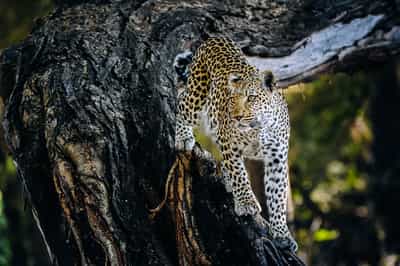
A protected wildlife area in northern Botswana, the Linyanti region is a veritable haven for animals. Massive herds of elephants call this area home, particularly along the permanent water sources in the dry season, as well as lion, hyena, leopard and plenty of zebra. Alongside fabulous game viewing, the region is characterised by its varied and incredibly beautiful scenery, from swampy marshlands and lagoons to glittering waterways, open grasslands and green forests. The Linyanti is one of the more remote regions in Botswana, with just a few outstanding camps and lodges to choose from, so you're guaranteed an authentic and very special safari experience.

Savuti

Combine the dry, arid Savuti with the shimmering Delta for a land-and-water expedition to remember.
Technically part of Chobe National Park, Savuti is the chalk to the Okavango Delta’s cheese. If this part of the world conjures up visions of glittering water channels and landscapes greener than a shamrock, think again. Savuti is dry and spectacular, arid savannahs stretching as far as the eye can see, and cut through by the Savuti Channel, a dry riverbed that flows unpredictably and erratically. But whilst water may be scarce, wildlife is not and Savuti is home to astounding amounts of game, both big and small. From warthogs, roan, sable, hyena and zebra to buffalo, painted dog and big cats, the area is most well-known for the enormous herds of elephants that saunter around the waterholes, gathering in their hundreds. Then, there are the lion prides. Fearsome hunters who have garnered a reputation for their incredible skill in hunting pachyderms, and watching life or death play out on the plains of Savuti is not for the faint-hearted, but boy, is it some of the best game-viewing out there.

Central Kalahari

Home to the San Bushmen, expect poignant cultural experiences, star gazing and pure, untouched space.
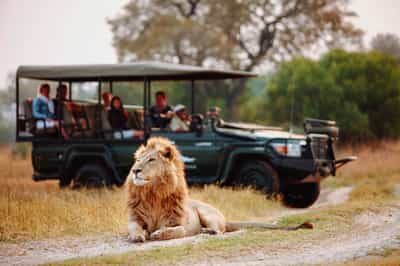
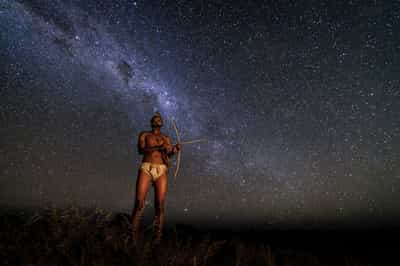
The Kalahari may be a desert, but what a desert it is. The seemingly never-ending plains (50,000 square kilometres to be exact) dominate central Botswana and are part of the largest continuous sand basin on earth. Established as a sanctuary for the San bushmen in 1961, the reserve was, until very recently, closed to the public and even today only very few make it to this wild and untouched expanse of pristine land. But those who do embark on a Kalahari safari can look forward to remarkable sightings of the powerful black-maned lions of Deception Valley, interactions with fascinating San tribesmen and the most phenomenal stargazing on the planet.

Moremi

Enter the heart of the animal kingdom in Moremi, a glittering landscape where safari dreams come true.
Smack bang in the heart of the iconic Okavango is Moremi Game Reserve. Proclaimed in 1963, a project spearheaded by the local Bat’wana people, it incorporates 5,000 square-kilometres of prime Delta real estate: floodplains, pans and lagoons, sprawling grasslands and thick forests of acacia trees, and tiny palm islands encircled by myriad waterways that shimmer in the sunlight. Over the years, the area has been well-protected and the wildlife is an ever-present reminder of how a wilderness area could (and should) be. With no walking safaris or night drives available (aside from at the lodges along the Khwai River), game drives are the name of the game, and they’ll reveal ever-present herds of impala and tsessebe, as well as buffalo, zebra and elephant. On the watery banks of the river live sitatunga and lechwe, whilst fish flitter below the surface and over 400 species of birds above it. Then there are the big cats. Lion and leopard are both frequent sightings, and no area is better for it than Moremi’s two landmasses: the ultra-exclusive Chief’s Island and the Mopane Tongue, a peninsula that merges into a glorious wetland network. But really, there are no ‘stars’ here – this is Moremi, one of the finest wilderness areas in the world.

Maun

Eclectic, fun and very practical, Maun is the gateway to the Delta and a weary traveller’s dream.
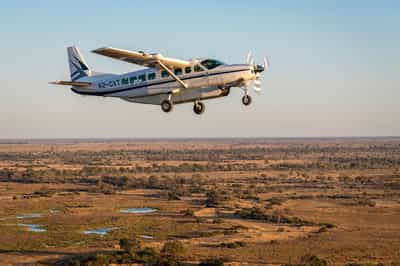
Africa’s original ‘safari town’, mention the name Maun to just about anyone in Botswana and they’ll certainly have a few stories to tell… Legendary it may be, but the town’s position in the south-eastern corner of the Okavango Delta is incredibly practical and almost everyone who visits Botswana will more than likely pass through. Tiny planes flutter in and out of the airport every hour, depositing visitors in the remotest corners of the Delta or returning them to civilisation, and dusty 4x4s eject a steady stream of tired-out travellers . On the ground, there’s not much you can’t buy, fix, see or sell when it comes to safari, whether that’s stocking up on your khakis or patching up a spare wheel – and there’s an eclectic selection of hotels and restaurants to explore too. Activities-wise, heli flights over the Delta are easily organised from the operators in town, as well as mokoro trips and a small selection of wildlife-watching opportunities on the Thamalakane River.

Tuli

Privately-owned farms offering diverse safari experiences, enormous elephant and even bigger baobabs.
The Tuli Block is a wilderness gem tucked away on a narrow fringe of land on Botswana's eastern border. Consisting mainly of privately owned game farms, the area is renowned for its black-maned lions, leopard and cheetah lurking between the gigantic nyala trees and sick-looking yellow fever trees on the river banks. The characteristic baobabs are ubiquitous among the rocky outcrops, while wildebeest, kudu, eland and waterbuck migrate through the area. Keep an eye out for the rare ginger Pel's fishing owl that sits above pools and rivers at night. This an old haunt of the ancient San bushmen, whose paintings coat the walls and overhangs of the Kopjes.

Mababe

Embark on a one-of-a-kind safari where few others ever venture and the wildlife is legendary.
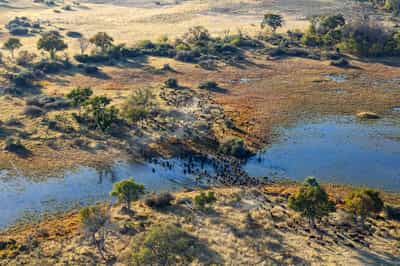
Soaring overhead in a helicopter, you’ll see the remnants of a vast lake that once occupied the landscape, fed by multiple river systems, until tectonic shifts had other ideas. This is the Mababe Depression, a unique and remote corner of northern Botswana that changes profoundly with the seasons; summer rains replenish its wetlands and leave behind a blanket of green, while the dry season brings dusty savannah and shrinking pans. Mababe is a critical funnel for wildlife moving through Botswana’s diverse habitats, from thousand-strong herds of buffalo to great elephant families that travel ancient pathways through the Depression. It also plays host to incredible numbers of predators, including prides of lions (some of the largest in Botswana) who rule the banks of the Khwai River, packs of African wild dogs and cheetahs on the hunt. This extraordinary enclave is quite unlike anything you’ve ever seen and you’ll take it all in without another soul in sight.
Where To Go
Pin Icon

Namibrand, Namibia