Planning Guides
Botswana Country Guide
Here’s the scoop
Botswana
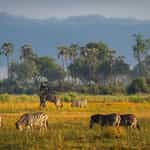
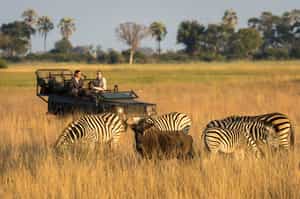
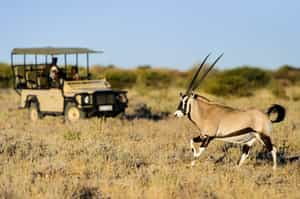
Let your wildlife dreams come true on a Botswana safari, where animals roam free and the wild stretches for miles.
When you’re on safari, Botswana is a window into the Africa of old, where wildlife follows an ancient flood cycle and long-ago cultural customs are still practised.
With 40-plus percent of the country designated as protected game-viewing areas, Botswana's safaris are wild, breathtaking and guaranteed to be jam-packed full of animals. In fact, the conservation-focused government is doing more than any other African country to protect its wildlife heritage.
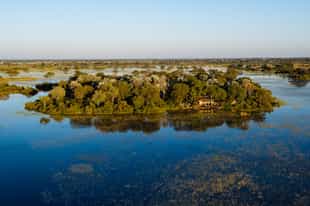
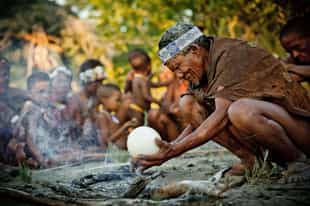
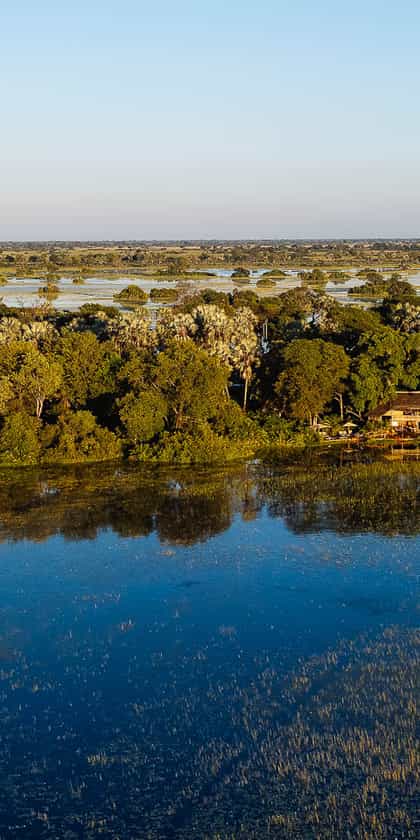
The Okavango Delta, Africa's largest wetland wilderness, is the crown jewel in any safari and teems with animals year-round. Much of the rest of the country is made up of the Kalahari Desert, with the Central Kalahari home to the ancient San people, whose culture is the oldest in the world.

Botswana is arguably the most pristine and exclusive safari destination in Africa, famous for the mighty Okavango Delta, with its unique ecosystem, huge numbers of wildlife and landscapes that are mind-bogglingly beautiful.

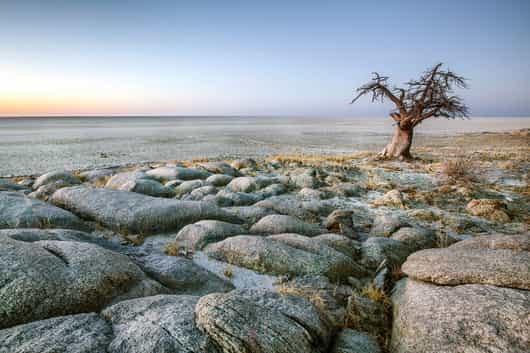
The lunar-like Makgadikgadi salt pans are the definition of isolation. What better place, then, to explore on a quad-bike safari before spending a night under the shimmering sky a million miles from anywhere?

Botswana safari camps are exceptional, most of them in huge private concessions that are accessible only by light aircraft – phenomenal, but with a price tag to match.
Start with a recommended trip or create one from scratch

12 nights from $9.4K per person
12 nights from $9.1K per person

10 nights from $7.1K per person
11 nights from $6.7K per person
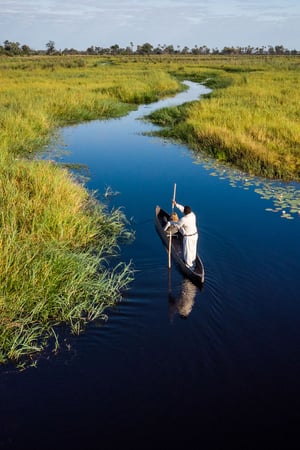
7 nights from $4.9K per person
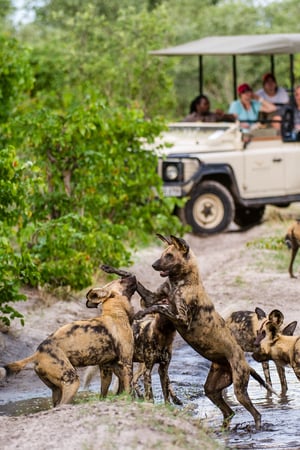
14 nights from $10.1K per person
Get advice and suggestions to make this your perfect trip.
or call us on: +1 (646) 542 0667
A king among safari destinations, you’ll be wowed by every corner of Botswana, from the wildlife-filled Okavango Delta to the stark beauty of the Makgadikgadi Pan.
,url-https%3A%2F%2Fassets.waybird.com%2Fcdn-cgi%2Fimage%2Fwidth%3D12%2Cformat%3Dauto%2Fhttps%3A%2F%2Fassets.waybird.com%2Fimages%2Fmap%2Fpin-primary-outlined.png(24.4994528,-18.6666616),url-https%3A%2F%2Fassets.waybird.com%2Fcdn-cgi%2Fimage%2Fwidth%3D12%2Cformat%3Dauto%2Fhttps%3A%2F%2Fassets.waybird.com%2Fimages%2Fmap%2Fpin-primary-outlined.png(24.9670793,-20.450763),url-https%3A%2F%2Fassets.waybird.com%2Fcdn-cgi%2Fimage%2Fwidth%3D12%2Cformat%3Dauto%2Fhttps%3A%2F%2Fassets.waybird.com%2Fimages%2Fmap%2Fpin-primary-outlined.png(22.64552764018895,-19.245828931058938),url-https%3A%2F%2Fassets.waybird.com%2Fcdn-cgi%2Fimage%2Fwidth%3D12%2Cformat%3Dauto%2Fhttps%3A%2F%2Fassets.waybird.com%2Fimages%2Fmap%2Fpin-primary-outlined.png(23.7495795,-19.165719),url-https%3A%2F%2Fassets.waybird.com%2Fcdn-cgi%2Fimage%2Fwidth%3D12%2Cformat%3Dauto%2Fhttps%3A%2F%2Fassets.waybird.com%2Fimages%2Fmap%2Fpin-primary-outlined.png(23.8828883,-18.3968869),url-https%3A%2F%2Fassets.waybird.com%2Fcdn-cgi%2Fimage%2Fwidth%3D12%2Cformat%3Dauto%2Fhttps%3A%2F%2Fassets.waybird.com%2Fimages%2Fmap%2Fpin-primary-outlined.png(24.0657878,-18.5680479),url-https%3A%2F%2Fassets.waybird.com%2Fcdn-cgi%2Fimage%2Fwidth%3D12%2Cformat%3Dauto%2Fhttps%3A%2F%2Fassets.waybird.com%2Fimages%2Fmap%2Fpin-primary-outlined.png(23.6476163,-22.001988),url-https%3A%2F%2Fassets.waybird.com%2Fcdn-cgi%2Fimage%2Fwidth%3D12%2Cformat%3Dauto%2Fhttps%3A%2F%2Fassets.waybird.com%2Fimages%2Fmap%2Fpin-primary-outlined.png(23.3533717,-19.239773),url-https%3A%2F%2Fassets.waybird.com%2Fcdn-cgi%2Fimage%2Fwidth%3D12%2Cformat%3Dauto%2Fhttps%3A%2F%2Fassets.waybird.com%2Fimages%2Fmap%2Fpin-primary-outlined.png(23.3838838,-20.0002812),url-https%3A%2F%2Fassets.waybird.com%2Fcdn-cgi%2Fimage%2Fwidth%3D12%2Cformat%3Dauto%2Fhttps%3A%2F%2Fassets.waybird.com%2Fimages%2Fmap%2Fpin-primary-outlined.png(29.0657803,-22.063852),url-https%3A%2F%2Fassets.waybird.com%2Fcdn-cgi%2Fimage%2Fwidth%3D12%2Cformat%3Dauto%2Fhttps%3A%2F%2Fassets.waybird.com%2Fimages%2Fmap%2Fpin-primary-outlined.png(23.997021274123156,-19.18087146591158)/auto/600x400?access_token=pk.eyJ1IjoidGltYnVrdHV0cmF2ZWwiLCJhIjoiY2poMGw1eHpkMmRkbDJ6bW8xYWZ5OGpjYyJ9.PYvAO7lUJ40SOpGvwmQLqw&attribution=false&logo=false)
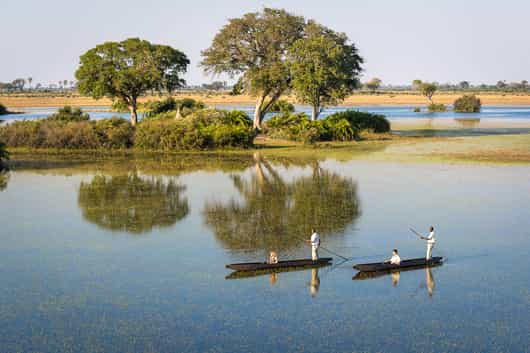
Botswana
Pristine natural beauty, incredible wildlife and varied activities make for a safari superstar.
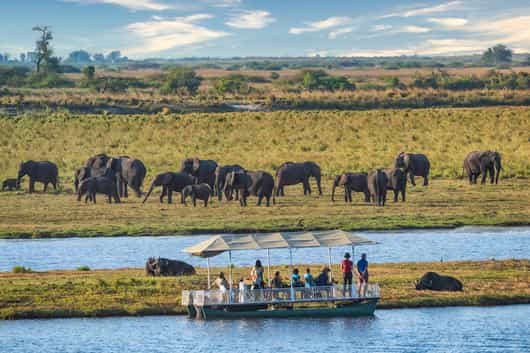
Botswana
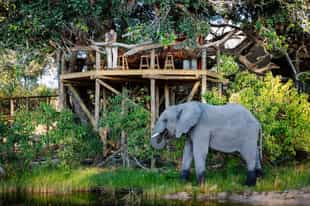
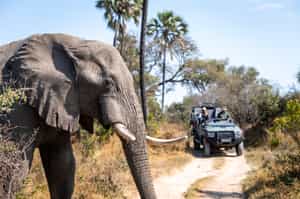
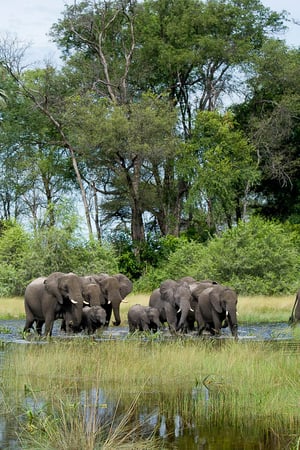
A place for unrivalled elephant sightings in Botswana and serene boat cruises along the mighty Chobe River.
Botswana
A vast, shimmering salt pan of horizon-bending landscapes where the magic is in the minimalism.
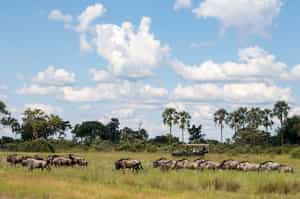
Like much of ‘safari Africa’, Botswana comes into its own in the dry season months of July to October. Ironically, the Okavango Delta is in full flood and it’s the best time for water-based safaris, whilst the Makgadikgadi Pans are at their iconic best. Game viewing across the country is excellent, particularly towards the end of the season as animals begin congregate in the same area (but it does get hot!).
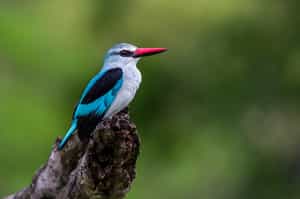
In November, the rains begin and usually last until March/April. The desert is transformed into a carpet of green and it’s actually the best time of year to visit the Central Kalahari area. Other areas of Botswana shouldn’t be crossed off the list however: the rain is short and sharp and shouldn’t prevent you from doing any activities, and on the plus side, the sunsets are spectacular, the birding is excellent and game viewing is good, despite the rumours.

Wet Season — a quieter time to visit
Weather is characterised by high temperatures, relative humidity and considerable rainfall
The birthing season provides high excitement as predators take advantage of the inexperienced newborns
The vegetation is lush and green, animals are in pristine condition and birds are in full breeding plumage providing incredible photographic opportunities
Make sure you have your insect repellent packed, the wet season is also mosquito season
Wet Season — a quieter time to visit
This time of year is the height of the wet season, on average rain falls only a couple of days a week, leaving plenty of time to explore the various wilderness regions
Exceptional game viewing with high predator excitement during the birthing season
Vegetation is green, wild flowers are in bloom and birds are in their breeding plumage
There are more insects and mosquitoes around, luring out a host of unique insectivores in the Central Kalahari
Wet Season — a quieter time to visit
March is still relatively hot and considerably drier than January and February, expect sporadic afternoon showers
Still good predator excitement with many young antelope learning the harsh lessons of an unforgiving wilderness
A great time for land based explorations with water based activities only available at a handful of the Delta camps
The Central Kalahari has unique desert flowers, barking gecko's and the chirping rain locust, creating a fascinating change to the more traditional safari
Be sure to pack mosquito repellent at this time of year
Wet Season — a good time to visit
Temperatures start cooling with a handful of rainy days, the water levels begin to rise in the Delta, indicating the start of the flooding period
Some of the animals will still be spread out in the Linyanti, however lion, leopard, wild dog and cheetah usually add to safari excitement
Birds look to migrate, game starts to make its way back into the Delta and Linyanti regions, as other water sources become scarce
Clarity improves for photography, showcasing the breath-taking landscapes of this wonderfully different wilderness
Mosquito's are still around but not as prevalent, pack your insect repellent just in case
Dry Season — one of the best times to visit
Transition month from wet summer to dry winter, offering moderate temperatures and little to no rain
The perfect time for Delta explorations, flooding is approaching its peak providing the perfect conditions for water based activities
The "Emerald Season" is coming to an end, vegetation will slowly begin to thin and animals will migrate into the Linyanti and Delta region, following the year round water sources
Clarity improves for photography, showcasing the pristine Kalahari landscapes
Mornings and Evenings can be a little nippy at this time of year, a couple of extra layers will surface during the month of May
Dry Season — one of the best times to visit
Temperatures are comfortable but have dropped considerably at night, with morning frost on occasion, rainfall dry's up
Flooding is reaching its peak, creating one of the ideal months to visit the Okavango Delta
Wildlife of every shape and size migrate into the delta and Linyanti areas, taking advantage of this constant water source in the dry season
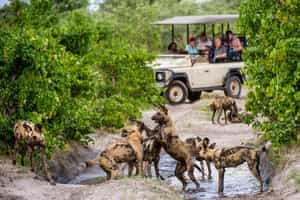
This is usually the best time to view the elusive wild dogs of the Linyanti region, as they begin their denning period
The night sky is at its most impressive in the Central Kalahari, with shooting stars and the Milky Way taking centre stage
Include a warm jacket in your essentials as morning and evening temperatures are chilly
Dry Season — one of the best times to visit
Nights are cold and possibly frosty, day temperatures are comfortable with rainfall drying up
The height of the water levels are achieved, ensuring a great diversity of activity and wildlife in the Delta region
This is usually the best time to view the endangered wild dogs of the Linyanti, during their denning period
July offers ideal photographic conditions, low humidity and sparse vegetation means wonderful image clarity and no shortage of picture perfect moments
Without a cloud in the sky, stargazing is an absolute treat in the Central Kalahari Game Reserve
Pack a warm jacket for the chilly mornings and evenings
Dry Season — one of the best times to visit
The coldest night temperatures have passed, with the daylight hours warming considerably, rain is still very unlikely
A wonderful time to visit the Okavango Delta with the flood level still high, leading to great water and land based safari, depending on your preference
Experience some of the best wildlife viewing on the planet with incredible variation and big game encounters at both the Linyanti and the Delta
The air is thin and still, offering the perfect conditions to photograph the unique species and landscapes of the Central Kalahari
The lack of ambient light enhances the incredible night sky visible at this time of year
Include a warm jacket on your packing list because mornings can be chilly
Dry Season — one of the best times to visit
The best time to visit the Delta and Linyanti for land based explorations, with warm daytime weather, low humidity and not a cloud in the sky
The Delta is home to the best wildlife viewing in Botswana at this time of year, encounter a myriad of species, all on your doorstep
Vegetation is thin due to the lack of rainfall, causing animals to cluster around the remaining water sources and the Savute Channel in the Linyanti Concession
Animals are spread out over large areas in the Kalahari but many unique species, not often seen elsewhere in Botswana are present
Very few mosquitoes present during this time of year, making for a carefree safari experience
Dry Season — a good time to visit
The flood levels in the Delta begin to drop, with the temperatures and humidity across Botswana reaching a high, expect some rainfall in the later days of the month
Visibility is good with sparse vegetation, making it easier to spot the animals of the Delta and Linyanti regions
An interesting month for photography, particularly in the Kalahari, with the landscape at its most extreme before the arrival of the first rains
Make sure to drink plenty of water during the day to avoid dehydration in this month
Wet Season — a quieter time to visit
Temperatures are still hot and humid with the first true rains of the wet season, it should be noted that in most cases rains are just passing afternoon showers
Wildlife will start to disperse with the receding floodwaters, making the delta game viewing exceptionally good, instead of world class
As vegetation becomes green wildlife becomes more difficult to spot in the Linyanti and Delta regions, wildlife congregate in the lush Central Kalahari
Interesting cloud formations and spectacular electrical storms, illuminating the nights sky, are a common occurrence in this month
Wet Season — a quieter time to visit
Temperatures are hot and relatively humid with the rain falling in the form of afternoon showers
The "Emerald Season" is now in full swing, foliage is green and plentiful, flowers are in bloom and the migratory birds have returned
Animals are spread across the Delta and Linyanti regions but congregate in the Central Kalahari as grasses sprout in the fossilized river beds
A great time for photography with December offering the longest day length of the year
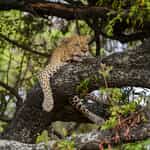
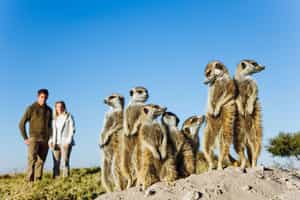
You can also see cheetah, spotted hyena, large herds of buffalo, elephant, giraffe, prolific birdlife and many other intriguing creatures. If wild dog is your thing then head for the Linyanti swamps which enjoys regular sightings of these endangered hunters. The focus of the Central Kalahari is not on the wildlife although it is home to the black maned lion and cheeky meerkat.


There are two main airports to use on a safari in Botswana: Maun (MUB) and Kasane (BBK). Most safaris begin or end in either Maun or Kasane, and commercial flights to/from those towns route via Johannesburg. Depending on your arrival time at Johannesburg, you may have to overnight before catching your connecting flight to Botswana the next day (as those leave just once per day via Johannesburg). International flights We would recommend booking your flights online in order to get the best rates. If you need any help or advice please let us know. There are no direct flights from the USA to Maun but Delta Airlines (departing from Atlanta) and United Airlines (departing from Newark) fly into Johannesburg. From there, you can fly directly into Maun. The first leg will take approximately 15 hours and 40 minutes (from Atlanta) or 14 hours and 40 minutes (from Newark), and the latter will take 1 hour and 45 minutes. If you are flying out of Heathrow, there are direct flights to Johannesburg, which take approximately 11 hours. From Johannesburg to Maun, the flight will take around 1 hour and 45 minutes. Domestic flights and transfers Connecting between all the locations on your Botswana holiday may necessitate a variety of modes: light aircraft charters, domestic commercial flights and road transfers. Please review the inclusions and exclusions on your specific trip page for details. If you need help understanding the best flights to book, please let us know. From the moment that you land in Botswana you will be greeted and assisted to your onward connections. You will be looked after from that point on until you are transferred back to the airport in time for your departure flight.
Please consult your personal physician and/or a travel clinic preferably 6 weeks prior to your departure on one of our Botswana safari tours. Vaccine requirements vary based on your country of origin and your travel itinerary and your previous vaccination history. It is best to consult with your physician or the CDC website (https://wwwnc.cdc.gov/travel/destinations/traveler/none/botswana?s_cid=ncezid-dgmq-travel-single-001) for guidelines. Important vaccinations to consider and which may either be required or recommended are: Yellow Fever, Typhoid, Hepatitis A & B and Cholera, among others. Please always carry your "International Certificate of Vaccination or Prophylaxis (ICVP)" (or "Yellow Card") with you. Malaria We advise that you consult a medical practitioner at least six weeks prior to travel. Botswana has a high malaria risk in the Central and Northern parts of the country and is low risk in the rest of the country. The highest risk of transmission is during the rainy season from November to June. See websites below for more detailed advice. We suggest taking malaria prophylactics before, during and after your visit if you are visiting a known malarial region. Please consult a medical professional regarding which prophylactics will be suitable for you. In addition to the recommendations of your travel clinic or physician, you may also consider the following proactive preventative measures: ● Apply insect repellent to exposed skin. Recommended repellents contain 20-35% DEET but it is a very virulent repellent, and should be used cautiously. ● Wear long-sleeved clothing and long pants at dawn and dusk ● Use a mosquito net if your tent or room isn't screened or air-conditioned; and spray insecticide or burn a mosquito coil before going to bed. If you come down with flu-like symptoms either during or within four to six weeks after your visit to a malaria area, seek a doctor's advice immediately and let him/her know that you have been in a malaria area. You can also visit https://www.who.int/news-room/fact-sheets/detail/malaria for more information or see a full map of affected countries here - https://www.who.int/data/gho/data/themes/malaria. Yellow Fever There is no risk of Yellow Fever in Botswana; however, vaccination is required for travellers who are arriving from, or have transited through, countries with risk of Yellow Fever transmission (e.g. Kenya, Uganda, Rwanda or elsewhere worldwide). This requirement can change unexpectedly, therefore, we recommend carrying a Yellow Fever card with you at all times. Communication Botswana country code: +267 Calling overseas from Botswana: From a landline dial 00 followed by the country code plus area code and number. e.g. USA: 00 1 910 795 1048 When calling from a cell phone dial + prefix followed by the country code plus area code and number. e.g. USA: + 1 910 795 1048
Money The currency used in Botswana is the Botswana Pula (BWP). You can withdraw from a bank or ATM, which are widely available in the larger airports and towns. Please check with your bank for charges and advice when using international ATMs. VISA and Mastercard are the most widely accepted credit cards. American Express has limited to no coverage. It is advisable to have some cash in local currency for smaller shops, stalls and gas stations. IMPORTANT: When bringing in foreign currency (e.g. USD, GBP, EUR), be sure to bring the new format with no damage or marks. Gratuities Gratuities are not compulsory or expected on a safari in Botswana; rather it is a reward for excellent service. If you are pleased with the service you receive you are more than welcome to tip your guide or the staff. Tipping is usually done at the end of your stay. You may tip the staff individually, give the tip to the manager to distribute, or do both. Tips can be made in Botswana Pula or USD. Gratuities suggestions: Safari Camp lead guide: $15 - $20 per guest per day Mokoro polers: $10 - $15 per guest per day Transfer drivers (e.g. in cities or between airport and hotel/lodge): $5 per guest per transfer Porter: $1 per bag Ranger or any “ancillary” guides on ad-hoc basis for a specific activity: $5 - $10 per guest per activity General Camp staff (put in a central box in each camp’s main area): $10 - $15 per guest per day Waitstaff in a city restaurant: 10% - 15% (large group may incur automatic service charge - best to check)
It is a condition of booking that you carry the correct comprehensive travel and medical insurance to cover yourself, as well as any dependents/travelling companions for the duration of your trip. This insurance should include cover in respect of, but not limited to, the following eventualities: Compulsory Insurance: a. Emergency evacuation expenses b. Medical expenses c. Repatriation expenses Recommended Insurance: a. Cancellation or curtailment of trip b. Damage/theft/loss of personal luggage, money and goods
As a general precaution, we recommend you make several copies of your travel-related documents (passport, traveller’s cheques, credit cards, itinerary, airline tickets, insurance cover, visas, etc) when going on a Botswana safari. Leave one set at home, and bring another set with you, and place it in a location separate from your originals. All Citizens of Commonwealth countries do not require a visa except those from Bangladesh, Cameroon, Ghana, India, Nigeria, Pakistan, and Sri Lanka. For those countries that will require a tourist visa, it can be obtained on arrival in Botswana at a cost of US$30 per person and is valid for one month. Alternatively, travellers are able to apply, make payment, complete the visa application and upload all supporting documents through an online portal (http://gov.bw/). An eVisa costs BWP 300 (approximately $27) for a single entry for up to one month, and BWP 500 (approximately $45) for multiple entries for up to three months. To see the full list of countries requiring a visa for Botswana please go to: https://www.botswanatourism.co.bw/travel-info/countries-requiring-visas Passports MUST be valid for at least six months from your departure from Botswana to home. There must be at least TWO (we recommend four) consecutive blank VISA pages in the passport (not endorsement pages). Botswana’s immigration control is very strict, and is known to deny entry to those not meeting the requirements. Visa requirements change regularly and it is best to contact your local Botswana embassy regarding the most recent rules. Visa Central is also a good resource. Travelling with children (under 18) The new immigration rules relating to travelling with children remain in force and was introduced by Botswana following that of South Africa’s issued in June 2015. Parents travelling with children (under 18) will be asked to show the child’s full unabridged birth certificate. The full unabridged birth certificate should list the child’s details and both parents’ details. The abridged (short) birth certificate which only lists the child’s particulars won’t be accepted. The Government is not accepting uncertified copies of birth certificates or copies of the parents/guardians identification. There are additional requirements if the child is travelling with only one parent, with neither biological parent, or unaccompanied. See this information sheet, this statement by the South African Department of Home Affairs and this leaflet produced by the South African Department of Home Affairs. School groups should use this consent form in addition to the documents referred to above. This special dispensation applies to all schools registered with the Department of Basic Education and its equivalent abroad. We recommend referencing the website as requirements change regularly, or contact your nearest Botswana consulate if you have any specific questions about your trip.
Climate The weather in Botswana is generally pleasant throughout the year with warm to hot days, and cool to warm nights. During the winter months, however (May to September), it can get really cold at night and in the early morning, particularly when on safari. January & February are the wettest months, characterized by torrential downpours in the afternoon and sometimes continuous rainfall for days. Daytime temperatures are around 32°C/90°F and the humidity is between 50-80%. From March to April, the rainfall decreases and it steadily cools. Dress Code Conservative casual clothing is acceptable on safari trips in Botswana, though it is recommended that revealing clothing be avoided. Camouflage clothing is not recommended for travel in southern African countries (camouflage or military-inspired clothing is prohibited when travelling in Zimbabwe). When on safari in Botswana, light layers of clothing in neutral safari colours of green, khaki and beige are the best items to bring with you, as well as a warmer jacket or fleece for the colder evenings. A hat is also a must have! Bright and dark colours like yellow, red and purple are discouraged, or sometimes not allowed (on a bush walk) if you are going on safari. What to Pack Preparation and packing for any holiday is important but never more so than when you visit remote areas in Africa. Once on safari you will find it very hard to pick up that odd item you thought your partner had packed! What follows is by no means an exhaustive list but is designed to point you in the right direction. • Layers - long and short sleeve shirts and trousers • A warm fleece or jumper • A lightweight waterproof jacket • Comfortable but sturdy shoes • Flip-flops • Swimming costume (Bathing suit) • Light rain gear for summer months (late November to April) • A hat or baseball cap • Sunglasses • Sunscreen – a must!
• Insect repellent • Toiletries – most camps will provide shampoo, shower gel and soap • A small torch • Spare batteries, plug adaptors and charging equipment • A good pair of Binoculars (8x40/8x42 is recommended) • Books or a fully loaded Kindle / iPad for siesta time Most Botswana safari lodges and camps will have a small medical and first aid kit, but we recommend bringing your own supply of essentials - cough medicine, plasters, vitamins, aspirin and paracetamol, and anything else you use on a regular basis. Camera Equipment (for the enthusiasts) • A telephoto lens (200/300mm) • Flash and fast film (400 ASA) for night photography • Lots of film (64,100,200,400 ASA) if you’re still using SLR cameras • Spare memory cards for digital cameras • Camera cleaning equipment and a good dust proof bag • Bring spare batteries as although you may recharge your batteries at the camps, charging capacity can be limited Luggage Please check with your airlines for the specific luggage restrictions relevant to your flight schedule. Many international airlines have a baggage allowance of 20kgs or more per person and commercial airlines generally permit two (2) pieces of checked luggage per person. The carry-on bag must be of such dimensions and weight as set by the airlines. Luggage Restrictions on Internal Flights Please be advised that on light aircraft flights, luggage is limited to one SOFT duffle bag per person with a maximum weight of 20kg/44lbs. No hardshell bags are permitted. Electricity In Botswana, the standard voltage is 230 V and the frequency is 50 Hz. You can use your electric appliances in Botswana, if the standard voltage in your country is in between 220 - 240 V (as is in the UK, Europe, Australia and most of Asia and Africa). If the standard voltage in your country is in the range of 100 V - 127 V (as is in the US, Canada and most South American countries), you will need a voltage converter in Botswana.
In many ways, the answer is a resounding yes. Many lodges are family-friendly with special activities for kids, entertaining guides and flexible chefs, and both the wildlife and cultural elements are amazing to experience together. However, it’s worth considering the age restrictions at certain lodges, the potential use of a private vehicle and the need for anti-malarials. Botswana is a world-renowned safari destination, but its suitability really depends on your family.
Botswana is widely considered to be one of the safest countries in Africa with incredibly low crime rates and a stable democracy. When it comes to a safari, safety is taken very seriously and it’s vital to always follow the instructions of guides and camp staff – many camps in the Okavango Delta are unfenced, after all. Comprehensive travel insurance with medical evacuation cover is also a necessity. On the whole, Botswana’s offers a safe and rewarding safari experience.
This is greatly dependent on when and exactly where you are planning to go, as well as your choice of accommodation. For instance, a luxury safari to Botswana in the high season will likely cost between $1,000 and $3,000 per person per night, excluding international flights. Why not give our trip builder a go and get up-to-date pricing for your dream trip?
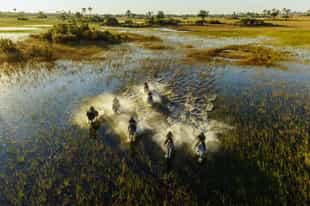
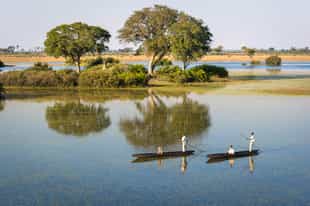
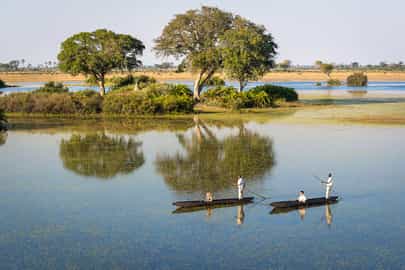
Around four months after the heavy rains fall in the Angolan highlands, around June to August, the channels and lagoons of the Okavango Delta start to fill up. At this time, the floodwaters are at their peak, making for ideal conditions for mokoro rides, boating safaris and fishing. Birdlife is vivid, elephant and red lechwe splash across the waterways, and the Okavango Delta is truly spectacular against the arid Kalahari.
From Chobe and the Okavango Delta to the surreal Makgadikgadi Pan and Central Kalahari, Botswana is incredibly diverse. Botswana is the type of country that rewards lingering longer and truly immersing yourself in each destination’s unique offerings. If time allows it, we recommend spending a week to 10 days (or more!) in Botswana, experiencing the gentle rhythm of the wilderness, the varied wildlife and the vastly different environments.
On the one hand, the Okavango Delta is utterly unique and boasts one of Africa’s greatest wildlife concentrations. On the other hand, Chobe is far more accessible and pairs well with Victoria Falls, while it has the largest elephant population on the continent. If time allows, we highly encourage our guests to include both the Okavango Delta and Chobe in their first journey to Botswana in order to grasp the country’s full scope.
Pairing Victoria Falls with Botswana works incredibly well. In fact, it’s a short drive from Victoria Falls (the Zimbabwean side) to Kasane, the gateway to Chobe and the Okavango Delta. Adding Victoria Falls to the beginning or end of your Botswana safari is both simple to do and elevates your trip with even greater adventure and superlative views. This will likely only add on two or three nights to your trip.
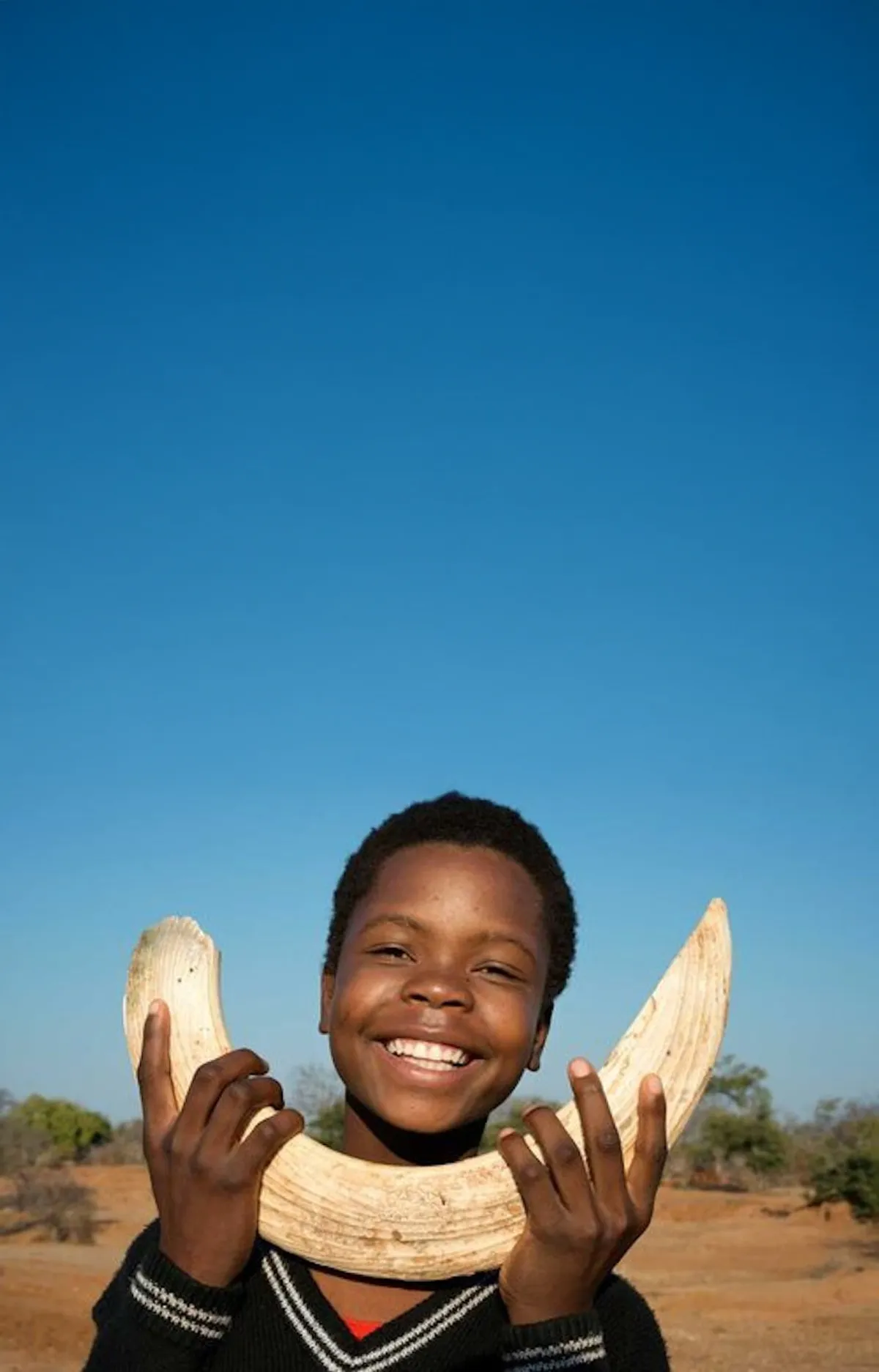
We’re big believers in leaving a positive impact in the countries in which we operate. We’re proud to donate $50 for every booking to projects focusing on female empowerment, tech education, conservation, and so much more.
Our dream is to empower our guests to travel with a purpose.
So far, we’ve donated $107,000 to projects across the globe.


Why travel with Timbuktu?

We've been crafting one-of-a-kind journeys since 2014 — over 2,500 trips across 40+ countries, each one built from scratch around your interests and dreams.

Our team only recommends places they've slept in, eaten in, and happily keep going back to. Condé Nast Traveler named 11 of them Top Travel Specialists in 2026, and Travel+Leisure made three A-List Advisors.

Travel+Leisure's readers voted us the World's No.1 Tour Operator in 2024 and No.2 in 2025 — the travel industry's biggest readers' award, judged by people who actually travel.

$50 from every booking goes to female empowerment, tech education, and conservation projects across the countries we love. We have donated $78,000 so far – and it's going up!

Your travel specialist is with you the whole way, dreaming up the trip, building the itinerary, checking you in, and answering the 2am question from the other side of the world..

We are rated 4.9 out of 5 from 1007 verified Feefo reviews. And these are the words of people who actually went, not us talking about ourselves.
11 Condé Nast Traveler Top Travel Specialists 2026

No. 1 & No. 2 Tour Operator in Travel + Leisure's Best Awards 2024 & 2025

Best Booking Platform in Women's Health Travel Awards 2025

Travel Specialist voted as Latin America A-List Travel Advisor 2025
"Timbuktu can take relatively complex and slightly amorphous travel plans and transform them into a well-organized, perfectly tailored trip."