Travel and Leaisure Worlds Best Awards for number 1 tour operator in the world 2024 and number 2 tour operator in the world 2025
We're one of the World's Best Tour Operators!
Voted No.1 in 2024 and No.2 in 2025 by Travel+Leisure
Destinations

Where to go in Costa Rica

On a Costa Rica vacation, you’ll find yourself in a place where astonishing nature waits around every turn, from wildlife-filled forests to idyllic, sun-soaked coasts.


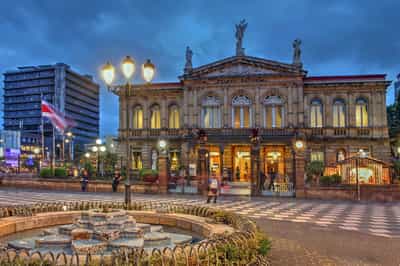
San José & Central Valley

Blend big city life with the magic of the great outdoors in the heart of the country.
Costa Rica’s geographical centre is home to almost two thirds of the country’s population – and it’s easy to see why. The buzzy capital city of San José, with its museums, restaurants and (handful of) pretty buildings puts firm ticks in the cultural and good food boxes, whilst the scrumptious landscapes of the Central Valley that lie just beyond offer residents and visitors the best of the Costa Rican outdoors. Spread out in a carpet of coffee farms and cloud forests, this central plateau is carved by tumbling rivers and gorges, and dominated by the peaks of Poás and Irazú volcanoes and their namesake national parks. There are excellent opportunities to hike through ravines, swim in the vivid waters of high-altitude calderas, wildlife watch and white-water raft on some of the world’s premier rivers, but this area also offers a window into the heart and soul of the country. It’s here that Spanish colonisers first settled, where the first coffee farms appeared, and where the country’s iconic painted oxcarts hail from. Markets offer up traditional cheese and steaming corn cakes, villages celebrate life in colourful fiestas, and for a visitor willing to linger, it’s a chance to find out what makes Costa Rica tick.

Arenal Volcano

Hike, bike, horse-ride and zip-line under the watchful eye of majestic Arenal and her wildlife-filled forests.
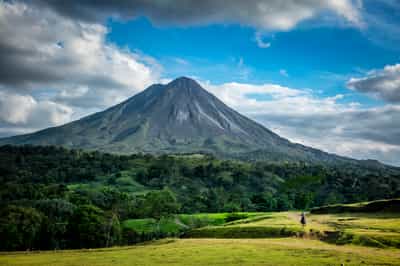
Standing tall against the skyline of north-western Costa Rica, the pleasingly symmetrical cone of Arenal is the most famous of the country’s 60-plus volcanoes. Rising from the forests of the National Park below, the twirling mists will either completely obscure the view of the cone or frame it perfectly, but take a gamble – the rewards are stunning. Once known for its turrets of smoke and glowing lava, the volcano is now dormant but adrenaline isn’t in short supply. Thirteen hanging bridges, deep in the canopy, offer up squeal-worthy views and sightings of wildlife invisible from the forest floor, whilst canopy tours, zip lines, sky trams, mountain bikes and canyoning expeditions quicken the pulse to the max. Wildlife-wise, half the country’s known species of birds, reptiles and mammals reside in the surrounds and you can bet your last memory card you’ll encounter sloths, monkeys and white-faced capuchins on the hiking trails. And when your muscles are crying out for respite? Head to the thermal springs and luxuriate in one of nature’s hot tubs…

Corcovado & Osa Peninsula

The brightest jewel in Costa Rica’s crown and a perfect rainforest experience in every way
Make the intrepid journey down the spectacular Osa Peninsula to the rainforests of the Corcovado National Park and we guarantee you won’t be disappointed. How could you be in the place that National Geographic calls the most ‘biologically intense’ on Earth? Remote, rugged and wild, the peninsula is one of the most isolated places in the country, but that’s all part of the appeal. Covering almost half of it are the pristine forests of Corcovado and it’s here, residing under the canopy and chattering amongst the leaves, that a selection of vibrant and varied birds, mammals and reptiles dazzle even the most hardened wildlife expert. We’re talking all four species of monkey and two species of sloth, jaguar, puma, crocodiles, tanagers, tapirs, harpy eagles, endangered scarlet macaws… We would be here for hours to list them all, but suffice to say, the wildlife watching is really, really good. But, it doesn’t end there. Wend your way through the jungle to the ocean to see bottlenose dolphins in the Golfo Dulce (and whales in December and January), snorkel, and kayak through the tangled mangroves. If we had to choose one place to visit in the whole country, it would undoubtedly be Corcovado…

Monteverde Cloud Forest

Do go chasing waterfalls in Costa Rica’s well-protected cloud forests, resplendent in unique flora and fauna.
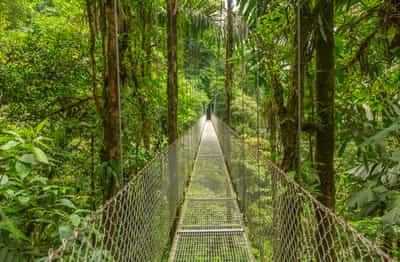
If the name ‘cloud forest’ conjures images of leafy greens, exquisite mists and a great whack of juicy biodiversity, you would be absolutely correct. Costa Rica’s Monteverde region is famous for its cloud forest and the Monteverde Biological Preserve is one of the last remaining sections of native forest in Central America. The area encompasses a staggering six ecological zones and within them, 2,500 species of plants, more than 100 mammals, 490 butterfly and almost 450 species of birds. Wow, indeed. In terms of visiting, there’s the original Monteverde Reserve as well as the newer Santa Elena Reserve, the first community-managed conservation project in the country when it opened in 1992. Both hum with flora and fauna, including the aptly-named resplendent quetzal with its jewel-bright plumage, giant orchids that Darwin would be proud of, and a melee of sloths, morpho butterflies, toucans and poison dart frogs. The activities are just as varied, with canopy tours for a different and delicious perspective of the trees, strolls with encyclopaedic naturalist guides, and zip line experiences, horse-back rides and rafting for the adventurists.

Turrialba

Get stuck into nature in the parrot-green, eastern landscapes – and enjoy some of the best whitewater rafting in the world.
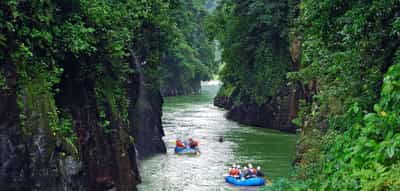
Stand in San José on a clear day and your eye will be drawn to a row of mountains 40 kilometres to the east. This is the Cordillera Central, a volcanic mountain range against whose slopes the Turrialba Valley lies – and over here, wild and wonderful takes on a new meaning entirely. Miles upon miles of unspoilt jungle covers the landscape, cut through by gin-clear rivers, fields of sugar cane and macadamia nut plantations, and watched over by all 11,000-feet of the towering Turrialba Volcano. The most famous of these rivers is the Pacuare, a winding, tumbling, gushing churn of water that provides some of the best whitewater rafting in the world and (you guessed it) is one of the main attractions of the region. Depending on how wet you’d like to get, book a half-day or day-long trip with a local operator, and enjoy the thrills and spills of the rapids and the twittering wildlife on the banks. Then, when back on dry land, roam the forest in search of black-cheeked woodpeckers and resplendent quetzals, hike the foliage-clad trails, or propel yourself through the canopy on a zipline.

Guanacaste & Nicoya Peninsula

No matter what you came to Costa Rica for, you’ll find it in this handsome Pacific corner
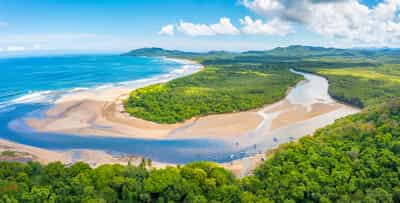
Wild, rugged and charming, the Pacific Guanacaste coast & Nicoya Peninsula is a land of contrasts in every way and the ideal scene for whatever you want your Costa Rica holiday to be. Home to some of the most beautiful beaches in the country, there’s Tamarindo for sun worshippers, grey-sand Hermosa for family-friendly shallow waters, Langosta for the best swimming (and some peace and quiet), and Playa Grande for keen surfers. Down on the exquisite Papagayo Peninsula, where the hotels are of the sleek and sophisticated variety, combine your relaxation with wildlife-watching in the forests (iguana, endangered macaw and howler monkeys) or in the ocean (manta rays, parrotfish and turtles). In Cabo Blanco National Park, there’s a menagerie of animals to spot, and at Montezuma, hike, swim in waterfalls and then explore the craft shops in town. So, that’s black or white sand beaches; luxury hotels that will cater for your every whim or teeny, boutique boltholes mere steps from the beach; surfing or yoga; hiking or ziplining; sun-splattered sands or animal-filled forests… The choice is yours!

Manuel Antonio

Discover national parks, pristine beaches, wildlife and ocean on this most picturesque slice of coast
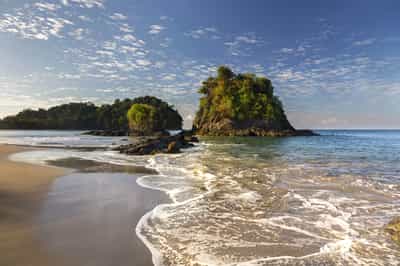
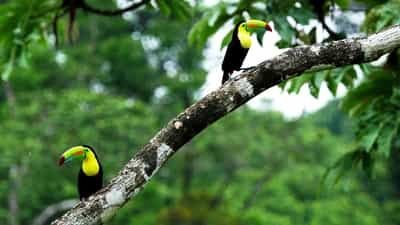
With two whole coastlines to boast about, Costa Rica is blessed with its fair share of postcard-perfect beaches. But how many of them are backed by chattering, animal-filled rainforests? Enter Manuel Antonio, a stunning crescent of blonde on the Pacific Coast where ferns touch the sand and lime-green palms stand proud against the jungle. At 1,700 acres on land and just under 136,000 acres out to sea, it’s the country’s smallest national park yet its diminutive size is certainly not a reflection on the wildlife that’s in store. Here, the trees buzz with butterflies, sloths and iguanas crawl amongst the lianas, squirrel monkeys swing, white-faced capuchins leap, and there are a variety of hummingbirds, kingfishers and toucans to spot overhead. Borrow the eyes and ears of a naturalist guide for the most informative of walks, then wind your way out of the jungle and straight into the shimmering waters of the Pacific for a dip. And whilst you’re there, why not try a spot of snorkelling, paddle-boarding or surfing?

Tortuguero

Translated as ‘turtle catcher,’ this enigmatic park produces the best turtle sightings in the world – and more!
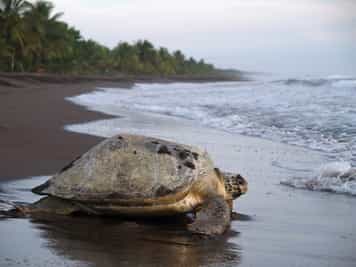
Protecting one of Central America’s largest swathes of tropical rainforest, Tortuguero, on the Caribbean Coast, is an homage to Mother Nature. Teeming with green and tickled by volcanic sands, it’s a jigsaw of waterways, lagoons and rivers only accessible by boat or small plane. And once on the (partly-submerged) ground, the adventure only gets better… Best explored on any number of water-based vessels, the wildlife – all 138 species of mammals, 442 different birds and 118 reptiles – is as exotic as it gets, and you’ll float past skittering Jesus Christ lizards, tiger herons, swinging howler monkeys and West Indian manatees to name but a few. Then, there are the green sea turtles, 40,000 of which arrive every year to nest along the shoreline. Visit from July to October to witness the females laying their eggs, then support research into the fascinating creatures at the visitor’s centre.

Puerto Viejo de Talamanca

The Caribbean cost, its tiny towns and nature-rich parks are laidback, vibrant and incredibly enjoyable
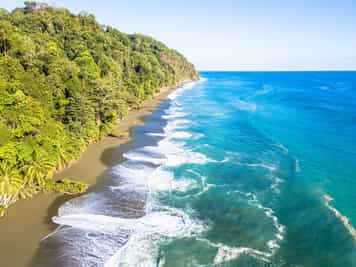
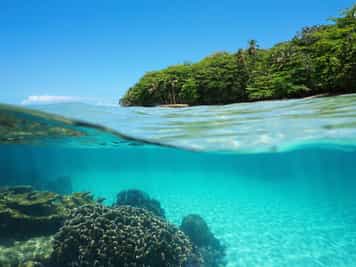
If there’s anywhere in Costa Rica to perfect the art of rest and relaxation, it’s the Caribbean coast. Complete with requisite palm trees, snow-white beaches and picture-perfect turquoise waves, the coastline has ‘beach holiday’ written all over it. But dig a little deeper into the sands and you’ll soon see that R&R doesn’t have to mean doing nothing... In Puerto Viejo, a sleepy (by day!) Afro-Caribbean village, join the surfers as they gather to tackle the waves, and then head into town to sample the uber-trendy eateries and vibrant food stalls, or find an offbeat bar for a drink and chilled-out vibes. For swimming, resist the temptation at Puerto Viejo and instead head to Playa Cocles, two miles up the road, and dip into the water before touring the nearby cacao forests and chocolate-creation lab. Then, there’s Cahuita National Park, a 10 square-kilometre, nature-rich paradise that spills from land to coral reef, rainforest to lagoon, and protects sea turtles, manta rays and sloths. But equally, if you would like to sit, take a moment and watch the waves tumbling onto the sands, the Caribbean coast will absolutely oblige...

Rincón de la Vieja

Hike among the forests, volcanos and flowering trees of this dry national park in the far north-west
Every country has somewhere that takes the title of the ‘least-visited’ place and in Costa Rica, it’s probably Rincón de la Vieja. Sitting up in the north-west corner of the country, the national park spans 34,000-acres, allowing plenty of space for rivers, streams, an amazing number of flora and fauna, and not one, but two volcanoes. Up here, the climate is hot and arid (think American wild west crossed with an African savannah) and, despite the presence of those rivers – and some therapeutic hot springs – the park is Costa Rica’s only dry forest. Hiking and walking is the best way to explore and there are seven trails to choose from, all ranging in difficulty, excitement and terrain, and with varying highlights including waterfalls, gurgling volcanic mud pits, and fumaroles. Much of the wildlife is unique to this part of the country and amongst the rolling hills, you might spot white-nose coati, agouti, nine-banded armadillo, peacocks and pizotes. And if you’re wondering what any of those are, you’ll just have to visit to find out…

Where To Go
Pin Icon

Namibrand, Namibia