DRC

Democratic Republic of Congo Safari Trips & Tours

Democratic Republic of Congo

Travel and Leaisure Worlds Best Awards for number 1 tour operator in the world 2024 and number 2 tour operator in the world 2025
We're one of the World's Best Tour Operators!
Voted No.1 in 2024 and No.2 in 2025 by Travel+Leisure
Why you'll love it

Why you'll love it

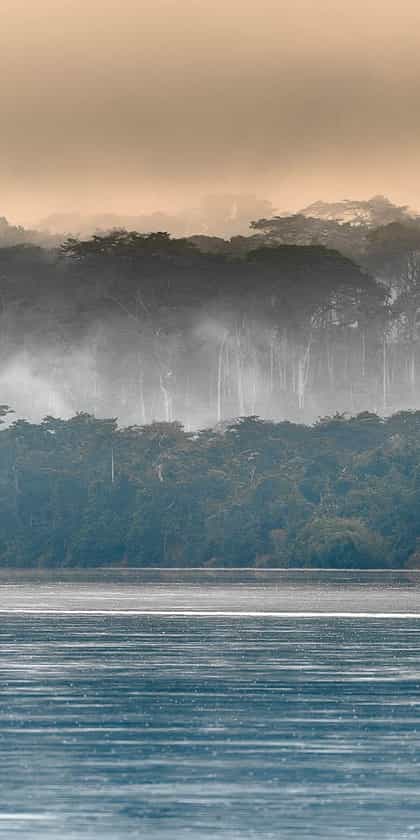
The DRC is mysterious and complicated, unexplored and diverse, and has a spirit of adventure that will put even the most adventurous traveller through their paces – and that’s definitely why it's one of our favourite destinations.
Off the beaten track

Off the beaten track

Hike to the summit of Nyiragongo Volcano and spend a night on the rim, looking down into the world’s most active lava lake – and dine out on the story for the rest of your life!
Something to think about

Something to think about

DRC is not without its problems and (we won’t beat around the bush) it’s a complex area to travel in. But if you’re organised, plan well and don’t leave anything to chance, the country can be more rewarding than almost any other on the continent.
Best time to visit

When to go on a DRC Safari

Excellent
Good
Mixed
Articles

DRC in the blog

Need to know and faqs

Democratic Republic of Congo Safaris and Holidays

Essential information before you leave
Getting there There are two preferred options for reaching Virunga National Park in the DRC. The first is travelling via Rwanda, where you’ll land at the Kigali International Airport. Depending on your time of arrival, you will either spend the night in KIgali or begin the 4 to 5-hour drive to the Grande Barrier border, which is just 15km away from Virunga. If you are strapped for time, it is possible to fly straight into the DRC, landing at the Goma International Airport. You will likely have a stopover in Ethiopia, which offers daily flights to Goma. From Goma, the entrance to Virunga National Park is just 45 minutes away.
Health & Safety Please consult your personal physician and/or a travel clinic preferably 6 weeks prior to your departure. Vaccine requirements vary based on your country of origin and your travel itinerary and your previous vaccination history. It is best to consult with your physician or the CDC website for guidelines. Important vaccinations to consider and which may either be required or recommended are: cholera, Hepatitis A & B, meningitis, typhoid and yellow fever. Please always carry your ‘International Certificate of Vaccination or Prophylaxis (ICVP)’ or ‘Yellow Card’ with you. Malaria We advise that you consult a medical practitioner at least six weeks prior to travel. Malaria is present in the DRC and it is strongly advisable to take malaria prophylactics before, during and after your visit. Please consult a medical professional regarding which prophylactics will be suitable for you. In addition to the recommendations of your travel clinic or physician, you may also consider the following proactive preventative measures: ● Apply insect repellent to exposed skin. Recommended repellents contain 20-35% DEET but it is a very virulent repellent, and should be used cautiously. ● Wear long-sleeved clothing and long pants at dawn and dusk, as well as closed shoes. ● Use a mosquito net if your tent or room isn't screened or air-conditioned; and spray insecticide or burn a mosquito coil before going to bed. If you come down with flu-like symptoms either during or within four to six weeks after your visit to a malaria area, seek a doctor's advice immediately and let him/her know that you have been in a malaria area. You can also visit www.malaria.org.za for more information. Communication DRC country code: +243 Calling overseas from DRC: From a landline dial 00 followed by the country code plus area code and number. e.g. USA: 00 1 910 795 1048 When calling from a cell phone dial + prefix followed by the country code plus area code and number. e.g. USA: + 1 910 795 1048
Money The official currency in the DRC is the Congolese Franc (CDF). The country is highly dollarized and US dollars are accepted as cash alongside the CDF for virtually all transactions. You can convert money to CDF at a bank or Forex Bureau, or withdraw from an ATM at the airport. Please check with your bank for charges and advice when using international ATMs. VISA and Mastercard are the most widely accepted credit cards, while American Express has limited to no coverage. It is advisable to have some cash for small charges and for tipping. IMPORTANT: When bringing foreign currency (e.g. USD, GBP, EUR) into the country, be sure to have the new format with no damage or marks. Gratuities We must stress that tipping is not compulsory or expected; rather it is an extra reward for excellent service. If you are pleased with the service you receive you are more than welcome to tip your guide or the staff. Tipping is usually done at the end of your safari, and you may tip the staff individually, place a tip for all the staff in the box or do both. Tips can be made in Congolese Francs or US Dollars. Gratuities suggestions: Safari Camp lead guide: $15 - $20 per person per day Transfer drivers (e.g. in cities or between airport and hotel/lodge): $5 per person per transfer Porter: $1 per bag Ranger or any “ancillary” guides on ad-hoc basis for a specific activity: $5 - $10 per person per activity General Camp staff (put in a central box in each camp’s main area): $10 - $15 per person per day
Insurance It is a condition of booking that you carry the correct comprehensive travel and medical insurance to cover yourself, as well as any dependents/travelling companions for the duration of your trip. This insurance should include cover in respect of, but not limited to, the following eventualities: Compulsory Insurance: a. Emergency evacuation expenses b. Medical expenses c. Repatriation expenses Recommended Insurance: a. Cancellation or curtailment of trip b. Damage/theft/loss of personal luggage, money and goods
As a general precaution, we recommend you make several copies of your travel-related documents (passport, traveller’s cheques, credit cards, itinerary, airline tickets, insurance cover, visas, etc). Leave one set at home, and bring another set with you, and place it in a location separate from your originals. Most nationalities do require a visa to enter DRC. Immigration control is very strict, and is known to deny entry to those not meeting the requirements. Passports MUST be valid for at least six months (we recommend nine) from your departure from DRC to home. There must be at least TWO consecutive blank VISA pages in the passport (not endorsement pages). Visit the Embassy of the Democratic Republic of the Congo website for the most current visa information. Overseas inquiries may be made at the nearest Congolese Embassy or Consulate. Please do contact the embassy or consultant in your home country to reconfirm visa requirements, as they change often. Visa Central is also a good resource for further information.
What to pack Climate The DRC experiences a hot and humid climate with minimal temperature changes throughout the year. There are two rainy seasons, one from March to May and a lighter, shorter period from mid-September to November. The DRC can be visited at most times of the year, but the weather can become quite unpredictable at the peak of the rainy season. Dress Code Generally speaking, light layers of clothing in neutral safari colours of green, khaki and beige are the best items to bring with you. Dark colours such as navy or black can attract tsetse flies and are best avoided, as are bright colours like yellow, red and purple. A lightweight waterproof jacket is also a must with high humidity leading to occasional showers. What to Pack Layers - long and short sleeve shirts and trousers A warm fleece or jumper A lightweight waterproof jacket Comfortable but sturdy shoes Leather gloves (there are stinging nettles in the park) A hat, sunglasses and sunscreen – a must! Toiletries – most camps will provide shampoo, shower gel and soap A small torch Spare batteries, plug adaptors and charging equipment A good pair of Binoculars Books or a fully loaded Kindle / iPad for siesta time Most camps and lodges will have a small medical and first aid kit, but we recommend bringing your own supply of essentials - cough medicine, plasters, vitamins, aspirin and paracetamol, and anything else you use on a regular basis. Camera Equipment (for the enthusiasts) • A telephoto lens (200/300mm) • Flash and fast film (400 ASA) for night photography • Lots of film (64,100,200,400 ASA) if using an SLR camera • Spare memory cards for digital cameras • Camera cleaning equipment and a good dust proof bag • Bring spare batteries as although you may recharge your batteries at the camps, charging capacity can be limited. Luggage Many international airlines have a baggage allowance of 20 kgs or more per person, but please check this with your individual airline. Please be advised that on domestic flights, luggage is limited to one soft sided bag per person with a maximum weight of 15kg. No hardshell bags are permitted. Electricity The DRC uses 220V, 50Hz AC, and sockets take mostly Type C, D and E. It is best to bring an adapter/convertor combination.
Travel with a purpose

We're proud to be making a positive impact

We’re big believers in leaving a positive impact in the countries in which we operate. We’re proud to donate $50 for every booking to projects focusing on female empowerment, tech education, and conservation.

Our dream is to empower our guests to travel with a purpose.

So far, we’ve donated $78,000 to projects across Africa.

As Seen in

11 Condé Nast Traveler Top Travel Specialists 2025

Condé Nast Traveler

No. 1 & No. 2 Tour Operator in Travel + Leisure's Best Awards 2024 & 2025

Travel + Leisure

Best Booking Platform in Women's Health Travel Awards 2025

Women's Health

Travel Specialist voted as Latin America A-List Travel Advisor 2025

Latin America A-List Travel Advisor

"Timbuktu can take relatively complex and slightly amorphous travel plans and transform them into a well-organized, perfectly tailored trip."


Forbes
AFAR
The Daily Telegraph
Vogue
Glamour
BBC
Oprah Magazine
Natural Geographic