According to current research, there are approximately 1,063 mountain gorillas on Earth, a number that is shared amongst the Volcanoes National Park in Rwanda, Virunga National Park in the DRC and Bwindi Impenetrable Forest in Uganda. Take a look at our full guide on choosing the destination for your gorilla trek here.
Known to be one of the most poignant, memorable and, often, life changing experiences in the safari world, gorilla trekking certainly tops many a bucket list. But have you ever heard of a gorilla habituation experience?
Note: Virunga National Park is currently closed to guests until further notice.
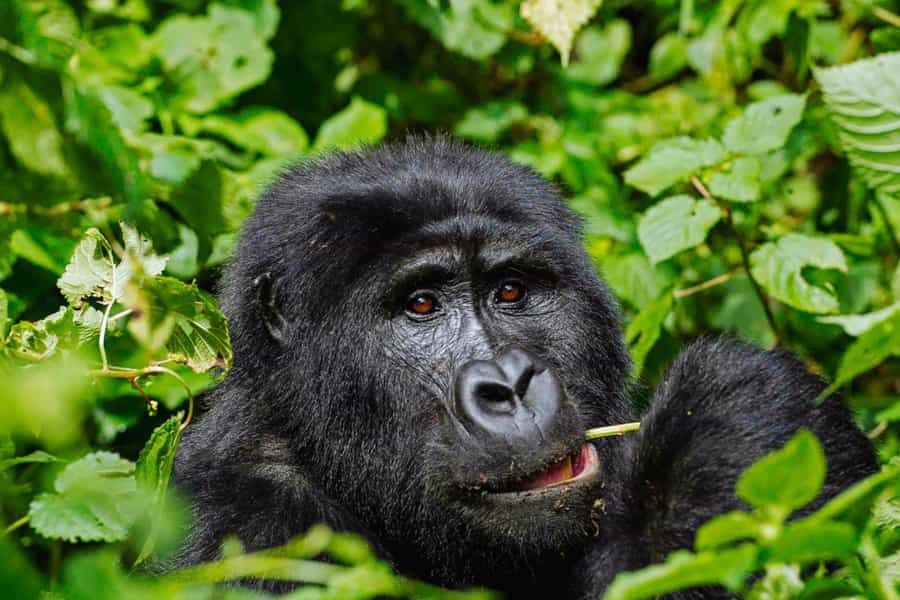
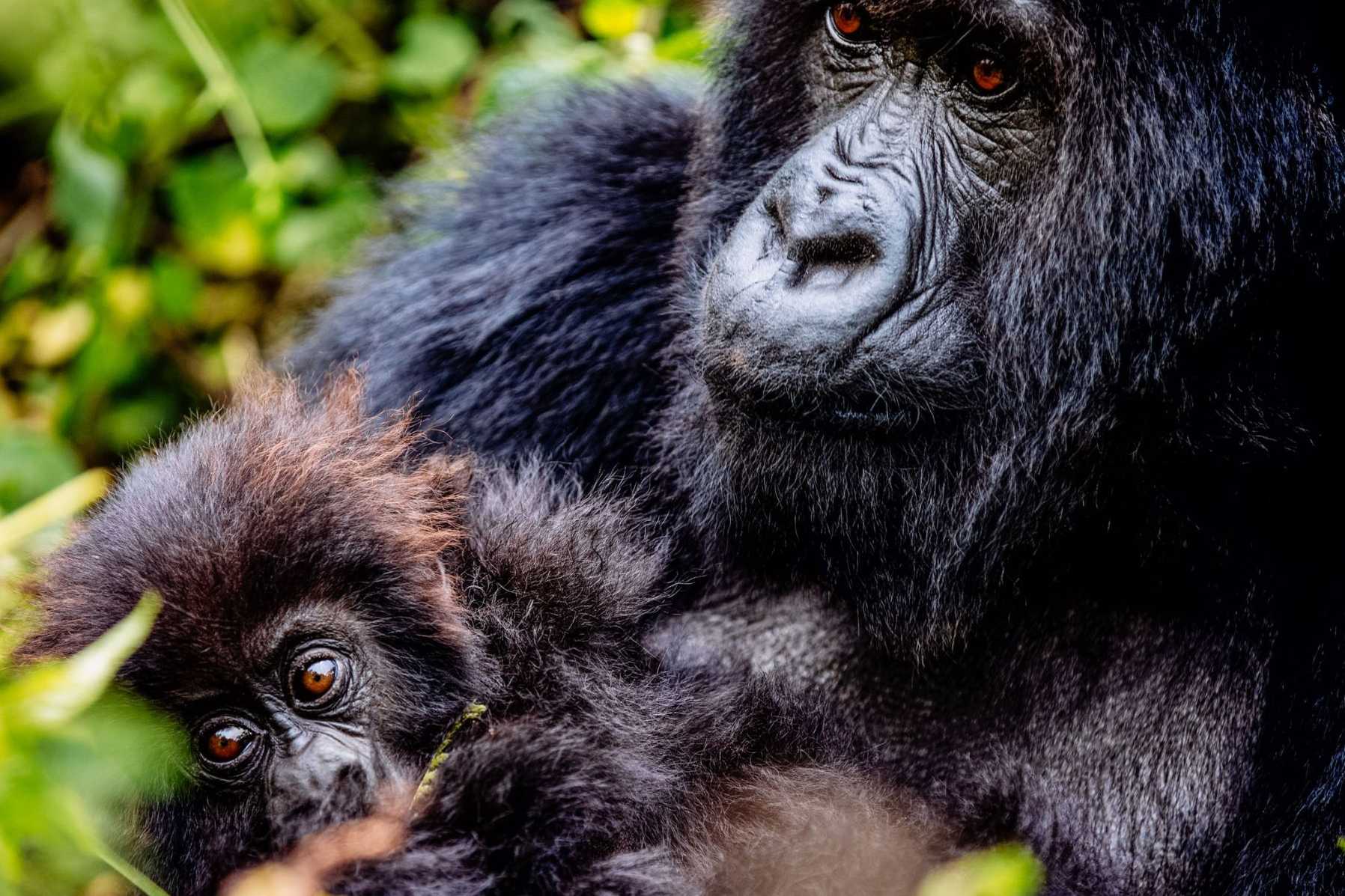
Spot gorillas in their natural habitat
What is a gorilla habituation experience?
First initiated in 2016, a gorilla habituation experience is a prolonged trek during which you will join a group of conservationists, researchers and rangers on an expedition to find a troop of gorillas who are unfamiliar with human visitors. Before the trek even begins, a full safety briefing of the dos and don’ts is given and you will then set off in search of the gorillas’ nests from the previous night, which will be used to track their current position. It can take up to six hours or longer to locate a gorilla family and, along the way, you will learn a great deal about how the rangers use subtle signs left behind to track them. This process is a major part of the entire experience and fascinating to witness.
The habituation process takes between two and five years, during which many treks are completed. Once the family of gorillas is found, the rangers will perform certain actions–making calls and grunts, chopping vegetation with machetes and talking amongst themselves–in order to slowly get the gorillas used to different sounds. If the troop is early on in the habituation process, you can expect them to be quite shy, compared to a family of gorillas who is further on in the process.
During your time with the gorillas, you will really get to know their individual behaviour and social dynamics and the habituation team will share the names and traits of each gorilla. You will also be able to capture some truly incredible photos without competing for space. Remember that flash photography is strictly prohibited.
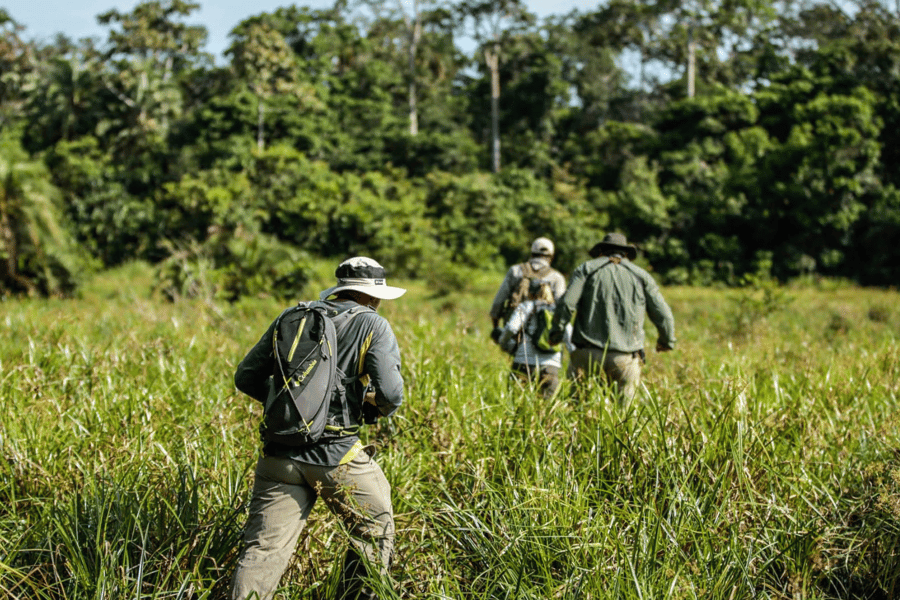
Set off on foot for a gorilla trekking adventure
What is the difference between a gorilla trek & habituation experience?
Firstly, on a gorilla trek, you will encounter a family who is completely used to human presence, while on a habituation experience, you are there to assist in getting the troop to this point. They are therefore less predictable and much wilder.
Secondly, the time spent with these creatures differs greatly. On a standard gorilla trek, guests are able to spend an hour with the gorillas, while a habituation experience allows for up to four hours to be spent in their presence. However, bear in mind that this time begins when you discover the previous night’s nests.
Which is more strenuous?
The gorilla habituation experience is likely to be more strenuous as you start far earlier and could be on your feet all day, while on a standard gorilla trek, the trackers go ahead so finding the gorillas takes far less time. In preparation for the habituation experience, you are advised to take long hikes of varying inclines before you arrive at your destination. However, both require a reasonable level of fitness due to the challenging terrain, and hiring a porter could be useful to assist you with tricky areas and carry your bag.
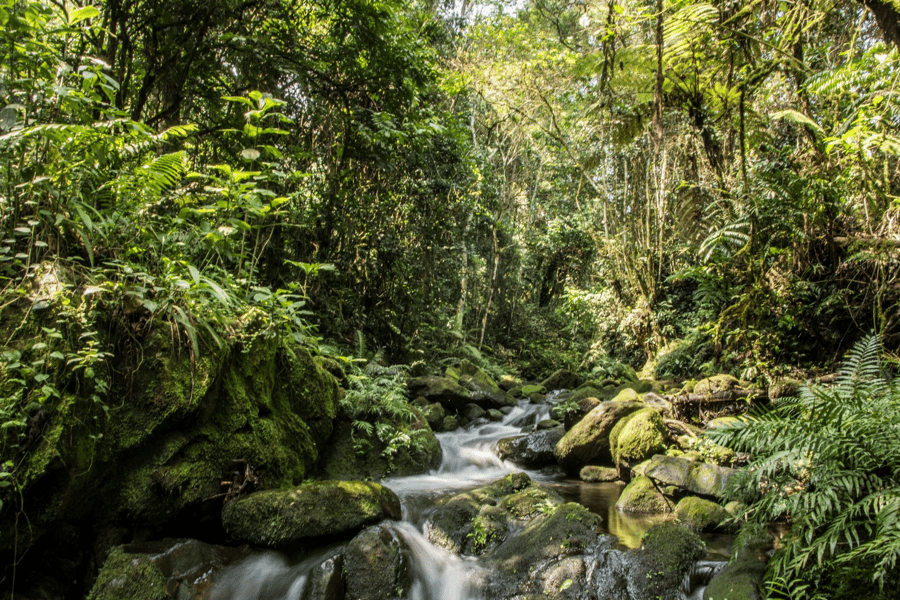
Search for gorillas in the Bwindi Impenetrable Forest
Where can you do it?
Gorilla trekking is available in three locations including Volcanoes National Park in Rwanda, Virunga National Park in the Democratic Republic of Congo and Bwindi Impenetrable Forest in Uganda. On the other hand, a habituation experience is only offered in the Rushaga sector in the south of Bwindi in Uganda.
How many people are allowed on a trek?
Across all three destinations, a maximum of eight guests are allowed on a standard trek, while a habituation experience is limited to four people per troop (eight in total), making the experience far more intimate.
What are the costs?
For a standard gorilla trek, the price of the permits varies from country to country, the highest being $1,500 in Rwanda, followed by $800 in Uganda and $400 in the DRC. Only available in Bwindi Impenetrable Forest in Uganda, the habituation experience costs $1,500. These prices are all based on a per person, per day basis and are subject to change.
Is there an age restriction?
For both the gorilla trek and habituation experience, guests must be 15 years and older to participate. This is due to the nature of the activity and the strict rules that need to be followed in order to co-exist harmoniously with the gorillas.
How close can you get to the gorillas?
All guests are required to maintain a distance of seven metres from the gorillas at all times. However, during a habituation experience, this will likely be more as the gorillas are shy and unlikely to venture closer of their own accord, as often happens during a standard trek.
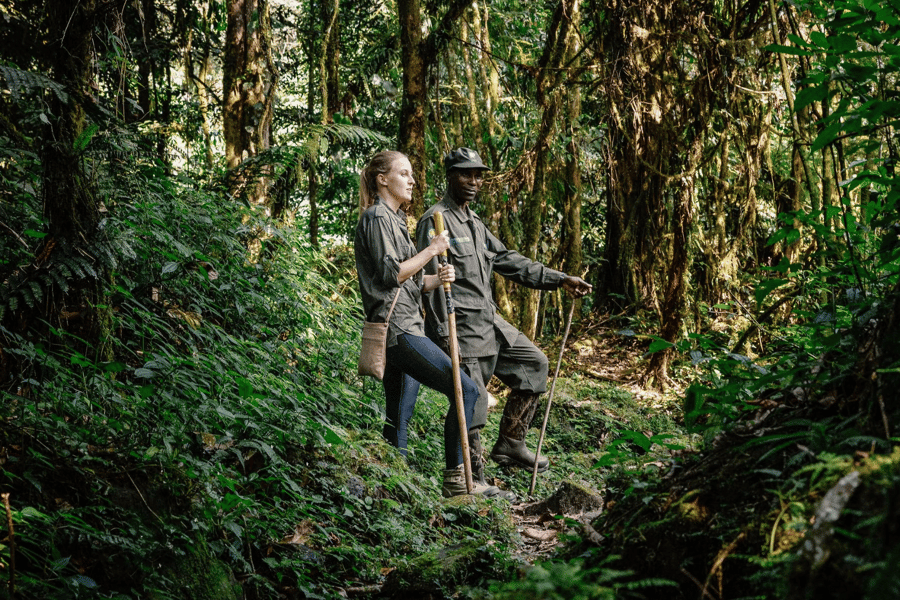
Take a guided walk looking for gorillas
Is gorilla trekking ethical?
Due to the high risk of poaching and habitat loss, it’s vital that rangers operate within the forests where gorillas live in order to protect them and their environment. In turn, the majority of the fees paid for both trekking and the habituation experience go towards anti-poaching efforts, ranger salaries and training, and habitat preservation and restoration. Thus, the opportunity to take part in either experience works towards the protection of these majestic creatures.
Participation in a habituation experience, also allows for increased opportunities for conservationists and researchers. These activities also mean rangers spend more time in the forest and delve deeper, acting as even more of a deterrent for poachers.
A portion of the fees is also invested back into local communities, making them more likely to support conservation efforts and more jobs within gorilla tourism means less reliance on activities like farming or logging.
A gorilla trek and habituation experience differ in a variety of ways including the amount of time spent with the gorillas, how strenuous they are and, ultimately, the purpose of your presence there. However, both are highly rewarding and will likely be one of the highlights of your safari (and life!).
Latest blogs
As seen in