Your Month-by-Month Guide to the Great Migration in Tanzania
If seeing the Great Wildebeest Migration in Tanzania is on your bucket list, then you’ve come to the right place… In this blog, we’ll be covering everything there is to know about the greatest wildlife show on Earth including a month-by-month breakdown of where the gnus will be, the most prominent sectors of the Serengeti and what you can expect to see there, and just where to stay to see this natural spectacle in all its glory. Read on for our guide to the Wildebeest Migration as it moves across Tanzania.

See the great herds of wildebeest crossing rivers
What exactly is the Great Wildebeest Migration?
Essentially, the Great Migration is the largest mass movement of mammals on the planet, where almost two million ungulates migrate between the Serengeti in Tanzania and the Masai Mara in Kenya. This includes around 1.5 million wildebeest, alongside hundreds of thousands of zebras, as well as Grant’s gazelle, Thomson’s gazelle, eland and impala. What makes the Great Migration so fascinating is its never-ending nature as the animals are in a near-constant state of movement on their 1,000 kilometre round trip. When it comes to the Great Migration, Tanzania enjoys the lion’s share of time spent and possible sightings.
Many have wondered what causes the Great Migration to happen each and every year. Some surmise that the ancient route is imprinted in the DNA of the wildebeest, with fossil evidence suggesting that the animals have been roaming the plains of East Africa for over one million years. However, some scientists believe that the herds are attracted to higher levels of phosphorus and nitrogen in newly-sprouted grass, which occurs in response to the rains that arrive ahead of them. Aerial photography also suggests that there is a remarkable level of organisation in the structure of the wildebeest herds, indicating a degree of decision making between the gnus.
The Great Wildebeest Migration also ensures the Serengeti savannah isn’t over-grazed, giving it time to replenish as the animals move along the route. The migrating ungulates are also critical for fertilising the soil and ‘trimming’ the grasslands, which assists in preventing bush encroachment and supporting a diversity of plant life for other species. Ultimately, without the Great Migration, the Serengeti-Mara ecosystem would likely see major ecological changes. Additionally, this mass gathering of herbivores provides a vital food source for predators including lion, leopard, cheetah and spotted hyenas.


Spot an abundance of wildlife in the Serengeti
The Serengeti in four parts
Covering a vast landscape of 14,750 square kilometres, the Serengeti is truly iconic in safari circles (and beyond) and by understanding the different sectors, it’ll make it easier to plan your Great Migration safari. Here’s a little more about the four main regions: the Southern Serengeti, Central Serengeti, the Western Corridor and the Northern Serengeti.
Southern Serengeti
A landscape of ‘endless plains’ for which it was named, the southern region is quintessential Serengeti. Mostly made up of flat grassland with occasional acacia woodlands and granite outcrops (kopjes), it is ideal for seeing the herds in their hundreds and thousands and catching plenty of predator action.
Central Serengeti
Often called the ‘heartbeat’ of the park, the Central Serengeti is clustered around the Seronera Valley, the transition point between the southern plains and northern woodlands. It’s a golden landscape of rolling savannah, acacia trees and plenty of kopjes, with the Seronera River and many permanent waterholes attracting wildlife all year long. In fact, it has incredible diversity including big cats throughout the year, but this does make it one of the busiest sectors of the park too.
Western Corridor
Defined by the Grumeti and Mbalageti Rivers, dense riverine forests and acacia woodlands, the Western region of the Serengeti forms a wildlife corridor leading towards Lake Victoria. For much of the year, this area is pretty much absent of tourists until the Great Migration herds arrive.
Northern Serengeti
A soaring, hilly region of savannah and woodlands, the Northern Serengeti is made up of the Mara River basin, the Lamai Wedge and Lobo Hills. The rolling green hills, rugged kopjes and lack of roads give it a wonderful ‘wilderness’ feel and the landscape is truly spectacular.
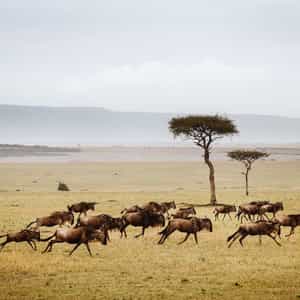

Witness calving season in the Serengeti
A month-by-month guide to the Great Migration: Tanzania
From changing weather to thrilling ‘events’, the Great Wildebeest Migration is incredible to witness during every month of the year, but it’s worth knowing what’s going on and when.
November to December
Tanzania’s short rains begin around early November, and the herds begin their journey south in pursuit of succulent new shoots and grasses. During late November, the best viewing can often be had in the eastern Serengeti and central Seronera region.
By December, most of the wildebeest will have gathered in the southern Serengeti once again, enjoying a feast of grass and quenching their thirst.
January to March
Throughout these early months, the wildebeest remain in the southern Serengeti, munching on juicy grasses and preparing for calving season. This normally takes place over a few weeks in February when over 500,000 calves are born (that’s about 8,000 every day!). This is one of the most significant moments on the Serengeti migration calendar when heartwarming scenes of tottering newborns contrast with thriving predator action as they pick off the young and weak. Babies may still be born in the first half of March, but following localised showers, the herds begin to move northwards en-masse, even reaching as far as the northern Ngorongoro Conservation Area, though they never actually enter the crater.

Track wildebeest during the Great Migration
April to May
As the southern plains begin to lose their bountiful appeal, long, snaking columns (often up to 40 kilometres long) of wildebeest and other ungulates trek northwards, stretching from the south and all the way through the central Moru Kopjes to the Western Corridor. These columns are so vast it is said they can be seen from space!
June
Depending on the rains, large herds often reach the Grumeti and Mbalageti Rivers in the west by June, where the first crossings take place. While the rivers are mostly made up of pools and channels at this stage, huge Nile crocodiles lie in wait for the brave gnus. Rutting season has also begun and the plains are filled with males strutting their stuff in an attempt to attract a mate.

Keep your eyes peeled for jaw dropping moments
July to September
Then, it’s onwards to the Mara River, which winds its way through the north-western Serengeti, before entering the western Masai Mara in Kenya. The herds often spread out across a broad area for this part of the journey, some heading through the Grumeti Reserve and Ikorongo, whilst others go north through the heart of the Serengeti.
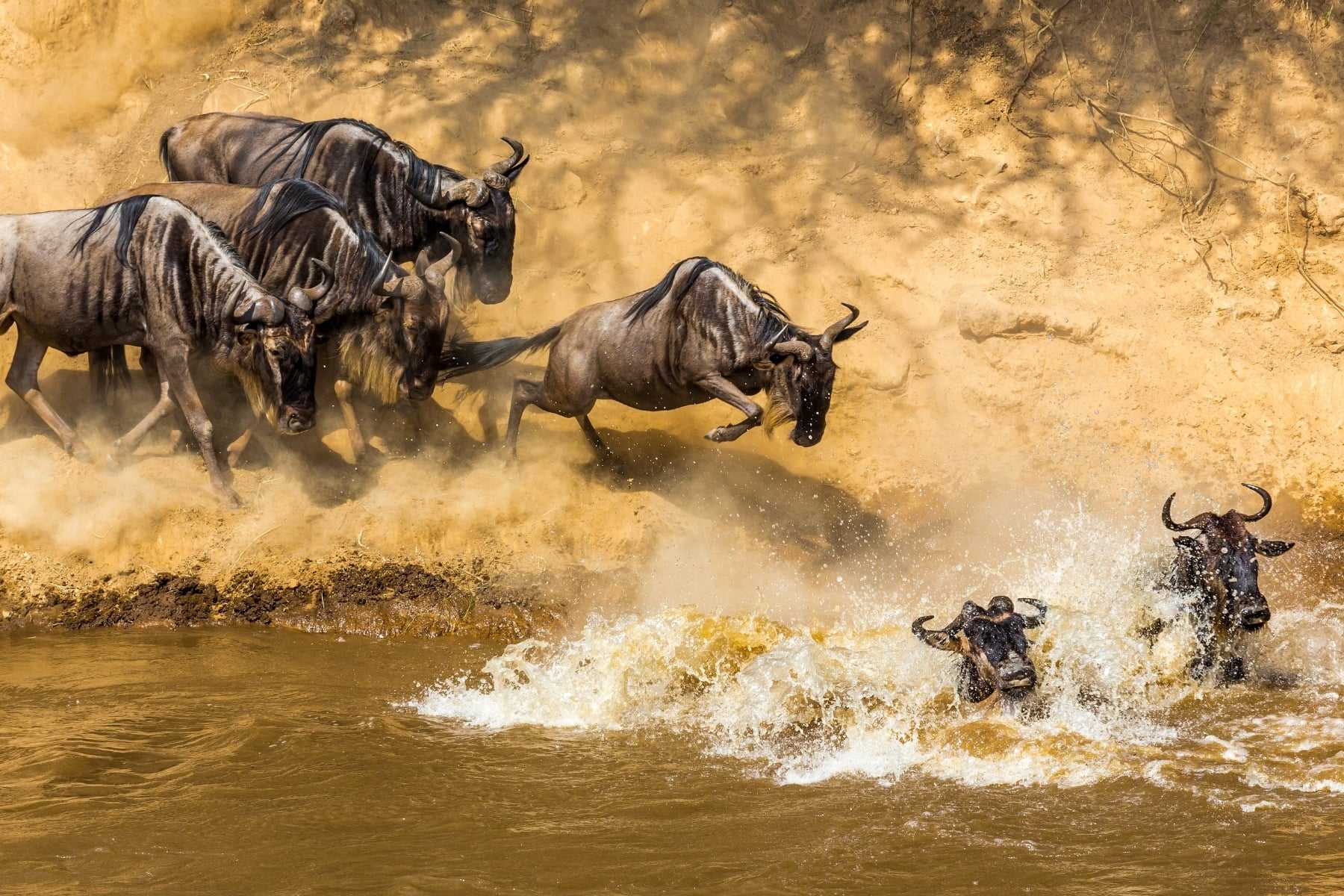
As early as June or late as August, the gnus arrive on the banks of the Mara River, gathering their courage to cross. Those who do make it past the snapping jaws of the crocodiles, strong currents and waiting big cats, spend the next few weeks enjoying the grasses in the Masai Mara. However, a significant number often remain in the northern Serengeti, moving back and forth across the Mara River. Visiting during this period provides extremely rewarding sightings, however it is a popular time with visitor numbers to match.
October
By this time, the wildebeest migration will be making its way back across the Mara River (for those that have remained in Kenya) and making a beeline for the southern Serengeti as the short rains begin. The herds are usually more dispersed in October, spreading through the northern Serengeti and Lobo area, which is relatively tourist free.
The transition months (late May into June and late October into early November) can be a particularly excellent time to see the Great Wildebeest Migration in the Serengeti. These periods often experience a fantastic balance of wildlife action and fewer tourists, but you may have to travel further to the see the herds depending on where they are in their journey.
For a full guide on when to see the Great Migration across Tanzania and Kenya, including wildlife movement and weather patterns, take a look at our blog.

Spot lion as they hunt during the Great Migration
How to see the Great Migration in Tanzania
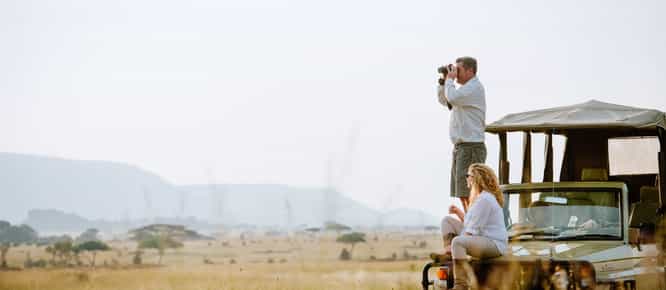
Game drives are, of course, the most popular way of seeing the Great Migration as you’re able to cover significant ground and follow the herds easily. This will usually be done in an open-topped or open-sided 4×4. Certain camps and operators also offer special equipment for photographers looking to capture that perfect shot.
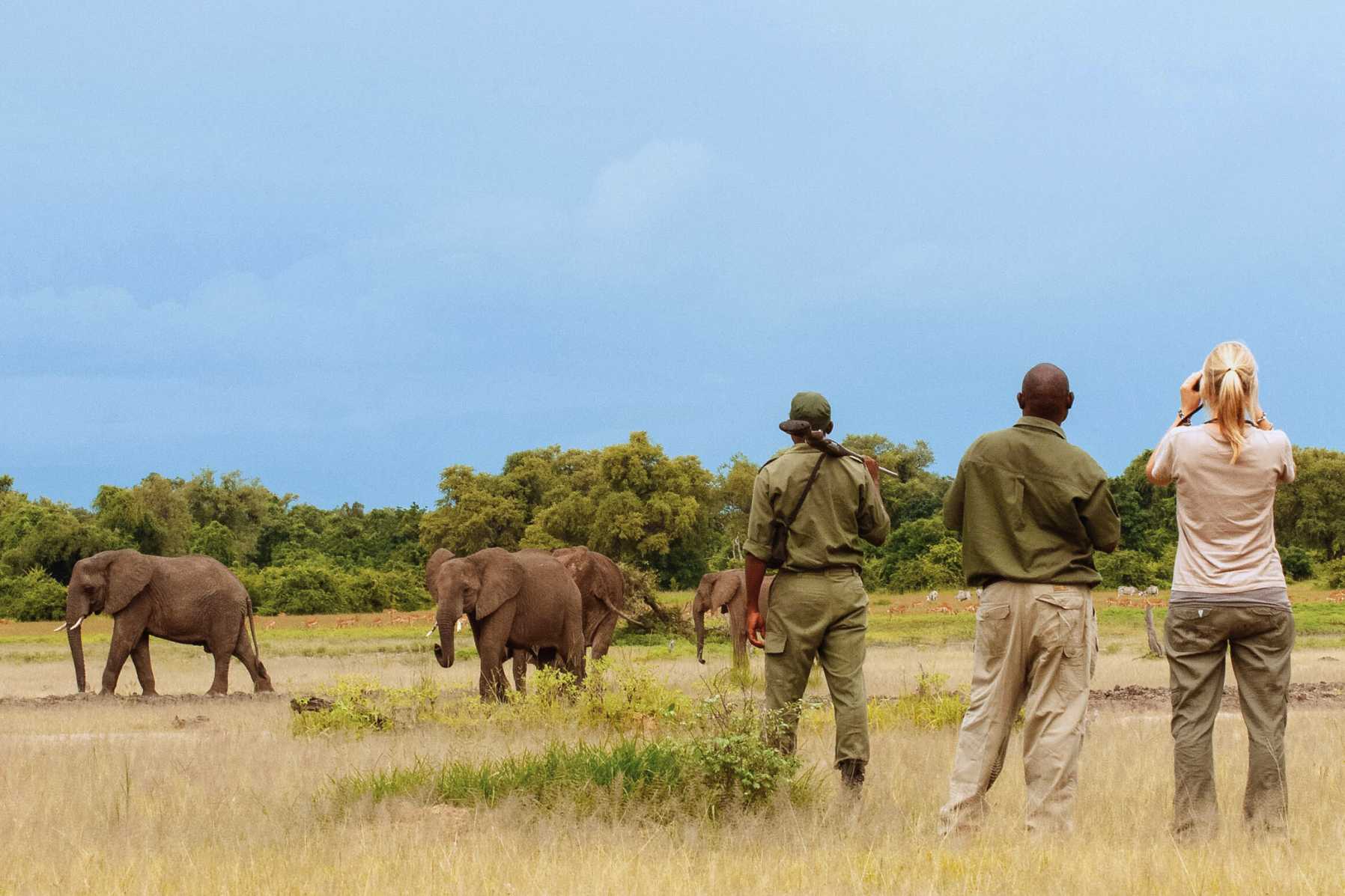
Walking safaris are also available within specific areas of the Serengeti and will be led by expertly-trained guides. While you won’t get close to the herds, it is a fascinating way to experience this natural phenomenon from afar.
Available in Central and Northern Serengeti, hot air balloon safaris are a rather special way to see the full scope of the Great Migration. You’ll float silently overhead as thousands upon thousands of ungulates move beneath you, undisturbed.

Singita Faru Faru Lodge, Serengeti
Where to stay?
Kubu Kubu Tented Lodge
Seronera & Central Serengti
You couldn’t ask for a better location at this hilltop camp with perfectly-situated tented suites and access to the famous Moru Kopjes and nearby river.
Best time to visit: April to June
Singita Faru Faru Lodge
Grumeti & The Western Corridor
A glamorous spot in the Grumeti Private Reserve, Faru Faru boasts a hilltop location overlooking plentiful waterholes and the Grumeti River. When you’re not out on thrilling game drives, take in the scenery and ever-exciting sightings from one of the two swimming pools.
Best time to visit: May to June
Nimali Mara
Northern Serengeti & Lamai
Glass-sided tents and well-positioned chill-out locales ensure the thrilling action along the Mara River is never out of view – even from your soaking copper bathtub.
Best time to visit: July to October
Ndutu Kati Kati Tented Camp
Southern Plains & Ndutu
Kati Kati takes you back to safaris of a simpler time with bucket showers and meals cooked over a fire, and little to distract you from the enthralling scenes of the Serengeti’s calving season.
Best time to visit: December to March
The Great Migration, Tanzania’s thrilling wildlife spectacle, is a constantly moving cycle, a dance between new life and certain death, and one of the greatest shows on Earth. From what you can see and when, to the best places to stay, we’ve covered it all, but if you’re looking for an even more in-depth take on the Migration as a whole, delve into this blog.

Latest blogs
As seen in