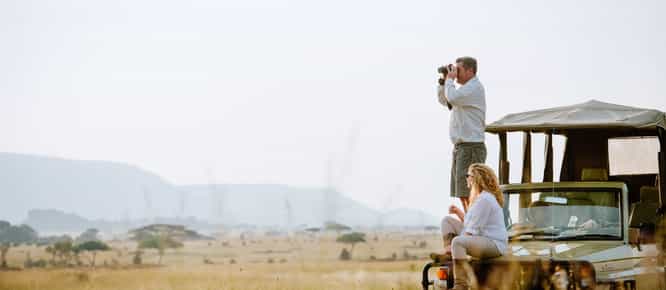
What to expect on a Zambia walking safari
Imagine setting out at dawn, your boots crunching through the grass and your senses primed for the slightest sound or flicker of movement. Picture hunkering down around a print left in the soft sand or inspecting a particularly unusual spiderweb, followed by the thrill of a vividly-feathered bird taking flight or the distant roar of a lion. And this is just a snapshot of what awaits on one of our African walking safaris…
Now, if you’re seriously thinking about including a walking safari in your trip, whether that’s spending a morning on foot or a multi-day trek, Zambia should be at the top of your list of destinations. It is renowned the world over for its spectacular scenery and wildlife and top-tier guides. What’s more, it’s the birthplace of the modern walking safari (more on that later).
In this guide, we’ll share everything there is to know about a Zambia walking safari, from the animals you’ll see to the very best places to stay.
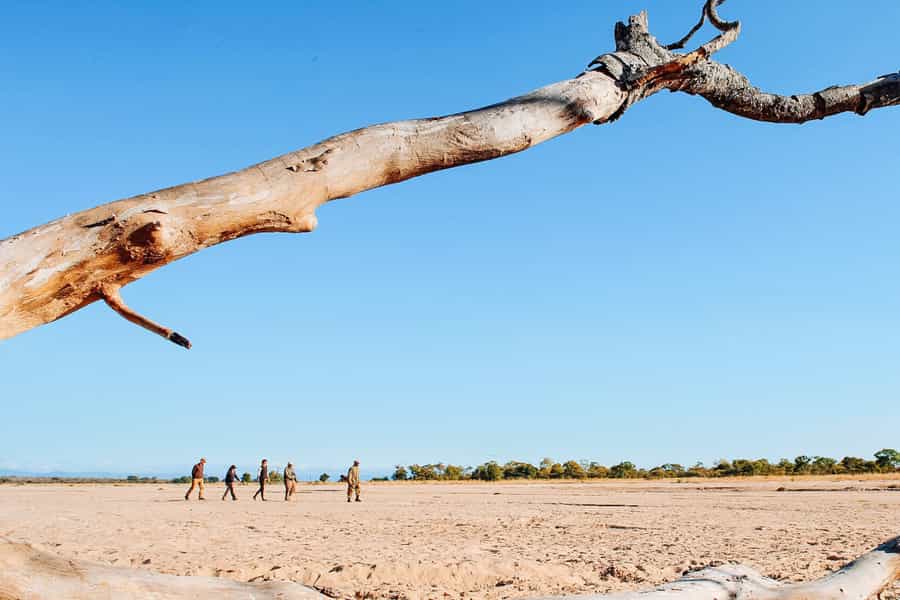
Go on a walking safari in Zambia
The history of the Zambia walking safari
Walking is the original way of experiencing and exploring Africa, a necessity for centuries of indigenous people, an opportunity to learn for naturalists and, unfortunately, the method of many early trophy hunters too.
However, it wasn’t until the 1950s, when former game ranger and big game hunter, Norman Carr, realised that tourism could benefit both the wildlife and local people. Carr helped establish Kafue National Park, then turned his sights to the Luangwa Valley, where he laid the foundations for conservation-based tourism. He founded Norman Carr Safaris, where guests were taken out into the bush on foot, led by trained guides; a completely radical idea at the time. Thus, the Zambia walking safari was born. Carr worked closely with local communities, hiring guides and scouts, and putting a community-based conservation model in place.
Of course, since then walking safaris have become available in other places across the continent, from southern Africa to certain parts of East Africa.
African walking safaris: a typical day
A walking safari in Africa typically starts at dawn, long before the hottest hours of the day. You’ll usually have a light breakfast or snack before setting off for the walk, usually lasting between 3 – 4 hours. Throughout, you’ll stop frequently to look at interesting tracks, plants, insects and animals. A walking safari isn’t about covering many kilometres, but instead about following the meandering landscape and the signs of the wildlife. At mid-morning, you may break for coffee or tea and a selection of snacks in the shade of a tree and by late morning (10 am or 11 am), you’ll return to camp for a well-earned brunch or lunch. If you’re on a multi-day walking safari, then your end point may be the next camp on your itinerary, where you’ll have lunch and settle in. At many camps, you can head back out for a shorter afternoon walk after your siesta, which takes around 1.5 to 2 hours and ends back at camp for sundowners around the fire.

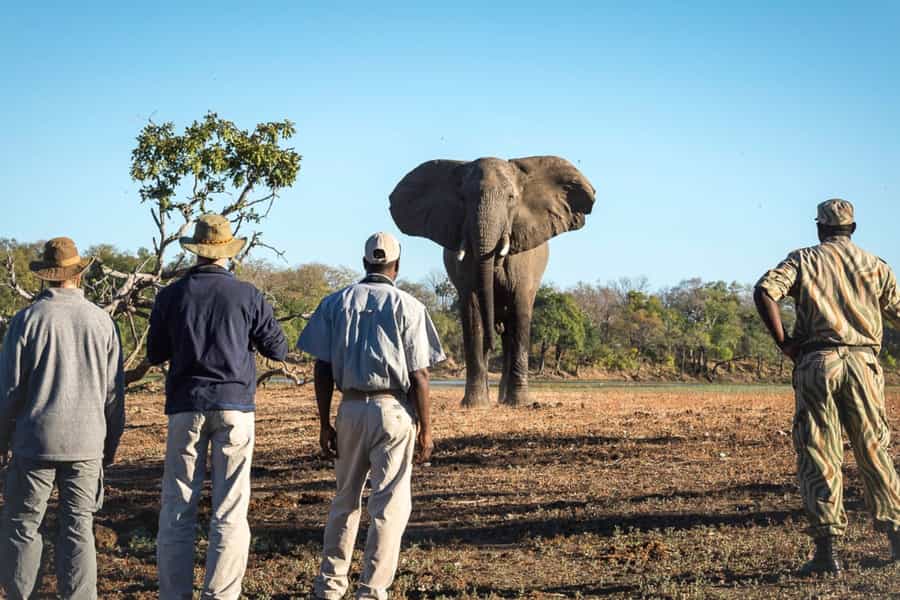
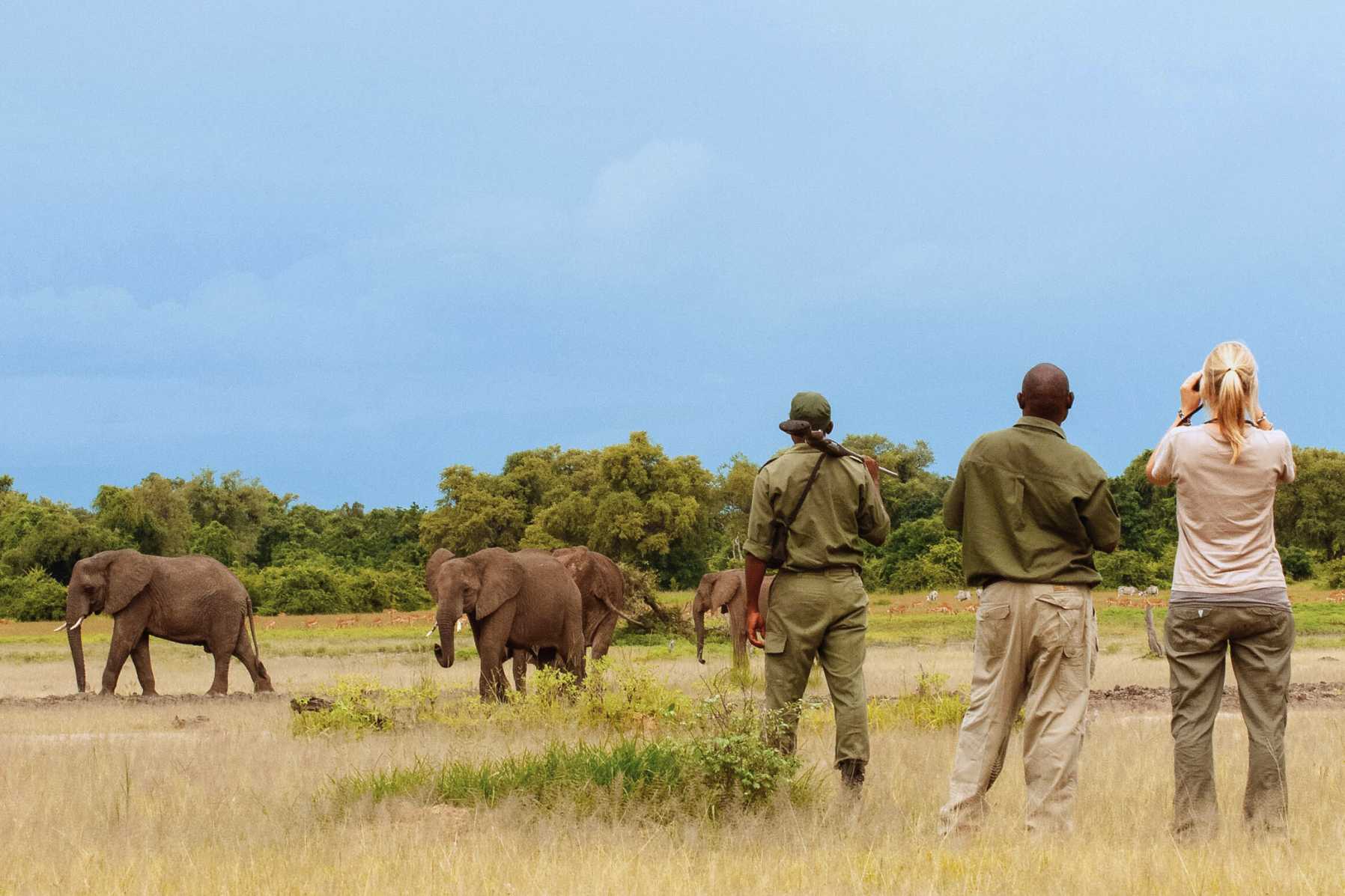
Get up and close with elephants on a walking safari in Zambia
Safety on a walking safari
On any Zambia walking safari, you’ll venture out with an expert guide and armed wildlife scout and safety is of the highest priority. In fact, Zambia has some of Africa’s most rigorous guiding exams and it takes over two years of training to earn a walking safari license. Before setting off, your guide will prepare you with a strict briefing and instructions to follow whilst out in the bush. These may include walking in a straight, tight-knit line, avoiding loud noises and never making sudden movements. Whilst the aim of a walking safari is to discover the smaller aspects of the bush, you may encounter large animals on foot. In most instances, your guide will have spotted them before you are even aware of them and will keep you at a safe distance for viewing. Walking safaris can sound a tad intimidating or nerve-wrecking at times, but as long as you follow your guide’s instructions, be it verbal or hand movements and stay alert, you can enjoy a thrilling yet safe experience.
Preparation & pace
On a Zambia walking safari, you can expect to travel at a relaxed pace with plenty of stops – the experience isn’t as much about ground covered as it is about intentional exploration. In fact, during a typical three to four hour walk, you might only cover five to 10 kilometres, with frequent stops to examine tracks, droppings, and other clues left behind by the Zambia wildlife.
In terms of physical preparation, you certainly don’t need to be an athlete, but a moderate level of fitness will help you enjoy the walks. Ultimately, you need to be able to walk for a few hours in the sun, on often uneven terrain, with little actual rest. However, in most cases, the guide will adjust the pace to the group and anyone with reasonable walking ability can participate.
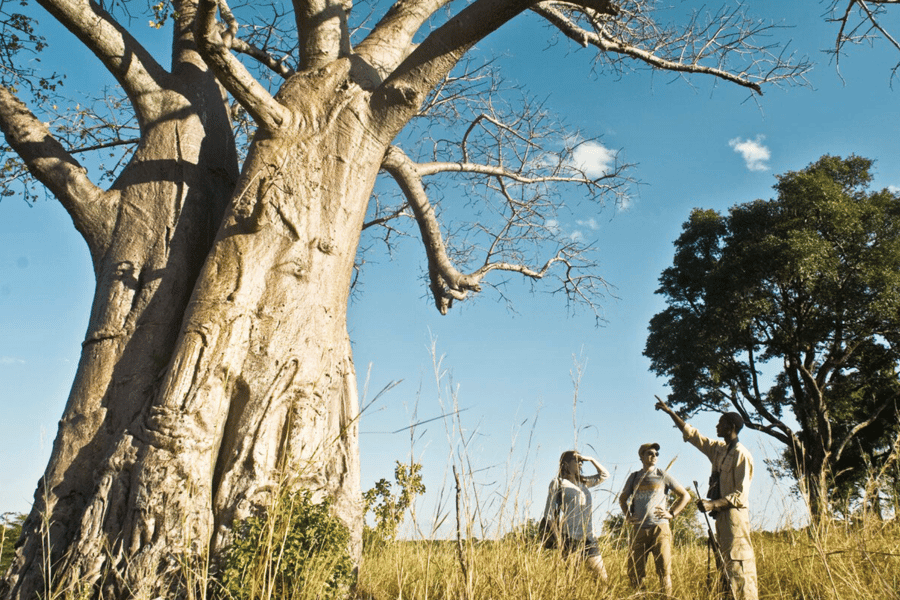
Learn about the flora and fauna with a local guide in Zambia
Camps, Conservation & Community
Following in the footsteps of Norman Carr, most lodges and camps in Zambia are deeply involved in conservation through Zambia’s low-impact, high-value tourism model. Many camps run or co-run anti-poaching patrols, and are involved in fire management, invasive species control and community-led buffer zone planning to reduce human-wildlife conflict. Some camps or groups also run or support local schools, health clinics, scholarship and conservation education programs. Several camps also provide logistical support to researchers, host wildlife monitoring programs and participate in citizen science.
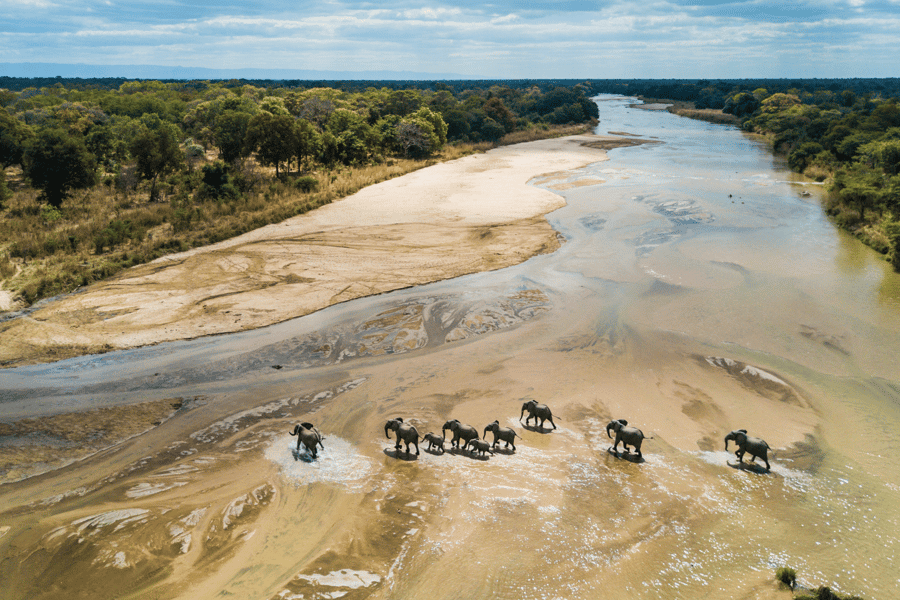
View great herds of elephants in South Luangwa
Where to go on a Zambia walking safari
In the years since its first iterations, walking safaris have become available across Zambia and the rest of southern Africa. Within Zambia, there are four regions that stand out for their exceptional on-foot experiences.
South Luangwa National Park
Perhaps the most famous destination on Earth when it comes to walking safaris (it’s their birthplace, after all), South Luangwa National Park lies within the Luangwa Valley, a landscape of riverine woodlands, open floodplains and shimmering oxbow lagoons along the looping Luangwa River. The terrain is mostly flat, making it gentle on walkers, and routes typically take you through pretty groves of ebony and mahogany trees, across grassy meadows and along dry sand riverbeds. South Luangwa has a long and prolific history of walking safaris, so guiding standards are superb across the board and many camps specialise in walking explorations.
Wildlife in South Luangwa National Park
South Luangwa is known for its incredible population of predators including wild dogs, lions and leopards, however, guides usually track them or seek out sightings at a distance, rather than direct encounters. The park is also known for its impressive elephant numbers and they are often seen from a safe and respectful distance in riverine forests and around dry, sandy lagoons (their mammoth footprints are usually a giveaway!). Hippos can often be heard grunting and snorting from oxbow lagoons and riverbanks and sightings of endemic subspecies like Thornicroft’s giraffe and Crawshay’s zebra are rather special, as are encounters with zebra, puku, impala and kudu. Colourful birdlife like lilac-breasted rollers and bee-eaters, chameleons and butterflies are also fantastic to see on foot. With such incredible wildlife in the region, every walk feels exciting and unpredictable.

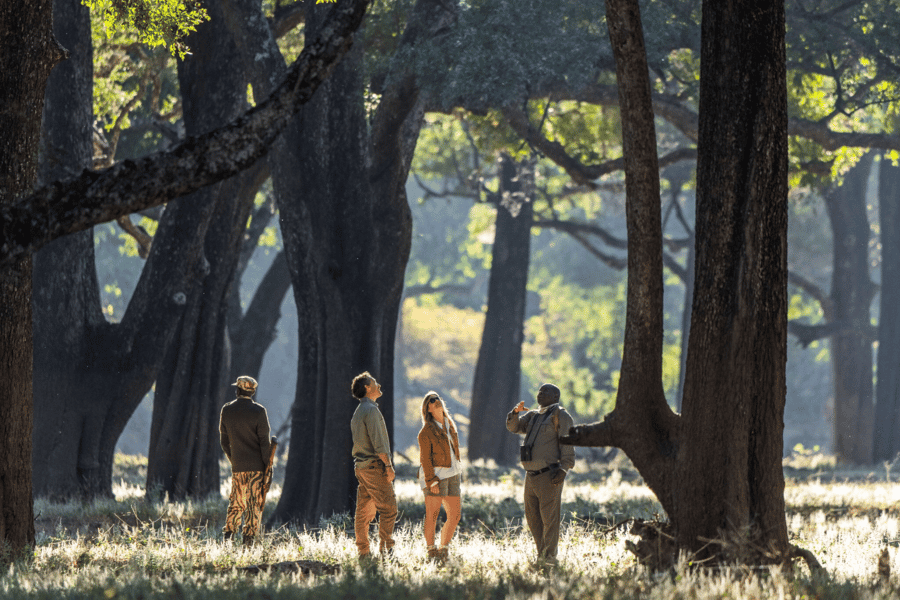
Go on a bush walk at Time + Tide Chinzombo
Where to stay in South Luangwa National Park
From the wonderfully rustic to the truly luxury, South Luangwa has somewhere for everyone.
A pioneer of walking safaris in South Luangwa, this five- to seven-day walking route traverses the park’s wild northern regions. Each day, you’ll walk around 10 kilometres and bed down in a simple fly-camp at night. The guides are legendary for their knowledge and storytelling abilities.
Sitting right on the Luangwa River, this is one of Zambia’s most opulent lodges complete with plunge pools and a spa. The lodge offers shorter guided walks but guests often pair it with one of South Luangwa’s more remote bush camps.

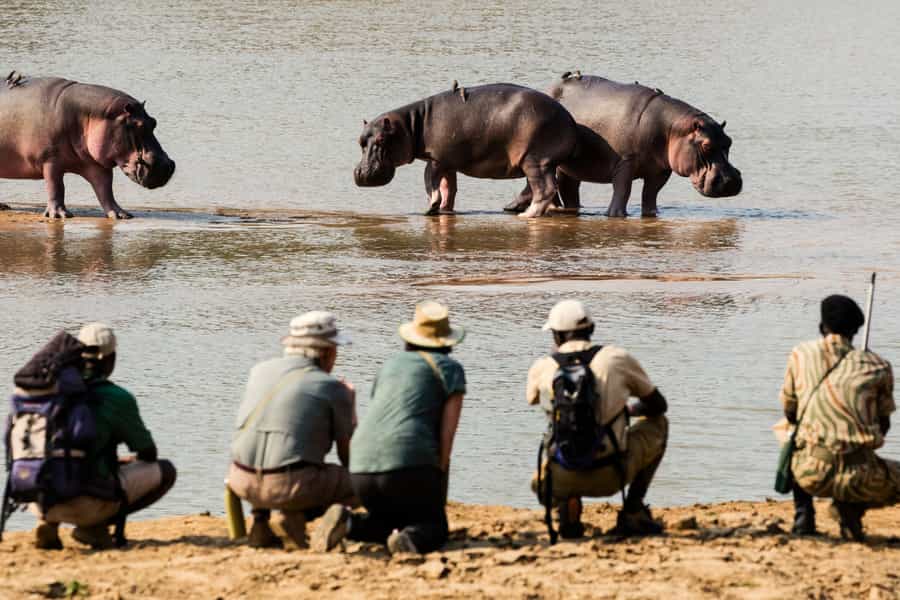
Spy hippo in North Luangwa National Park
North Luangwa National Park
The even wilder sibling of South Luangwa, the North Luangwa is as remote as they come with very limited roads. Naturally, the walking safaris are out of this world. As you explore on foot, you’ll rarely see another group around, just woodlands of miombo and mopane interspersed with open grassy areas, the perennial Mwaleshi River, and wildlife that is mostly unaccustomed to humans.
Wildlife in North Luangwa National Park
The elephants in the North Luangwa are more cautious of humans than in South Luangwa, so moments in their presence tend to be brief but highly memorable. You’re also likely to come across eland and hartebeest on the plains, as well as bushbuck and kudu darting amidst the thickets. Walking in this region may include following the meandering Mwaleshi River, spotting wallowing hippos and tracking lion prints in the sand.

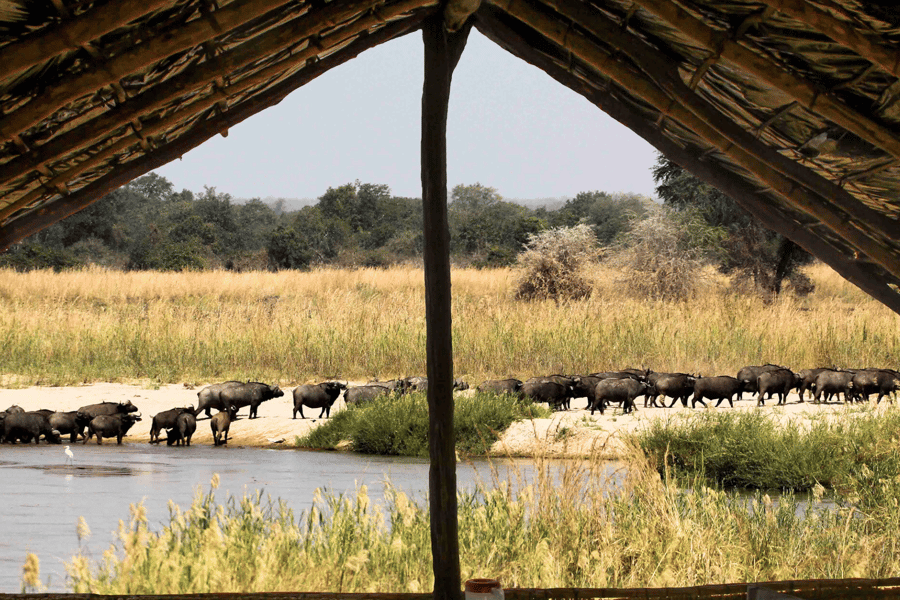
Witness herds of buffalo at Buffalo Camp
Where to stay in North Luangwa National Park
Camps in North Luangwa are few and far between, but beautifully rustic and off-the-grid.
An exclusive and blissfully simple camp set amongst the endless acres of North Luangwa, where walking safaris truly are a way of life.
Rebuilt each year in time for June and gone again by December, Buffalo Camp is a down-to-earth spot on the banks of the Mwaleshi River. And the walking safaris are suitably epic!

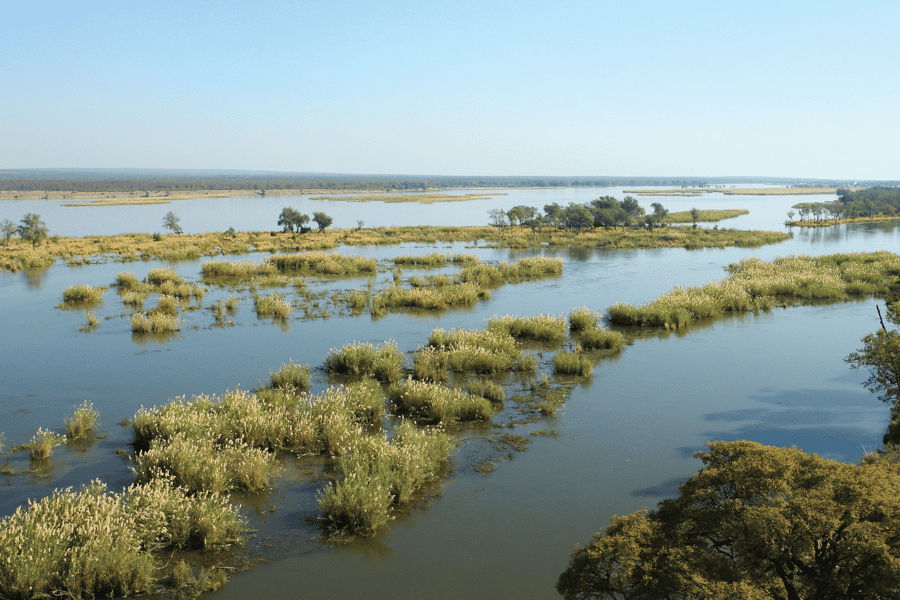
Take in epic views while on safari in the Lower Zambezi
Lower Zambezi National Park
On the opposite side of the country to the Luangwa Valley, this sprawling and spectacular park stretches along the north bank of the Zambezi River. Backed by the Zambezi Escarpment, the park is a mosaic of habitats from thick winterthorn and acacia forests, to open floodplains and river islands. Walking safaris in the Lower Zambezi allow you to explore everything from the foothills right up to the water’s edge – the Zambezi’s soft, sandy channels are ideal for reading animal movements.
Wildlife in Lower Zambezi National Park
Out of all the Zambia wildlife, elephant sightings are iconic in Lower Zambezi National Park, and it’s not unusual to spy bulls feeding silently in a winterthorn grove or see a herd digging for water in a dry channel. Buffalos are also present in their numbers, where they graze on the floodplains, closely watched by lions, leopards, hyenas and African painted dogs. Although, you’re unlikely to have an up-close encounter with any predators on foot, you’ll spy impala, kudu, bushbuck and waterbuck in the thicket and fish eagles, hornbills, bee-eaters and owls overhead.

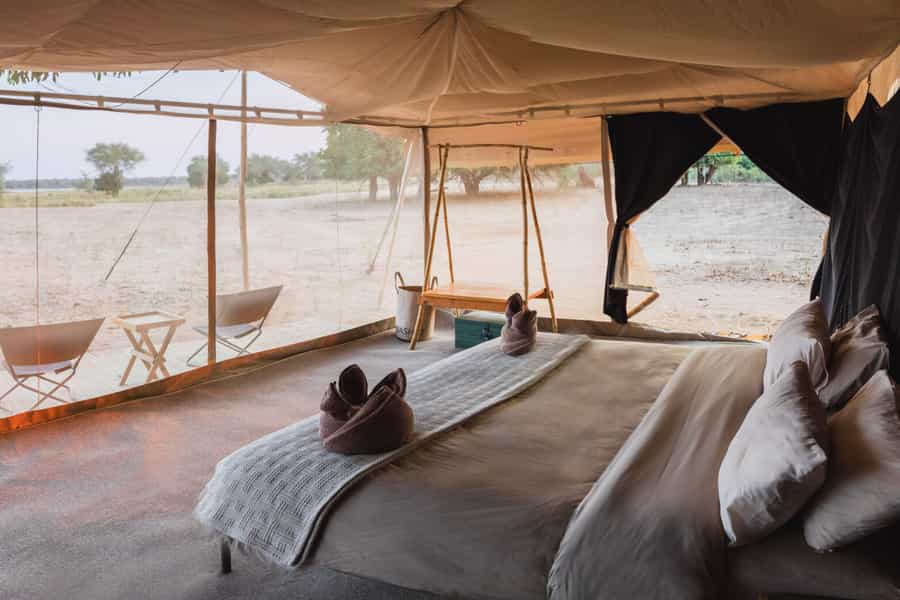
Stay at Chula Island Camp for the ultimate wildlife experience
Where to stay in Lower Zambezi National Park
From ultra-luxe properties like Anabezi Camp to more down-to-earth enclaves, the Lower Zambezi is ready to welcome you.
When planning a Zambia walking safari, Chiawa Camp is a name that comes up often and with good reason – it’s a stellar property in a beautiful setting with everything you could ask for, including sublime tents, a pool and outstanding cuisine. It also pairs well with sister property, Old Mondoro, a minimalist bush camp in a game-rich area that is focused almost solely on walking. Their guides are often praised as being some of the best in Zambia.
Tusk & Mane Fly Camps
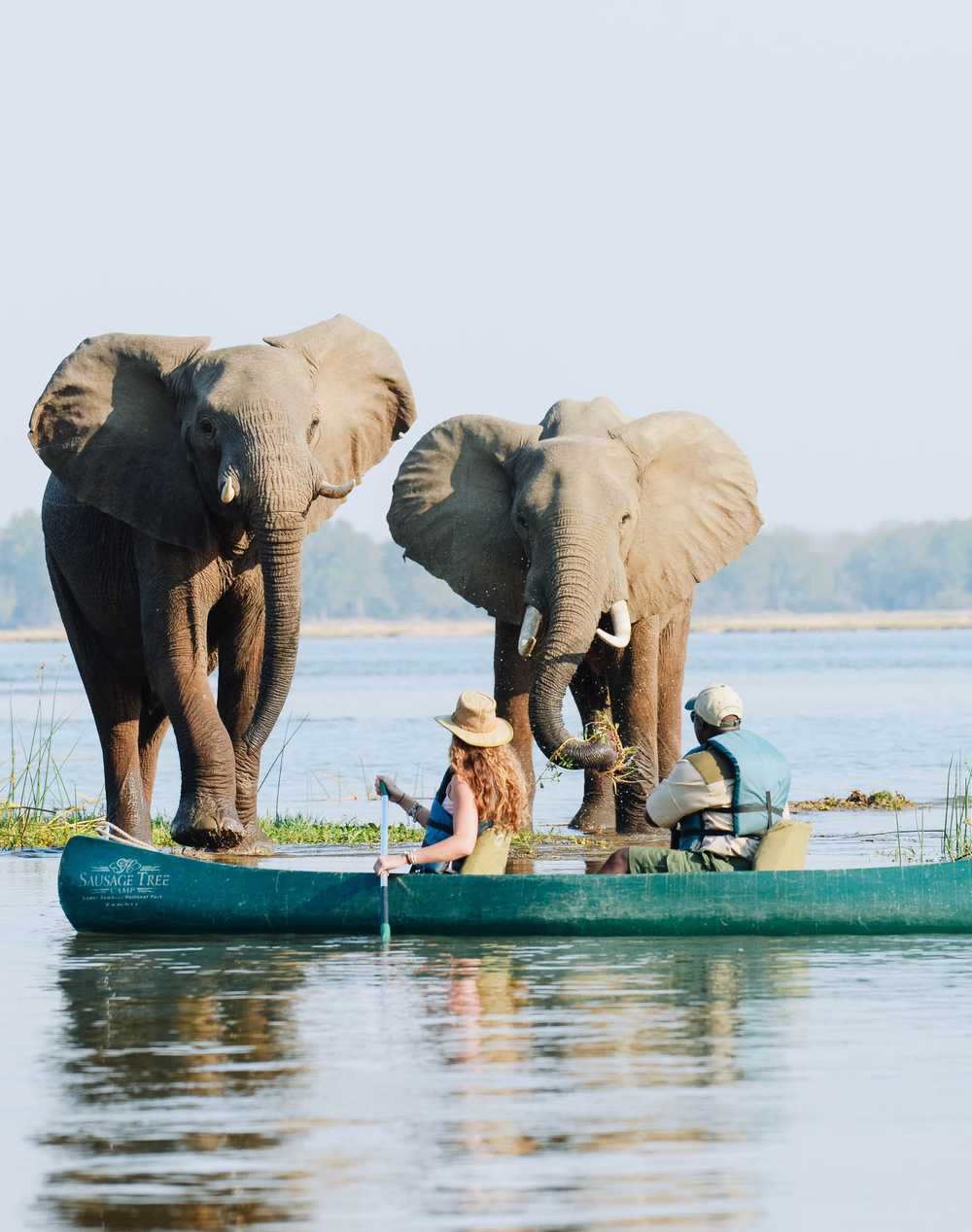
An off-the-grid adventure is yours to be had at Kutali Camp, hidden away in a pretty winterthorn forest, or Chula Island Camp, which sits in the middle of the Zambezi. Set in a less-visited section of the park, wildlife sightings are spectacular and walks are often combined with canoe safaris.
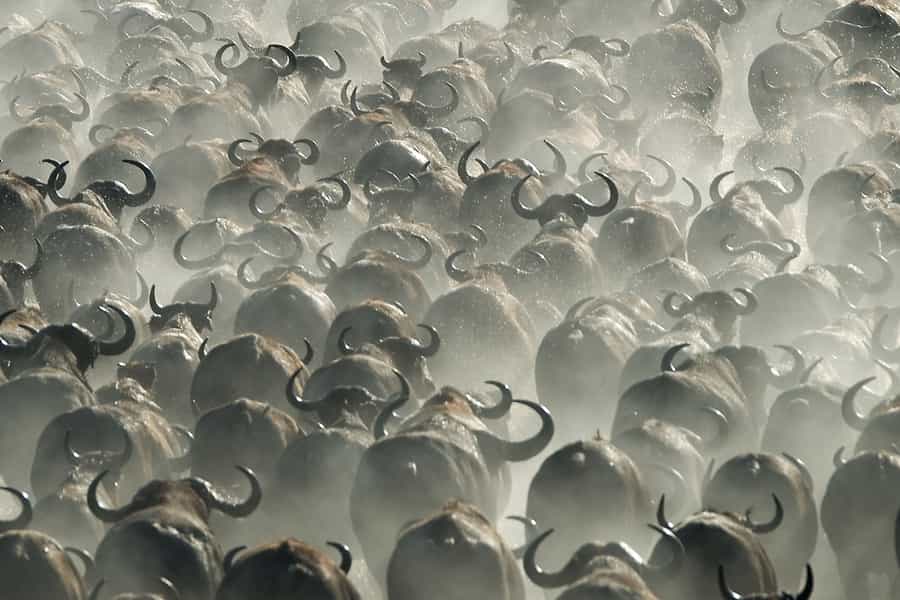
Spot herds of buffalo in Kafue National Park
Kafue National Park
The largest of Zambia’s parks, Kafue offers a staggeringly diverse walking experience because of its size and variety of habitats. In the north, the famous Busanga Plains are a melange of open floodplains and papyrus-lined channels. In central and southern Kafue, the landscape shifts to rolling woodlands, lush riverine forests and marshy clearings. Walking safaris will take you far, far away from any crowds and allow you to truly appreciate the untamed nature of this vast park.
Wildlife in Kafue National Park
During certain times of the year, Busanga Plains teems with antelope (lechwe, puku and sable), while elephant and buffalo find refuge along its shimmering channels. Across the rest of Kafue, there is an incredible collection of Zambia wildlife including coveted cheetah sightings (they’re rare in most of Zambia), herds of elephant and staggering birdlife – there are over 500 species with highlights like wattled cranes, ground hornbills and the endemic black-cheeked lovebird.

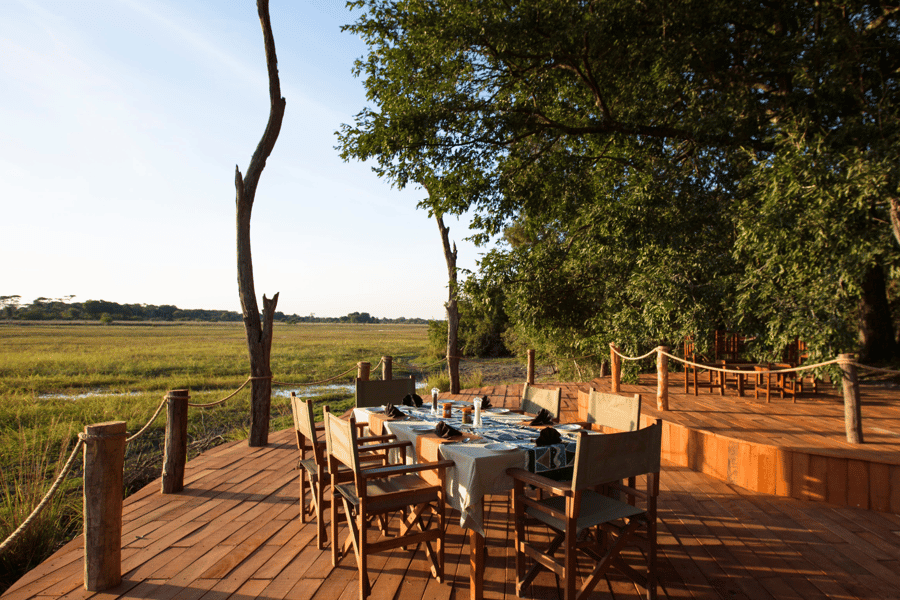
Have dinner overlooking the plains at Musekese Camp
Where to stay in Kafue National Park
Let your senses be engaged at one of the charming camps or lodges in Zambia’s first national park.
Nestled in the remote northeastern Kafue, Musekese Camp is an authentic little haven with a strong walking focus. Overlooking a glassy lagoon, boat rides are also offered in between epic walks with world-class guides.
A humble and intimate camp set on the lakeshore in southern Kafue, you’ll be in the best of hands in this wild and wonderful corner of Zambia.

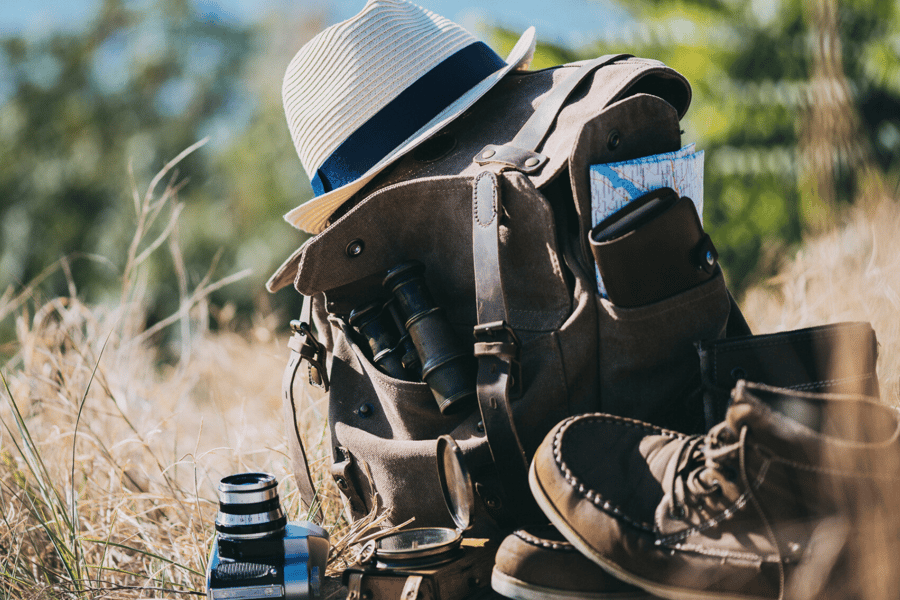
Learn all about what to pack for your next Zambia safari
The best time to go on a Zambia walking safari
We can wholeheartedly say the dry season (June to September) is usually the best time for a walking safari. The days are dry and sunny with little to no rain and cooler mornings and the thinning vegetation improves visibility and safety. The wildlife also tends to gather at the shrinking water sources, making sightings more frequent – and absolutely incredible!
What to pack for a Zambia walking safari
When embarking on a walking safari, pack as light as possible as most small-plane flights have strict baggage limits. Most camps offer laundry too, making it easy to pack only the essentials.
Here is a list of clothing and items to get you started:
- Sturdy walking shoes or boots. They must be closed-toe with a good tread, and we highly recommend you break them in beforehand. Long socks are also very handy.
- Neutral, long-sleeved clothing including lightweight trousers and breathable, long-sleeved shirts in neutral colours like khaki, olive, brown or tan.
- A warm fleece or light jacket for early mornings and cool evenings.
- Wide-brimmed hat, sunglasses, high-SPF sunscreen and insect repellent.
- Refillable water bottle (or double check if your camp supplies one).
- Small daypack or belt bag
- Binoculars
- Camera
- Personal hygiene items
- Park entry permits and other important documents
- Small USD bills or local currency for tips
- Book, kindle or journal
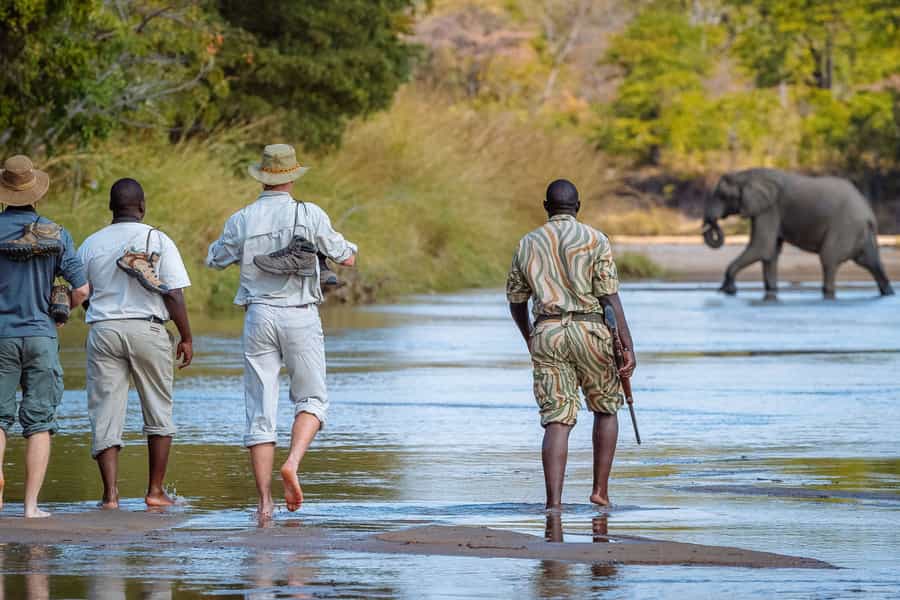
Go on a true guided African walking safari in Zambia
What makes a walking safari so special?
Walking safaris are unlike anything else you can experience in the wild. They favour a spirit of discovery, rather than a checklist of sightings and bring you incredibly close to nature, away from the sound of a vehicle. You’ll learn to decipher the clues left behind by nature, from watching the tiniest dung beetle scuttle across the sand to sussing out the movements of a pride of lions. A good guide will encourage awareness of the smallest details and leave you with a greater understanding of the larger Zambia wildlife too.
Zambia is King when it comes to exploring the landscape on foot with outstanding guides with decades of expertise, soaring scenery and wildlife beyond your wildest dreams. Feeling inspired? Start planning your Zambia walking safari or take a look at our all-time favourite African walking safaris here.

Latest blogs
As seen in