Planning Guides
India Travel Guide
Make the most of your India trip and start planning!

One way to describe India is vast - meaning its weather tends to boggle the mind, changing wildly depending on where you are. Overall, the country is the most pleasant from November to March when Agra, Rajasthan, Varanasi, Goa and Delhi aren't sizzling hot. It's best to avoid Kerala and the coastline after the monsoon hits at the end of May and instead head north to the grand forts, the trails of the Himalayas or hill stations in Ladakh - but take a rain coat! As the rain eases up in September, Delhi and the Golden Triangle are more bearable to visit and the backwaters of Kerala are calling for you to drift along them. March is a stellar time to explore the wildlife parks of central India, including the famous, tiger-filled Ranthambore. Goa is the perfect place to enjoy some winter sun but by May, the coastal areas are awash with rain and the central cities reach high humidity - its the perfect time to head to the Himalayan hills. Indian festivals are a medley of colour and sound, a great opportunity to see the country at her brightest. Diwali, the festival of lights, usually takes place in early October or November, and the brilliantly colourful Holi festival is in March.

Dry Season — one of the best times to visit
Temperatures are beautiful in Rajasthan making it the perfect time for exploring palaces and forts or sneaking into the desert for a night or two.
In Kerala, days are balmy with little rain. Meander through the backwaters on a houseboat or opt for Munnar’s tea plantations for something slightly cooler
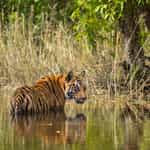
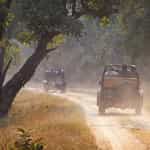
The tigers! All 10 zones are open in Ranthambore National Park (from October to June) but securing a booking requires planning many months in advance. For a quieter experience, the tiger reserves of Madhya Pradesh are also an excellent option.
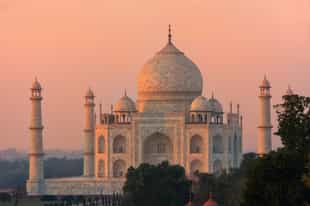
If you’re heading to Agra to admire the Taj Mahal, be careful of the morning fog during sunrise visits.
Dry Season — one of the best times to visit
Before temperatures really skyrocket, this is a fantastic time for discovering the sights and sounds of Rajasthan, be it in the cities, in the desert or at the temples.
The fog begins to lift throughout the Golden Triangle, making for unobstructed sunrise views of the Taj Mahal in Agra without being overwhelmed by the heat either.
In Bandhavgarh, Kanha and Pench, the foliage and water sources thin out, making tiger spotting increasingly easier. Cubs born in earlier months can often be seen accompanying their mothers to waterholes.
Dry Season — one of the best times to visit
Kerala is heating up, but without being overbearing – perfect for cruising the backwaters or heading to Periyar National Park, where elephants congregate around the depleting water sources.
Tiger sightings across India’s parks are good thanks to the ever-shrinking vegetation, and guides can often pinpoint which tigers head to specific water sources and when.
The crowds thin significantly in Goa, while the sea remains a temperate 28°C and the sights are just as good.
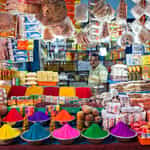
In early to mid-March, the Holi festival explodes across India (except many areas in the South) in a riot of colour – a must-see for some and a better-to-avoid for others.
Mixed Season — a good time to visit
The Western Himalayas emerge like a rhododendron from the snow as the picturesque trails open for the spring season.
April is widely considered the most fruitful month for tiger sightings as these big cats converge on remaining waterholes, often accompanied by their growing cubs. But beware, the temperatures verge on scorching.
The north of India reaches intense temperatures but, if you’re willing to embrace the heat, travelling to Delhi, Agra and Rajasthan is still possible.
Mixed Season — a good time to visit
Central India is in the midst of intense heat but this also means tigers emerge from the undergrowth to drink and cool off at the remaining waterholes – the photography opportunities are incredible.
In the north, the Himalayan trekking season is in full swing as more and more trails become accessible and spring flowers carpet the meadows.
Rajasthan experiences its most extreme temperatures, making city and desert explorations nearly impossible.
Wet Season — a good time to visit
Ladakh reaches full accessibility and days warm into the mid-twenties, making it one of the best places to be as much of India is drenched by the monsoon. Do be aware that other Himalayan regions experience landslides during June.
While many parks including Ranthambore and Periyar remain open during June, we don’t recommend a visit as the monsoon will likely cause disruptions.
Mumbai and Kerala receive the monsoon in spectacular fashion, which most travellers (including us) avoid.
Wet Season — a quieter time to visit
With much of India experiencing extreme heat or monsoon, Ladakh is the darling of July with delightful weather and exceptional trekking conditions.
While most avoid Kerala during this period, it’s actually an optimal time to visit an Ayurvedic retreat as the conditions are just right.
Goa is firmly in monsoon mode with intense rainfall and rough seas.
Wet Season — a quieter time to visit
Although temperatures start dropping, Ladakh continues to enjoy excellent trekking conditions – your last chance to explore this corner of the Himalayas before the passes begin to close.
The monsoon begins to ease up in areas like Kerala (though backwater cruises remain challenging) and India’s tiger reserves, teeing them up for a lush and very photogenic re-opening..
Mumbai’s most prominent festival, Ganesh Chaturthi, takes over the city in late August and sometimes the beginning of September. The devoted race to Mumbai despite lingering monsoon conditions and it’s quite a spectacle!
Wet Season — a good time to visit
The Autumn trekking season opens in the Himalayas with clear skies, stable weather and golden landscapes.
The monsoon and scorching temperatures start to ease up across India, beginning with Jaipur and Jodhpur.
White-water rafting in Rishikesh reopens in late September but if you’d rather head for a yoga retreat, the dry weather means their doors are open once again.
Kerala is a brilliant shade of green after the monsoon, making it a rather photogenic time for a cruise, especially towards the end of September.
Dry Season — one of the best times to visit
Early October offers a brief sweet spot for a visit to Rajasthan and Agra as, with beautifully clear skies and reduced temperatures.
India’s tiger reserves typically re-open in mid to late-October and, although the vegetation isn’t exactly conducive to spotting the cats, it’s a stunning time to visit.
Rajasthan really finds its groove with glorious days, replenished lakes and streets washed clean by the rains.
In mid to late-October (sometimes extending into early November), Diwali illuminates cities across India. Areas like Varanasi, Jaipur and Udaipur are especially amazing but be aware that the crowds and cost will be significant.
Tamil Nadu experiences a high likelihood of flooding as the northeast monsoon arrives.
Dry Season — one of the best times to visit
Rajasthan is in fine form at this time of the year with idyllic temperatures that are just right for any and all itineraries.
Kerala comes into its own with lovely conditions for coastal excursions or backwater cruises.
Tiger safaris are back with a bang, although do expect sightings to be more hard-won as the lush (and very photogenic) foliage creates fantastic camouflage.
Tamil Nadu is considered a no-go zone as the northeast monsoon wreaks havoc on its coast.
Dry Season — one of the best times to visit
Snow leopard season begins tentatively in Ladakh (and continues until April) as the elusive cats descend to lower elevations in pursuit of their prey.
Rajasthan enjoys the finest of winter weather with pleasant temperatures and fantastic photography conditions.
Expect chilly but rewarding morning safaris in India’s tiger reserves as the big cats bask in the winter sun and golden lighting makes for outstanding photos.


Get advice and suggestions to make this your perfect trip.
or call us on: +1 (646) 542 0667
11 Condé Nast Traveler Top Travel Specialists 2026

No. 1 & No. 2 Tour Operator in Travel + Leisure's Best Awards 2024 & 2025

Best Booking Platform in Women's Health Travel Awards 2025

Travel Specialist voted as Latin America A-List Travel Advisor 2025

"Timbuktu can take relatively complex and slightly amorphous travel plans and transform them into a well-organized, perfectly tailored trip."










.jpg)
.jpg)