Planning Guides
Africa’s Most Beautifully Designed Safari Lodges
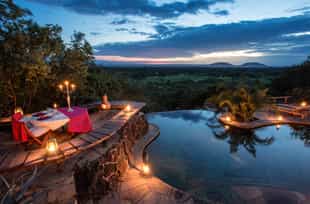
Sleep inside an architectural wonder
Madagascar
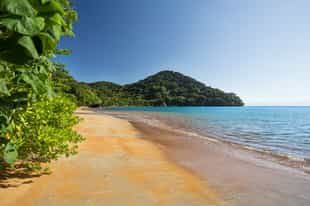
Welcome to wild, wonderful Madagascar, where lemurs leap through trees and the shores of Nosy Be beckon for a spot of R&R.

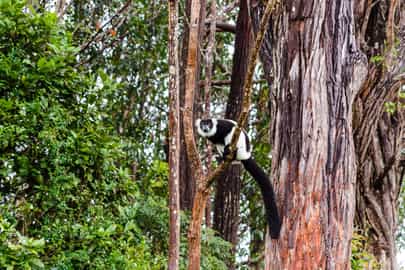
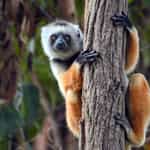
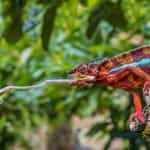
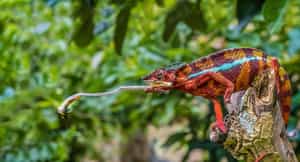
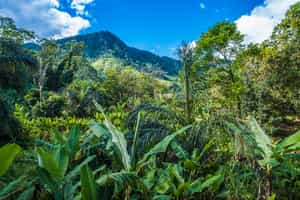
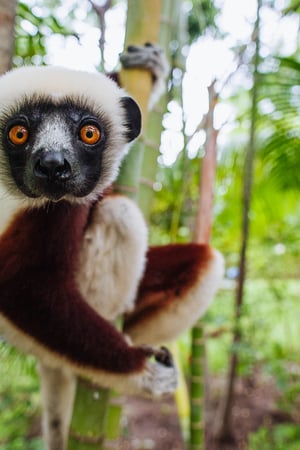
The world’s fourth-largest island, Madagascar is more like a mini continent. Its remarkable ecosystem supports large numbers of bizarre creatures, and an incredible 80 percent of the critters that call the forests home are endemic – they are not found anywhere else in the world. From lemurs to dancing sifakas and every rainbow-coloured chameleon in between, Madagascar is a wildlife-lover's dream. And then there are the landscapes – eccentric, colourful and full of contrasts, from tropical jungle and parched desert to grassy plateaus and spiny forests. Add a blend of African, Asian and European cultures, and the country becomes one in a million. A Madagascar holiday may cost more than other destinations on the continent, but it’s worth every cent.

Madagascar is a destination with a difference (animals really do change colour before your eyes, and the lemurs really do dance!) with an enticing mix of adventure, wildlife and some chill time on the beach. And if Sir David Attenborough says it’s fantastic….
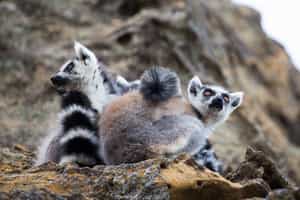
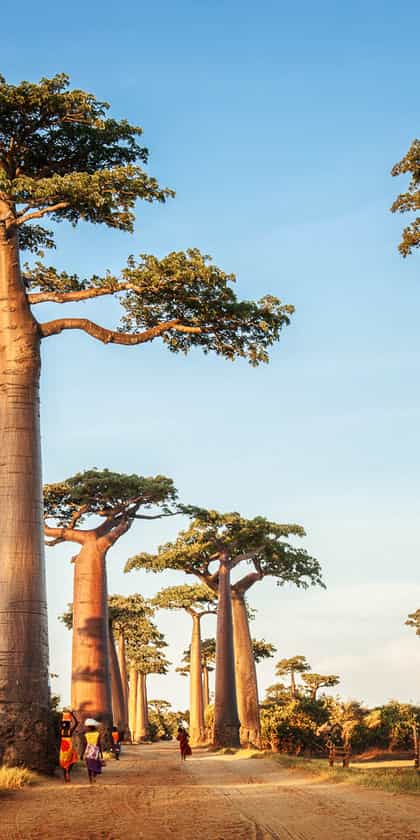
Head to Madagascar’s wild and rugged south. You’ll be greeted by spiny forests and iconic baobabs, ring-tailed lemurs and paradisiacal landscapes (and the drive from Fort Dauphin is pretty good too).

You'd need endless amounts of time (and patience) to visit all of Madagascar, so pick a couple of areas and stick to them. Remember that even though areas may appear to be close together, internal transport is a tricky beast – flights have a habit of being delayed and roads are long and bumpy.
Start with a recommended trip or create one from scratch
12 nights from $6.6K per person
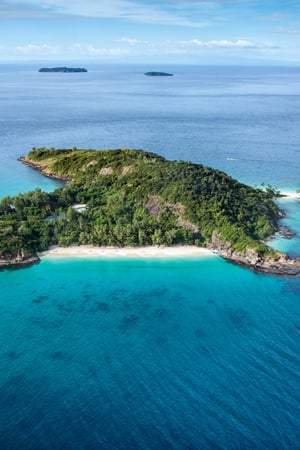
10 nights from $5.7K per person
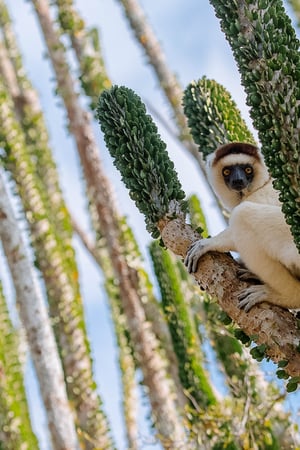
7 nights from $5.8K per person
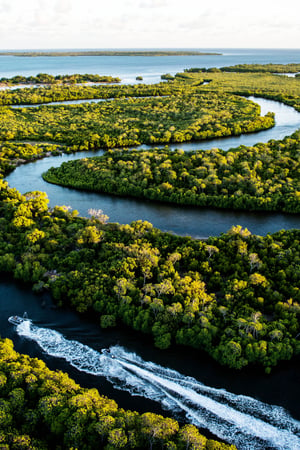
10 nights from $15.4K per person
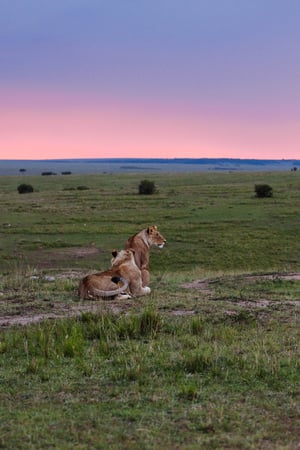
10 nights from $9.3K per person
Get advice and suggestions to make this your perfect trip.
or call us on: +1 (646) 542 0667
Fall in love with all this island has to offer, from the lemur-filled forests of mainland Madagascar to salt-encrusted isles like Nosy Be.
,url-https%3A%2F%2Fassets.waybird.com%2Fcdn-cgi%2Fimage%2Fwidth%3D12%2Cformat%3Dauto%2Fhttps%3A%2F%2Fassets.waybird.com%2Fimages%2Fmap%2Fpin-primary-outlined.png(48.267285,-13.346285),url-https%3A%2F%2Fassets.waybird.com%2Fcdn-cgi%2Fimage%2Fwidth%3D12%2Cformat%3Dauto%2Fhttps%3A%2F%2Fassets.waybird.com%2Fimages%2Fmap%2Fpin-primary-outlined.png(49.1262553,-12.917549),url-https%3A%2F%2Fassets.waybird.com%2Fcdn-cgi%2Fimage%2Fwidth%3D12%2Cformat%3Dauto%2Fhttps%3A%2F%2Fassets.waybird.com%2Fimages%2Fmap%2Fpin-primary-outlined.png(49.9061593,-16.9055529),url-https%3A%2F%2Fassets.waybird.com%2Fcdn-cgi%2Fimage%2Fwidth%3D12%2Cformat%3Dauto%2Fhttps%3A%2F%2Fassets.waybird.com%2Fimages%2Fmap%2Fpin-primary-outlined.png(47.2240557,-15.03205),url-https%3A%2F%2Fassets.waybird.com%2Fcdn-cgi%2Fimage%2Fwidth%3D12%2Cformat%3Dauto%2Fhttps%3A%2F%2Fassets.waybird.com%2Fimages%2Fmap%2Fpin-primary-outlined.png(47.5156783,-18.896435),url-https%3A%2F%2Fassets.waybird.com%2Fcdn-cgi%2Fimage%2Fwidth%3D12%2Cformat%3Dauto%2Fhttps%3A%2F%2Fassets.waybird.com%2Fimages%2Fmap%2Fpin-primary-outlined.png(46.954931,-24.9855521),url-https%3A%2F%2Fassets.waybird.com%2Fcdn-cgi%2Fimage%2Fwidth%3D12%2Cformat%3Dauto%2Fhttps%3A%2F%2Fassets.waybird.com%2Fimages%2Fmap%2Fpin-primary-outlined.png(47.1624572,-21.2882217),url-https%3A%2F%2Fassets.waybird.com%2Fcdn-cgi%2Fimage%2Fwidth%3D12%2Cformat%3Dauto%2Fhttps%3A%2F%2Fassets.waybird.com%2Fimages%2Fmap%2Fpin-primary-outlined.png(47.0313542,-19.8606634),url-https%3A%2F%2Fassets.waybird.com%2Fcdn-cgi%2Fimage%2Fwidth%3D12%2Cformat%3Dauto%2Fhttps%3A%2F%2Fassets.waybird.com%2Fimages%2Fmap%2Fpin-primary-outlined.png(45.2613088,-22.4654688),url-https%3A%2F%2Fassets.waybird.com%2Fcdn-cgi%2Fimage%2Fwidth%3D12%2Cformat%3Dauto%2Fhttps%3A%2F%2Fassets.waybird.com%2Fimages%2Fmap%2Fpin-primary-outlined.png(49.2878703,-12.3167418),url-https%3A%2F%2Fassets.waybird.com%2Fcdn-cgi%2Fimage%2Fwidth%3D12%2Cformat%3Dauto%2Fhttps%3A%2F%2Fassets.waybird.com%2Fimages%2Fmap%2Fpin-primary-outlined.png(44.82981,-18.89767),url-https%3A%2F%2Fassets.waybird.com%2Fcdn-cgi%2Fimage%2Fwidth%3D12%2Cformat%3Dauto%2Fhttps%3A%2F%2Fassets.waybird.com%2Fimages%2Fmap%2Fpin-primary-outlined.png(49.3955748,-18.1446847),url-https%3A%2F%2Fassets.waybird.com%2Fcdn-cgi%2Fimage%2Fwidth%3D12%2Cformat%3Dauto%2Fhttps%3A%2F%2Fassets.waybird.com%2Fimages%2Fmap%2Fpin-primary-outlined.png(48.0213589,-22.1403041),url-https%3A%2F%2Fassets.waybird.com%2Fcdn-cgi%2Fimage%2Fwidth%3D12%2Cformat%3Dauto%2Fhttps%3A%2F%2Fassets.waybird.com%2Fimages%2Fmap%2Fpin-primary-outlined.png(47.0885314,-21.4505605)/auto/600x400?access_token=pk.eyJ1IjoidGltYnVrdHV0cmF2ZWwiLCJhIjoiY2poMGw1eHpkMmRkbDJ6bW8xYWZ5OGpjYyJ9.PYvAO7lUJ40SOpGvwmQLqw&attribution=false&logo=false)
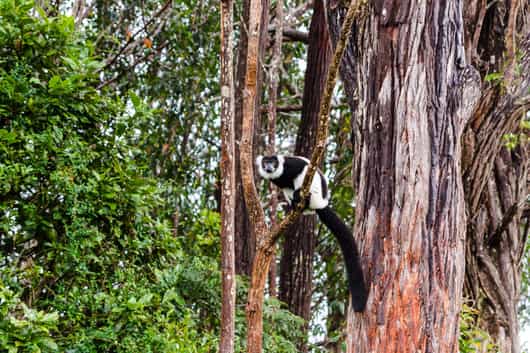
Madagascar
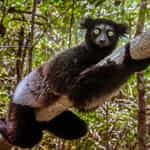
The island’s most popular wildlife destination is home to 13 lemur species and the intriguing indri.
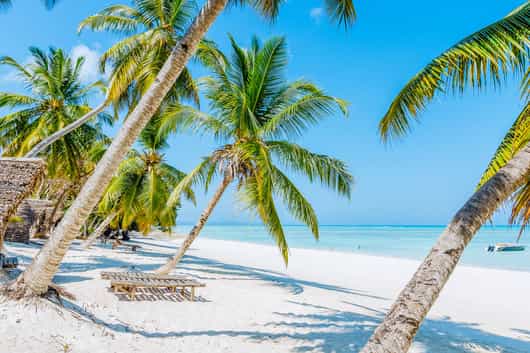
Madagascar
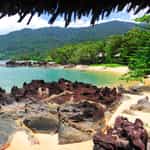
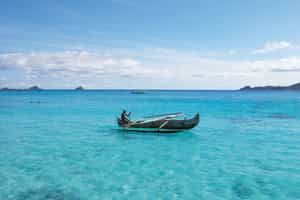
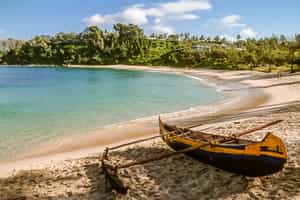
Madagascar’s top beach location is low-key, heavenly and offers tranquil land and water activities.
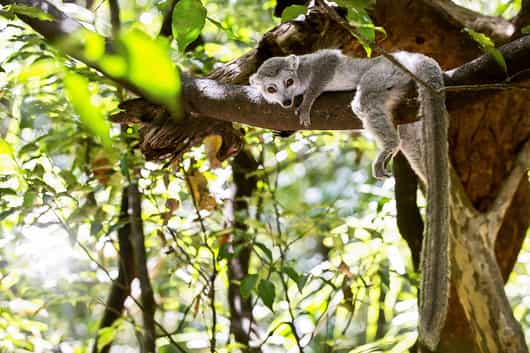
Madagascar
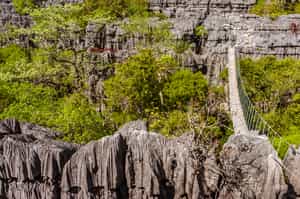
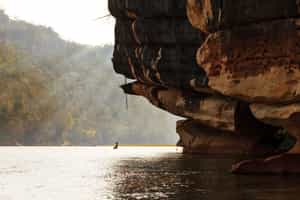
Completely unexplored, this psychedelic region is all about tsingy, subterranean rivers and primates.
Madagascar’s prime season of travel starts in May and lasts until around September. These are the ‘dry’ season months and the weather is cooler and less humid making it a great time to explore - without getting too sweaty! At the beginning of the season (May & June) you might encounter a little rain in places, but it shouldn’t affect your travels or activities. In July, the whales start to arrive in the north of the country and stay until September, whilst September and October are some of the best times to see lemurs and their young. In November and December, temperatures are on the rise but it’s still a generally good time to travel. We would probably suggest avoiding January to March, however; it’s the height of the cyclone season and travel is tricky.

Wet Season — a quieter time to visit
Much of Madagascar is in the throws of its hot, wet season, which makes certain activities inadvisable. Tsingy de Bemaraha is closed, as are most dive centres on Nosy Be.
January also brings out unique behaviour amongst wildlife. This is one of the best times for spotting chameleons; Verreaux’s sifaka enter their mating period; and tenrecs are active after their hibernation period.
Throughout Madagascar’s forests, orchids are in full, technicolour bloom and birdlife dons its spectacular breeding plumage.
Wet Season — a quieter time to visit
Extremely hot and wet, February has the highest chances of cyclones occurring and all diving facilities on Nosy Be are suspended.
Despite the weather, this month offers a high likelihood of spotting chameleons while mouse lemurs are incredibly active.
Enjoy the spoils of the Fianarantsoa Wine Festival, which celebrates Madagascar’s highland wine region with tastings, tours and artisanal workshops.
Should you find yourself exploring the island’s forests, expect an explosion of vivid and exceedingly beautiful orchids.
Wet Season — a quieter time to visit
March remains rather soggy, particularly on the east coast, but conditions begin to improve later in the month.
Chameleon activity remains excellent with vivid colouring and breeding behaviour in areas like Kirindy Forest Reserve and Andasibe.
Towards the end of March, it’s worth planning a trip to Ranomafana to see its incredible array of orchids.
Wet Season — a good time to visit
The rains are easing up properly and many roads, parks and activities open once again.
In areas like Isalo National Park, ring-tailed lemur breeding season peaks around mid-April when males engage in spectacular ‘stink fights’. Across the board, lemurs are lively and visible in the forests.
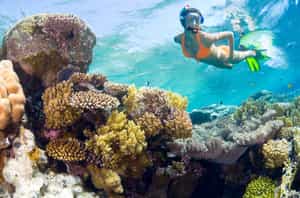
Diving off Nosy Be really takes off, with balmy water temperatures, improving visibility and abundant marine life.
Dry Season — one of the best times to visit
The animated indris give birth in remarkable synchronicity during May – truly extraordinary to witness in Andasibe.
The trails of Tsingy de Bemaraha open once again, ready to be explored on foot or by boat.
Visit the Avenue of the Baobabs to witness the stunning, bare-branch silhouettes against the clear, golden skies of sunset.
Dry Season — one of the best times to visit
Across reserves like Andasibe and Anjajavy, mother and baby lemurs can be spotted moving through the trees - an adorable sight! Cooler temperatures across the country also make trekking much more comfortable.
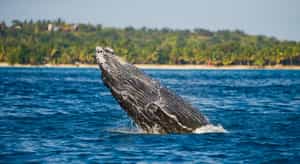
Humpback whales arrive in the waters off Nosy Boraha and Masoala, while green sea turtles reach peak nesting at Nosy Iranja.
The curious landscapes of Tsingy de Bemaraha are fully accessible, perfect for epic and exceedingly scenic hikes.
Madagascar’s Independence Day takes place on 26 June and vibrant parades fill the streets of Antananarivo. Exciting for some, but best-avoided for others.
Dry Season — one of the best times to visit
The lemurs are out in full force from Andasibe to Isalo National Park, with young clinging to their mothers.
Visibility off Nosy Be only gets better, making for stunning diving expeditions rife with marine life.
The foliage in Kirindy Forest Reserve has thinned out significantly, which is fantastic for spotting fossa.
Humpback whale season is in full swing. Take advantage with a boat tour from Nosy Boraha and land-based sightings at Nosy Ankao and Masoala National Park.
Dry Season — one of the best times to visit
It’s all going on in the world of lemurs, including ring-tailed lemur babies and the haunting calls of the indri.
There is tremendous humpback whale activity off Nosy Boraha and Masoala National Park, while mid-August brings an explosion of marine life around Nosy Be – the underwater photography is incredible.
If you’re up for a hardcore adventure, head to Andrafiamena in the north where you’ll trek amongst surreal tsingy formations and forests where the endangered Perrier’s sifaka dwells.
Dry Season — one of the best times to visit
Apart from the unbelievable lemur sightings, September also marks the beginning of fossa breeding season when Madagascar’s largest predator becomes more visible.
Birding is sensational from the ground-rollers of Andasibe to the emergence of the cardinal-red Madagascar pygmy kingfisher.
Humpback whale sightings are more likely than ever off Nosy Boraha and Masoala National Park, while the first whale sharks arrive at Nosy Be in late September.
Dry Season — one of the best times to visit
Head for Kirindy Forest Reserve where female fossas return to specific ‘mating trees’ while males fight it out below.
Playful baby ring-tailed lemurs are enjoying a bit more freedom in Isalo National Park, while young indri, sifaka and ruffed lemurs are all visible in Andasibe.
Marine life is sensational off Nosy Be with whale sharks, manta rays and sea turtle sightings in abundance.
Dry Season — a good time to visit
Warmer nights make this a fantastic time for spotting nocturnal wildlife including mouse and wooly lemurs, and aye-aye throughout Kirindy Forest Reserve, Ranomafana and Andasibe.
Tenrecs emerge once again while most chameleon species are highly active – Labord’s chameleon hatchlings are also visible after the first rains in Kirindy.
Nosy Be offers near-guaranteed whale shark sightings on snorkelling or diving trips, while hawksbill turtle nesting takes place on Nosy Ankao.
Birding is out of this world across the country’s forests with the striking Helmet Vanga nesting in Masoala National Park.
Wet Season — a good time to visit
By mid to late-December, Madagascar is getting hotter and increasingly wetter, but this doesn’t mean a visit isn’t worthwhile. In fact, the Masoala Peninsula is fantastic at this time of year.
Lemurs are still highly active including diademed sifaka as they enter mating season and ring-tailed juveniles finding their independence.
Common tenrecs are known to produce litters of up to 32 pups while fossa babies are born in Kirindy Forest Reserve.
Orchids are in full bloom in Andasibe while many of Madagascar’s iconic baobabs are flowering, creating a dazzling and photogenic scene.

Madagascar has one primary international airport, Ivato International Airport (TNR) situated in Antananarivo, the capital of Madagascar. The airport is located 16km northwest of the city center and is the main hub for Air Madagascar and airlines arriving from Africa and Europe. International flights We would recommend booking your flights online in order to get the best rates. If you need any help or advice please let us know. Domestic flights and transfers Connecting between all the locations on your trip may necessitate a variety of modes: light aircraft charters, domestic commercial flights and road transfers. Please review the inclusions and exclusions on your specific trip page for details. If you need help understanding the best flights to book, please let us know. From the moment that you land in Madagascar you will be greeted and assisted to your onward connections. You will be looked after from that point on until you are transferred back to the airport in time for your departure flight.
Please consult your personal physician and/or a travel clinic preferably 6 weeks prior to your departure. Vaccine requirements vary based on your country of origin and your travel itinerary and your previous vaccination history. It is best to consult with your physician or the CDC website for guidelines. Important vaccinations to consider and which may either be required or recommended are: Typhoid, Hepatitis A & B and Cholera, among others. Malaria We advise that you consult a medical practitioner at least six weeks prior to travel. Malaria is present in Madagascar. We suggest taking malaria prophylactics before, during and after your visit if you are visiting a known malarial region. Please consult a medical professional regarding which prophylactics will be suitable for you. In addition to the recommendations of your travel clinic or physician, you may also consider the following proactive preventative measures: ● Apply insect repellent to exposed skin. Recommended repellents contain 20-35% DEET but it is a very virulent repellent, and should be used cautiously. ● Wear long-sleeved clothing and long pants at dawn and dusk. ● Use a mosquito net if your tent or room isn't screened or air-conditioned; and spray insecticide or burn a mosquito coil before going to bed. If you come down with flu-like symptoms either during or within four to six weeks after your visit to a malaria area, seek a doctor's advice immediately and let him/her know that you have been in a malaria area. You can also visit https://www.who.int/news-room/fact-sheets/detail/malaria for more information or see a full map of affected countries here - https://www.who.int/data/gho/data/themes/malaria. Yellow Fever There is no risk of Yellow Fever in Madagascar; however, vaccination is required for travellers who are arriving from, or have transited through, countries with risk of Yellow Fever transmission (e.g. Kenya, Uganda, Rwanda or elsewhere worldwide). This requirement can change unexpectedly, therefore, we recommend carrying your 'International Certificate of Vaccination or Prophylaxis (ICVP)' or 'Yellow Card' with you at all times. Any travellers arriving from Ethiopia, Kenya or South Africa are required to take preventative cholera treatment, Doxycycline 100mg tablets, before departure with the exception of anyone with diabetes or pregnant persons. Communication Madagascar country code: +261 Calling overseas from Madagascar: From a landline dial 00 followed by the country code plus area code and number. e.g. USA: 00 1 910 795 1048 When calling from a cell phone dial + prefix followed by the country code plus area code and number. e.g. USA: + 1 910 795 1048
Money The currency in Madagascar is the Malagasy Ariary (MGA). Although this is the official unit of currency in Madagascar, many of the island’s people still use their old unit; the FMG (Franc Malagasy). This can be a little confusing as prices are often given in FMG, while notes are denominated in Ariary. 5 FMG is equal to 1 Ariary and the exchange rate is approximately US$1 = 3000 Ariary or 15,000FMG. ATMs are widely available, please check with your bank for charges and advice when using international ATMs. It is advisable to carry MGA cash for smaller shops and tipping as this is preferred. Please note, Maestro and American Express are seldom accepted, so we recommend using a VISA credit/debit card instead. IMPORTANT: When bringing foreign currency (e.g. USD, GBP, EUR) into the country, be sure to bring new format with no damage or marks. It is easier to draw local currency from the ATM, rather than exchange. Gratuities Gratuities are not compulsory or expected; rather it is a reward for excellent service. If you are pleased with the service you receive, you are more than welcome to tip your guide or the staff. Tipping is usually done at the end of your stay. You may tip the staff individually, give the tip to the manager to distribute, or do both. Tips are better given in the Malagasy Ariary. Gratuities suggestions: Private tour guide: 50,000 - 75,000 MGA ($11 - $17) per guest per day Local guide (excursions & private reserves): 20,000 - 25,000 MGA ($5 - $6) per guest per day Driver on tour: 25,000 - 30,000 MGA ($6 - $7) per guest per day Driver on transfer: 10,000 - 15,000 MGA ($3 - $4) per transfer Guide (National Parks): 20,000 - 25,000 MGA ($5 - $6) per guest per day Animal spotter (National Parks): 5,000 - 10,000 MGA ($2 - $3) per guest per day Lodge staff: 10,000 - 20,000 MGA ($3 - $5) per guest per night Luggage porter: 5,000 MGA ($1) per bag Waitstaff in a city restaurant: 5% - 10% of the bill (large group may incur automatic service charge - please check)
Insurance It is a condition of booking that you carry the correct comprehensive travel and medical insurance to cover yourself, as well as any dependents/travelling companions for the duration of your trip. This insurance should include cover in respect of, but not limited to, the following eventualities: Compulsory Insurance: a. Emergency evacuation expenses b. Medical expenses c. Repatriation expenses Recommended Insurance: a. Cancellation or curtailment of trip b. Damage/theft/loss of personal luggage, money and goods
As a general precaution, we recommend you make several copies of your travel-related documents (passport, traveller’s cheques, credit cards, itinerary, airline tickets, insurance cover, visas, etc). Leave one set at home, and bring another set with you, and place it in a location separate from your originals. Nearly all nationalities require a visa for Madagascar. Your passport will need to be valid for at least 6 months from the date of travel and past the date of expected departure from Madagascar and there must be at least TWO (we recommend four) consecutive blank VISA pages in the passport (not endorsement pages). Please contact a representative in your country who can advise you on how to obtain a visa or visit: http://www.madagascarconsulate.org.za/visa-info/ for more information. Visa Central is also a good resource.
Climate Madagascar offers a highly diverse subtropical climate with the rainy season lasting from December to March. The dry season runs from April until October, peak months are July and August. July is the coolest month, with mean monthly temperatures around the island ranging from the low 50s F (low 10s C) to the high 70s F (mid-20s C), and December is the hottest month, with temperatures between the low 60s and mid-80s F (mid 10s and high 20s C). Temperatures generally decrease with elevation, being highest on the northwest coast and lowest on the plateau. Dress Code Standard clothing is acceptable in the bigger towns and cities in Madagascar and dependent on the climate. Comfortable beach wear is fine on the coast, just be sure to take sun cream because the sun gets very strong in the summer months. When on safari, light layers of clothing in neutral safari colours of green, khaki and beige are the best items to bring with you, as well as a warmer jacket or fleece for the colder evenings. A hat is also a must have! Bright and dark colours like yellow, red and purple are discouraged, or sometimes not allowed (on a bush walk) if you are going on safari. What to Pack • Layers - long and short sleeve shirts and trousers • A warm fleece or jumper • A lightweight waterproof jacket • Comfortable but sturdy shoes • Flip-flops • Swimming costume • A hat or baseball cap • Sunglasses • Sunscreen – a must! • Toiletries – most camps will provide shampoo, shower gel and soap • A small torch • Spare batteries, plug adaptors and charging equipment • A good pair of Binoculars • Books or a fully loaded Kindle / iPad for siesta time Most camps and lodges will have a small medical and first aid kit, but we recommend bringing your own supply of essentials - cough medicine, plasters, vitamins, aspirin and paracetamol, and anything else you use on a regular basis. Camera Equipment (for the enthusiasts) • A telephoto lens (200/300mm) • Flash and fast film (400 ASA) for night photography • Lots of film (64,100,200,400 ASA) if you’re using an SLR cameras • Spare memory cards for digital cameras • Camera cleaning equipment and a good dust proof bag • Bring spare batteries as although you may recharge your batteries at the camps, charging capacity can be limited Luggage Please check with your airlines for the specific luggage restrictions relevant to your flight schedule. Many international airlines have a baggage allowance of 20kgs or more per person and commercial airlines generally permit two (2) pieces of checked luggage per person. The carry-on bag must be of such dimensions and weight as set by the airlines. Luggage Restrictions on Internal Flights Light aircraft flight luggage is strictly limited to one SOFT duffle bag and one small carry on. The combined weight must not exceed 20kgs (45lbs), unless otherwise noted in your personal itinerary. Electricity In Madagascar the standard voltage is 127 / 220 V and the frequency is 50 Hz. Please note, in Madagascar more than one voltage is being used (127 / 220 V). It can depend on the region, the city or hotel, which voltage you will encounter. You cannot use your appliances if the local voltage exceeds the maximum voltage of your appliances. We recommend bringing a voltage converter.
We’re big believers in leaving a positive impact in the countries in which we operate. We’re proud to donate $50 for every booking to projects focusing on female empowerment, tech education, conservation, and so much more.
Our dream is to empower our guests to travel with a purpose.
So far, we’ve donated $107,000 to projects across the globe.


Why travel with Timbuktu?
We've been crafting one-of-a-kind journeys since 2014 — over 2,500 trips across 40+ countries, each one built from scratch around your interests and dreams.

Our team only recommends places they've slept in, eaten in, and happily keep going back to. Condé Nast Traveler named 11 of them Top Travel Specialists in 2026, and Travel+Leisure made three A-List Advisors.

Travel+Leisure's readers voted us the World's No.1 Tour Operator in 2024 and No.2 in 2025 — the travel industry's biggest readers' award, judged by people who actually travel.

$50 from every booking goes to female empowerment, tech education, and conservation projects across the countries we love. We have donated $78,000 so far – and it's going up!
Your travel specialist is with you the whole way, dreaming up the trip, building the itinerary, checking you in, and answering the 2am question from the other side of the world..

We are rated 4.9 out of 5 from 1007 verified Feefo reviews. And these are the words of people who actually went, not us talking about ourselves.
11 Condé Nast Traveler Top Travel Specialists 2026

No. 1 & No. 2 Tour Operator in Travel + Leisure's Best Awards 2024 & 2025

Best Booking Platform in Women's Health Travel Awards 2025

Travel Specialist voted as Latin America A-List Travel Advisor 2025

"Timbuktu can take relatively complex and slightly amorphous travel plans and transform them into a well-organized, perfectly tailored trip."