Planning Guides
Our month-by-month safari guide
Fall in love with Africa, month by glorious month.

Madagascar’s prime season of travel starts in May and lasts until around September. These are the ‘dry’ season months and the weather is cooler and less humid making it a great time to explore - without getting too sweaty! At the beginning of the season (May & June) you might encounter a little rain in places, but it shouldn’t affect your travels or activities. In July, the whales start to arrive in the north of the country and stay until September, whilst September and October are some of the best times to see lemurs and their young. In November and December, temperatures are on the rise but it’s still a generally good time to travel. We would probably suggest avoiding January to March, however; it’s the height of the cyclone season and travel is tricky.

Wet Season — a quieter time to visit
Much of Madagascar is in the throws of its hot, wet season, which makes certain activities inadvisable. Tsingy de Bemaraha is closed, as are most dive centres on Nosy Be.
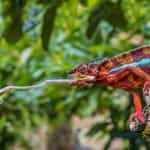
January also brings out unique behaviour amongst wildlife. This is one of the best times for spotting chameleons; Verreaux’s sifaka enter their mating period; and tenrecs are active after their hibernation period.
Throughout Madagascar’s forests, orchids are in full, technicolour bloom and birdlife dons its spectacular breeding plumage.
Wet Season — a quieter time to visit
Extremely hot and wet, February has the highest chances of cyclones occurring and all diving facilities on Nosy Be are suspended.
Despite the weather, this month offers a high likelihood of spotting chameleons while mouse lemurs are incredibly active.
Enjoy the spoils of the Fianarantsoa Wine Festival, which celebrates Madagascar’s highland wine region with tastings, tours and artisanal workshops.
Should you find yourself exploring the island’s forests, expect an explosion of vivid and exceedingly beautiful orchids.
Wet Season — a quieter time to visit
March remains rather soggy, particularly on the east coast, but conditions begin to improve later in the month.
Chameleon activity remains excellent with vivid colouring and breeding behaviour in areas like Kirindy Forest Reserve and Andasibe.
Towards the end of March, it’s worth planning a trip to Ranomafana to see its incredible array of orchids.
Wet Season — a good time to visit
The rains are easing up properly and many roads, parks and activities open once again.
In areas like Isalo National Park, ring-tailed lemur breeding season peaks around mid-April when males engage in spectacular ‘stink fights’. Across the board, lemurs are lively and visible in the forests.
Diving off Nosy Be really takes off, with balmy water temperatures, improving visibility and abundant marine life.
Dry Season — one of the best times to visit
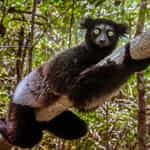
The animated indris give birth in remarkable synchronicity during May – truly extraordinary to witness in Andasibe.
The trails of Tsingy de Bemaraha open once again, ready to be explored on foot or by boat.
Visit the Avenue of the Baobabs to witness the stunning, bare-branch silhouettes against the clear, golden skies of sunset.
Dry Season — one of the best times to visit
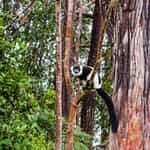
Across reserves like Andasibe and Anjajavy, mother and baby lemurs can be spotted moving through the trees - an adorable sight! Cooler temperatures across the country also make trekking much more comfortable.
Humpback whales arrive in the waters off Nosy Boraha and Masoala, while green sea turtles reach peak nesting at Nosy Iranja.
The curious landscapes of Tsingy de Bemaraha are fully accessible, perfect for epic and exceedingly scenic hikes.
Madagascar’s Independence Day takes place on 26 June and vibrant parades fill the streets of Antananarivo. Exciting for some, but best-avoided for others.
Dry Season — one of the best times to visit
The lemurs are out in full force from Andasibe to Isalo National Park, with young clinging to their mothers.
Visibility off Nosy Be only gets better, making for stunning diving expeditions rife with marine life.
The foliage in Kirindy Forest Reserve has thinned out significantly, which is fantastic for spotting fossa.
Humpback whale season is in full swing. Take advantage with a boat tour from Nosy Boraha and land-based sightings at Nosy Ankao and Masoala National Park.
Dry Season — one of the best times to visit
It’s all going on in the world of lemurs, including ring-tailed lemur babies and the haunting calls of the indri.
There is tremendous humpback whale activity off Nosy Boraha and Masoala National Park, while mid-August brings an explosion of marine life around Nosy Be – the underwater photography is incredible.
If you’re up for a hardcore adventure, head to Andrafiamena in the north where you’ll trek amongst surreal tsingy formations and forests where the endangered Perrier’s sifaka dwells.
Dry Season — one of the best times to visit
Apart from the unbelievable lemur sightings, September also marks the beginning of fossa breeding season when Madagascar’s largest predator becomes more visible.
Birding is sensational from the ground-rollers of Andasibe to the emergence of the cardinal-red Madagascar pygmy kingfisher.
Humpback whale sightings are more likely than ever off Nosy Boraha and Masoala National Park, while the first whale sharks arrive at Nosy Be in late September.
Dry Season — one of the best times to visit
Head for Kirindy Forest Reserve where female fossas return to specific ‘mating trees’ while males fight it out below.
Playful baby ring-tailed lemurs are enjoying a bit more freedom in Isalo National Park, while young indri, sifaka and ruffed lemurs are all visible in Andasibe.
Marine life is sensational off Nosy Be with whale sharks, manta rays and sea turtle sightings in abundance.
Dry Season — a good time to visit
Warmer nights make this a fantastic time for spotting nocturnal wildlife including mouse and wooly lemurs, and aye-aye throughout Kirindy Forest Reserve, Ranomafana and Andasibe.
Tenrecs emerge once again while most chameleon species are highly active – Labord’s chameleon hatchlings are also visible after the first rains in Kirindy.
Nosy Be offers near-guaranteed whale shark sightings on snorkelling or diving trips, while hawksbill turtle nesting takes place on Nosy Ankao.
Birding is out of this world across the country’s forests with the striking Helmet Vanga nesting in Masoala National Park.
Wet Season — a good time to visit
By mid to late-December, Madagascar is getting hotter and increasingly wetter, but this doesn’t mean a visit isn’t worthwhile. In fact, the Masoala Peninsula is fantastic at this time of year.
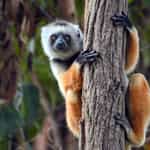
Lemurs are still highly active including diademed sifaka as they enter mating season and ring-tailed juveniles finding their independence.
Common tenrecs are known to produce litters of up to 32 pups while fossa babies are born in Kirindy Forest Reserve.
Orchids are in full bloom in Andasibe while many of Madagascar’s iconic baobabs are flowering, creating a dazzling and photogenic scene.


Get advice and suggestions to make this your perfect trip.
or call us on: +1 (646) 542 0667
11 Condé Nast Traveler Top Travel Specialists 2026

No. 1 & No. 2 Tour Operator in Travel + Leisure's Best Awards 2024 & 2025

Best Booking Platform in Women's Health Travel Awards 2025

Travel Specialist voted as Latin America A-List Travel Advisor 2025

"Timbuktu can take relatively complex and slightly amorphous travel plans and transform them into a well-organized, perfectly tailored trip."