Singapore
Glamorous and gleaming with a hidden cultural heart, Singapore is one knock-out island.

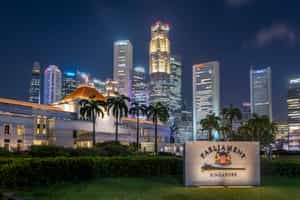
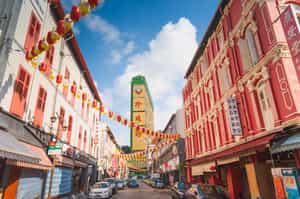
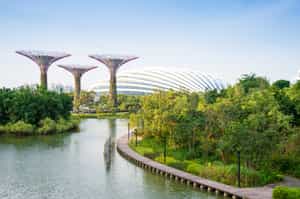
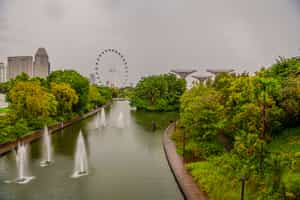
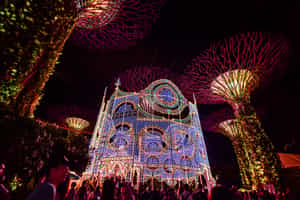
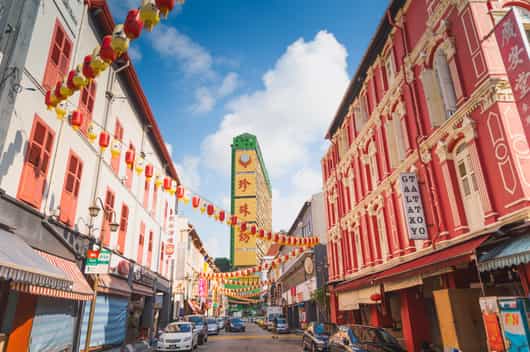
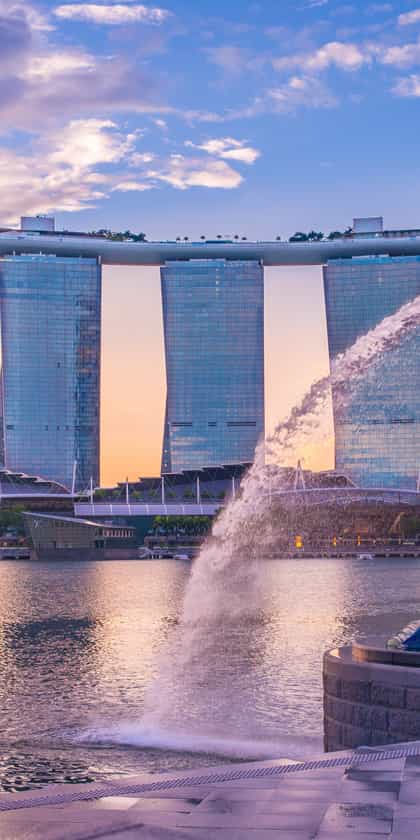
Once a historic spice port at the crossroads of Asia, the Singapore of today is a gleaming, futuristic city of sci-fi skylines and robot waiters – with some incense-filled temples and heritage shophouses thrown in for good measure. Down at Marina Bay, lotus-petalled museums and gravity-defying bridges glow against the water, while the Supertrees of Gardens by the Bay stage that iconic nightly light show. But the real soul of the Lion City is on the ground. Follow your nose to the hawker centres where woks crackle, satay smokes and aunties size you up before dishing out laksa, dollops of Hainanese chicken rice and chilli crab. During the day, ride the spotless MRT train and temple-hop in Chinatown, breathe in the spices in Little India and wander past the pretty, pastel Peranakan shophouses. And how will it make you feel? Comfortably out of your depth in the best way. This is a city that is safe enough to wander at midnight, wired on sugar cane juice and curiosity, and giddy on the sheer ease of it all – with something delicious around every corner...

It’s one of the few places on earth where you can slurp $5 hawker noodles at lunch, sip rooftop cocktails amongst the highest, glitziest skyscrapers at sunset and fall asleep in a hotel that looks like a film set from the future.

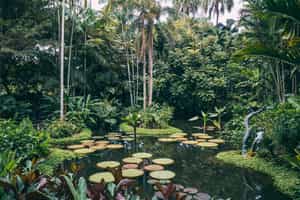
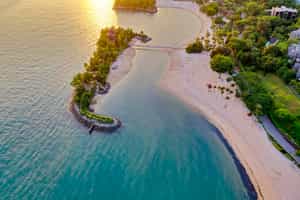
Even in ultra-modern Singapore, pockets of old-school charm are never far away… Wander through the indie cafés and Art Deco curves of Tiong Bahru, cycle the leafy Southern Ridges, or hop a bumboat to rustic Pulau Ubin where wooden kampong houses and mangroves feel a world away from the city. Just magic.

Singapore is so wonderfully efficient and polished that it definitely doesn’t have the rough edges or “culture shock” of some other Asian cities. If you’re craving chaos, this might feel a little too orderly.
Get advice and suggestions to make this your perfect trip.
or call us on: +1 (646) 542 0667
Sitting just a degree north of the equator, Singapore doesn't really do seasons — it does heat, humidity and rain, in varying proportions, all year round. Temperatures barely shift off 27–31°C whatever month you land in, so the real question isn't "will it be hot?" but "how wet will it be?" The Northeast Monsoon (November to January) brings the heaviest, longest downpours of the year, whilst February to April is your sweet spot — drier, sunnier and altogether more forgiving on an outdoor itinerary. February in particular is the driest month of the lot, so pack a sun hat rather than an umbrella. Come the middle of the year, the Southwest Monsoon (June to September) settles in with noticeably less rain, making it a comfortable stretch for wandering Gardens by the Bay or working your way through a hawker centre menu, plate by plate — though the occasional regional haze can drift in and blur the skyline, so it's worth a quick check before you book. Rain, when it does arrive, is rarely the day-ruining sort: storms tend to be short, sharp and dramatic rather than prolonged.

Wet Season — a good time to visit
With the Monsoon in full swing, expect heavy, daily rainfall.
Dry Season — one of the best times to visit
Singapore doesn't really have a 'dry' season, but with the first Monsoon over, this month sees a big drop in rainfall.
Dry Season — one of the best times to visit
Lower average rainfall make this a good time to explore the Lion City.
Dry Season — one of the best times to visit
Lower average rainfall make this a good time to explore the Lion City.
Dry Season — one of the best times to visit
Lower average rainfall make this a good time to explore the Lion City.
Dry Season — one of the best times to visit
Lower average rainfall make this a good time to explore the Lion City.
Dry Season — one of the best times to visit
Lower average rainfall make this a good time to explore the Lion City.
Dry Season — one of the best times to visit
There's lots of rain at this time of year, but showers and thunderstorms tend to be shorter than during the first Monsoon.
Wet Season — a good time to visit
There's lots of rain at this time of year, but showers and thunderstorms tend to be shorter than during the first Monsoon.
Wet Season — a good time to visit
The inter-monsoon season brings slightly lower rainfall and an increase in temperatures.
Wet Season — a good time to visit
With the arrival of Singapore's first Monsoon, expect heavier, more frequent rainfall.
Wet Season — a good time to visit
With the Monsoon in full swing, expect heavy, daily rainfall.

Getting to Singapore is relatively straightforward, whether you're traveling from nearby countries or from across the globe. Singapore is a major international travel hub, with Changi Airport being one of the busiest and most well-connected airports in the world. Most international airlines have flights to Singapore, so you should have a variety of options. The airport is well-equipped and offers plenty of amenities to make your transit comfortable. Singapore's public transport system is fast and efficient. The MRT (Mass Rapid Transit) and bus systems have an extensive network of routes that will help you zip around the city.
Singapore has stringent health and safety regulations, particularly related to travel. Here are some key health requirements and guidelines to keep in mind: The CDC and WHO recommend the following vaccinations for Singapore: typhoid, hepatitis A, polio, yellow fever, chikungunya, rabies, hepatitis B, influenza, COVID-19, pneumonia, meningitis, chickenpox, shingles, Tdap (tetanus, diphtheria and pertussis) and measles, mumps and rubella (MMR).
While tipping is not customary, should you experience good service, you are encouraged to do so. Tap and go to enjoy the convenience of using credit cards, Apple Pay, Samsung Pay, contactless payment and other options for seamless transactions. Tourists can claim a refund on the 9% Goods and Services Tax (GST) paid on your purchases if you spend more than $100 at participating shops.
It is a condition of booking that you carry the correct comprehensive travel and medical insurance to cover yourself, as well as any dependents/traveling companions for the duration of your trip. This insurance should include cover in respect of, but not limited to, the following eventualities: Compulsory Insurance: a. Emergency evacuation expenses b. Medical expenses c. Repatriation expenses Recommended Insurance: a. Cancellation or curtailment of trip b. Damage/theft/loss of personal luggage, money and goods Travellers may also consider coverage that relates to specific activities on the islands you will be visiting.
Visa requirements for Singapore depend on your nationality and the purpose of your visit. Here’s a general overview: Many countries' citizens can enter Singapore without a visa for short stays. The length of stay and specific conditions can vary. Here are a few examples: -United States, United Kingdom, Australia, Canada: Citizens can generally stay for up to 90 days without a visa. -European Union Countries: Many EU countries' citizens can stay for up to 90 days without a visa. -Japan, South Korea, New Zealand: Citizens can stay for up to 90 days without a visa. While its possible to obtain a visa upon arrival, it is recommended you apply before your travels. Types of Visas: Tourist Visa: For short visits for tourism, social, or business purposes. Business Visa: For business-related activities. Student Visa: For studying at a recognized institution in Singapore. Employment Pass: For working in Singapore.
What you pack depends on when you’re travelling but we’ve put together a list of items to get you started: - Hat and sunglasses - Comfortable sandals and closed shoes for possible hiking - Light, loose-fitting clothing including items that cover your arms, legs and shoulders - Something more fancy for dining out - Camera - Travel adapter - Earplugs - Rain gear and a dry bag if you’re travelling in the rainy season (December - March)

We’re big believers in leaving a positive impact in the countries in which we operate. We’re proud to donate $50 for every booking to projects focusing on female empowerment, tech education, conservation, and so much more.
Our dream is to empower our guests to travel with a purpose.
So far, we’ve donated $107,000 to projects across the globe.


Why travel with Timbuktu?

We've been crafting one-of-a-kind journeys since 2014 — over 2,500 trips across 40+ countries, each one built from scratch around your interests and dreams.

Our team only recommends places they've slept in, eaten in, and happily keep going back to. Condé Nast Traveler named 11 of them Top Travel Specialists in 2026, and Travel+Leisure made three A-List Advisors.

Travel+Leisure's readers voted us the World's No.1 Tour Operator in 2024 and No.2 in 2025 — the travel industry's biggest readers' award, judged by people who actually travel.

$50 from every booking goes to female empowerment, tech education, and conservation projects across the countries we love. We have donated $78,000 so far – and it's going up!

Your travel specialist is with you the whole way, dreaming up the trip, building the itinerary, checking you in, and answering the 2am question from the other side of the world..

We are rated 4.9 out of 5 from 992 verified Feefo reviews. And these are the words of people who actually went, not us talking about ourselves.
11 Condé Nast Traveler Top Travel Specialists 2026

No. 1 & No. 2 Tour Operator in Travel + Leisure's Best Awards 2024 & 2025

Best Booking Platform in Women's Health Travel Awards 2025

Travel Specialist voted as Latin America A-List Travel Advisor 2025

"Timbuktu can take relatively complex and slightly amorphous travel plans and transform them into a well-organized, perfectly tailored trip."










.jpg)
,url-https%3A%2F%2Fassets.waybird.com%2Fcdn-cgi%2Fimage%2Fwidth%3D12%2Cformat%3Dauto%2Fhttps%3A%2F%2Fassets.waybird.com%2Fimages%2Fmap%2Fpin-primary-outlined.png(103.81486495759611,1.3116949670805262),url-https%3A%2F%2Fassets.waybird.com%2Fcdn-cgi%2Fimage%2Fwidth%3D12%2Cformat%3Dauto%2Fhttps%3A%2F%2Fassets.waybird.com%2Fimages%2Fmap%2Fpin-primary-outlined.png(103.8449856116727,1.2807586099753938),url-https%3A%2F%2Fassets.waybird.com%2Fcdn-cgi%2Fimage%2Fwidth%3D12%2Cformat%3Dauto%2Fhttps%3A%2F%2Fassets.waybird.com%2Fimages%2Fmap%2Fpin-primary-outlined.png(103.86361491883746,1.2816002329009384),url-https%3A%2F%2Fassets.waybird.com%2Fcdn-cgi%2Fimage%2Fwidth%3D12%2Cformat%3Dauto%2Fhttps%3A%2F%2Fassets.waybird.com%2Fimages%2Fmap%2Fpin-primary-outlined.png(103.81570419703405,1.3129977774878647),url-https%3A%2F%2Fassets.waybird.com%2Fcdn-cgi%2Fimage%2Fwidth%3D12%2Cformat%3Dauto%2Fhttps%3A%2F%2Fassets.waybird.com%2Fimages%2Fmap%2Fpin-primary-outlined.png(103.82051469541966,1.2585568761969772),url-https%3A%2F%2Fassets.waybird.com%2Fcdn-cgi%2Fimage%2Fwidth%3D12%2Cformat%3Dauto%2Fhttps%3A%2F%2Fassets.waybird.com%2Fimages%2Fmap%2Fpin-primary-outlined.png(103.78803913774858,1.402444613535801),url-https%3A%2F%2Fassets.waybird.com%2Fcdn-cgi%2Fimage%2Fwidth%3D12%2Cformat%3Dauto%2Fhttps%3A%2F%2Fassets.waybird.com%2Fimages%2Fmap%2Fpin-primary-outlined.png(103.83356346349449,1.2494512007279772),url-https%3A%2F%2Fassets.waybird.com%2Fcdn-cgi%2Fimage%2Fwidth%3D12%2Cformat%3Dauto%2Fhttps%3A%2F%2Fassets.waybird.com%2Fimages%2Fmap%2Fpin-primary-outlined.png(103.82629394103122,1.2592922924225738),url-https%3A%2F%2Fassets.waybird.com%2Fcdn-cgi%2Fimage%2Fwidth%3D12%2Cformat%3Dauto%2Fhttps%3A%2F%2Fassets.waybird.com%2Fimages%2Fmap%2Fpin-primary-outlined.png(103.82629394103122,1.261008490990001),url-https%3A%2F%2Fassets.waybird.com%2Fcdn-cgi%2Fimage%2Fwidth%3D12%2Cformat%3Dauto%2Fhttps%3A%2F%2Fassets.waybird.com%2Fimages%2Fmap%2Fpin-primary-outlined.png(103.8559461450287,1.2835215028486728),url-https%3A%2F%2Fassets.waybird.com%2Fcdn-cgi%2Fimage%2Fwidth%3D12%2Cformat%3Dauto%2Fhttps%3A%2F%2Fassets.waybird.com%2Fimages%2Fmap%2Fpin-primary-outlined.png(103.8238171084913,1.2545213116772982),url-https%3A%2F%2Fassets.waybird.com%2Fcdn-cgi%2Fimage%2Fwidth%3D12%2Cformat%3Dauto%2Fhttps%3A%2F%2Fassets.waybird.com%2Fimages%2Fmap%2Fpin-primary-outlined.png(103.79182136590649,1.404402126648088),url-https%3A%2F%2Fassets.waybird.com%2Fcdn-cgi%2Fimage%2Fwidth%3D12%2Cformat%3Dauto%2Fhttps%3A%2F%2Fassets.waybird.com%2Fimages%2Fmap%2Fpin-primary-outlined.png(103.81920802491558,1.2579594815753605),url-https%3A%2F%2Fassets.waybird.com%2Fcdn-cgi%2Fimage%2Fwidth%3D12%2Cformat%3Dauto%2Fhttps%3A%2F%2Fassets.waybird.com%2Fimages%2Fmap%2Fpin-primary-outlined.png(103.80443366648261,1.2785049173637584),url-https%3A%2F%2Fassets.waybird.com%2Fcdn-cgi%2Fimage%2Fwidth%3D12%2Cformat%3Dauto%2Fhttps%3A%2F%2Fassets.waybird.com%2Fimages%2Fmap%2Fpin-primary-outlined.png(103.86404098182737,1.282253021709244),url-https%3A%2F%2Fassets.waybird.com%2Fcdn-cgi%2Fimage%2Fwidth%3D12%2Cformat%3Dauto%2Fhttps%3A%2F%2Fassets.waybird.com%2Fimages%2Fmap%2Fpin-primary-outlined.png(103.8514523223015,1.2906668324714319)/auto/600x400?access_token=pk.eyJ1IjoidGltYnVrdHV0cmF2ZWwiLCJhIjoiY2poMGw1eHpkMmRkbDJ6bW8xYWZ5OGpjYyJ9.PYvAO7lUJ40SOpGvwmQLqw&attribution=false&logo=false)