We're one of the World's Best Tour Operators!
Named three years running in Travel+Leisure World's Best, including No.1 in 2024
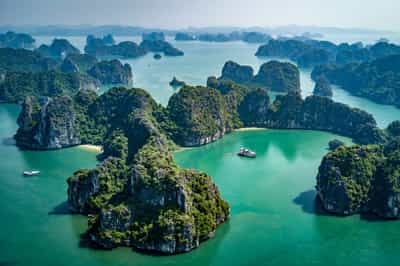
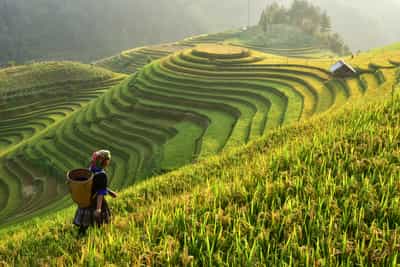
From the many dazzling places to visit in Hanoi to the emerald hills of Sapa and sparkling Halong Bay, Vietnam is blessed with highlights galore.
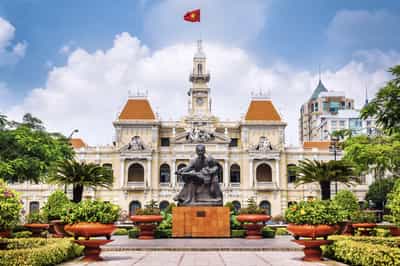
If northern Vietnam is ornate and homely, Ho Chi Minh is exhilarating and contemporary. Well, that’s not entirely true – for every gleaming skyscraper there’s a traditional market just around the corner, but it’s this unashamed fusion of young and old that we love the most. This is also the place to delve into the country’s turbulent past. Formerly Saigon, capital of French Vietnam, the city was liberated in 1975 and renamed in honour of the Communist leader, Ho Chi Minh. For a deep dive into the history books, the American War Museum and the 200-kilometre long Cu Chi Tunnels are poignant and moving. Today, the city reflects the various influences from over the years and a walking tour will take you from Notre Dame to Chinatown to a food stall in a few kilometres! Other highlights include the old Post Office, tree-lined Rue Catinat (and the iconic Rex Hotel), the opulent Opera House, and Reunification Palace.
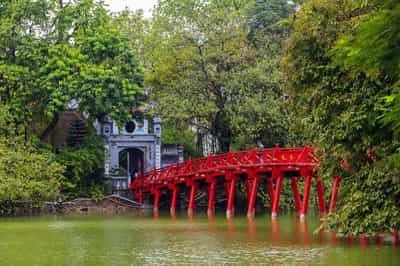
140 kilometres inland from the South China Sea on the western bank of the Red River lies Hanoi, Vietnam’s charming capital city. Picturesque and incredibly friendly, the streets are shared by traditional fishermen and the suited younger generation, sprawling, beautiful temple complexes, modern shops and pho sellers – and the near constant buzz of many, many mopeds. Despite a history of wars, battles and calamities, much of the city’s heritage stands intact and visitors can gaze upon intricate French-inspired buildings, traditional, two-storey houses in the Old Quarter, and over 600 pagodas and temples. Once you’ve extricated yourself from the bustling streets, treat your lungs to a stroll around one of the 18 tree-lined gardens and lakes, and for an added dose of zen, join the locals for a morning of Tai Chi around Hoan Kiem – and then hang around for a traditional water puppet show as night falls. Last but not least, pay a visit to Ho chi Minh himself in the mausoleum and pay your respects to the man who liberated Vietnam.
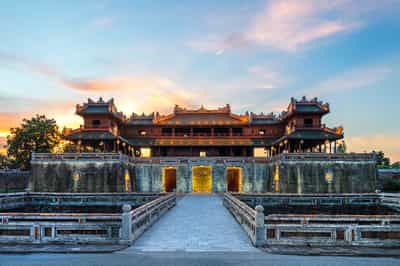
Full to the brim of temples and tombs, pagodas and palaces, Hue, in the central-eastern region of Vietnam, is an architectural delight. In 1945 the last of the Nguyen emperors, Bao Dai, abdicated from the throne and the city was left to crumble into nothing. In the 1990s the People’s Committee of Vietnam declared the city a UNESCO World Heritage Site and began an immense project of restoration. Today, you’ll probably be drawn to visit the Imperial Citadel, an impressive fortress modelled on Bejing’s Forbidden City and perched on the banks of the pretty Perfume River. Stay a while longer and you’ll uncover the gems: the seven-storey octagonal tower of the Thien Mu Pagoda, the extravagant mausoleums of Tu Duc and Khai Dinh, and countless examples of royal buildings, Vietnamese artefacts and the famous garden houses. And, if there’s any time left, a royal Hue afternoon tea on the banks of the river is a rather lovely addition…
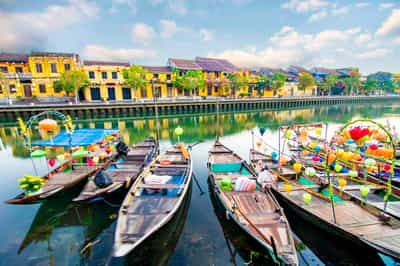
The jewel in Vietnam’s crown, Hoi An is Timbuktu’s darling, and few pass up the opportunity to wander the maze of quiet lanes (and have a suit tailored). Once a trading port for far-flung merchants, the passing cultures have left their mark in the food, the arts and, of course, the architecture. The town centre is a UNESCO World Heritage Site to protect the unique blend of Japanese bridges, Chinese carvings and European balconies. Motorised cars are banned for several days of the week, and once a month, the electricity is turned off, leaving behind a mellow glow of traditional silk lanterns. Then there’s the food. Incredible cuisine is part and parcel of any Vietnam trip, but in Hoi An, it starts with an early-morning market visit and a traditional cooking course, and ends with dinner in any number of restaurants, ranging from fine-dining to street-corners – and both are a treat for the tastebuds. Once you’re noodle-ed out, hire a bike and explore the nearby hills and beaches – a few kilometres out of town and you’ll find life has changed little for centuries.
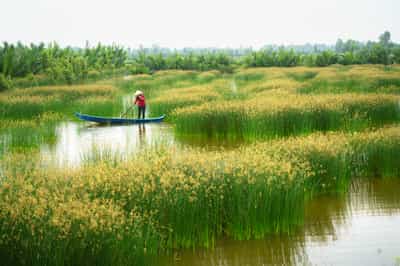
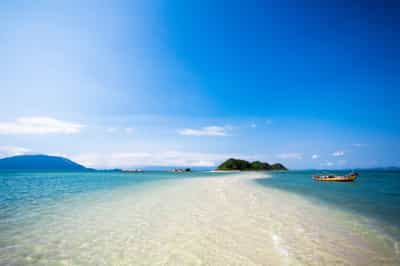
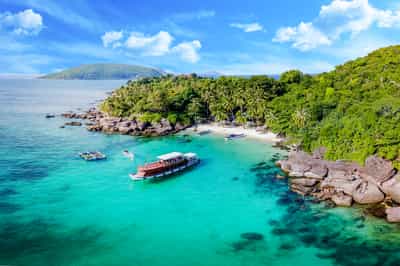

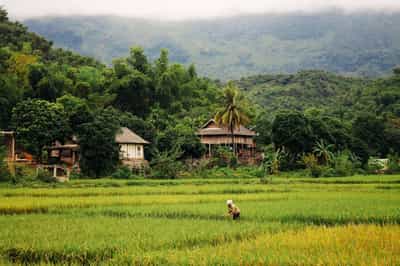
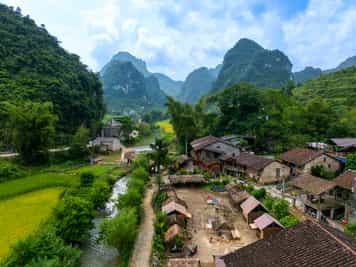
This is Vietnam's last true frontier. While Sapa has the terraces and the lodges and the well-worn paths, the northeast offers something rawer – a landscape that still feels like a secret, where the roads themselves are the attraction and every bend reveals another valley you didn't know existed. The Ha Giang loop is the headline act: a two-to-three day circuit through the Dong Van Karst Plateau, where limestone towers erupt from green valleys and the road clings to mountainsides with cheerful disregard for vertigo. Ba Be National Park offers a gentler counterpoint – still water, jungle, and wooden homestays on the lake. This is H'mong, Tay, Dao, and Lo Lo country. The markets are real, the villages are working communities, and the tourism infrastructure is still catching up with the scenery. It asks a bit more of you and gives more back.


Namibrand, Namibia