Travel and Leaisure Worlds Best Awards for number 1 tour operator in the world 2024 and number 2 tour operator in the world 2025
We're one of the World's Best Tour Operators!
Voted No.1 in 2024 and No.2 in 2025 by Travel+Leisure
Destinations

Where to go in Zambia

From the cascading Victoria Falls to landscapes beyond your wildest dreams where all manner of wildlife dwells, this is Zambia.

South Luangwa

The home of the walking-safari, chic yet rustic bush camps and incredible guides.
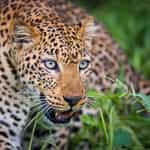
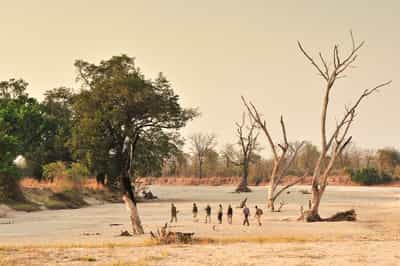
South Luangwa National Park is one of the most magnificent wilderness areas in southern Africa. The park is bordered by the great Luangwa River, which supports a large diversity of megafauna along its course through eastern Zambia. One of the largest populations of hippo and crocodile resides in the river, while elephant, zebra and many predators are attracted to its fertile and forested banks. The park is famous for leopard sightings, and the many spotted cats that hunt on the river have earned it the nickname "The Valley of the Leopard". South Luangwa is also the home of the walking safari, a tradition pioneered by Norman Carr in the 1960s, and still carried out today. Great lodges, high quality guiding and stunning wilderness make this one of our top adventure safaris.

Victoria Falls

Adrenalin-busting activities and views to take your breath away at Africa’s greatest natural wonder.
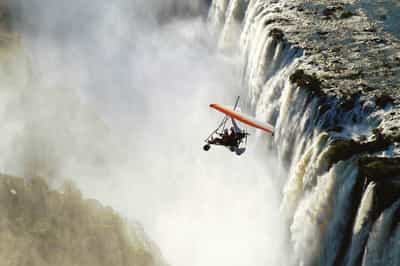
Every minute, 650 million litres of Zambezi water plummet into the Batoka Gorge on the border between Zambia and Zimbabwe, creating one of the world's most splendid sites – the Victoria Falls. And if you’re on safari in southern Africa, visiting them should be top of your list! Straddling no fewer than four countries (Zambia, Zimbabwe, Botswana and Namibia), the falls can be viewed from both Zambia and Zimbabwe. Start off gently with a walk along the precipitous edge of the waterfall, then get active – go bungee-jumping or white-water rafting, take a helicopter flight or swing across the gorge. They don’t call Vic Falls the "Adventure Capital" for nothing!
Lower Zambezi

Glide down the Zambezi by boat, spotting elephants and tiger fishing to your heart’s content.
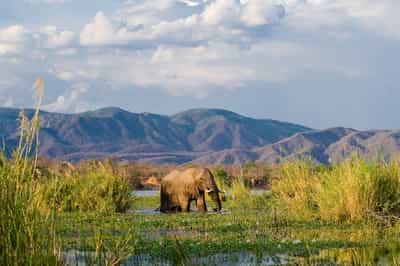
The Lower Zambezi National Park is one of our favorite destinations in Zambia. The vast reserve makes up 4500 square kilometers of Zambezi escarpment wilderness. The huge densities of wildlife tend to stick near the river, and game drives (and canoe safaris) into the park often encounter large herds of elephant, buffalo and zebra. The riverfront is also ideal leopard habitat and it's not uncommon to see one of these rare predators lazing in a tree beside the river. Travelers can self-drive through the park, or choose to stay at one of the top lodges that offer the full Lower Zambezi experience. A canoe safari along the river is also a must!

Kafue

A magical landscape on an epic scale where cheetah and lion roam free, yet tourists rarely visit.
Emerging from the tiny plane and into the vastness of the Kafue, it’s the endless, horizon-stretching size of the place that really hits you. Kafue is Zambia’s oldest and largest national park but, often lost in the shadow of the popular South Luangwa. There are only a handful of camps and even fewer visitors. But don’t let that deter you – come armed with a little patience and the rewards are spectacular. Think cheetah and lion roaming in the golden grass, herds of red lechwe, puku and wildebeest on the plains of Busanga. There is more to Kafue than just Busanga though, the turquoise blue Kafue River itself, a stunning landscape adjoining endless miombo woodlands and seasonal lagoons, a great place for elephant, sable antelope, leopard and even wild dogs.

North Luangwa

Safari like an explorer of old in this remote region, where walking safaris are the name of the game.
North Luangwa National Park is about as remote as it gets in Africa. The area, covering 4636 square kilometers along the mighty Luangwa River, offers some of the finest wilderness experiences in Zambia. There are no permanent lodges in the entire park, and it's not open to the public, except for a few safari operators who have been granted permission to conduct walking safaris along the river. This is an adventure experience like no other, a walk back in time to a wild place, where the great megafauna of Africa—elephants, lions, buffalo and hippo—still roam the bush and we are just spectators.

Liuwa Plain

Step off the beaten track and view Africa’s second largest wildebeest migration in a magical setting.
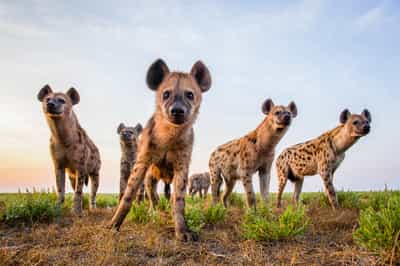
The phrase ‘best kept secret’ is often bandied around when it comes to Africa, but boy does Liuwa Plain deserve the title. Located in the far west of the country, it was once a royal hunting ground for the Barotse King and home of the Lozi people. Today, it’s not unusual to see fishermen gliding down the river or kids playing the shallows, which only adds to the magic of this enchanting wilderness. As for game, the park hosts the second largest wildebeest migration on the continent, an extraordinary concentration of hyena (and other predators) and an even more astonishing variety of birdlife. The journey to get here may be long with an even longer list of transport, but it’s worth every second.
Luambe

A true wilderness with only one camp, many animals and walking safaris and game drives galore.
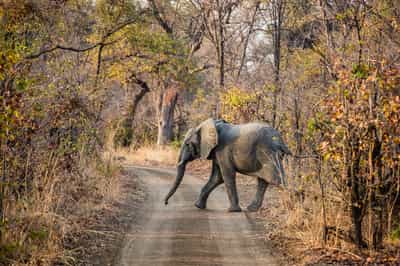
If there’s one thing guaranteed to make us happy on safari, it’s a mind-boggling slice of raw, untamed wilderness and the absence of any tourist-toting minibuses. If that sounds like your kind of thing then it’s time to pay a visit to Luambe National Park. Situated between the North and South Luangwa parks in Zambia, the pint-sized beauty has always remained pretty much off the radar but with the help of a little private investment in recent years, Luambe is ready to have its moment. And with pods of splashing hippo numbering over 500, spectacular numbers of raptors and the return of the big cats, what a moment it’s going to be.

Lusaka

The commercial heart of the copper country, Lusaka is a quirky and perfectly ‘African’ capital city.
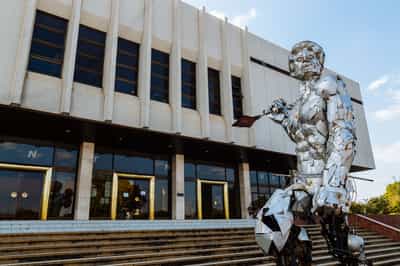
Zambia’s capital city, Lusaka is an eccentric hodgepodge of market stalls and gleaming shopping malls, and dusty, earthy tracks side by side with (relatively) smooth freeways. Chances are you’ll not even see the city if you're simply on a stopover. But if you spend a day or two, there's fun to be had. Lusaka is largely a commercial city, so don't expect grand museums or gentle tree-lined avenues. What you will find is a burgeoning selection of lively restaurants and cafes, some fun markets and a genuine "African" feel, which are enough to entice some to return again and again.

Kasanka

Forget chasing big game and visit Kasanka for the beautiful fauna and incredible bat migration.
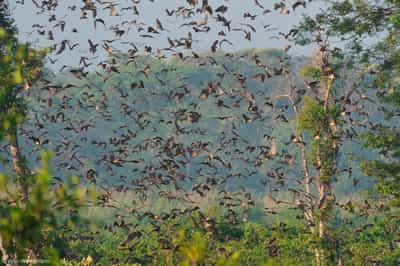
With just under 400 square kilometres of attractive papyrus marshes and forests sprinkled amid classic miombo woodlands, Zambia’s Kasanka National Park is diminutive but utterly beautiful. The incredible biodiversity also belies its miniature stature and in amongst the wetland habitats, you’ll find intriguing mammals, birds and reptiles including the blue monkey, sitatunga antelope, marsh mongoose and slender-snouted crocodile. But what the park is really famous for is the bat migration in which over 10 million fruit bats flock to the fruits in the forest, ripened by the onset of the rains. The best vantage points are the treehouse platforms and hides dotted around the area but you’ll have to be quick – the bats begin arriving at the end of October and are almost entirely gone by December.
Where To Go
Pin Icon

Namibrand, Namibia