Travel and Leaisure Worlds Best Awards for number 1 tour operator in the world 2024 and number 2 tour operator in the world 2025
We're one of the World's Best Tour Operators!
Voted No.1 in 2024 and No.2 in 2025 by Travel+Leisure
Experiences

Wildlife experiences

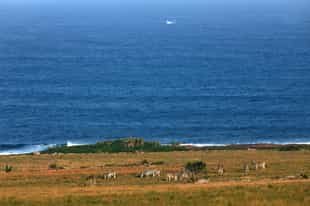
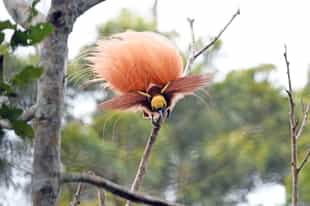
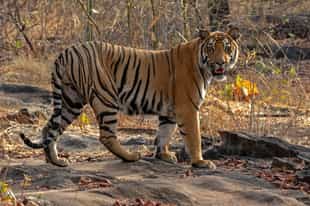
The thrill of catching a glimpse of a swishing tail or the flash of an eye, knowing you’re the first human they have seen in a while – or for the very first time - is a truly unforgettable moment. One moment, you’re scanning the horizon, and the next, an elephant ambles into view or a monkey swings overhead. It might be a whale breaching off the coast, or a pangolin scurrying across the sand, but whatever it is, it’s real, and it’s unforgettable. At Timbuktu, we’ll get you to the right place at the right time for the best wildlife encounters - you just need to have your binoculars at the ready.

Find the Golden Monkeys in Volcanoes National Park

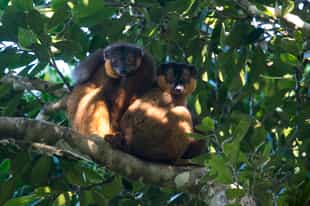
Journey into the verdant forests of Volcanoes National Park, one of the only places in the world where endangered golden monkeys are found - and you are able to get as close. You'll make tracks in the early morning to follow your seasoned guide on a trekking adventure to find these fascinating and animated primates. There are two habituated troops, the largest of which has between 80 and 100 monkeys, which can be found at the foot of soaring Mount Sabyinyo. You'll spend an hour there and be fully immersed in their world, surrounded by the bronze-backed primates as they scamper through the undergrowth, leap through the bamboo branches and investigate their guests (that's you!). It's also less strenuous compared to other activities in the area thanks to the relatively flat terrain and length of treks (it can take as little as 30 minutes to locate the troop).

Watch rare forest animals meet at Dzanga bai

As if Dzanga-Sangha wasn't unique enough, it also provides marshy clearings amongst the thick rainforest, the perfect place to explore on foot. An experienced guide will lead the way, calling out trivia about the history and heritage of the area, its wildlife and its people. The bais are where most of the forest's wildlife gathers, including eye catching flocks of Great Blue Turacos and the endemic Dzanga robin, herds of forest buffalo and elephant foraging for minerals, and pint-sized red river hogs rolling in the mud. Be prepared to get more than a little mucky and wet, crossing the bai to explore a tiny island and seeing species you've never encountered before, closer than you would ever expect. Your boots will surely need drying by the fire, but trust us, it'll be more than worth it. Or for the greatest adventure, sleep out on a research platform and wake up to sunlight streaming through the mist as elephant wallow in the mud.

Enjoy a sundowner boat cruise in Akagera

Known as Rwanda's rising star of safari, Akagera is a vast landscape marked by its large and gleaming lakes. Take to the water early in the morning or at golden hour when birdlife from its 520 species takes a last flight before settling into the forest-fringed shores. Cruise the lake, navigating lurking crocodile (the highest numbers in Africa) and pods of hippo, whilst spotting the wildlife on shore. As the sun sets, casting its colours across the water, enjoy a chilled drink and snap all the photos you can.

Ride amongst Laikipia's wildlife on horseback

Round these parts, horseriding is almost a given! The even savannah leads perfectly into the lush foothills of Mount Kenya, and there are plenty of lodges on pretty conservancies that offer guided rides to find the wildlife. If you can't imagine a better way to explore the plains of Kenya, we're happy to arrange a multi-day excursion. Enjoy a safari from the back of your wild guide, where you can spot protected wildlife like black rhino (Laikipia is home to around half of Kenya's population) and the rest of the Big Five, as well as gangly giraffe, herds of Grevy's zebra and buffalo, and if you're lucky, the beautiful African painted dog.

Go on a guided walking safari in Mana Pools

In Zimbabwe, elephant reign supreme and nowhere more so than Mana Pools, which occupies prime land beside the Zambezi River. Apart from the hazy blue forests of Ana trees, the area is rather sparsely vegetated, making it perfect for a walking safari with few hiding spots. Your guide is highly trained in understanding wildlife dynamics and how to find the myriad animals, while remaining mostly undetected. Using the clues left behind by wildlife, you may be walking quietly through the forest when an elephant stands on its back legs to reach the treetop bounty or follow a pack of African painted dog on their travels, sometimes getting within a few meters. Much of the wildlife is quite used to humans tramping through the park! Stop for chilled drinks while a herd of buffalo grazes downwind before returning to camp. The driest, safest and most rewarding time for a walking safari is between May and September.

Spot the endangered Black Rhino in Damaraland

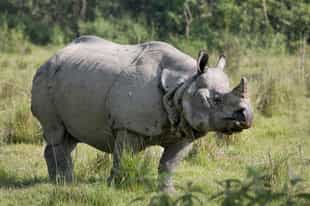
Depart from camp with your expert guide and tracker in tow to follow the trail of the rare black rhino. Venture out in a 4x4 as your tracker susses out the location of these tough-skinned beauties, where you'll continue on foot. Learn the ropes of rhino tracking from the best and experience the thrill of seeing these secretive creatures in the wild and up-close. Watch in wonderment as they trundle amongst the boulders and nibble on a euphorbia plant as your guide fills you in on the hard-won conservation efforts in Damaraland.

Spot the tree climbing lions of Lake Manyara

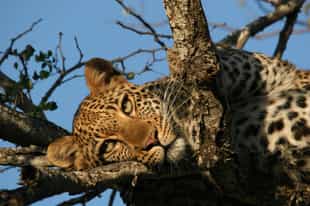
Across East Africa, lions can be found lazing in the sun and draped over rocks but the big cats at Lake Manyara do things a bit differently. Garnering wonder from many safari-goers, generations of lion have been sizing up a sturdy tree, clawing their way to a comfortable branch and spending the day snoozing under the leaves. Whether it was to escape charging buffalo or the pesky midday flies, the habit has stuck! It's a real treat to spot the famous tree-climbing lions on a game drive in the park.

Spot wildlife on a Samburu bush walk

Ditch the jeep and explore the crisp, crimson landscape of Samburu on foot. Follow your expert guide as they lead you on a journey of tracking black rhinos and the 'Special Five', and spotting the details that are often missed. Let your safari slow to a gentle pace as you stop to learn the names and uses of desert-dwelling flora, discover skeletons left behind by predators (both large and small) and examine rock formations for tiny critters.

Night drives in Luambe National Park

Grab the chance to see the species that emerge only under cover of darkness.
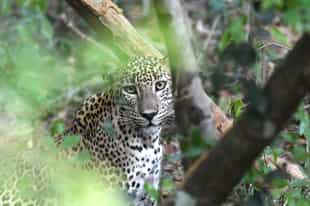
Unlike the activities allowed in many national parks across the continent, night safaris are permitted in Zambia and provide a fabulous opportunity to spot some of the more elusive nocturnal creatures. In Luambe, night drives continue for a couple of hours after sundowners, and you should keep your eyes peeled for porcupine, honey badgers, serval and even the well-camouflaged leopard.

Spot spectacular birdlife in Lake Nakuru

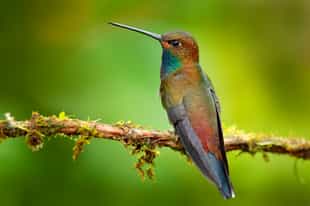
If we had to pick one thing that puts Lake Nakuru a head and feathers above the rest, it would be the mesmerising birdlife. Leave the jeep behind to take a walk along the lakeside where you'll see plumage of every colour. Lake Nakuru was made iconic by its flocks of rose-hued flamingos, and after leaving for eight years, the lake's star players have returned to delight twitchers once again. With 500 species and counting, there is plenty more to see. Scan the water and skies for gluttonous pelicans, elegant cranes and the striking long-tailed widowbird. March to May is your best bet for seeing the most birdlife as migratory birds also settle on the lake, while November to April is breeding season when many species are dressed in their finery.

Search for elusive species in Tswalu Kalahari

The arid Kalahari is one of the best places to see the secretive aardvark and pangolin, sightings highly sought-after even by Big Five aficionados. Both animals are nocturnal so your guide will try to find them on an early evening safari. Stay alert and you might spot other wildlife too.

Track the Waterberg's wildlife on a game drive

Rumble out of camp in the early morning light or closer to dusk, to explore the Waterberg's landscape of craggy cliffs, crystaline streams and plains dotted with mighty baobabs and leafy fever trees. Your expert guide knows all the right places to look (and in the Waterberg, it won't be far) for members of the Big Five, wallowing hippo and herds of plains game. Stop to take as many mental and real pictures as you can before driving on to spot even more wildlife. After a cuppa or cooling drink, return to home base, eyeing out plenty of animals on the way!

See whales on a boat trip in Mauritius

Leave the island in a speedboat in search of the oceans most majestic creatures, whales. Your skipper will give you a run-down of the whales you might see, their traits and the best way to see a whale up-close while respecting their peace. There is always the chance to see whales in Mauritius, as long as the weather conditions are good, but Humpback Whales migrate between July and November. The species you're likely to see year-round include Blainville's Beaked Whale, Gray's Beaked Whale, Dwarf Sperm Whale and the Sperm Whale, which is a favourite in Mauritius. Expect to be enthralled and humbled by these giants of the deep as they blow, flap and (if you're lucky), leap from the water.

Spot wildlife on a night game drive in Amboseli

Under a canvas of stars, set out from camp in a jeep to spy on the wildlife as Amboseli comes alive with a whole new cast of creatures. Even more so than the day, night time belongs to the predators. Lions slink between the trees, sniffing out hidden antelopes, and spotted hyenas howl in excitement as they look for leftovers. In the quiet of the evening, scan the brush for a pair of glowing eyes - then try and figure out if they belong to a bush baby, aardvark or even the shy civet. Your guide knows all and won't let any rustle go unnoticed!

Visit the Ol Pejeta conservancy in Laikipia

The Laikipia private conservancies and game ranches have banded together to make this area a wonderful sanctuary for rare and endangered species. Here, you will find more elusive Northern species like Grevy’s zebra, reticulated giraffe, kongoni, bongo, giant forest hogs and oryx as well as wild dogs, black and white rhino and, most importantly, the last remaining Northern white rhinos in the world in the Ol Pejeta Conservancy. These sanctuaries work closely with local communities to eliminate human/wildlife conflict and to encourage harmonious cohabitation and conservation.

Track wildlife on a game drive in Mana Pools

With its life-giving waterholes, replenished by the rushing Zambezi River, Mana Pools is a dream safari destination. You'll set out at your choice of early morning or late afternoon for an open-air game drive, helmed by your expert guide who knows just where to look for the myriad species that live here. One of the great elephant sanctuaries in Africa, Mana Pools is also home to the rest of the Big Five, cheetah, herds of rare sable and, if luck is on your side, you just might get an African painted dog sighting. Beginning in June, winter is a particularly good time to visit. Park at one of the sprawling water holes and watch as the parade of wildlife arrives! Round off your drive with drinks before zooming back to camp.

Track the Damaraland's wildlife on a game drive

Depart from camp as the dawn breaks or after the midday heat subsides for a game drive across bold and rugged Damaraland. Amongst the volcanic mountains and forests of petrified trees, your expert guide will lead you on a search for desert-adapted elephant, quietly grazing black rhino and herds of mountain zebra (plus the pint-sized Damara dik-dik). You'll explore the designated concession areas (much of Damaraland is left for nature to enjoy) with a pitstop for snacks and a cooling drink. As is the case for much of Southern Africa, the dry season months of May to October provides the best wildlife-spotting.

Witness huge herds of Elephants in Linyanti

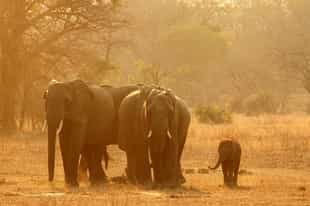
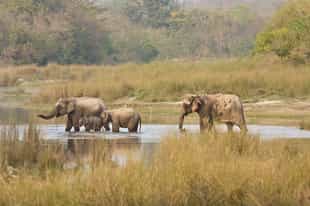
Depart from camp as the sun peeps over the horizon or as the midday heat subsides to find the jaw-dropping herds of elephant Linyanti is famous for. Your guide knows the landscape like the back of their hand and will have no trouble finding the magnificent tuskers as they gather along the permanent water sources to cool off and rehydrate. This is especially true in the dry season from May to October! Explore the lush marshlands, open grassland and shimmering channels, with your binoculars at the ready to spot the tough-skinned giants of Linyanti. Before you head back to camp, sip on a warm cuppa or chilled cocktail!

Go birdwatching in Luambe National Park

Get to know your raptors from your rollers with the expert guides at Luambe.
Birdwatching in Luambe is a lovely way to spend a morning or afternoon. Embark on a proper birding safari (on wheels or on foot) with one of the expert guides, and tick off everything from African fish-eagles to vivid Lilian’s lovebirds, or get comfortable in camp and watch our feathered friends straight from the veranda. Time your visit for September or October to visit the large colonies of carmine bee-eaters creating a storm of colourful activity along the banks of the Luangwa – magical.

Track the Kalahari's wildlife on a game drive

Within the super remote Central Kalahari, as dawn breaks or dusk approaches, your expert guide will lead you on a game drive journey across this untouched desert landscape. Traverse the Kalahari in search of big cats (including black-maned lion), meerkats surveying the scene from rocky outcrops and, if you're around between November and April, herds of gemsbok. Stop for a refreshing cup of something hot or a sundowner before you return to camp.
Previous Next
31 - 60 of 100 experiences
Where To Go
Pin Icon

Namibrand, Namibia