Planning Guides
South Africa Country Guide
Safaris, sandy shores and multicultural cities

Wet Season — a good time to visit
It is the height of the wet season in the Kruger National Park, days are hot and humid with the potential for dramatic thunderstorms.
Animals can be more difficult to find, with lush, flowering vegetation and an abundance of water allowing wildlife to spread out.
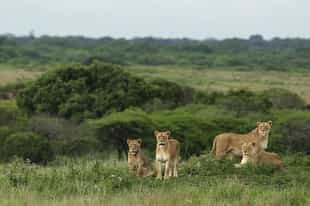
Enjoy an abundance of predators with lion and leopard more prevalent than cheetah.
Birding is exceptional with migrants present creating a kaleidoscope of colours in the treetops as they display for the affections of the opposite sex.
A smaller delight at this time of the year is the numerous dung beetles rolling their dung balls in every direction.
Hats and sunblock are a must at this time of year.
Wet Season — a good time to visit
Weather conditions are hot and humid, rainfall is still high and impressive evening thunderstorms are a possibility.
During this time of plenty, wildlife can be more difficult to find, vegetation is thicker and the abundance of water means animals spread out over a greater distance.
A special region for the big five, with leopard the most challenging species to find.
It is the waterbuck birthing season, leading to encounters with these unique fluffy calves.
A great time for birding with migrants present and in their breeding plumage.
Hats and sunblock are a must have with the African sun baking down.
Wet Season — a good time to visit
The last of the summer rains fall in this month, with temperatures still high and relative humidity experienced.
Vegetation is thick leading to unpredictable game viewing with animals spreading out over greater areas, enjoying the abundance of food.
The big 5 are prevalent in this region throughout the year, with leopard providing the greatest challenge.
Birding is still good with migrants present, providing melodious noise from the tree tops.
The peak of the Greater kudu and Cape buffalo breeding season creating plenty of excitement amongst the predators, lions in particular.
Hats and sunblock are a must have with the African sun baking down.
Wet Season — a good time to visit
Temperatures are still hot but starting to cool, with much lower humidity and rainfall drying up.
The vegetation is still thick with many trees fruiting, drawing out wildlife in search of a high energy meals.
There are few better opportunities to view the big 5, with leopard usually the prized sighting.
The start of the rutting (breeding) season for impala, wildebeest and warthog fighting for the opportunity to mate.
Birds begin to migrate in this month, international species leaving the park and local migratory species arriving.
Hats and sunblock are a must have with the African sun baking down.
Dry Season — one of the best times to visit
The Kruger National Park is experiencing the end of the transition period from wet summer to dry winter, offering moderate temperatures and little to no rain.
Game viewing improves considerably as vegetation thins, waterholes dry up and competition increases.
The wild dogs begin their denning period providing the greatest opportunity to view these rarely seen, charismatic animals.
Enjoy breath-taking scenery with the White seringas blossoming and a picturesque mix of autumn reds and oranges.
Elephants from Mozambique and Zimbabwe migrate into the Northern Kruger in search of winter grazing.
Dry Season — one of the best times to visit
Day temperatures are comfortable but drop considerably at night, with morning frost on occasion and rainfall drying up.
Game viewing approaches its peak with vegetation thinning and wildlife concentrating around the remaining water sources.
Wild dogs are denning during this period, providing the best opportunity to view these highly endangered and very energetic animals.
The ancient baobab trees are flowering, targeting bats specifically as pollinators.
An ideal time of year for walking safari, providing a unique perspective of the region's wildlife.
Be sure to pack a warm jacket for the chilly mornings and evenings at this time of year.
Dry Season — one of the best times to visit
In the Kruger National Park, nights are cold and possibly frosty, while days are dry with comfortable temperatures and short periods of wind.
Wildlife viewing is exceptional at this time of year, with vegetation thin and animals staying close to the remaining water sources.
The best time of year to view the elusive wild dog which dens over this period.
The potato bushes are in flower and alive with the arrival of local bird species such as the stonechat.
A wonderful time of year to experience this region on foot, with cool, calm conditions and good visibility.
Don't forget to pack a warm jacket for the chilly mornings and evenings at this time of year.
Dry Season — one of the best times to visit
The coldest night temperatures have passed, with the daylight hours warming considerably, rain is still very unlikely and occasional wind is a possibility.
Enjoy prime wildlife viewing with vegetation thin and animals remaining close to the permanent water sources.
A mix of yellows dominates the vegetation as both the knob thorns and sjambok pod flower at this time.
Walking safari is a must at this time of year with conditions producing an unforgettable experience.
Take the time to visit some of the lesser known heritage sites, including rock art, stone ruins and comprehensive museums.
A warm jacket is a must at this time of year for the mornings and evenings.
Dry Season — one of the best times to visit
In the Kruger National Park, enjoy prime safari weather, with warm daytime temperatures, low humidity and a handful of rainy days, usually towards the end of the month.
Wildlife viewing is exceptional at this time of year with vegetational still thin and animal densities high around water sources.
The Weeping boer-beans burst into flower attracting a myriad of bird life, insects, monkeys and more.
An ideal time of year for walking safari, providing a unique perspective of the region's wildlife.
Visit the lesser known heritage sites, including bushman rock art, museums and stone ruins with ancient tools.
Be sure to pack a warm jacket for the chilly mornings and evenings at this time of year.
Wet Season — a good time to visit
Temperatures can get very hot towards the end of the month, with a slight rise in the amount of rainfall, usually in the form of irregular afternoon showers.
Take advantage of the last month of quality game viewing with vegetation still thin and wildlife congregating around the permanent water sources.
Migratory birds begin to arrive back in the park, with males in their breeding plumage presenting to the females in the hopes of winning a mate.
A wonderful time of year to experience this region on foot, with cool, calm conditions and good visibility.
The big 5 are prevalent in this region throughout the year, with leopard providing the greatest challenge.
Hats and sunblock are a must have with the African sun baking down.
Wet Season — a good time to visit
Temperatures are hot and a little humid with the first true rains of the wet season, it should be noted that in most cases rains are just passing afternoon showers.
Wildlife viewing is not at its best with vegetation bursting back to life and animals spreading out as waterholes are filled again.
Birding is particularly good with migrants present and in breeding plumage, making for a spectacle in the tree tops.
A great time of year to visit the lesser known heritage sites, including bushman rock art, museums and stone ruins with ancient tools.
There are few better opportunities around to view the big 5, with leopard usually the prized sighting.
Hats and sunblock are a must have with the African sun baking down.
Wet Season — a good time to visit
The Kruger National Park is experiencing hot temperatures with relatively high humidity and rain falling in the form of afternoon showers or occasional, dramatic storms.
Game viewing is not in its prime with wildlife spread out and less visible.
Many animals give birth in late December generating high excitement amongst the lion, leopard and cheetah of the region.
Birding is at its best with migrants present and in breeding plumage, displaying to the opposite sex in the hopes of finding a mate.
The Wild morning glory and Flame lilies are in flower, splashing purples and yellows across the green vegetation.
Hats and sunblock are a must have with the African sun baking down.
Get advice and suggestions to make this your perfect trip.
or call us on: +1 (646) 542 0667
11 Condé Nast Traveler Top Travel Specialists 2026

No. 1 & No. 2 Tour Operator in Travel + Leisure's Best Awards 2024 & 2025

Best Booking Platform in Women's Health Travel Awards 2025

Travel Specialist voted as Latin America A-List Travel Advisor 2025

"Timbuktu can take relatively complex and slightly amorphous travel plans and transform them into a well-organized, perfectly tailored trip."