
We're one of the World's Best Tour Operators!
Named three years running in Travel+Leisure World's Best, including No.1 in 2024
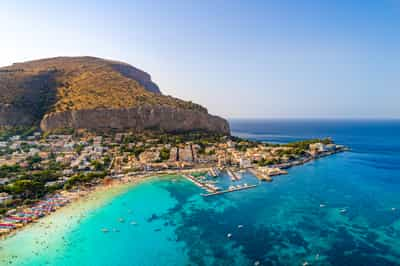
Separated by a narrow stretch of sea, Sicily is worlds apart from the mainland. It’s the kind of island where stress feels out of place, helped along by the stunning scenery in every direction, full of mountains, searing blue seas and flaxen sands. The island itself was ruled by many nations over the years, influencing everything from architecture to the cuisine, and Greek temples sit next to perfectly-preserved Baroque paintings and glittering Arab-Norman mosaics. Whenever the opportunity arises, take a moment to sample the island’s signature dishes including caponata, gambero rosso (raw red prawns) and cannoli filled with creamy ricotta – and in Palermo, pay a visit to one of the many markets, piled high with swordfish, citrus and arancini. Inland, almond trees and pistachio groves abound and a visit to the adored hillside town of Taormina and nearby Noto is a must. And then there are the hotels. You’ll find sprawling five-star residences that are every bit as White Lotus as they sound, designer boutiques and guesthouses that will thrust you into the heart of Sicilian family life (and the cucina).
Sicily’s capital is a study in contrasts. There are crumbling piazzas and gorgeous sunlit courtyards, Norman domes and extravagant Baroque churches, and centuries of Arab, Spanish and Italian influence carved into the stone. Much of the architecture is in varying states of disrepair yet it all adds to the charm and (slightly faded) grandeur. Begin a day of wandering with an espresso and a brioche at a pavement café, before tackling one of the many markets, as much for the people-watching and atmosphere as for the purchasing! In the afternoon, admire the Byzantine mosaics in the Norman Palace and browse Sicilian art at the Palazzo Abatellis art gallery, or squeeze in a visit to the nearby town of Monreale. The impressive cathedral looks out across the Conca d'Oro or the ‘Golden Shell’, named after the lemon, orange and mandarin groves that filled the valley for years. Then, after an aperitivo and a plate of zucchini fritti, spend the evening at the opera at Teatro Massimo, Europe’s third largest opera house, and revel in the delights of this enthralling, confusing town.
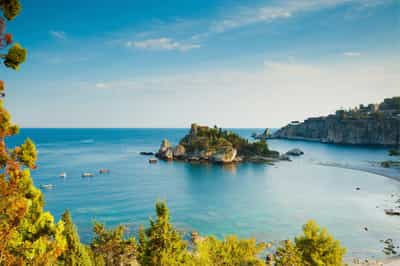
Set high on Sicily’s jagged cliffs and peering out over the Mediterranean Sea, Taormina is an adored hillside town, chock-full of history and with a charm that has been thousands of years in the making. The Greco-Roman amphitheatre is the town’s showpiece, its stone tiers framing the sea and Mount Etna in one of Italy’s most irresistible views. Along Corso Umberto, boutiques, gelaterie and chic aperitivo bars spill out, while narrow lanes lead towards Chiesa Madonna della Rocca for even wider and more wonderful vistas. Below is teeny-tiny Isola Bella, a nature reserve once home to English conservationist Florence Trevelyan and now reached by a ribbon of sand (walk, swim or cable car across) that appears and disappears with the tide. Head south and the scenery shifts again, as the Ionian Coast tumbles towards Catania in a string of fishing villages and lava-black headlands, all born of Etna's historic eruptions. At the end of the day, grab a seat on a sunset terrace and watch the sky turn apricot, a perfectly chilled martini by your side...
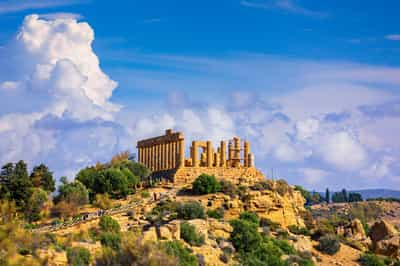
Stretched along a limestone ridge above the sea, the Valley of the Temples is home to Sicily's most spectacular collection of Greek temples, seven of them built in the 5th and 6th centuries BC. The remarkably intact Temple of Concordia is the showstopper (visit in the early morning to see it glowing gold) while the Temple of Juno on the eastern hilltop still bears the marks of the fire set by Carthaginian invaders in 406 BC. Arrive at opening time to have it more or less to yourself, then retreat from the heat to the Kolymbethra Garden, a former Greek fish pond now shaded by blood orange, lemon and bergamot trees and aeons-old olives. Then, follow the coast west to the Scala dei Turchi, a dazzling white cliff carved by wind and waves into giant steps or continue to Selinunte, where more Greek temples are perched right beside the sea. By dusk, find a table with a view of the floodlit temples and settle in with a glass of Nero d'Avola…
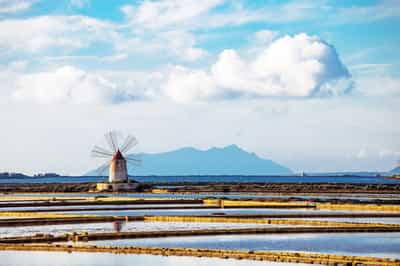
Curling into the sea on a sickle-shaped promontory (legend has it that Demeter dropped her sickle here while searching for her daughter Persephone), Trapani is right on Sicily's far western tip, with a distinctly North African streak running through its cooking. Wander the old town's pedestrianised streets and Baroque piazzas, then settle in for a plate of fish couscous, a nod to the city's Tunisian influences, or busiate pasta with the local almond-and-tomato pesto. Just south of town, old windmills rise above the salt pans that fuelled the local economy for centuries, and they are at their prettiest at sunset. Trapani also makes a superb base for day trips: ride the cable car up to Erice, a medieval hilltop village 751 metres above the sea, or hop on a ferry to the Egadi Islands: Favignana is the biggest and busiest, with its old tuna works and turquoise Cala Azzurra; Levanzo is car-free and barely populated; and Marettimo is further out and wilder, all sea caves and goat tracks and almost no traffic whatsoever.


Namibrand, Namibia