
We're one of the World's Best Tour Operators!
Named three years running in Travel+Leisure World's Best, including No.1 in 2024
This former Ryukyu Kingdom traded with China and Southeast Asia for centuries before Tokyo took notice, and that independence still lingers in the fortified gusuku ruins, the pork-rich cuisine, and a languid pace locals call ‘Okinawa time.’ Shuri Castle emerges from the ashes of a recent fire – take the chance to watch lacquer masters at work before the scaffolding comes down – while the Kerama Islands, a short ferry hop away, deliver that heart-stopping turquoise the brochures promise (and visibility to match). In the north, jungle-cloaked Yanbaru offers flightless rails and waterfall trails, and in the south, it’s all about the cliffs of Peace Memorial Park. The food alone justifies the journey: bitter melon stir-fries, meltingly tender rafute pork, and awamori, Japan's oldest spirit, sipped where it's made. Blue Zone territory, genuine beaches, and not a temple queue in sight… glorious.
Far, far away from the bright lights of Tokyo, Okinawa occupies the southernmost scatterlings of Japan, where an unbelievably blue East China Sea laps onto its shores. It’s one of the world’s original Blue Zones and, aside from health and longevity, the Main Island has plenty to occupy your time: watch the UNESCO-listed Shuri Castle being rebuilt using traditional joinery; watch, mesmerised, as whale sharks and manta rays swim overhead at the Churaumi Aquarium; and take a sobering walk amongst the thousands upon thousands of names at the Peace Memorial Park & Museum. It’s worth going beyond the well-known too. Think trundling through the tunnels of ancient fukugi trees in a traditional water buffalo cart; visiting a traditional awamori distillery; and, if you’re around in the autumn, watching the ever-competitive Naha Tug-of-War.
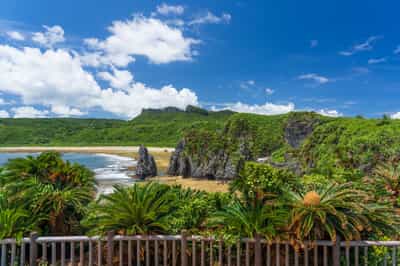
The word ‘dreamy’ might be a tad overused in travel literature, but when you discover waters so distinctly blue that they named a colour after them, it might just deserve the adjective... Just 40 kilometres off the coast of Okinawa’s capital, Kerama is a national park made up of 22 islands, where off-shore reefs boast almost unbelievable visibility, the beaches are straight off the pages of a magazine, and turtles are frequent visitors. Even further-flung, Kume Island is famed for Hate no Hama, a surreal 7 kilometre sandbar only reachable by boat, alongside some of the best beaches in Japan, gorgeous, hand-woven silks and a surplus of prawns. These waters also happen to host epic humpback whale sightings, between January and March, when mothers and calves enjoy them as much as the humans.
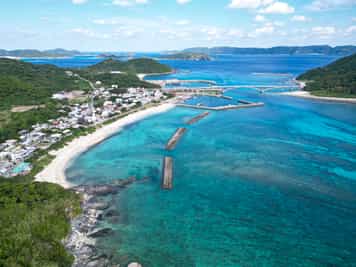
From Okinawa Main Island, set your compass south and you’ll end up on the golden shores of Miyako Island. Actually a cluster of islands linked by increasingly longer bridges (including the 3,540-metre-long Irabu Bridge), Miyako boasts some of the loveliest beaches in Asia (really!) with bleached-white sands and, importantly, not another soul in sight. And if you hear talk of 17END, it’s the local nickname for one of the most photogenic stretches on the island. The waters here are a sensational blue thanks to the almost total lack of rivers and snorkelling is possible right from the shore, where sea turtles are often spotted. Also on the coastline is Higashi-Hennazaki, a narrow cape with the Pacific on one side and the East China Sea on the other, and, if you can drag yourself away from the water, the interior is lush with row upon row of sugar cane fields. In a place like this, your cares seem to just drift away...
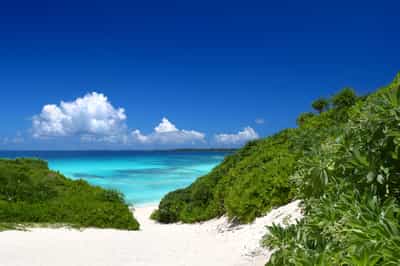
An archipelago of tiny, picturesque islands, each one more unique than the last, the Yaeyama Islands are, quite simply, spectacular. Ishigaki is the main hub where flights and ferries operate from, but that doesn’t mean it ranks any lower in the beauty stakes. Head for Kabira Bay where glass-bottomed boats float over the turquoise waters and coral reef. Taketomi Island, on the other hand, is a preserved Ryukyu village with white sand streets and aged houses, best explored by bicycle or water buffalo cart (the buffalo usually know the route better than the driver!). Iriomote Island is almost all jungle and home to the endangered Iriomote wildcat, which was only discovered in 1965 and is found nowhere else on Earth. In fact, natural wonders abound, from ‘star sand’ beaches and disappearing islands, to tumbling falls (only reachable by kayak and a jungle trek) and incredible congregations of manta ray.


Namibrand, Namibia