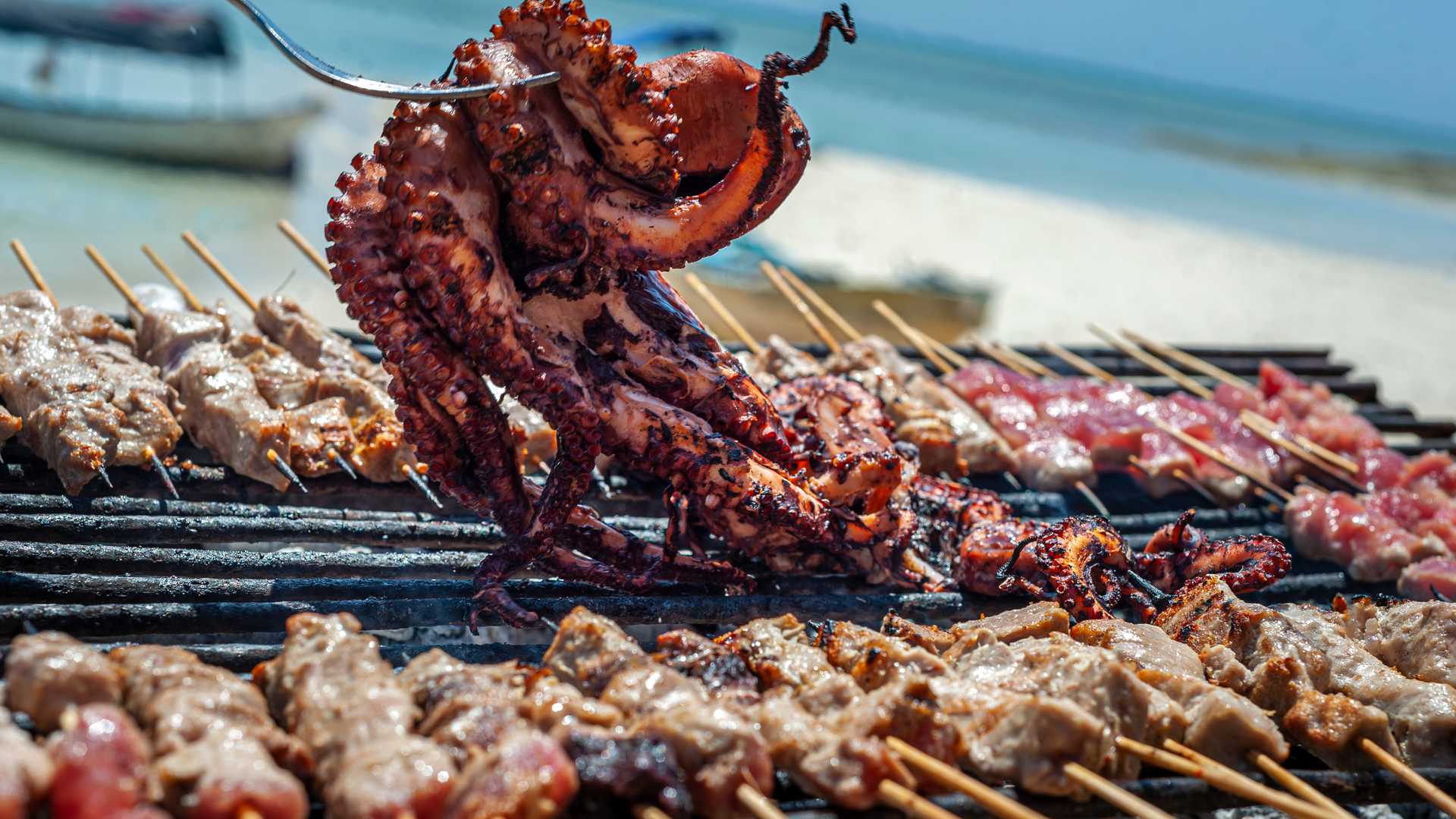
Food in Tanzania – Everything You Need to Know
 With expert insights from Annie Irankunda, Travel Specialist
At its core, food in Tanzania is a meeting of three culinary traditions: hearty inland cooking built on maize, beans and grilled meat; Swahili coastal cuisine layered with coconut milk, cardamom and clove from Zanzibar’s spice farms; and Indian influences brought by 19th-century traders. Add British colonial leftovers (chai with milk, the odd biscuit), and Portuguese ingredients that arrived via the spice trade — cassava, chillies, maize itself — and you have a kitchen with some serious range. The staple holding most of it together is ugali, a stiff maize-flour porridge eaten with everything from goat stew to coconut fish curry.
In this guide, we’ll walk you through the dishes worth knowing, what gets served for breakfast, the street food you shouldn’t leave Zanzibar without trying, and what to drink alongside it all. We’ll also point you to the restaurants and lodges where we’d send you to eat it.
Tanzanian dishes at a glance
| Dish | What it is | Eat it with |
|---|---|---|
| Ugali oo-GAH-lee Staple / starch · Nationwide |
Stiff maize-flour porridge, dough-like in texture | Stews, sauces, grilled meat, vegetables |
| Nyama choma n-YAH-mah CHOH-mah Grilled meat · Nationwide (esp. inland) |
Goat, beef or chicken grilled over charcoal with minimal seasoning | Ugali, kachumbari, a cold beer |
| Mishkaki mish-KAH-kee Street food / skewers · Nationwide |
Marinated beef or goat cubes grilled on skewers | Chips mayai, chilli sauce |
| Pilau pee-LOW Rice dish · Nationwide (coast especially) |
Rice cooked in spiced broth — cardamom, clove, cinnamon, garlic | Beef, goat or vegetables; often kachumbari |
| Chapati Flatbread · Nationwide |
Flaky, pan-fried unleavened wheat flatbread | Stews, eggs, chai |
| Wali wa nazi WAH-lee wah NAH-zee Rice · Coast & Zanzibar |
Rice slow-cooked in coconut milk, faintly sweet and creamy | Fish curry, beans, vegetable stews |
| Sukuma wiki soo-KOO-mah WEE-kee Vegetable side · Nationwide |
Collard greens sautéed with onion, tomato and garlic | Ugali, almost everything else |
| Mchicha m-CHEE-chah Vegetable side · Nationwide |
Amaranth leaves cooked with tomato, onion, coconut milk or peanuts | Ugali, rice |
| Maharage mah-hah-RAH-gay Beans · Nationwide |
Red kidney or black-eyed beans, often simmered in coconut milk | Ugali, rice, chapati |
| Kachumbari kah-choom-BAH-ree Salad / relish · Nationwide |
Finely sliced tomato, red onion, chilli and lime juice | Nyama choma, pilau, mishkaki |
| Mchuzi wa samaki m-CHOO-zee wah sah-MAH-kee Fish curry · Coast & Zanzibar |
Fish simmered in tomato, coconut milk, tamarind and spices | Wali wa nazi or chapati |
| Ndizi nyama n-DEE-zee n-YAH-mah Stew · Northern (Chagga, Kilimanjaro) |
Green bananas stewed with meat or fish in coconut milk | On its own |
| Sambusa sam-BOO-sah Street food / snack · Nationwide (Indian-influenced) |
Spiced potato, peas or minced meat in deep-fried pastry triangles | Chilli sauce, chai |
| Chips mayai chips ma-YAI Street food · Nationwide |
Chips folded into an omelette while frying | Kachumbari, ketchup, pili pili |
| Mandazi man-DAH-zee Breakfast / snack · Nationwide |
Lightly sweet fried dough, sometimes with cardamom or coconut | Chai |
| Vitumbua vee-TOOM-boo-ah Breakfast / snack · Coast especially |
Small rice-flour and coconut-milk cakes, crisp outside, soft inside | Chai, coffee |
| Zanzibar pizza Street food · Zanzibar (Stone Town) |
Thin dough folded around savoury or sweet fillings, pan-fried | On its own, straight off the griddle |
| Urojo oo-ROH-joh Soup · Zanzibar |
Tangy potato-based soup with chickpea fritters and boiled egg | On its own, with chilli sauce |
| Kashata kah-SHAH-tah Sweet / snack · Coast especially |
Coconut and peanut brittle, cut into squares | Chai, coffee |
| Ubuyu oo-BOO-yoo Sweet / snack · Zanzibar |
Boiled baobab seeds dyed red, coated in spiced sugar | On its own, slowly |
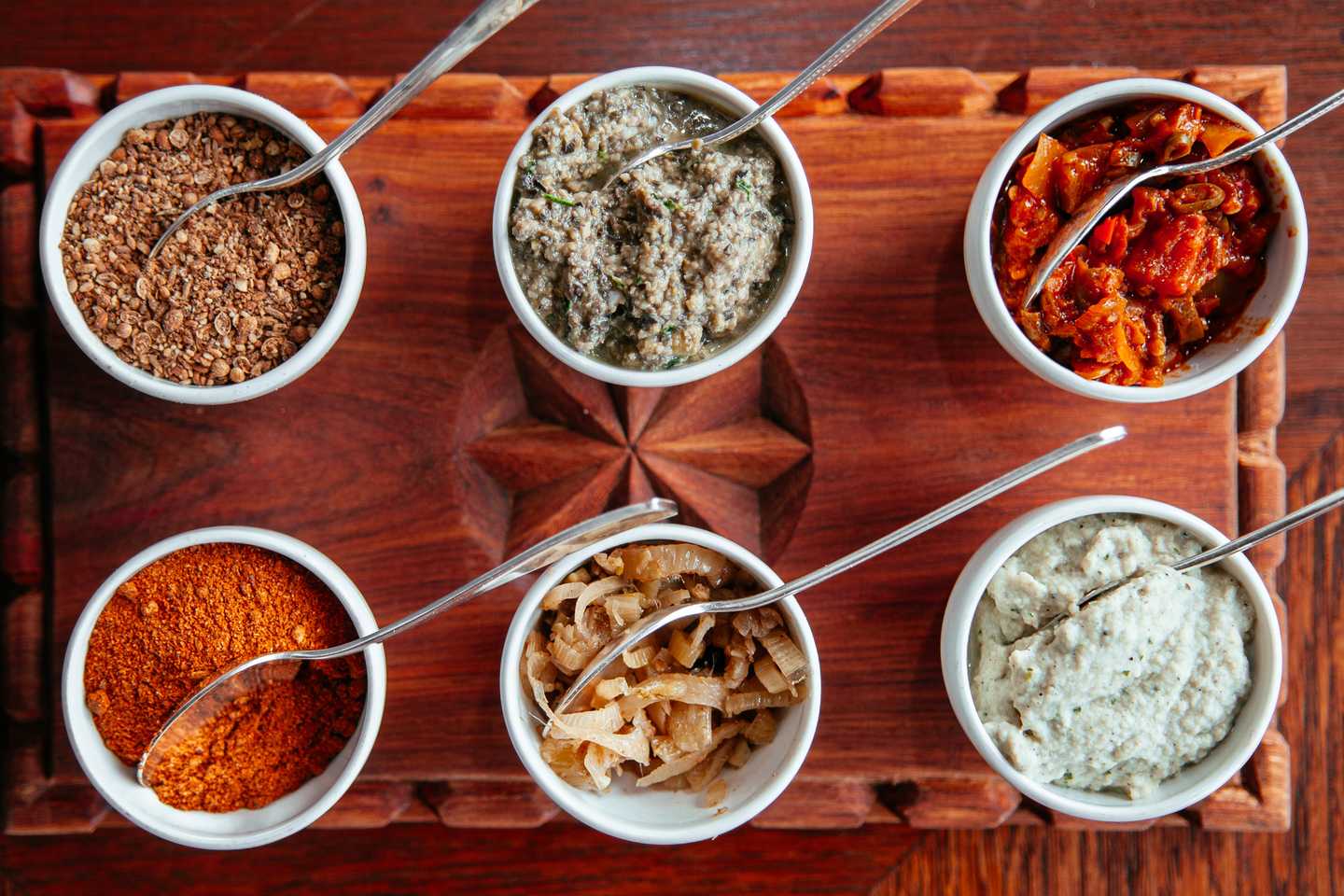
A variety of Tanzanian spices and condiments
Traditional food in Tanzania
Tanzania’s position in East Africa has always placed it firmly along significant trade routes, connecting it to the ancient Arab world, India, and beyond, which left an indelible mark on its traditional foods. Being near the equator with abundant rain and sunshine also produces very fertile lands, resulting in year-round growing seasons for crops like maize and rice, bananas and coconuts, and a collection of flavoursome spices (its islands are famous for them!). And you’ll find these ingredients in most of Tanzania’s traditional food.
In Tanzania, traditional food is quite different across various regions as the country has over 100 distinct tribes, whose diets are influenced by their geography – tribes near lakes eat a lot of fresh fish while those in the highlands feature beef in their diets. Food in Tanzania varies across regions, but there are some stand-out staples that form the backbone of the country’s cuisine.
In Tanzania, food and drink, and the consumption of them, is considered to be a very social activity but it is generally seen as unacceptable to eat while walking down the street or in a vehicle. Rather, it’s expected that you sit down and eat, even if it’s at an outdoor spot. This is especially relevant in Dar es Salaam and Zanzibar during the fasting period of Ramadan (the timing differs each year).

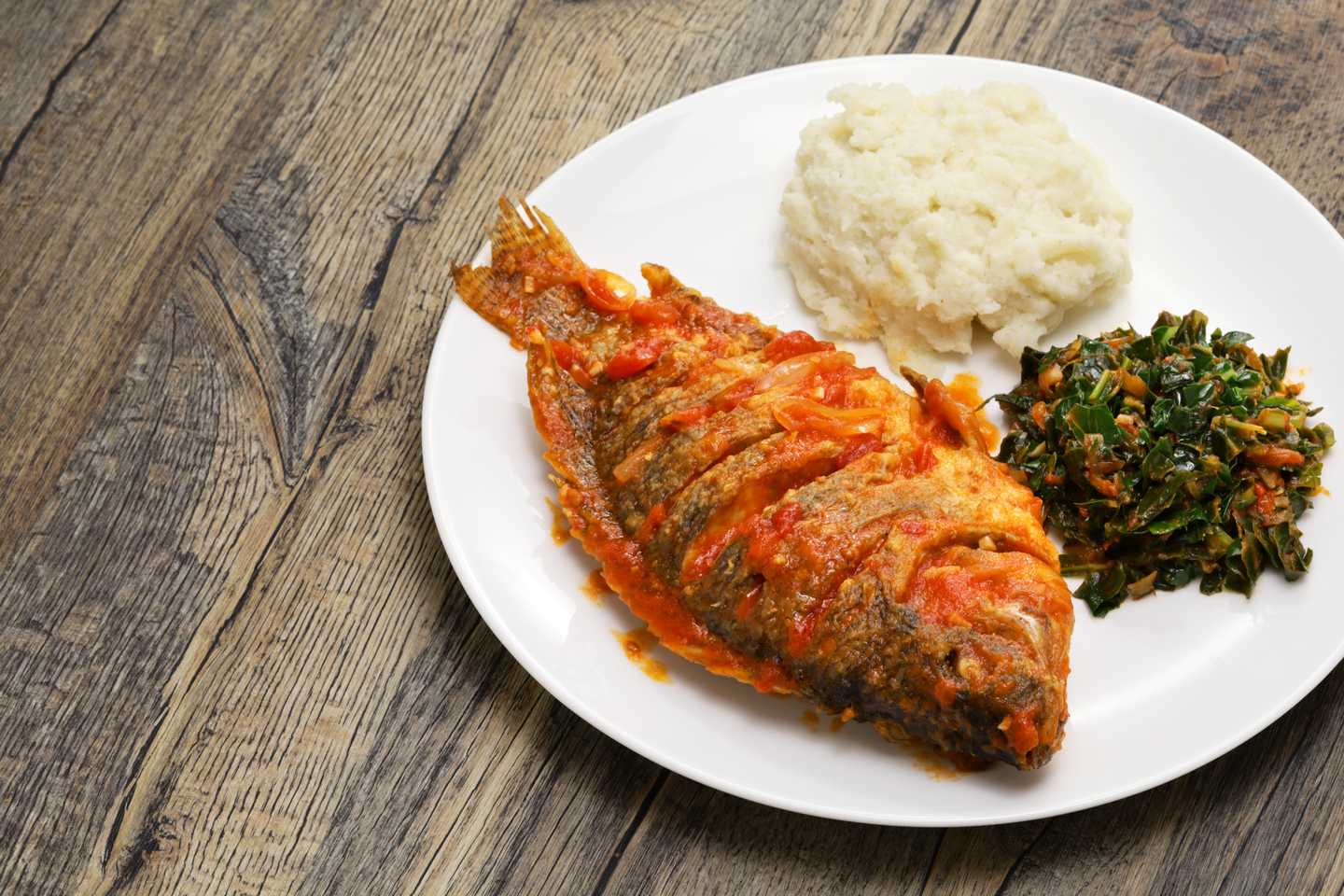
Traditional Tanzanian meal – Tilapia stew and ugali
What food do they eat in Tanzania?
Whilst planning your trip, you could be wondering, ‘What food and drink should I try in Tanzania?”. Sharing similarities with the cuisine of the rest of East Africa, there are a number of dishes that are synonymous with food in Tanzania and worth sampling when you visit.
- Ugali: a stiff porridge (it resembles polenta) made from maize flour and water, Ugali is one of the most common dishes served in Tanzania – and largely considered to be the national food of Tanzania. It is often eaten with your hands and used to scoop up stews and sauces.
- Nyama Choma: influenced by the East African open-fire tradition, Nyama Choma is very popular at social gatherings. Beef, chicken, or goat is marinated in a medley of onions, salt, garlic, ginger, and lime juice, then grilled over an open flame and served alongside ugali or thick-cut fries.
- Pilau (or pilaf): originating in Persia and still enjoyed widely across India, Pilau is often served on special occasions. It is a flavoursome rice dish prepared with garlic, onions, and a variety of spices including cinnamon, cloves, and cardamom, served with your choice of meat or potatoes.
- Chapati: very similar to the Indian food of the same name, Chapati is a type of unleavened bread fried in a skillet, resulting in a soft and flaky centre, and crispy exterior. It is most often served as an accompaniment to meat or vegetable stews, but can aslo be enjoyed as a savoury breakfast option.
- Fish is a significant part of Tanzanian cuisine in coastal and lake regions, making this a staple for many. It is either grilled, fried, or cooked in a curry and served with white rice, with fish in coconut sauce being one of the most popular dishes. Tilapia and Nile perch are the most common fish used in these dishes.
- Mchuzi wa samaki: Coastal cooking at its best, mchuzi wa samaki is a fish curry built on a base of tomato, garlic and onion, then enriched with coconut milk, tamarind and the kind of spice blend Zanzibar is famous for — cardamom, clove, cinnamon, turmeric. Kingfish or snapper are the usual choices, and it’s served with wali wa nazi or chapati to soak up the sauce.
- Ndizi Nyama (or Ndizi Samaki): Tanzania produces an abundance of bananas, which you’ll have the chance to enjoy in myriad ways including fried plantains, roasted green bananas, banana soup (a breakfast time classic), and banana beer. One of the tastiest dishes using cooked bananas is Ndizi Nyama, a traditional food of the Chagga tribe who reside at the base of Mount Kilimanjaro – make sure you try it out if you’re spending time in Arusha! It is prepared with green bananas, which are combined with meat or fish in a stew of coconut milk, and once boiled, tastes similar to starchy potatoes.
- Wali wa nazi: On the coast and across Zanzibar, plain rice gets an upgrade in the form of wali wa nazi – rice slow-cooked in coconut milk until creamy and faintly sweet. It’s the natural partner for any fish curry or bean stew with sauce to mop up.

A popular fresh tomato and onion salad called Kachumbari
Are there vegetarian dishes in Tanzania?
In Tanzania, famous foods, or a large portion of them are (or can be) completely vegetarian, which comes in very handy if you have dietary restrictions.
- Mchicha: a traditional vegetable dish prepared with amaranth leaves or spinach, tomatoes, onions, and coconut milk, Mchicha is a delectable concoction that can be enjoyed on its own or as a side dish.
- Wali na Maharage: it may sound exceedingly exotic but Wali na Maharage is actually a simple dish of rice and beans (red, kidney, soya or black-eyed peas), prepared with a delicious blend of coconut milk, onions and spices.
- Kachumbari: most commonly made up of tomatoes, cucumbers and red onions, this classic Tanzanian salad is refreshing and tasty. The ingredients are often sliced as thinly as possible to show off the chef’s knife skills – the cucumber is practically see-through!
- Fruit salad: bursting with tropical flavour, a fruit salad in Tanzania often includes fresh, sunset-orange papaya, banana and pineapple, and more unexpected ingredients like cucumber and carrots, which add a rather pleasant crunch.
- Makande: a traditional dish, specifically for the tribes of the Ngorongoro area, Makande is made with the two most popular crops grown here; beans and corn, combined in a thick soup. It’s especially delicious during harvest time when the kernels are sweet and soft.
- Sukuma wiki: this dish turns up on most Tanzanian tables at some point during the week. The name translates roughly to “stretch the week”, which tells you everything about its role in everyday cooking. Collard greens are sautéed with onion, tomato and a little garlic until soft, then served alongside ugali.


Mandazi is fried bread that was first made on the Swahili Coast
What food do they eat for breakfast in Tanzania?
While toast is a common part of breakfast in many households, there are some fantastic local foods in Tanzania to try out.
- Mandazi: most often enjoyed as a snack or breakfast item, Mandazi is a type of fried bread – similar to doughnuts but far less decadent. Depending on the chef, they could be flavoured with cardamom or coconut milk and served with very sweet tea.
- Vitumbua: fried in specialist pans over an open flame or in charcoal stoves, Vitumbua are balls of rice with a crispy exterior and gooey, rice pudding-like middle.
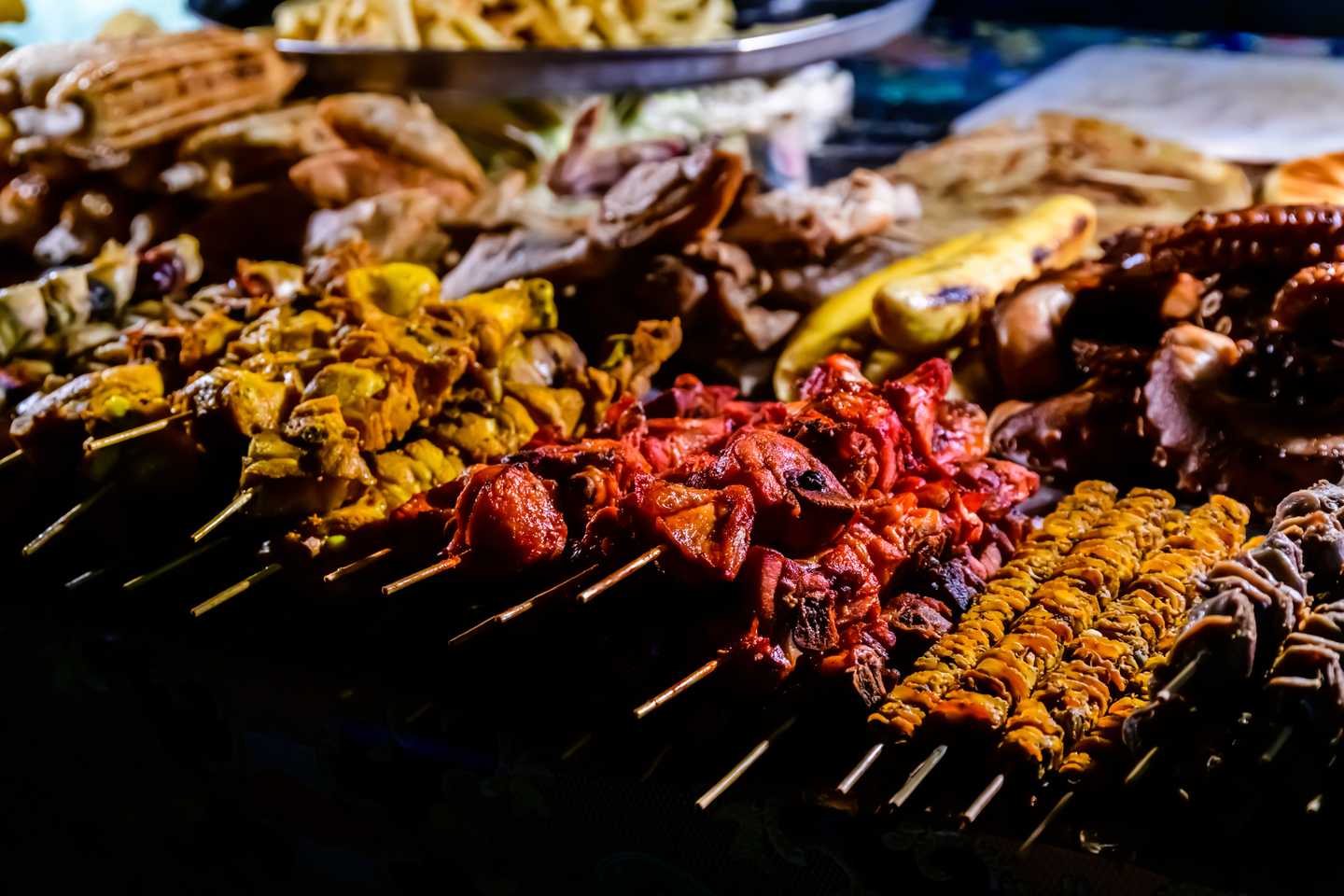
Try the delicious Mishkaki skewers
What street food is Tanzania known for?
In Tanzania’s main hubs, entire streets are often shut down in the evenings to become open-air eateries, where you can enjoy a taste of the country’s street food.
- Mishkaki: these delicious skewers (most often made with beef) are marinated in garlic and ginger and served with chilli sauce. Enjoy snacking on one of these as you watch the hustle and bustle of Dar es Salaam pass by.
- Chips Mayai: Tanzania’s very popular ‘fast food’, you can watch as this omelet of eggs and chips is prepared before your eyes.
- Sambusa: The samosa’s Tanzanian cousin, sambusa are deep-fried triangular pastries stuffed with spiced potato and peas, minced beef or chicken. You’ll find them everywhere from Stone Town side streets to office canteens in Dar es Salaam, sold from glass cases by women who’ve been making them daily for decades.
- Kashata: Kashata includes squares of coconut and peanut brittle, just sweet enough, with a clean, crunchy bite. You’ll see them stacked in giant plastic containers at petrol stations, bus stops and corner shops, usually sold for a few hundred shillings apiece. It’s worth bringing a packet back for the journey home.
Stone Town
There are a number of food markets, hole-in-the-wall spots, and streetside stalls throughout Stone Town and getting a taste of the local cuisine is a fantastic way of getting to know the island.
- Zanzibar pizza: a must-have in Zanzibar, this ‘pizza’ is closer to a stuffed pancake filled with meat, seafood or vegetables, and sometimes sweet ingredients for a dessert version.
- Roving coconuts: look out for carts laden with young coconuts moving through the streets of Stone Town. Once you pick out your coconut, they’ll lop it open with a machete, ready for you to snack on.
- Urojo: prepared with a tangy chicken stock base, Urojo is a steaming medley of potato, fried cassava chips, thinly sliced red onions, kachori and a hard-boiled egg. You’ll find some popular stalls serving Urojo in local food markets – just look out for the longest lines!
- Kachori: these delicious, deep-fried balls of mashed potato are spiced with chili, lime and ginger and, stuffed into a chapati with some shredded carrot and cabbage, it makes a very quick and easy lunch on the go.
- Ubuyu: A Zanzibar specialty, ubuyu are baobab seeds boiled, dyed bright red and coated in a sugar-and-spice mix – sometimes with cardamom, pepper or salt rubbed in alongside the sweetness. You’ll spot them by the bag at Forodhani market and in Stone Town’s spice shops.
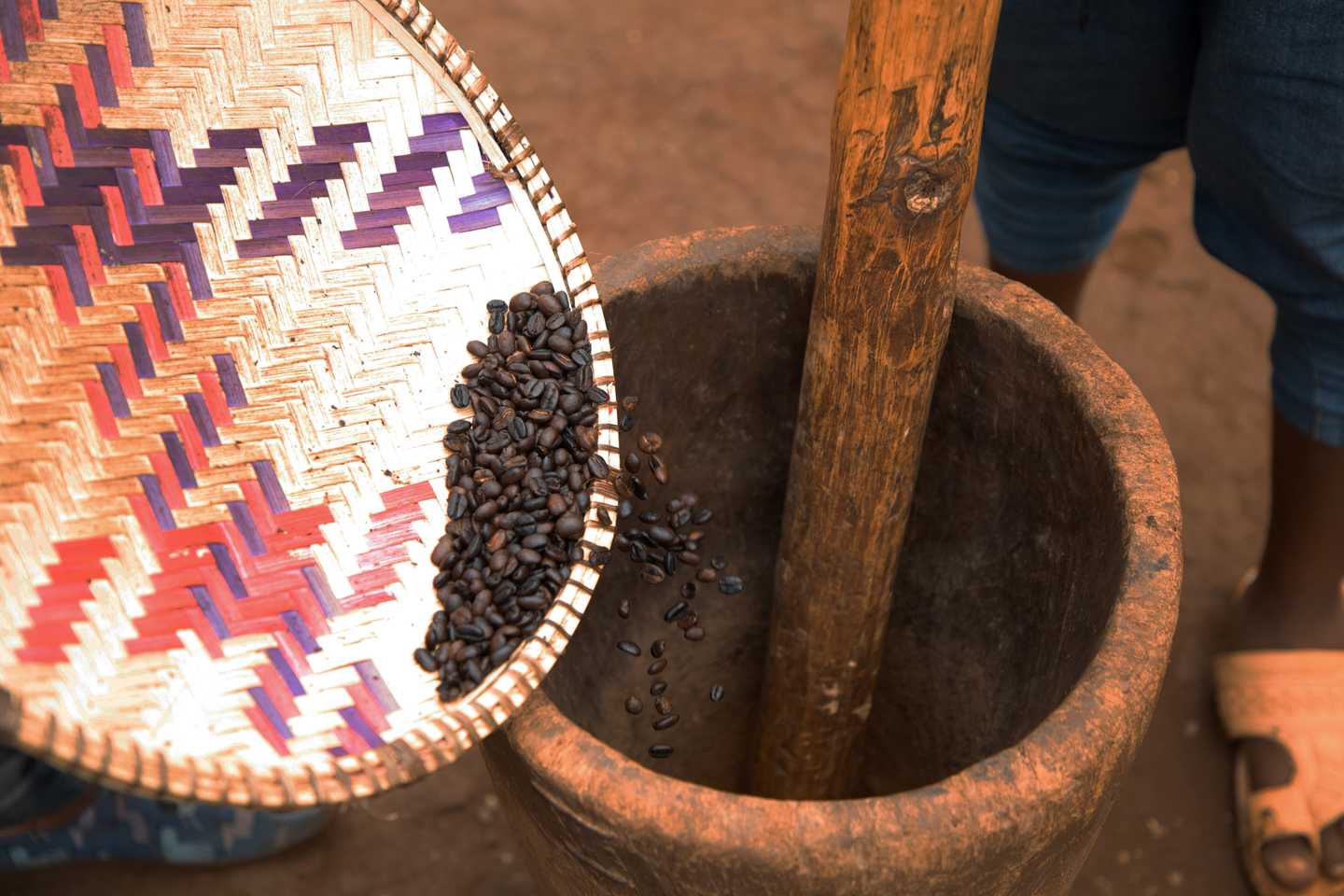
Tanzania’s iconic coffee beans
What do they drink in Tanzania?
Food in Tanzania doesn’t travel alone. From the strong, sweet chai poured into glasses at breakfast to the Konyagi that turns up in every beach bar on Zanzibar, Tanzania’s drinks are worth seeking out specifically.
Coffee
Thanks once again to its geography, climate and soil conditions, Tanzania has one of the most coveted check-lists for coffee growing and it’s now among the country’s largest exports. As many can attest to, there’s nothing better than waking before sunrise for a morning safari and being brought back to life by a steaming cup of locally-grown coffee.
Chai
The everyday hot drink across Tanzania is chai — strong black tea brewed with milk and sugar, often spiked with fresh ginger (chai tangawizi) on the coast. It’s poured generously and drunk at every time of day. Don’t ask for it without sugar unless you mean it.
Local beer
Kilimanjaro and Serengeti are the two big-name lagers, with Tusker (technically Kenyan) widely available across the border. All are crisp, easy-drinking and the natural accompaniment to a plate of nyama choma at the end of a long day. Safari Lager is the dark horse — a slightly heavier brew that rewards the curious.
Konyagi
Tanzania’s signature spirit, Konyagi is a clear sugarcane-derived distillate often labelled as gin (although purists will tell you it’s closer to a rum). Citrusy, herbal, and sold under the tagline “Spirit of the Nation”, it’s the default base for cocktails up and down the coast. Mix it with tonic, soda or Stoney Tangawizi ginger beer.
Fresh juices and madafu
Pressed sugarcane juice, passion fruit juice, tamarind juice and fresh madafu (young green coconut, cracked open with a machete and drunk straight from the shell) are everywhere along the coast. The vendors wheel them through Stone Town and along beach paths from dawn, and there’s almost nothing better on a hot afternoon.


The Rock Restaurant, Zanzibar
Where can I try Tanzania’s traditional food?
Arusha
One of the most popular places to go for a feast of local Tanzanian food is Khan’s Barbecue. An auto body shop by day, Khan’s transforms into a vibey eatery at night with long grills laid with whole chickens and fresh chips sizzling. Also, give the spicy carrot salad a try and wash it down with a glass of pressed sugarcane juice.
Not far from the airport, the Tembo Club is a laidback spot to enjoy some of Arusha’s finest grilled bites including mbuzi mguu (goat leg), kuku mzima (whole chicken) and mbuzi mbavu (goat ribs), served with ugali and vegetables. Team it up with a Kilimanjaro beer and you have a classic Tanzanian dinner.
Burka Coffee Lounge offers a mix of international and locally-inspired dishes, which you can enjoy alongside views of Mount Meru. And their lovely staff provide the warmest of welcomes to Arusha.
Dar es Salaam
Situated in the slick Hyatt hotel, The Palm Restaurant serves an array of cuisine (seafood features heavily, of course) including some fantastic, authentic Tanzanian dishes. Enjoy the likes of Kuku Makange (spicy chicken), Samaki Wa Kupaka (fish served in coconut and tomato gravy), Kuku Wa Kukaanga (Swahili fried chicken and kachumbari) and chicken and beef mishkaki.
From its clifftop perch, Karambezi Cafe’ enjoys 180-degree views of the Indian Ocean, which you can enjoy from the wide open deck. The menu is varied and includes dishes to suit all palettes but includes tasty local dishes too. Enjoy the BBQ beef mishkaki served with fried plantain and kachumbari salad or the Zanzibar tray – crispy fried coconut shrimp and peri peri, garlic and ginger chicken mishkaki.
Zanzibar
This is, by far, one of the best places to really get a taste of Tanzania’s food culture with a whole host of restaurants and eateries to choose from.
“One of the most unique is The Rock, which quite literally sits on a giant rock just off the south-east coast of Zanzibar. Their menu is entirely wrapped up in its location; much of the seafood is harvested from surrounding reefs and spices from the iconic farms of Zanzibar, although with an Italian twist. Booking ahead is a must!”
– Annie Irankunda, Africa travel specialist
Sitting in the heart of Stone Town, the Ma Shaa Allah Cafe serves a tasty lunch menu to enjoy in between sightseeing. Tuck into a buffet of African and Indian flavours like their much-loved barbecued lamb, washed down with a glass of lassi.

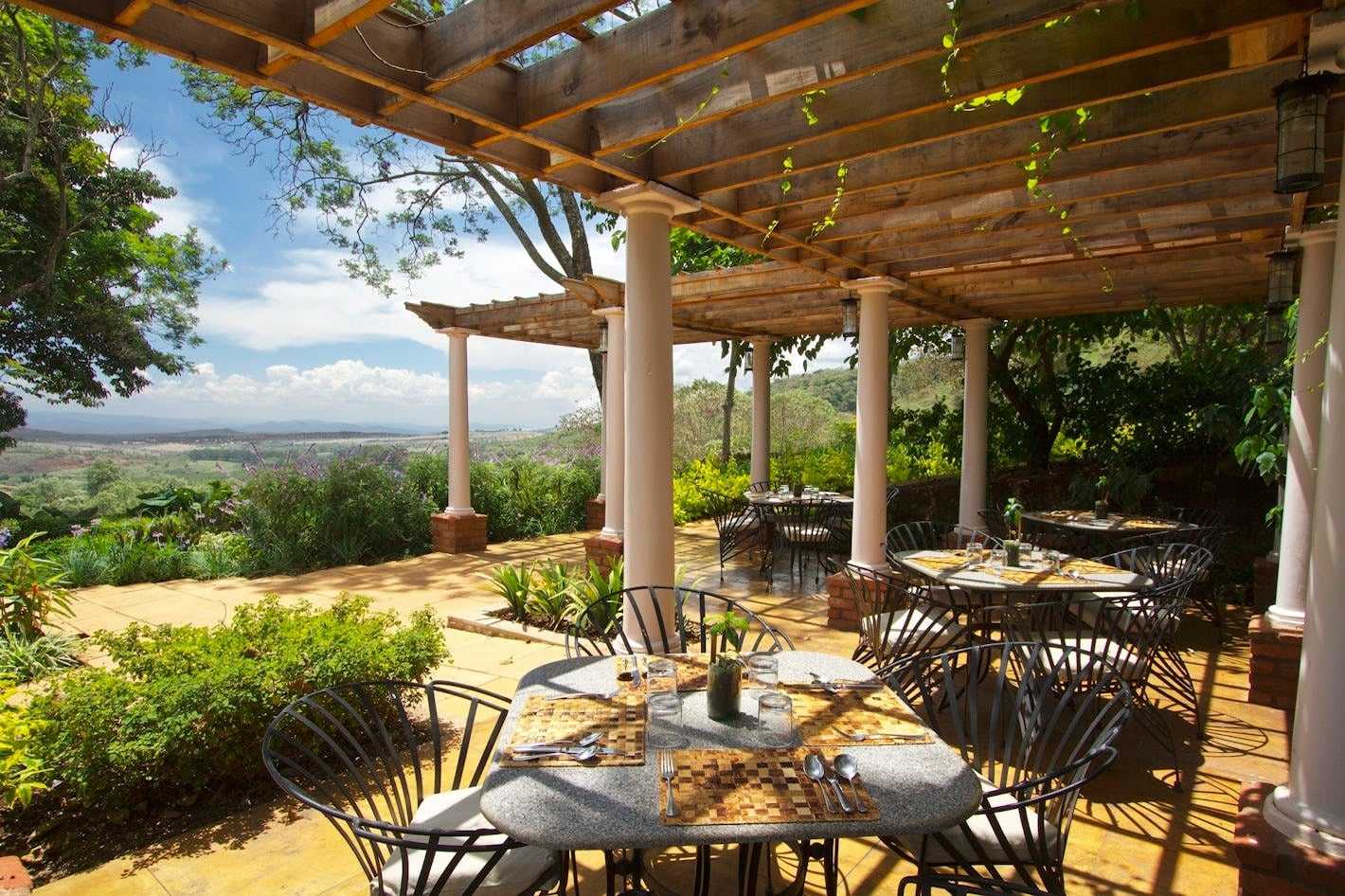
Enjoy the local cuisine served at the Gibb’s Farm restaurant
What is the best Tanzania food on safari?
So, what about meals when you’re on safari? While the menu differs from lodge to lodge, most offer a variety of dishes that span global cuisine to local flavours, often staying true to the traditional foods of Tanzania. Either in the form of a buffet or a la carte menu, you can have your pick of dishes. If you love nothing more than getting to know a country through your tastebuds, then we’ve got a fantastic selection of lodges that showcase Tanzania’s local produce and delicacies.
Gibb’s Farm
As you might have guessed, Gibb’s Farm has extensive gardens from which they harvest fresh, organic ingredients for your meals including the coffee beans in your cup each morning. They offer a range of dishes at their beautifully appointed restaurant including locally-inspired cuisine like the pan-fried red snapper fillet and grilled chicken kebab marinated in lemon with marjoram, okra and spicy capsicum.
Kisiwa Hotel
The dining at Kisiwa Hotel taps into the rich culinary heritage of Zanzibar, which can be enjoyed amidst the amber glow of its Darini restaurant or on the terrace with views of the lapping ocean and the iconic rooftops of Stone Town. Tuck into the freshest of seafood, expertly spiced dishes and puddings prepared with the island’s exotic fruits.
Rivertrees Country Inn
Set in sprawling gardens with views of Mount Meru and Kilimanjaro, Rivertrees Country Inn has a lovely, homely feel from the moment you arrive. Their restaurant serves dishes inspired by tried-and-true family favourites (the wood-fired pizzas are seriously delicious) but if you’re looking to try out some of the local flavours, take your pick from their Heritage menu. We’re talking Zanzibari fresh coconut and vegetable curry, marinated whole tilapia served with ugali, and chicken curry served with coconut rice. Rivertrees prides itself on using the freshest ingredients, many of which are picked daily from its garden.
Singita Faru Faru Lodge
Working closely with local farmers to use the freshest produce from potatoes to passion fruit, Singita is known for its fabulous dining experience. The food at Faru Faru Lodge reflects a sense of ‘barefoot elegance’ inspired by the flavours of Zanzibar including scrumptious seafood and lip-smacking spices.
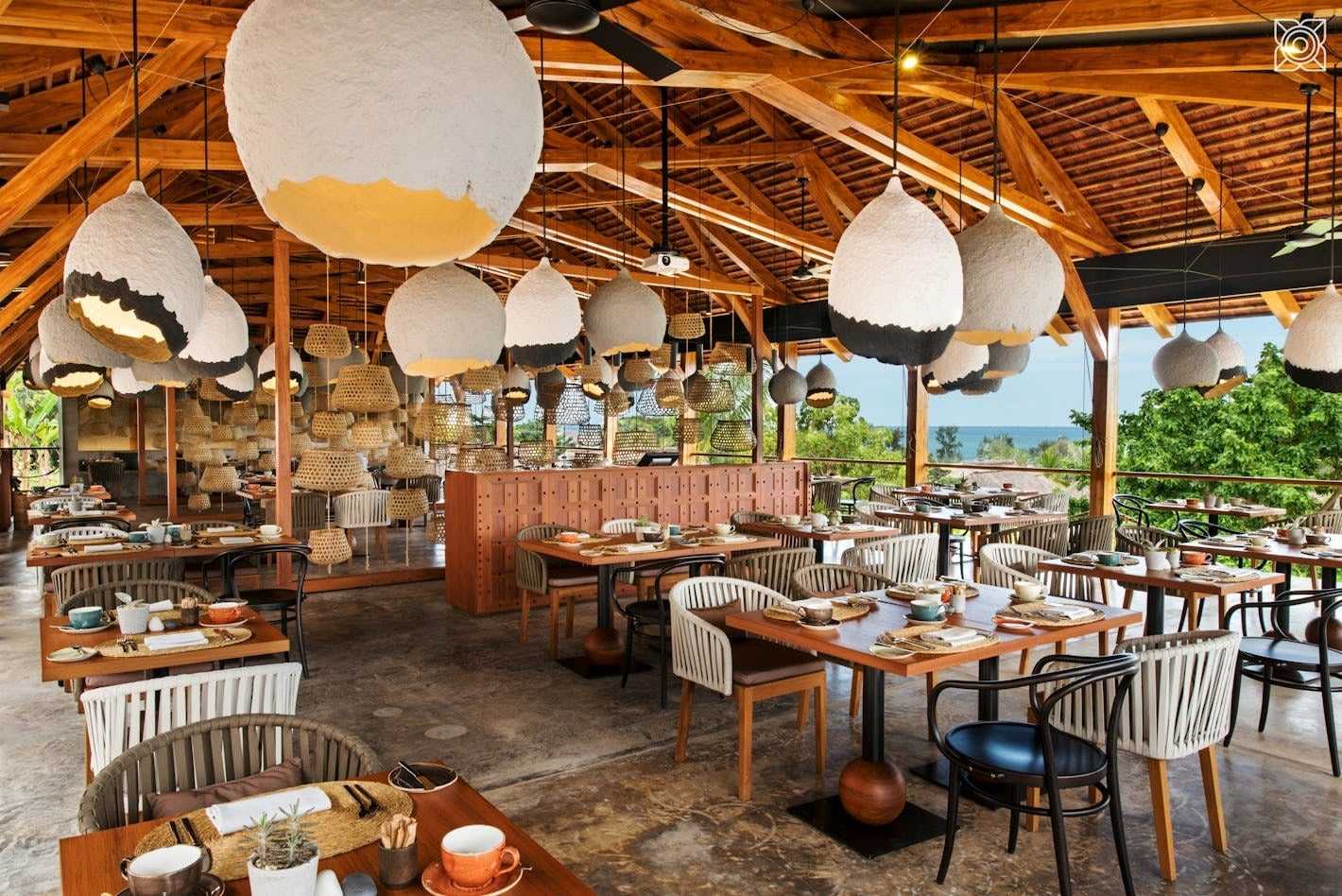
Upendo Restaurant at Zuri Zanzibar
Zuri Zanzibar
Occupying a particularly striking stretch of sand in northern Zanzibar, Zuri employs both the fruits of the sea, the spices of the island and the influences of African, Arabic and Indian cuisine at its four restaurants. Enjoy a fusion of Southern European and Indian Ocean dishes at the poolside restaurant – reserve a mouthwatering set menu curated by the chef just for you – or enjoy live cooking shows at the Main Restaurant.
Onsea House
Helmed by chef Axel Janssens, Onsea House Restaurant serves a menu that fuses delicious French cuisine with creative African flavours, which he has spent a decade discovering across every corner of Tanzania. Every day, the team produces a new menu inspired by seasonal specialties – stand-out dishes include the red snapper fillet with young vegetables and grilled Swahili Style calamari. Everything is prepared with the freshest, local ingredients homemade, right down to the ice cream.
Baraza Resort & Spa
A part of the auspicious Zanzibar Collection, Baraza Resort boasts an ever-changing menu of dishes that fuse the culinary cultures of Africa, Asia, India and Persia. For an especially memorable evening, head to the Sultan’s Dining Room, where you’ll be taken on a journey through time and taste in an elegant setting.
Emerson Zanzibar
Emerson’s hotels have a number of dining options where you can partake in delicious Zanzibari cuisine, whilst taking in the delightful ambiance. At Emerson on Hurumzi’s rooftop Tea House Restaurant, begin your evening with sundowners before enjoying an authentic meal, accompanied by traditional Taarab musicians.
“At Emerson Spice, dine on some of the finest seafood in the city where Sultans once did the same – be sure to try the coconut chili king fish baked in banana leaves.”
– Annie Irankunda, Africa travel specialist


A host of food and flavours at a Stone Town street stall
Frequently Asked Questions
1. What is the national dish of Tanzania?
Tanzania doesn’t have an officially designated national dish, but ugali na nyama choma — stiff maize porridge served with grilled meat — is what most Tanzanians would name if you asked. Ugali is the daily staple, eaten with one hand and used to scoop up stews and sauces. Nyama choma, Swahili for ‘grilled meat’, is the social dish of choice, served at gatherings from family lunches to roadside grill joints across the country.
2. What is ugali, and how do you eat it?
Ugali is a stiff, dough-like porridge made from maize flour and water, with a texture somewhere between polenta and bread. It’s bland on its own — which is the point. You eat it with your right hand, pinching off a piece, rolling it into a small ball with your thumb, and using it to scoop up whatever stew, sauce or vegetables it’s served alongside. Fork-and-spoon eaters get a slightly puzzled look, then a fork.
3. Is Tanzanian food spicy?
Generally, no — at least not by Indian or Mexican standards. Mainland Tanzanian cooking leans toward warm and savoury rather than fiery, with garlic, ginger and black pepper doing most of the heavy lifting. Coastal and Zanzibari food carries more spice thanks to centuries of Arab and Indian influence — cardamom, clove, cinnamon and chilli all turn up — but the heat is usually balanced by coconut milk. Pili pili (chilli sauce) is served on the side if you want more.
4. What is the difference between nyama choma and mishkaki?
Both are grilled meat dishes, but they’re prepared differently. Nyama choma is meat — usually goat or beef — grilled in larger cuts over charcoal and served sliced from the bone for sharing, almost always alongside ugali and kachumbari salad. Mishkaki are smaller marinated skewers, with beef or goat cubed, threaded onto sticks and grilled, typically eaten as street food.
5. What is Zanzibar pizza?
Despite the name, Zanzibar pizza isn’t a pizza. It’s a thin, stretchy dough cooked on a hot griddle and folded around fillings of your choice. Standard savoury versions include minced beef, egg, onion, mayonnaise (yes, really) and cheese; sweet versions feature banana, Nutella or condensed milk. You’ll find the best at Forodhani Gardens night market in Stone Town, where dozens of stalls cook them to order every evening.
6. Is Tanzanian food vegetarian-friendly?
Yes — much of everyday Tanzanian cooking is plant-based by default. Maharage (beans), wali wa nazi (coconut rice), mchicha (amaranth with peanuts), sukuma wiki (collard greens), chapati and ugali all turn up regularly without meat. Coastal vegetable curries, sambusa with potato-and-pea filling, and abundant fresh fruit make Tanzania one of the easier African countries to travel in as a vegetarian. Vegans should ask about ghee and check for fish-based stocks in soups.
7. Where can you find the best food in Zanzibar?
For street food, head to Forodhani Gardens night market in Stone Town — Zanzibar pizza, mishkaki, urojo soup and fresh sugarcane juice. For sit-down meals, Emerson Spice and Emerson on Hurumzi serve some of the most thoughtful Zanzibari food in the city. Beyond Stone Town, lodge dining at Zuri Zanzibar, Kisiwa Hotel and Baraza Resort showcases the island’s spice heritage at a higher register. The Rock is famously photogenic but now leans Italian-Zanzibari fusion.
From the fruits of the sea to the spices of the island, Tanzania has a mouth-watering selection of dishes to try. Whether it’s beneath the tent flaps on safari or in a restaurant in Stone Town, you’ll be wanting the recipe for a fair few of these delicacies.
If your hands are already reaching for your passport, begin planning your tasty trip to Tanzania now.


Latest blogs


As seen in