East or Southern Africa? Tanzania or South Africa? When it comes to planning the safari of a lifetime, these are the questions that must be answered before you can really delve into finalising all the exciting details. When it comes down to it, Tanzania and South Africa couldn’t be more different so choosing between the two is, really, an easy task – it all depends on what you want. From the types of safari activities to the accommodation on offer, we’ve got the low-down on Tanzania vs South Africa, so read on.
Tanzania vs South Africa at a glance
- Best for wildlife density: Tanzania – nearly a third of its land is protected, with some of the highest wildlife concentrations in Africa.
- Best for variety of experiences: South Africa – combines Big Five safaris with cities, coastlines, wine regions, and mountains.
- Best for families: South Africa – most safari parks are malaria-free and many lodges run dedicated children’s programmes.
- Best for the Great Migration: Tanzania – over 1.5 million wildebeest move through the Serengeti throughout the year.
- Best time to go (Tanzania): July to September for peak wildlife viewing; avoid March to May (long rains).
- Best time to go (South Africa): May to October for safari; November to March for beaches and warm weather.
- Budget: South Africa is generally easier to stay in budget; Tanzania’s remote camps and internal flights push costs higher.
Tanzania vs South Africa
Tanzania and South Africa may be like chalk and cheese, but deciding between the two still takes some figuring out.
What is Tanzania known for?
A star on the East African safari scene, Tanzania is famed for its vast savannahs laid beneath china-blue skies, incredible wildlife numbers – including the Big Five – and a sensational, sun-drenched coastline. You can also contemplate summiting Mount Kilimanjaro, meeting members of Tanzania’s many fascinating cultures, or venturing deep into the wilderness to experience the country’s most untouched corners.
What is South Africa known for?
South Africa, on the other hand, has many different sides to it! Of course, the Kruger National Park and its surrounding conservancies are world-renowned for Big Five safaris, but head west and you’ll find the beautiful coastal city of Cape Town where you can enjoy everything from world-class dining to kayaking off the beach. Should you crave postcard-worthy scenery and plenty of opportunities for adventure, explore the famous Garden Route, or enjoy the grapes and R&R that await in the Cape Winelands.
Getting Around
Both countries are easy to reach from most major hubs across the globe. In South Africa, travel hubs include Cape Town International Airport and OR Tambo International Airport in Johannesburg. From either of these, you can travel by road, domestic flight, or charter flight to your chosen destination. Self-drive itineraries are very popular in South Africa as renting a car is convenient and the roads are easy to navigate. Popular driving routes include spending a few days in Cape Town before exploring the Garden Route or from Johannesburg, making the drive to Kruger National Park (it’s around 4–5 hours).
In Tanzania, most flights will land in Kilimanjaro International Airport, which is close to Arusha, the main starting point for the majority of safaris. Alternatively, there is an international airport in Dar es Salaam, which can be used to reach some of the southern parks and the coast. In comparison to South Africa, travelling around Tanzania requires more logistics, whether that means guided drives between various destinations or small plane flights between more remote areas like Katavi, Ruaha, Nyere and Mahale Mountains. Roads aren’t very well-marked in Tanzania so self-drives aren’t highly recommended, however, it is common to drive the ‘Northern Circuit’ with a guide, which includes Lake Manyara, the Ngorongoro Crater, Serengeti and Tarangire.
Climate
Being an equatorial country, Tanzania’s climate remains consistent and temperate throughout most of the year, while South Africa experiences more distinctive seasons. Typically, South Africa enjoys warm, mostly sunny days between November and March, making it ideal for enjoying any of its wonderful beaches along the Indian or Atlantic coast. On the other hand, if you plan on visiting the Kruger, Phinda or the Waterberg for a safari, the dry season (May to October) is the best time to do so due to sparse vegetation and fewer permanent water sources, which makes sightings more likely.
Tanzania’s rainy seasons shape when to visit: the short rains (November to December) and long rains (March to May) mostly consist of daily thunderstorms. Many camps close during this period, but if you do visit, you’ll be rewarded with emerald-green landscapes and amazing photo opportunities. The Tanzania dry season (July to September) is considered to be the best time to go if wildlife-spotting is your main goal.
Culture
Tanzania’s official languages are Swahili and English. However, there are over 120 different ethnic groups including the most famous, the Maasai and Hadzabe tribes, the latter of which live on the shores of Lake Eyasi. You can spend time learning about their way of life including the hunting methods of the Hadzabe people or the amazing leaping dances of the Maasai.
South Africa has 11 official languages, representing the various tribal groups across the country as well as European influences. English is widely spoken throughout most urban areas and at any lodges and hotels you visit. South Africa is far more developed than Tanzania in terms of metropolises, which offers a completely different experience when you’re not on safari.
Landscapes
South Africa and Tanzania differ the most when it comes to landscapes. South Africa is strikingly varied, with terrain ranging from rugged mountains to desert, expansive plains to long, meandering coastlines of golden beaches. Tanzania, on the other hand, is known for its semi-arid landscape with vast savannah dotted with acacia trees and baobabs, sea-like lakes with wildlife-filled islands, and white-sand beaches.
Wildlife
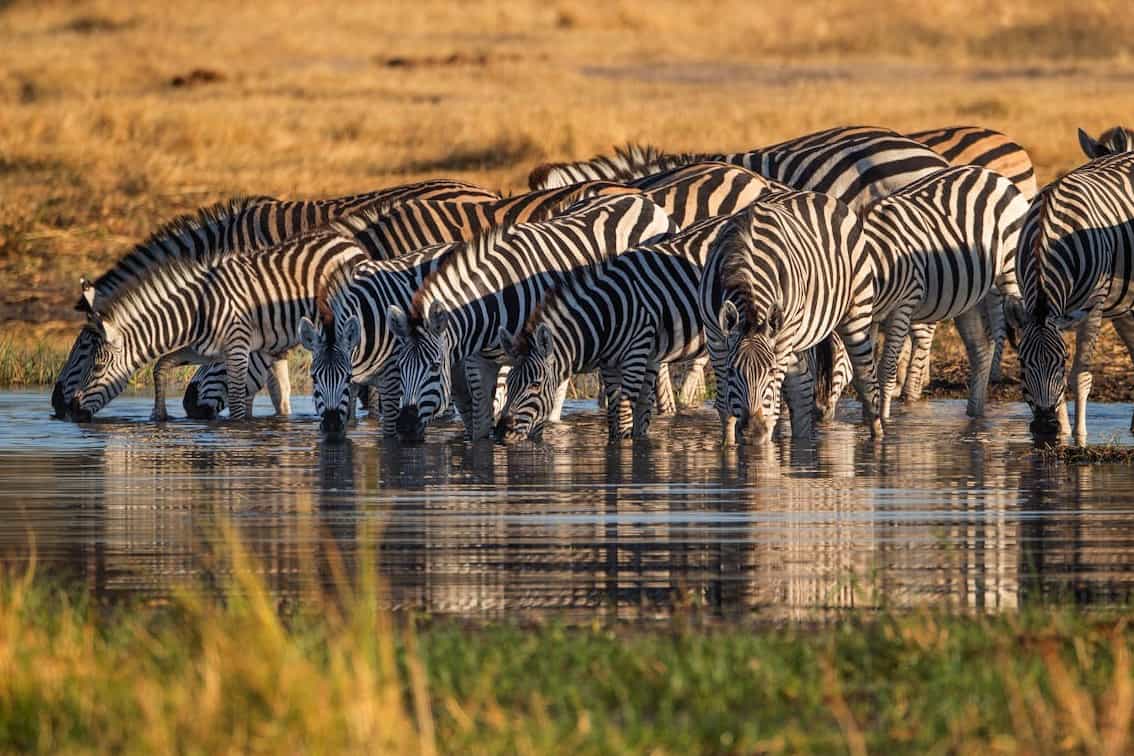
With nearly a third of its land having been protected for decades, Tanzania has some of the highest wildlife concentrations in Africa. While South Africa is greater in size, Tanzania has far more national parks and reserves. These factors make it a much bigger player than South Africa in the wildlife stakes. However, it is possible to see the Big Five in both countries with the Kruger taking first place in South Africa.
Apart from South Africa’s safari icon, Kruger, you can also explore the sweeping grasslands of the Waterberg in search of rhino, head to Madikwe Private Game Reserve to find African painted dogs and impressive numbers of cheetah, or discover the unique wildlife of Tswalu Kalahari – pangolin, aardvark and meerkats to name a few. Off the coast, you’ll encounter an entirely different cast of creatures including Southern Right whales in Hermanus and numerous species of dolphin.
Tanzania hosts the Great Migration for most of the year: over 1.5 million wildebeest move in a continuous cycle throughout the Serengeti National Park. In late February, calving season takes place in the southern Serengeti and in the following months, the herds move northwards. By late-June, thousands of wildebeest are gathering along the banks of the Mara River, ready to begin their crossings, the sight of which will leave your heart in your mouth.
Tanzania has a number of other wildlife highlights from the incredible lion population in Ruaha to the scores of majestic elephant in Tarangire, as well as chimpanzees on Rubondo Island and in the forests of the Mahale Mountains.
Types of safaris
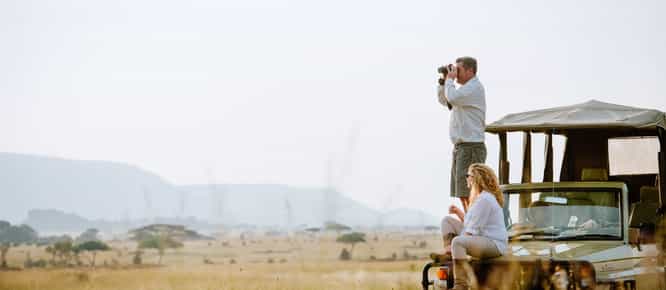
As you might have guessed, game drives are available in both destinations however in Tanzania you will mostly find closed-sided vehicles to ensure safety whilst on game drives, specifically whilst exploring the national parks. In South Africa (most markedly the Kruger), there are fewer regulations and open-sided vehicles are the norm. Guides also have the freedom to venture off-road, allowing you to follow wildlife more closely without losing their trail, and night drives are more common.
Walking safaris and bush walks are widely available throughout South Africa’s parks and reserves, while in Tanzania restrictions are tighter, especially in the national parks. Exploring the wilderness on foot is more likely in a private reserve or conservancy, but they are especially popular in Ruaha. You can also join a member of the Maasai tribe on a walkabout through the Ngorongoro’s crater forests.
If you fancy going on a horseback safari, the Serengeti is the best place for it and if you’re visiting while the Great Migration is in town, you’ll be able to ride unbelievably close to the herds. In South Africa, the Waterberg offers fantastic four-legged safaris.
The Serengeti is known for its epic hot air balloon rides where you’ll rise with the early morning sun and float above the trees, watching diminutive wildebeest and prowling predators amongst the golden grasses.
Tanzania vs South Africa: a side-by-side comparison
| Category | Tanzania | South Africa |
|---|---|---|
| Wildlife density | Exceptional – some of the highest concentrations in Africa | Very good – Big Five in Kruger and surrounding reserves |
| Safari style | Closed-sided vehicles in national parks; horseback and balloon rides available | Open-sided vehicles, off-road driving, night drives, walking safaris |
| Best season | July–September (dry season); avoid March–May | May–October for safari; Nov–March for beaches |
| Malaria risk | Yes – prophylaxis recommended for most areas | Most safari parks are malaria-free |
| Getting around | Guided drives or light aircraft between remote parks | Self-drive very popular; good road infrastructure |
| Beyond safari | Zanzibar, Pemba, Mafia Island, Mount Kilimanjaro | Cape Town, Garden Route, Cape Winelands, Drakensberg |
| Budget | Moderately priced; remote camps and internal flights add cost | Easier to stay in budget; wider range of price points |
Non-safari trips and activities
The Coast
The shores of South Africa are touched by two oceans, the Indian and the Atlantic, which means there is an abundance of stunning beaches to choose from. You could opt for Cape Town’s sunny, sugary hotspots, KwaZulu-Natal’s golden stretches, or the rugged and aptly-named Wild Coast.
Tanzania has a long, languid coastline of its own as well as a bevy of beautiful islands including Zanzibar, Pemba and Mafia. All that ocean calls for days spent snorkelling and diving, cruising the turquoise water in a traditional dhow and lazing on the powder-white sand, something chilled in hand.
The Mountains
While technically not a mountain, Mount Kilimanjaro is the tallest peak in Africa and the chance to summit its impressive walls has drawn avid trekkers for years. Making it to the top of this majestic mount is definitely worthy of your bucket list. For something totally different, escape to the Mahale Mountains for moments spent in the presence of the chimps that dwell in the lush forest.
Cutting one of the most iconic figures in the world, Table Mountain dominates Cape Town’s skyline, a symbol of South Africa’s diverse landscapes as it gazes over both city and sea. You can either make the scenic hike to the top or ride the cable car and simply soak up the view. On the other side of the country, the Drakensberg Mountain Range is a hiker’s paradise with extensive routes spanning 1,125 kilometres.
Accommodation
It could be said that South Africa has a greater variety of accommodation because of its very wide array of destinations. You can take your pick from high-end city escapes, boutique boltholes in the countryside (whether that’s by the sea or in the Winelands) and luxury safari lodges. A few of our favourites include the eco-chic Marataba Mountain Lodge in the Waterberg, the endlessly blissful Babylonstoren – their award-winning restaurant is enough to make anyone swoon – and Tinstswalo Atlantic, a tucked-away, seaside resort with ravishing views just outside Cape Town.
When it comes to Tanzania, the vast majority of its offerings are of the safari kind. You’ll find everything from authentic, mobile camps to more opulent camps in the wildest of locations. Of course, there is also a wonderful collection of boutique hotels and villas on the coast, with Zanzibar and its surrounding islands taking first prize. A firm favourite at Timbuktu is Kati Kati Tented Camp, an unplugged little beauty in the middle of the Serengeti and as for the more luxe, the Highlands Camp is a futuristic, up-scale spot on the forested slopes of the Ngorongoro Crater. In Zanzibar, Zuri takes first place with the likes of private hot tubs and views that are second to none.
Cost
Within Africa, Tanzania is considered a moderately-priced destination however, it is far easier to remain in-budget when travelling to South Africa. This is for a number of reasons; namely, it is more costly to travel between destinations in Tanzania and many of its camps are in highly remote locations, which always means a higher cost of running and transportation. It’s also worth keeping in mind that seasonality has a big effect on the rates at most hotels and lodges.
Families
When it comes to booking a trip for your family, it’s important to take health into account. The majority of Tanzania is considered at risk from malaria risk (aside from the coast) so a prophylaxis is recommended. On the other hand, most of the parks in South Africa are malaria-free, making them ideal for young families. Many of the lodges in Tanzania are unfenced, meaning they’re open to the wildlife that moves through the area, which may be a factor for families. However, all the lodges we recommend ensure safety is of the highest priority – read all about it in our blog answering the question, Is Tanzania safe? A variety of lodges throughout South Africa also offer specially-created programs for children.
From the weather to the wildlife, now you have all the information needed to decide: Tanzania vs South Africa? Safari stalwarts in their own right, each country has a long list of reasons to visit, it just comes down to deciding which one suits you best.
Tanzania vs South Africa FAQs
Is Tanzania or South Africa better for a first safari?
Both are excellent for first-timers, but they suit different priorities. South Africa is generally easier to navigate, more budget-flexible, and many of its parks are malaria-free – making it a practical first choice. Tanzania offers unmatched wildlife density and the spectacle of the Great Migration, but logistics require more planning and costs tend to be higher.
Which country is better for seeing the Big Five?
You can see the Big Five in both countries. Tanzania offers some of the highest concentrations of wildlife in Africa across its many protected areas. In South Africa, Kruger National Park is the headline destination for Big Five sightings, while reserves like Madikwe and Phinda offer excellent alternatives in more exclusive settings.
When is the best time to go on safari in Tanzania?
The dry season from July to September is considered the best time for wildlife-spotting in Tanzania, as sparse vegetation and reduced water sources concentrate animals around remaining waterholes and rivers. This period also coincides with the Mara River wildebeest crossings in the Serengeti. Avoid the long rains from March to May when many camps close.
When is the best time to visit South Africa for a safari?
May to October is the optimal safari season in South Africa, corresponding with the dry winter months when vegetation is low and wildlife gathers around water sources. November to March brings summer warmth ideal for beach destinations and the Garden Route, though game viewing remains possible year-round in many parks.
Is Tanzania safe for families with young children?
Tanzania is safe for families when travelling with a reputable operator. Key considerations include malaria risk across most of the country (prophylaxis is recommended) and unfenced camps where wildlife roams freely. South Africa’s malaria-free parks and dedicated children’s lodge programmes may suit younger families more comfortably. Read more in our guide to Is Tanzania safe?
Can you combine Tanzania and South Africa in one trip?
Yes, and it makes for a rewarding combination. A popular route pairs a Serengeti and Ngorongoro safari with a few days in Cape Town for city, beach, and winelands experiences. The two countries complement each other well – Tanzania for pure wilderness and South Africa for variety. Allow at least two weeks to do both justice without feeling rushed.
Is South Africa or Tanzania more expensive?
South Africa is generally the more budget-friendly of the two. Tanzania’s remote camps often come with higher price tags due to the logistics of reaching them, and internal light aircraft flights between parks add significant cost. That said, both destinations offer a range of accommodation options, and Zanzibar provides a more affordable coastal extension to a Tanzania safari.
What unique wildlife experiences does Tanzania offer that South Africa doesn’t?
Tanzania’s headline exclusive is the Great Migration – over 1.5 million wildebeest completing a continuous annual circuit through the Serengeti, culminating in dramatic Mara River crossings from late June. Tanzania also offers chimpanzee trekking in the Mahale Mountains and on Rubondo Island, and the unique concentration of wildlife within the walls of the Ngorongoro Crater, which has no direct equivalent in South Africa.
Latest blogs


As seen in