When is the best time to visit Namibia?
 With expert insights from Kevin Zimmermann, Travel Specialist
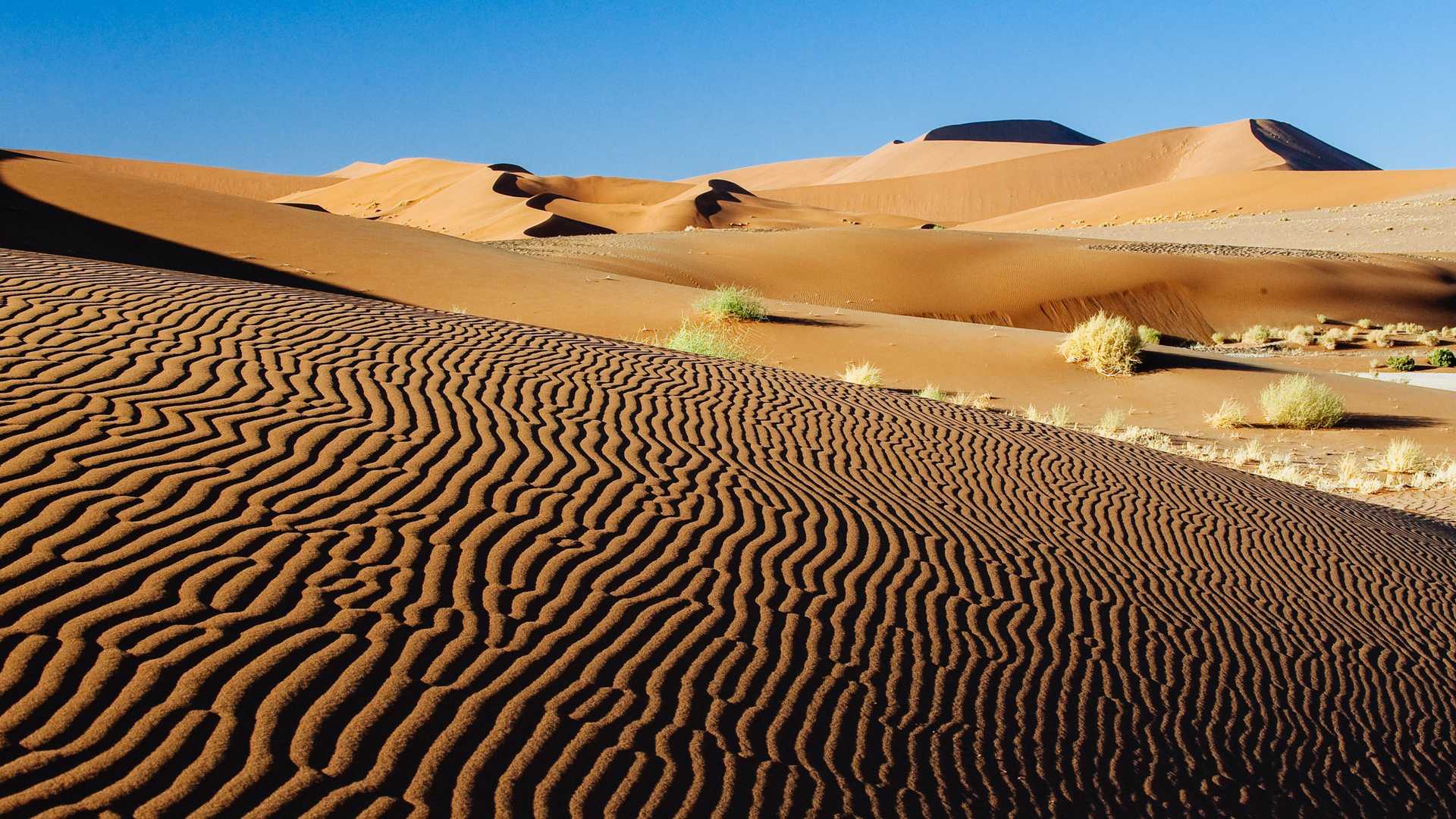
Our favourite apricot-coloured, sand-dune filled country, Namibia is located in the south-west corner of the continent and is partially covered by the Namib Desert. It follows roughly the same weather pattern as the southern African ‘safari countries’ but receives decidedly less rain, making it (almost) one of those elusive, year-round destinations. But, as ever, each season has its own quirks and contrasts, and if you’re trying to decide when the best time to visit Namibia is, read on…
The best time to visit Namibia at a glance
- Best overall for wildlife viewing: June to October (dry winter months), when animals congregate at Etosha’s waterholes.
- Best for something different: December to March (rains), for birdwatching in the Caprivi and green plains in Sossusvlei and the NamibRand.
- Best for balanced conditions: April and May (shoulder season), for glossy, green landscapes without extreme temperatures.
- Best all-round month: September, for perfect temperatures, strong wildlife-watching, and no school holiday crowds.
- Best for the Skeleton Coast: December to March, when mornings are less foggy and the coastal light is at its best.
- Worth knowing: Namibia’s aridity makes it one of the more reliable year-round safari destinations in southern Africa, though temperatures can swing dramatically within a single day regardless of season.
December to March
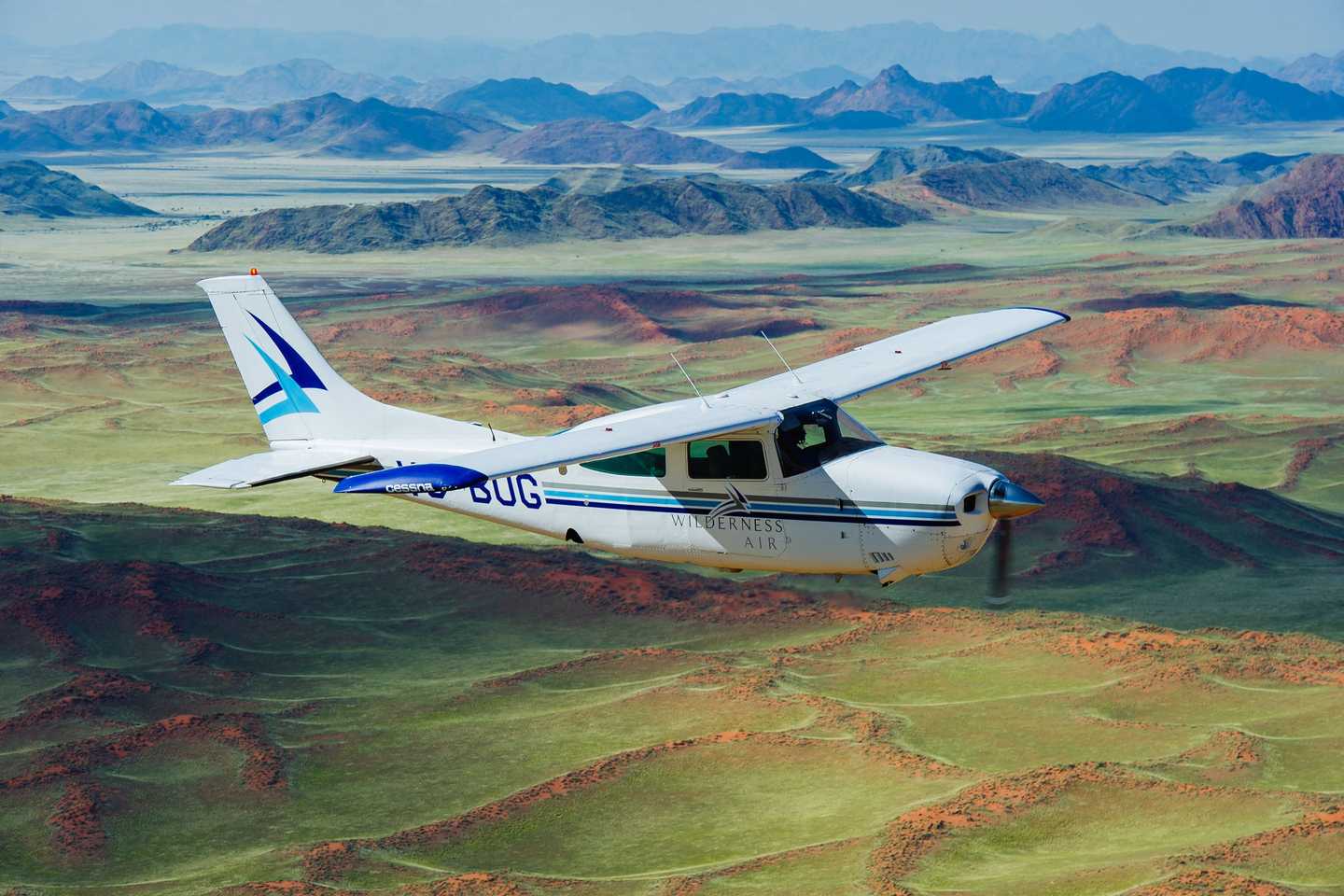
The country receives most rainfall from December to March, but it’s not a drizzly, British sort of rain – these are short, sharp storms that are over pretty quickly, allowing you to get back to your game-viewing. And if you’re looking for something a bit different, it’s the best time to visit Namibia. Birdwatching in the Caprivi is fantastic, and in Kaokoland, the Kunene River floods making for great game viewing by boat. In Sossusvlei and the NamibRand, the desert plains are transformed into green, grassy blankets, attracting herbivores from near and far.
The high temperatures send many flocking to the coast, particularly Swakopmund, between December and March. It might not be the best time to visit Namibia’s quaint coastal town if you’re looking for some peace and quiet, but the colonies of flamingo at the lagoons and the dreamy temperatures might just make up for it. It’s also one of the best times to visit Namibia for a Skeleton Coast flying safari. Surprisingly, the mornings aren’t as foggy as the winter months, the evenings are warmer and the rain clears the air.
“December to March is when Namibia shows a completely different side of itself. Sossusvlei goes from apricot and gold to green, and a Skeleton Coast flying safari this time of year gets clearer morning light than you’d expect.”
— Kevin Zimmerman, Travel Specialist at Timbuktu Travel

April and May
And then we come to April and May, the ‘shoulder season’ months when it’s not too hot, not too cold, and you’ll get the best of the dry and the green seasons. Etosha is glossy, green and grassy and the desert dunes may still have a sprinkling of foliage and wild flowers, depending on the rains. The air is fresh and the sky is blue and many say that Namibia is most beautiful at this time of year.

June to October
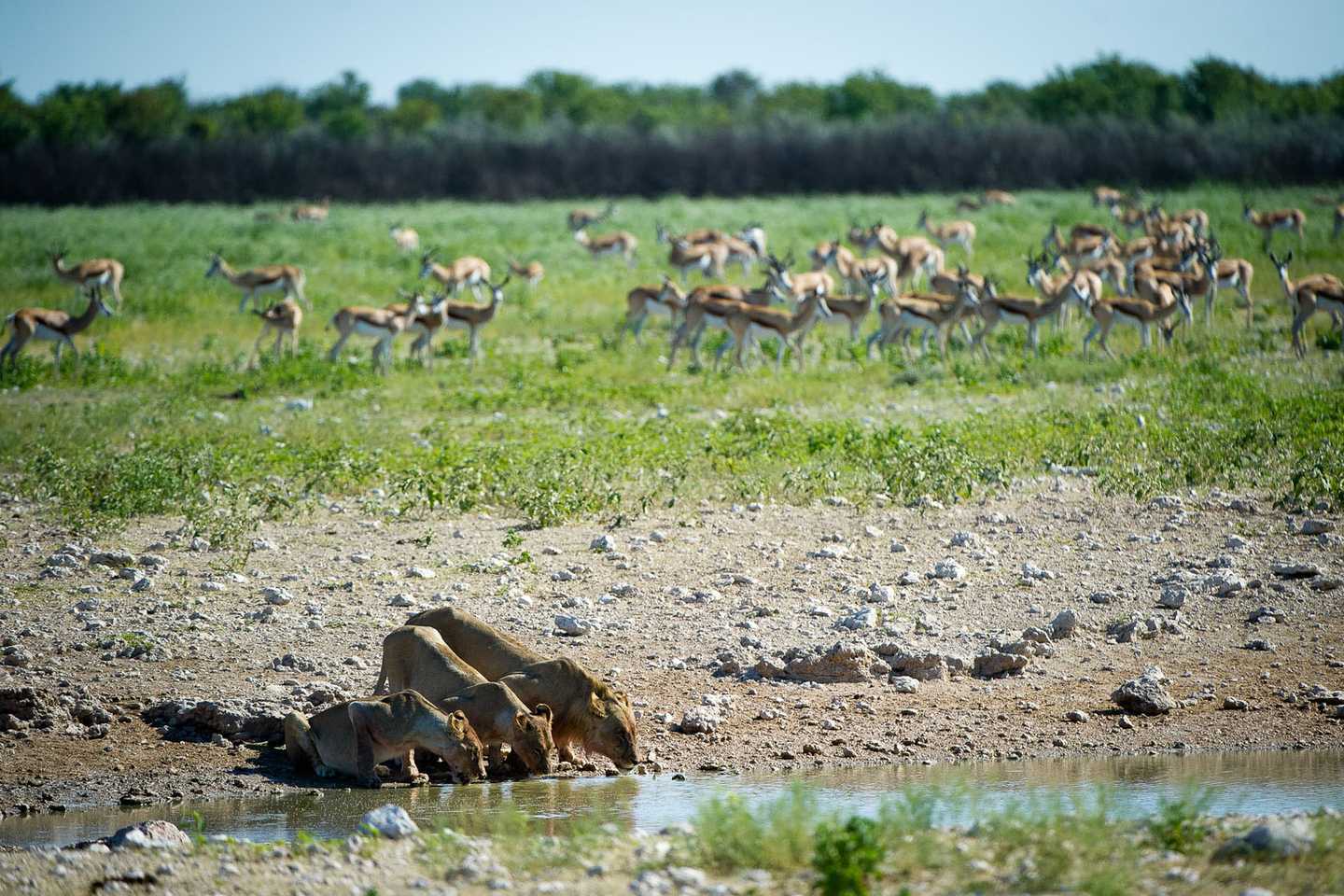
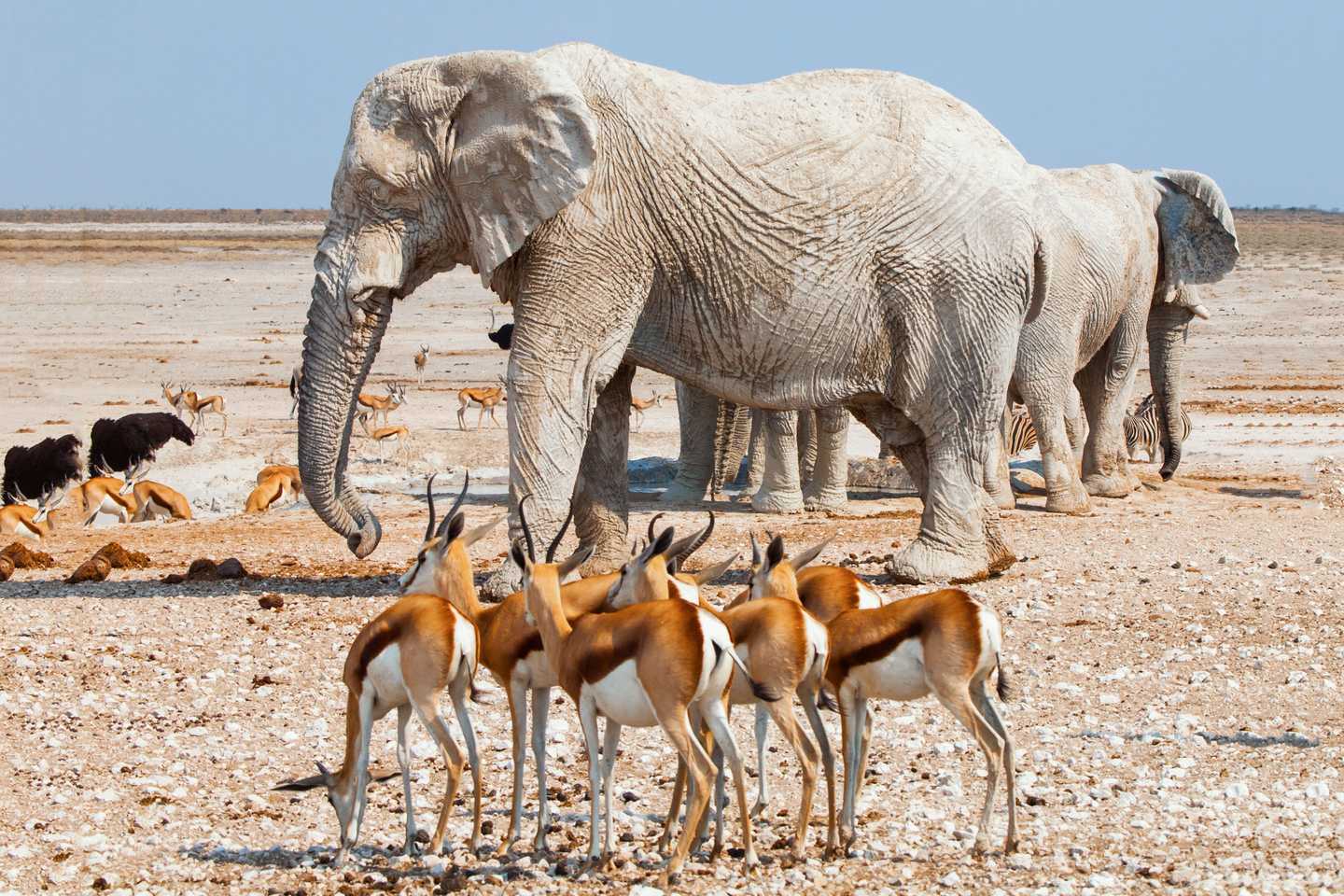
If it’s wildlife you’re looking for, put the months of June to October in your diary now. These winter months are the best time to visit Namibia’s animal hotspot, Etosha National Park. The bush is drying out after the wetter months and animals begin to congregate in their hundreds around the waterholes. It’s a truly remarkable spectacle that only gets better as the season progresses and the land gets drier.
The winter months aren’t just the best time to visit Etosha either – it’s a pretty good time to experience most of Namibia’s bucket-list marvels. The skyscraper dunes of Sossusvlei are in their most iconic, blood-red state, contrasted beautifully by cobalt-blue skies; the star-gazing in the desert is unrivalled; and up in Damaraland, you’ll find desert-adapted elephant picking their way across the riverbeds to the last remnants of water. This is also a great time of year for self-drive safaris, as pretty much everywhere is accessible.
Temperature-wise, June and July are the coldest months, while September and October bring the warmth without the extreme humidity of late spring: mornings and evenings can be icy in June and July, so pack a jacket. If we had to put money on it, we would say September was one of the best times to visit Namibia all-round. Perfect temperatures, excellent wildlife-watching, and it’s no longer the school holidays!
“September is the month I keep coming back to for Namibia. The Etosha waterholes are at their busiest, Sossusvlei’s dunes are that deep blood-red against the blue sky, and you avoid both the winter chill and the summer crowds.”
— Kevin Zimmerman, Travel Specialist at Timbuktu Travel

November and December
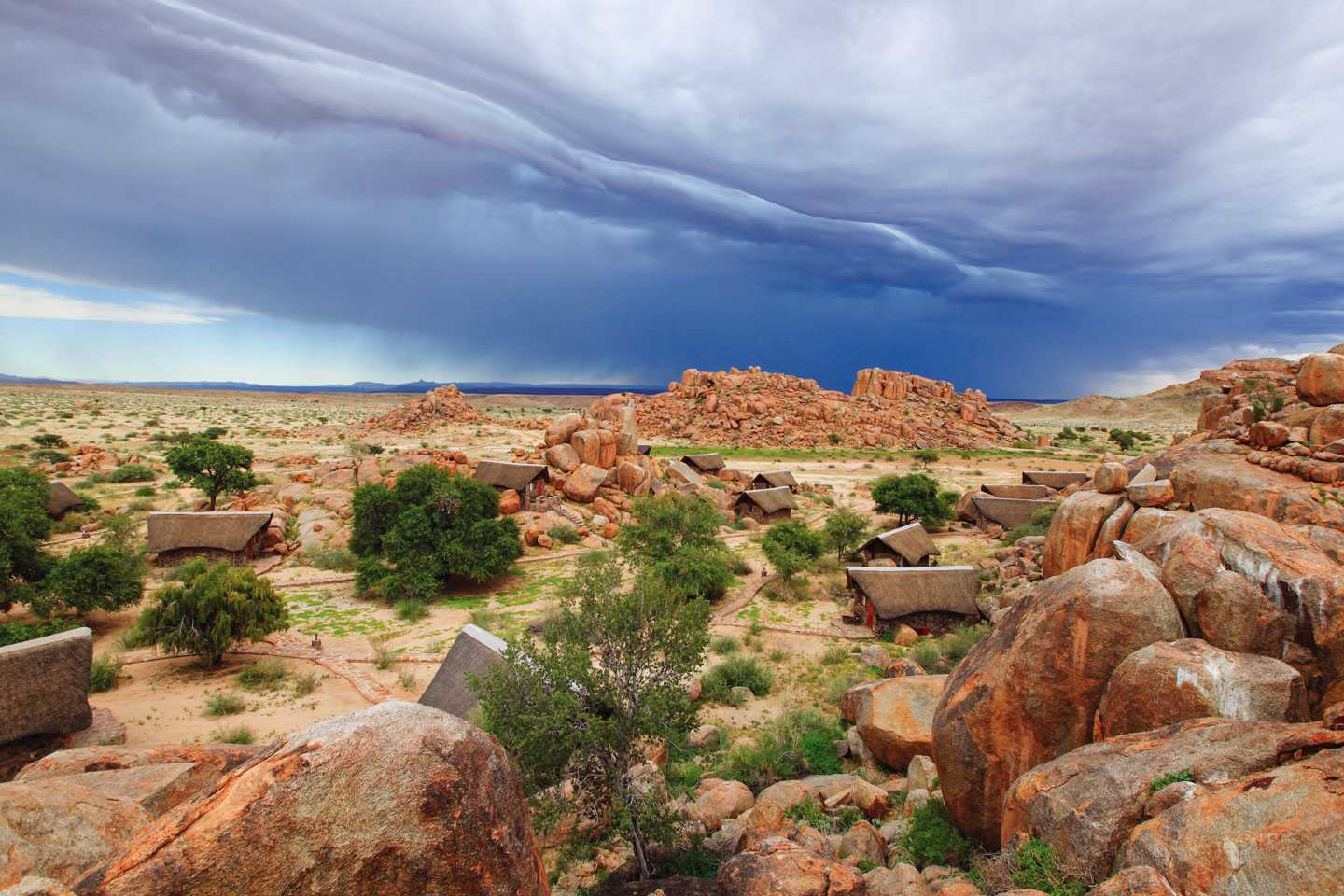
Throughout November and December, the temperature will steadily rise (as will the humidity) and at some point, the first rains of the season will fall. If you’re lucky enough to experience them, we guarantee you’ll never forget the experience; electric storms crackle across the desert and the sunsets are stormy and very special. It’s an exciting but unpredictable time to visit Namibia, and we would still recommend game drives in Etosha, self-drive and flying safaris – and what a way to spend Christmas!
And one last piece of advice for any Namibia trip: If there’s one thing we know about the desert, it’s that temperatures can change dramatically, with very little notice. Wake up in the morning to fog and some rather chilly temperatures, and in a few short hours, you’ll be looking for a t-shirt and the nearest bottle of sunscreen faster than you can say, ‘It’s hot.’ So, whatever time of year you travel, be prepared; pack layers, remember a hat and sunglasses, and a warm jacket and you won’t go far wrong. Here’s our Namibia packing list.
Namibia weather and timing FAQs
When is the best time to visit Namibia overall?
June to October is generally best for wildlife, especially in Etosha, where dry conditions concentrate animals around waterholes. September stands out as an all-round favourite for its balance of good weather, strong game viewing and fewer crowds.
Is Namibia worth visiting in the rainy season?
Yes, December to March offers a different experience, with excellent birdwatching in the Caprivi, flooded rivers for boat-based game viewing in Kaokoland, and green plains in Sossusvlei and the NamibRand.
When are Sossusvlei’s dunes at their most photogenic?
During the dry winter months of June to October, when the dunes reach their most iconic blood-red colour against clear, cobalt-blue skies.
What’s the best month to avoid crowds in Namibia?
September is a strong choice, since it falls outside school holidays while still offering excellent temperatures and wildlife viewing.
Is Swakopmund worth visiting in the rainy season?
Yes, particularly for a Skeleton Coast flying safari – mornings are less foggy than in the winter months, and the rain helps clear the coastal air.
How much do temperatures vary during a Namibia safari?
Significantly, and often within a single day. Mornings can start foggy and chilly, especially June and July, before warming up considerably by afternoon, so packing layers is essential year-round.


Latest blogs


As seen in