Chile Country Guide
 With expert insights from Carola Fresno, Travel Specialist
At Timbuktu, one of our favourite things to do is find out-of-this-world places and plan adventures to them – and Chile truly is something special. Cocooned from the rest of South America by its natural barriers, the Andes, Atacama Desert and Pacific Ocean, Chile is characterised by dazzling landscapes and an array of wildlife, a third of which isn’t found anywhere else on Earth. And we haven’t even got to the fabulous winelands, culture, and the mysteries of Easter Island. Settle in and get to know this beguiling, adventure-inducing and all-around beautiful land with the help of our Chile country guide.
Chile at a glance
- Main gateway: Santiago’s Comodoro Arturo Merino Benítez International Airport (SCL), the arrival point for almost every Chilean itinerary.
- Wildlife: a third of Chile’s wildlife isn’t found anywhere else on Earth.
- The scale of it: Chile spans almost a quarter of the globe from north to south, and Patagonia alone takes up 1,000 miles of that.
- For wine: the Wine Valleys just south of Santiago, home of Chile’s signature Carménère grape – Maipo Valley is only 35 minutes away.
- For hiking and glaciers: Torres del Paine, Aysen and the Lake District in Chilean Patagonia.
- For the surreal: the Atacama Desert, where NASA tests instruments bound for Mars.
- Book early: flights to Chilean Patagonia must be booked months in advance.
Where to go in Chile
| Region | Best for | Getting there |
|---|---|---|
| Central Chile | Santiago’s museums and markets, the Wine Valleys, colourful Valparaíso | Fly into SCL; Valparaíso is 1.5 hours by road, and all the Wine Valleys are within a day’s drive |
| Chilean Patagonia | Torres del Paine, Aysen’s fjords and glaciers, the Lake District | Fly from Santiago to Puerto Montt (1h40), Balmaceda (2.5h) or Puerto Natales (3h) |
| Atacama Desert | Salt pans, geysers, Moon Valley, flamingos and stargazing | Fly Santiago to Calama (2 hours), then an hour by private transfer to San Pedro de Atacama |
| Easter Island | The moai statues, Orongo village, snorkelling and diving in famously clear water | Around a dozen flights a week from Santiago to Hanga Roa; 6 hours out, 4.5 hours back |
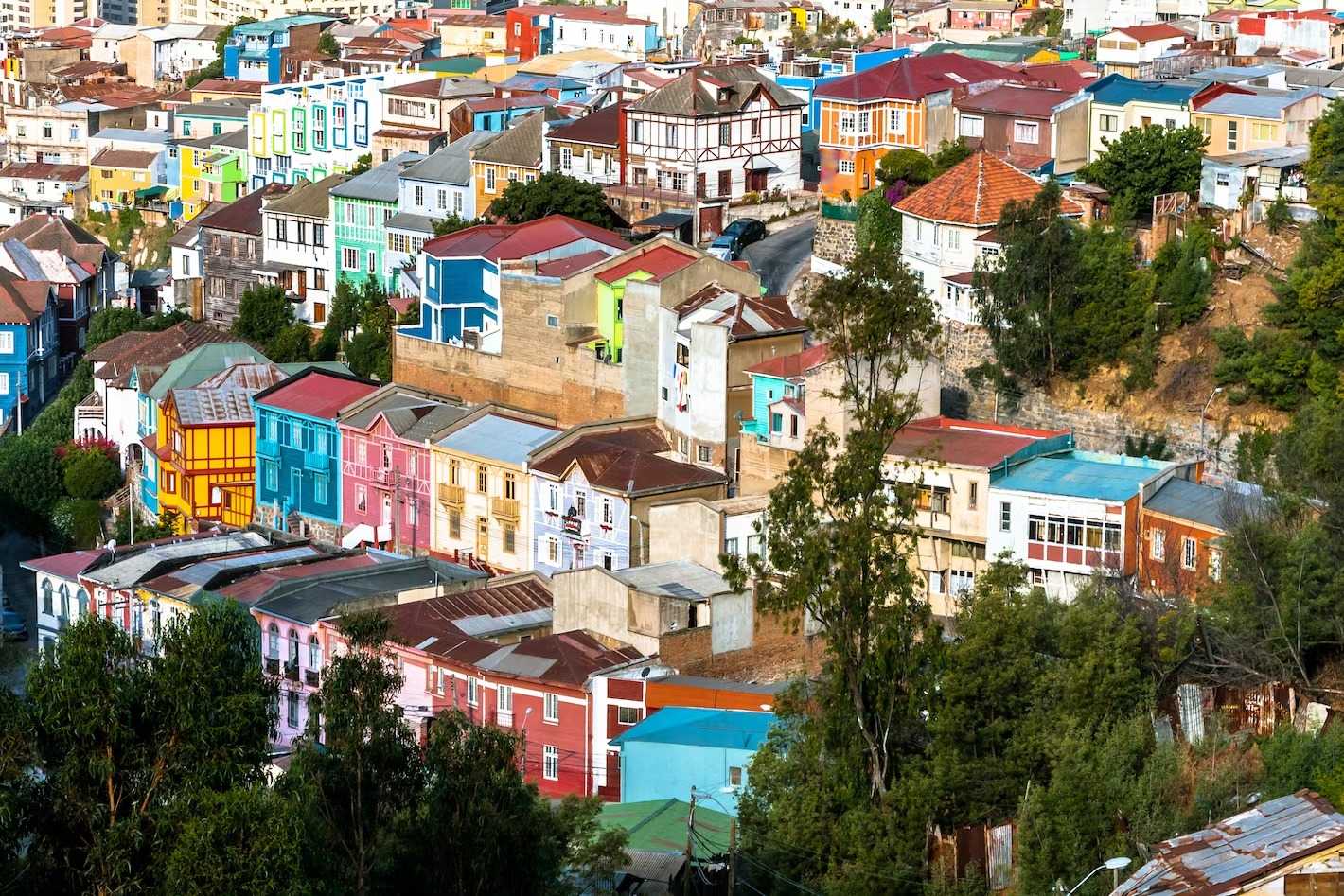
The cheery, colourful houses of Valparaíso
Central Chile
A trip to Chile will no doubt include its capital city, Santiago. Whether it’s a stop-over on your way to Chile’s natural gems or you’re sticking around for a few days, Santiago has plenty to offer. An art and history hub, a walkabout reveals museums and galleries, markets and street performances, fabulous foodie spots (often in the most unexpected nooks) and Spanish architecture. For the best view of it all, take a stroll up the famous Cerros Santa Lucia. A mountain or two over, you’ll also find the best ski resort in the Southern Hemisphere – the slopes are even perfect in summer.
Covering the sunny vales of ‘Middle Chile’, picturesque rows of grape vines ripen to produce some of the world’s finest wines. Just south of Santiago, the Wine Valleys enjoy the perfect conditions for cultivating delicious varietals including the piquant Carménère, Chile’s signature grape. Whether you’re a staunch oenophile or just appreciate a good chardonnay, there are plenty of authentic wineries and fine dining to enjoy. You could tour a handful of vineyards – by horseback or bicycle if you like – or pick one and make yourself at home in one of the lovely hotels for a few days.
Gazing over the Pacific Ocean, Valparaíso is a maze of cerros (hills) covered in Smartie-bright houses, and a haven for anyone of the boho lifestyle. Remnants of its past as a bustling port give the entire city the feeling of having stepped back in time: rattling funiculars and wooden staircases lead between sloping alleys, and historic quarters are filled with handicraft markets and museums. In some ways, ‘Valpo’ is an outdoor museum where poets, writers and artists display their creations on every empty wall – get your camera ready! Along the coast, pay a visit to Casa de Isla Negra, once the home of Pablo Neruda and now an homage to the renowned poet or make a pitstop at one of the pretty beaches to soak up the sun – if Patagonia is your next stop, you’ll need it…
“Valparaíso is really an outdoor museum. Poets, writers and artists have covered every empty wall, and between the rattling funiculars and the wooden staircases running up the hills, the whole city feels like you’ve stepped back in time.”
— Carola Fresno, Latin America travel specialist
How do I do it?
You’ll likely fly into Santiago’s Comodoro Arturo Merino Benítez International Airport (SCL) when arriving in Chile. From Santiago, Valparaíso is just a 1.5-hour drive away along Route 68, which you can travel by rented car or private transfer. All Chile’s Wine Valleys are within a day’s drive of Santiago. Colchagua, Casablanca and Aconcagua Valley are only a few hours away, while Maipo Valley can be reached in 35 minutes and is ideal for a day trip.
Where do I start?
Central Chile is easily combined with any itinerary, but our highlights of Chile trip adds the glorious, glacial scenery of Patagonia, desert adventures and Easter Island to your time in the scenic cities and winelands.

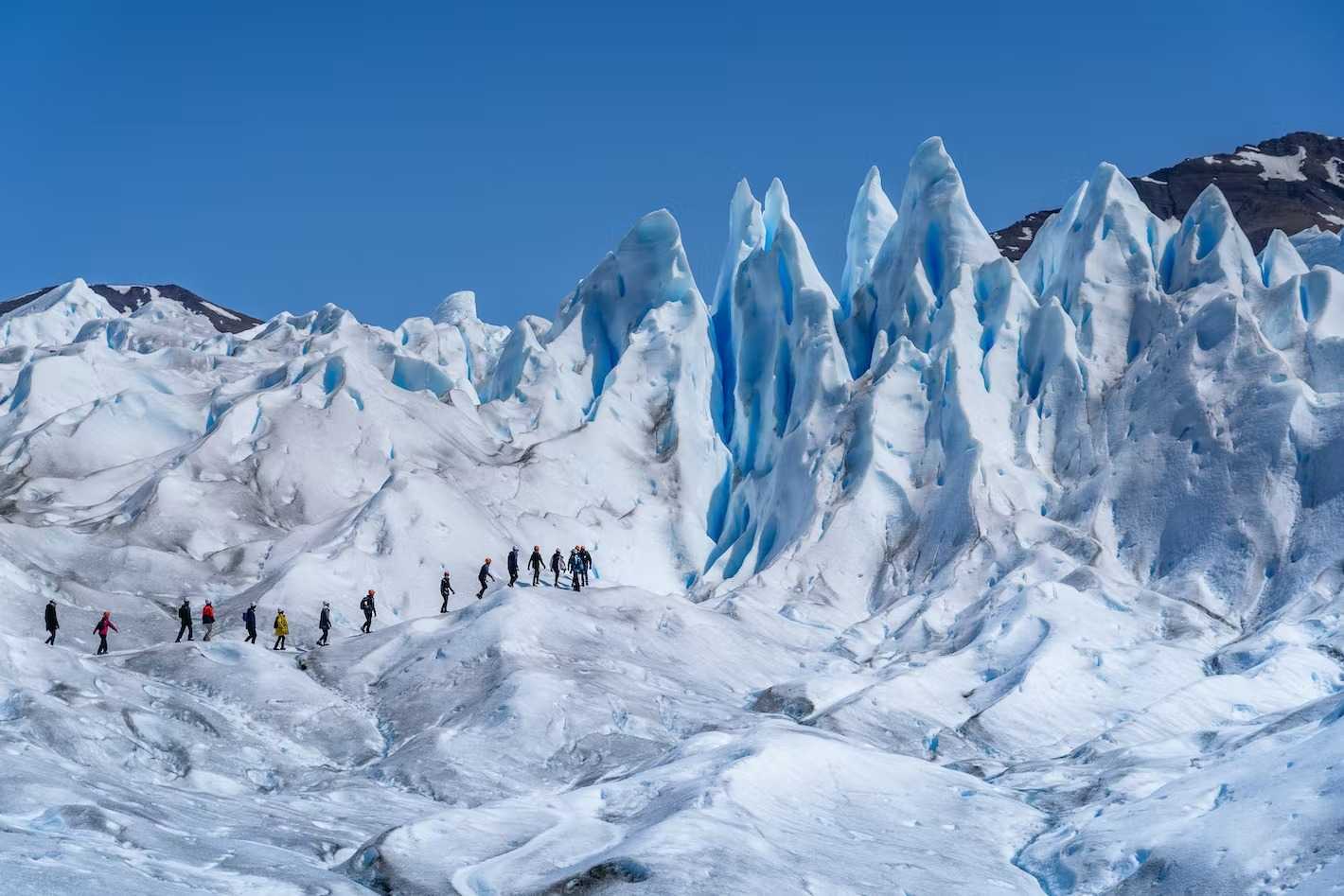
Trekking across craggy glaciers in Aysen
Chilean Patagonia
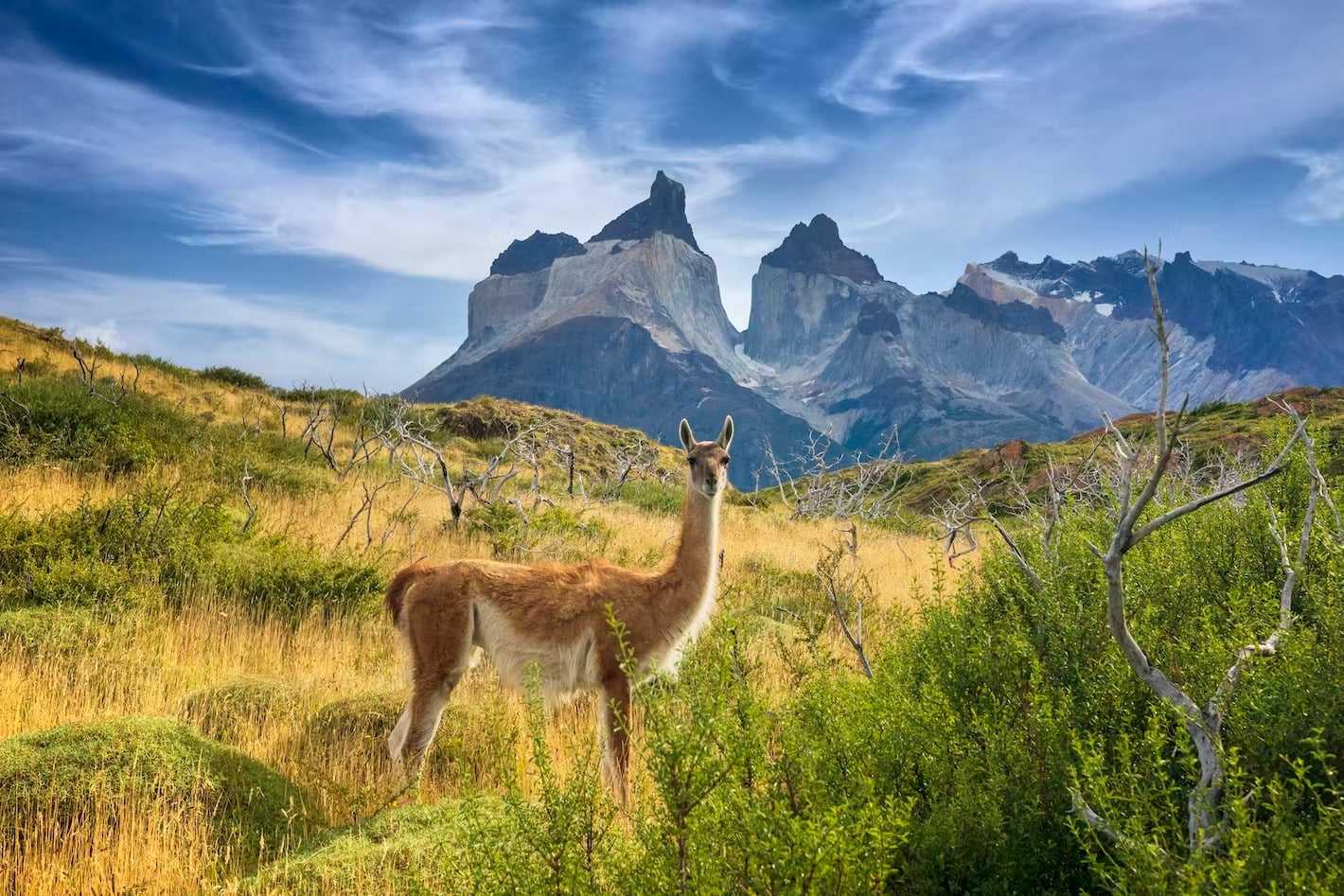
From north to south, Chile spans almost a quarter of the globe and Patagonia takes up 1,000 miles of that impressive expanse. It is here that South America splinters into fjords, tranquil glaciers and tiny islands, watched over by sky-scraping peaks. Speaking of which, the Torres del Paine National Park is Chile’s most iconic wilderness, luring travellers to trek along craggy slopes below its towering mountains or the crackling Grey Glacier, kayak on icy lakes or scan the pampas for guanacos, foxes and pumas. If you’re wondering what the best way to end a day like that is, it’s soaking in a fire-lit hot tub while taking in the gasp-worthy vistas.
In a domain where humans are already rare, Aysen feels like a place no-one has ever set foot. Perhaps the most varied of Patagonia’s regions, lush rainforests are interrupted by mountains jutting into the clouds, and barren steppes morph into glaciers and ethereal caves. There is endless opportunity for exploring these natural wonders; kayaking, white water rafting and boating amongst the fjords and tanzanite lagoons, or venturing across the landscape and glaciers on foot or horseback with a local gaucho to lead the way.
As its name alludes to, the Lake District is peppered with glassy lagoons surrounded by forest. While you could easily spend your time gazing wistfully at a different lake each day, there’s plenty of adventure to be had. Pucon is a hub of activity on the shores of Lago Villarrica, where you can hike its formidable volcano before descending by toboggan, bike or ride horseback into the countryside, or enjoy the watersports. Across the Lake District, there is fantastic skiing, white water rafting and hiking through some of the oldest forests in South America. Settled by the Mapuche people, the Lake District also happens to be one of the most historically-rich places in Chile and it’s certainly worth learning all you can about this ancient tribe who fought off the Incas and Spanish for centuries. For a completely different side to the region, visit Chiloé Island in Los Lagos, where rickety, bright-as-a-button houses and churches line the shores and the cuisine ranges from Mapuche stews to German pastries.
“Torres del Paine is Chile’s most iconic wilderness, but Aysen is the one that surprises people. It’s the most varied region in Patagonia — rainforest, steppe, glaciers and ethereal caves — and it genuinely feels like a place no one has ever set foot.”
— Carola Fresno, Latin America travel specialist
How do I do it?
To reach Aysen and the Lake District, you’ll most likely depart from Comodoro Arturo Merino Benítez International Airport (SCL) in Santiago and land at the most convenient point along the Carretera Austral, the major road route through Patagonia. You will either land in Puerto Montt in Aysen (1 hour and 40 minutes), which sits at the northern tip of the Carretera Austral, or Balmaceda (2.5 hours), located about halfway down the Carretera Austral. The closest airport to Torres del Paine is Puerto Natales, which is a 3-hour flight from Santiago. Aerovias DAP operates smaller aircrafts, which are able to fly between northern and southern Patagonia. From the airport, a private transfer will take you to your lodge. Due to its remoteness, booking flights to Chilean Patagonia must be done months in advance. If you are planning a self-driving journey, renting a car can only be done in Puerto Montt, Balmaceda and Punta Arenas.
Where do I start?
Take in every inch of marvellous Patagonia on this trip or add a helping of passion, Malbec and scenery by combining it with Argentina on this see-it-all adventure.

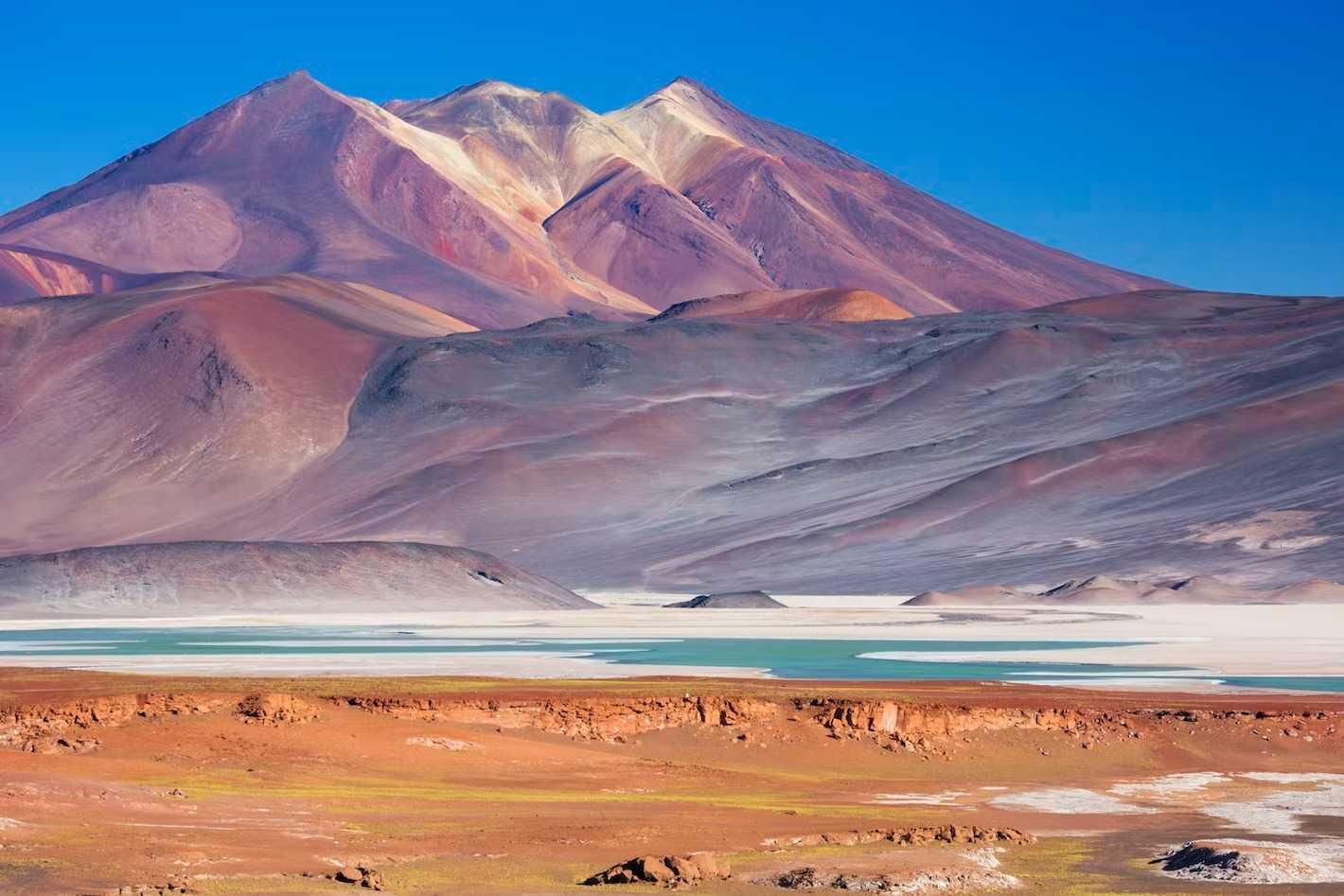
The sprawling Salar de Talar, the Atacama Desert
Atacama Desert
In the northernmost corner of Chile, this surreal landscape fills the space between the Andes and the Pacific Ocean with salt pans and erupting geysers, multi-coloured valleys and plateaus so other-worldly that NASA uses them to test instruments bound for Mars. Despite being one of the driest places on Earth, all your senses come alive in the Atacama Desert, whether you’re riding horseback through Moon Valley or feeling completely weightless as you float in the turquoise waters of Cejar Lagoon. Not to mention scenic drives, hiking, fat biking or sandboarding down the dunes… Just when you thought nothing could survive in this environment, discover cacti-studded ravines, spot flocks of flamingos or a herd of llamas (and their relatives), and watch as a majestic condor soars overhead, or hear the 11,000-year-old history of Atacama’s original people. After nightfall, turn your eyes to the unbelievably clear sky, blanketed by stars.
“The Atacama is one of the driest places on Earth and yet every sense comes alive there — Moon Valley on horseback, floating weightless in Cejar Lagoon, and after nightfall a sky so clear it doesn’t look real.”
— Carola Fresno, Latin America travel specialist
How do I do it?
Despite such a remote location, it’s fairly easy to reach the Atacama Desert. Most travellers fly from Santiago to El Loa Airport in Calama (2 hours). From here, a private transfer along Route 23 to San Pedro de Atacama is only an hour-long. The distance and route to your accommodation depends on which lodge you choose, but this will be taken care of by your driver.
Where do I start?
Our Chilean adventure trip is just the ticket and offers plenty of action, beginning with a few days in the Atacama. After a historic interlude in Santiago, you’ll barely have time to pick your jaw off the ground before entering Torres del Paine where hiking amongst soaring peaks and glaciers is a given.

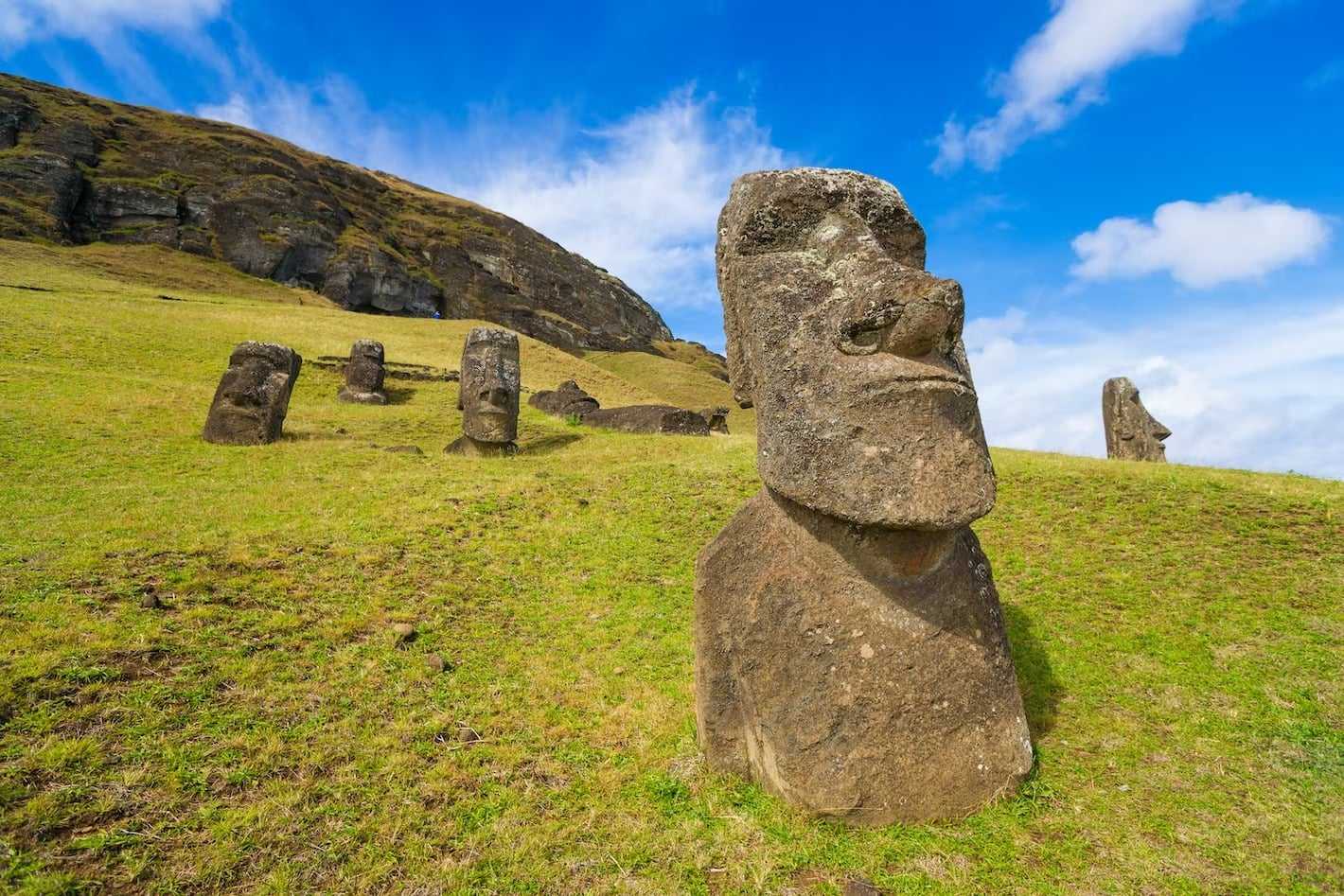
The great moai statues on the hills of Easter Island
Easter Island
We’d have to add some new words to the dictionary in order to justly describe Easter Island but rapturous, mysterious and captivating are a good place to start. About 3,700 km off the coast of Chile, Rapa Nui – as it was named by its original peoples – is one of the most isolated places in the world and setting foot on the island is magical in itself. Visit the Ranu Raraku caldera where most of the famous moai statues were sculpted and 396 still lie unfinished, and hike to see the other famous ‘resting’ places like Aku Akivi where you’ll find the only moai who face the sea. Then, visit the sacred village of Orongo in the bowl of the Kau volcano, where unique architecture and rock carvings are the remains of an ancient religion, or trek to the island’s highest peak where you can see the curvature of the Earth. Really! The waters off Rapa Nui are renowned for their clarity, and you’ll also have the chance to snorkel amongst endemic marine life and dive to see sunken moai or the incredible Cathedral caves. There’s so much to discover about Rapa Nui but one thing we know for sure: you won’t leave unchanged.
How do I do it?
The only practical way to reach Easter Island is by plane with around a dozen flights available each week, which depart from Santiago and land in Hanga Roa. Although high winds regularly result in delayed flights, the journey there is 6 hours long and 4.5 hours on return.
Where do I start?
Easter Island is a fabulous addition to any itinerary should you fancy designing one from scratch, but our Vineyards, desert scenes & Easter Island trip takes in the sunny Wine Valleys and colourful Valparaíso, and the enthralling sights of the Atacama Desert before whisking you off to Rapa Nui.

Chile FAQs
Which airport do you fly into in Chile?
Almost all visitors arrive at Comodoro Arturo Merino Benítez International Airport (SCL) in Santiago. It’s also the departure point for domestic flights to Patagonia, the Atacama and Easter Island.
How do you get to Easter Island?
The only practical way is by plane. Around a dozen flights a week depart Santiago for Hanga Roa. The journey out takes 6 hours and the return is 4.5 hours, though high winds regularly cause delays.
How do you get to the Atacama Desert from Santiago?
Most travellers fly from Santiago to El Loa Airport in Calama, which takes 2 hours. From there it’s an hour by private transfer along Route 23 to San Pedro de Atacama. Onward travel to your lodge is handled by your driver.
How far in advance should I book flights to Chilean Patagonia?
Months in advance. Because of the region’s remoteness, seats are limited and fill up early. If you’re planning to self-drive, note that cars can only be rented in Puerto Montt, Balmaceda and Punta Arenas.
Which airport is closest to Torres del Paine?
Puerto Natales, a 3-hour flight from Santiago. For Aysen and the Lake District, fly instead to Puerto Montt (1 hour 40 minutes) at the northern tip of the Carretera Austral, or Balmaceda (2.5 hours) about halfway down.
Where are Chile’s best wine regions?
The Wine Valleys just south of Santiago, where conditions suit the piquant Carménère, Chile’s signature grape. Colchagua, Casablanca and Aconcagua are a few hours from the capital, while Maipo Valley is only 35 minutes away and ideal for a day trip.
How far is Valparaíso from Santiago?
Just a 1.5-hour drive along Route 68, by rented car or private transfer. Along the same coast you’ll find Casa de Isla Negra, once Pablo Neruda’s home and now an homage to the poet.
What wildlife can you see in Chile?
A third of Chile’s wildlife isn’t found anywhere else on Earth. In Torres del Paine you can scan the pampas for guanacos, foxes and pumas, while the Atacama has flamingos, llamas and their relatives, and condors overhead. Off Easter Island, the famously clear water is home to endemic marine life.
Latest blogs


As seen in