Where should I go on my first African safari? A practical comparison of Africa’s best safari regions
The short answer
For most first-timers, South Africa is the easiest start. The country has many malaria-free reserves a short flight from Johannesburg, English is widely spoken, and the lodges run from comfortable to extraordinary. In East Africa, Kenya and Tanzania deliver the classic safari picture: open plains, the Great Migration and vibrant Maasai culture. Botswana is the most exclusive country, while Zambia and Zimbabwe are the ones to choose if you want fewer vehicles and some of the best guides in Africa. But, when choosing the right destination for your first safari, it all comes down to what kind of experience you’re after – and just how adventurous you want to be.
Africa’s main first-time safari destinations at a glance
| Destination | Best for | Worth knowing |
|---|---|---|
|
South Africa
Sabi Sand, Madikwe, Eastern Cape, Kruger, Tswalu Kalahari
|
The easiest possible start. Malaria-free reserves sit a short flight from Johannesburg, the Big Five (rhino especially) are reliable, and it all pairs neatly with Cape Town, the Winelands or the Garden Route. | Lodges of comparable quality sit at $500 to $1,000 per person per night, but you may share a sighting with other vehicles, and in some reserves you’ll hear a nearby town. |
|
Kenya
Masai Mara and the conservancies: Mara North, Naboisho, Olare Motorogi, Ol Kinyei
|
One week, concentrated game viewing and the Mara River crossings (late July to October). The conservancies are Maasai-owned and leased, so the cultural depth is built in rather than bolted on. | The main reserve gets extremely busy in peak season and almost every leopard sighting arrives with a queue of vehicles. Stay in a conservancy, where numbers are capped and off-road driving is allowed. |
|
Tanzania
Serengeti, Ngorongoro Crater, Tarangire, Ruaha, Nyerere, Zanzibar
|
Ten days or more. Big horizons, calving in the southern Serengeti from January to March, the Crater’s extraordinary density, and Zanzibar twenty minutes away by air when you’ve finished. | The Serengeti is roughly ten times the size of the Mara, so two hours between sightings isn’t unusual. Many camps sit inside the national park, where off-road driving is off the table. |
|
Botswana
Okavango Delta, Linyanti, Selinda, Chobe
|
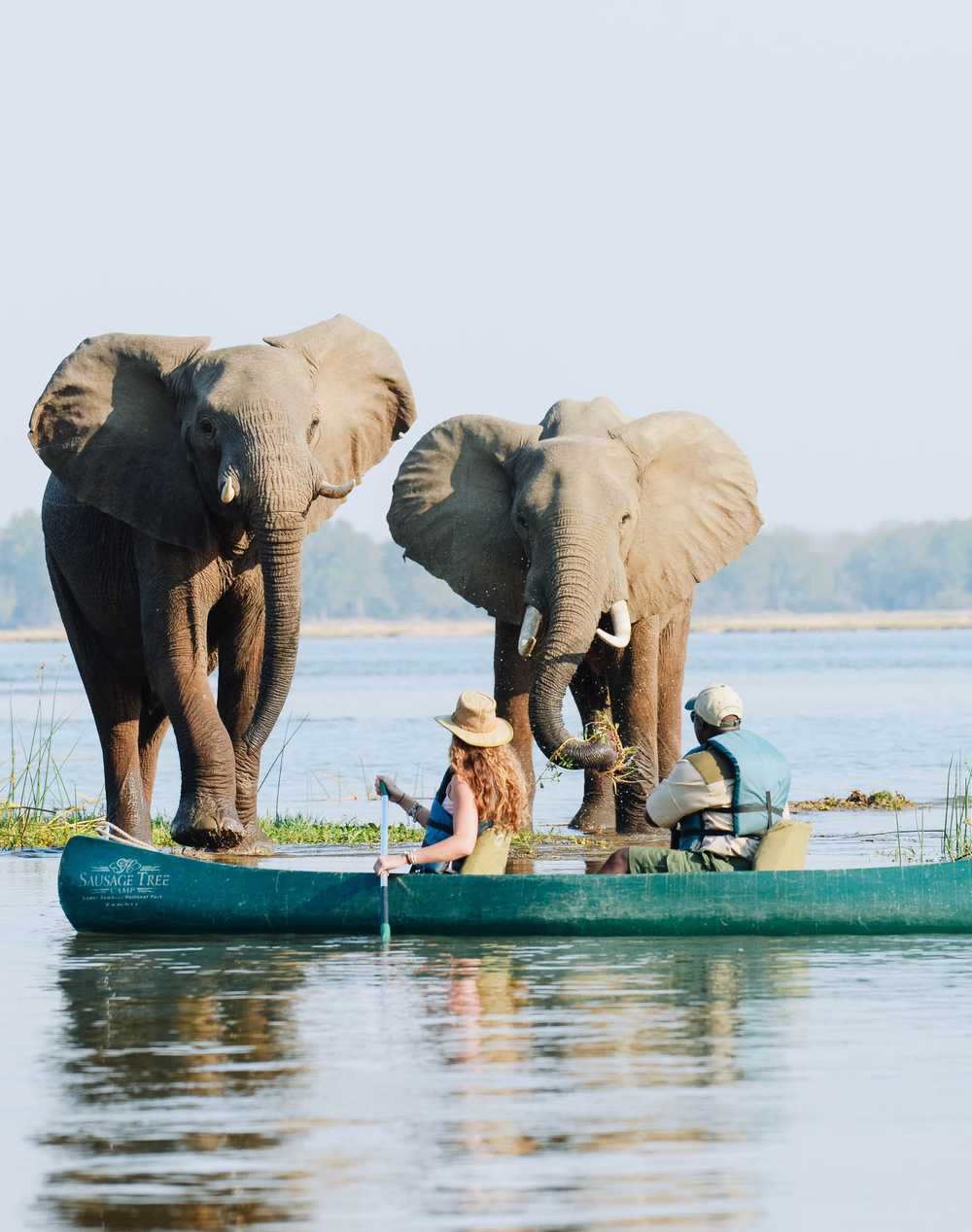
Exclusivity and absolute isolation. Tented camps of six to twelve rooms, traversing rights across thousands of unfenced acres, wild dogs, vast elephant herds and the only mokoro safaris in the world. | From about $1,300 per person per night in peak season (June to October), climbing north of $2,500. Very few rhino, and almost everything begins with a bush plane out of Maun. |
|
Zambia
South Luangwa, Lower Zambezi
|
Leopard, and lots of it. The walking safari was invented in South Luangwa and the guiding remains some of the best on the continent, with far fewer vehicles than the headline parks. | Still far less known to the Western market than Botswana next door, which keeps both prices and crowds down. Shoulder season (April to May, late November) is the value sweet spot. |
|
Zimbabwe
Hwange, Mana Pools, Victoria Falls
|
Elephants at scale (45,000 to 50,000 gather around Hwange’s waterholes in the dry season), canoe safaris on the Zambezi, and Mana Pools walking, widely rated among Africa’s finest. | Victoria Falls is forty minutes by road from Chobe, which makes the combination a gift for families. Walking safaris carry a minimum age of twelve to sixteen, depending on the property. |
|
Namibia
Etosha and the self-drive routes
|
The most cost-effective way into Africa if you’re happy behind the wheel, with low malaria risk at Etosha and across the higher ground. | You’ll be doing the driving, and the distances between waterholes and lodges are long. It suits confident road-trippers rather than anyone hoping to be looked after from the moment they land. |
We’ve planned thousands of first-time safaris over the years, and the travellers who come back glowing aren’t the ones who picked the most famous name on the map. They’re the ones who chose by what actually mattered to them – wildlife density, ease, exclusivity, budget and how far off the grid they wanted to go (honestly!). If you’re trying to figure out your safari style, you’ve come to the right place…

Serengeti vs Masai Mara: which is better for first-timers?
The short answer: pick the Masai Mara if you have a week, want concentrated game viewing in a smaller area, and don’t mind a busy reserve in peak season. Pick the Serengeti if you have ten days or more, want vast horizons, and the Great Migration over a longer window.
You might know that the Masai Mara (Kenya) and the Serengeti (Tanzania) share a border that wildlife ignores, the same ecosystem and the same migration – so it’s basically the same trip, right? Not really. The Serengeti is roughly ten times the size of the Mara (14,763 km² versus 1,510 km²), which sounds like an advantage until you find yourself two hours into a transfer drive between sightings. The Mara is smaller, more concentrated, and delivers more wildlife per square kilometre. Its lion prides are also among the most studied on the continent – this is the region made famous by the BBC’s ‘Big Cat Diary’, and the cats still patrol the same stretches of riverine forest twenty years on.
The iconic Great Migration is where the choice gets nuanced. The herds cross the Mara River into Kenya somewhere between late July and October (but the timing is becoming increasingly harder to predict), before turning back south. The Serengeti hosts them for the rest of the year – calving in the south (the Ndutu region) from January to March, then the slow northward push from April. In short, the Serengeti gets the longer window of wildebeest action but the Mara gets the majority of the iconic river crossings with wildebeest piling off the banks and crocodiles waiting in the churning water below.
“If a first-timer has one week, my recommendation hinges entirely on how they want to experience the Great Migration. If I’m pressed to pick my favourite, I’d suggest the Serengeti in February – calving season offers an incredible look at the circle of life that’s hard to replicate,” says Kevin Zimmerman, Africa specialist.
Crowds are the other big consideration. The main Masai Mara reserve in peak migration season can get incredibly busy and almost every leopard sighting comes with a queue of vehicles. Most travellers we send to the Mara in the peak season stay in one of the private conservancies, like Mara North, Naboisho, Olare Motorogi and Ol Kinyei. These are areas of land bordering the main reserve where vehicle numbers are capped and off-road driving is permitted. The safari experience is entirely different and truly excellent.
As one of our Africa specialists, Kristin Jessup, puts it, “For a more exclusive feel, the private conservancies of the Masai Mara are a slice of heaven year-round. You’ll see the same incredible wildlife and enjoy the same cultural immersion as the main reserve but with far fewer vehicles.”
Our verdict: for a first safari with one week and a flexible date, opt for the Mara conservancies in February or July to October. For ten days or more, combine the Serengeti with the Ngorongoro Crater and a few nights on Zanzibar Island.

South Africa vs Botswana for a first-time safari
The short answer: South Africa for ease, value and variety. Botswana for exclusivity, water-based safaris, and the truest sense of wilderness left on the continent.
The practical differences between Botswana and South Africa are bigger than anyone likes to admit. South Africa has an excellent road and flight network, meaning you could self-drive in the Kruger, fly an hour from Johannesburg to another private reserve, and then finish in Cape Town, the Winelands or the coast without serious logistics. Botswana works differently. Almost everything starts with a flight to Maun, followed by a small bush plane that lands on an airstrip in the middle of nowhere. Flying in a small bush plane is an incredible experience that’s hard to replicate and the first time the plane banks low over the Delta and the channels appear below, it really does feel like you’re arriving somewhere genuinely remote.
Accommodation styles differ in both countries too. In South Africa, you’ll tend to find lodges with solid walls, plunge pools, and sometimes twenty rooms or more in the private reserves. In Botswana, however, accommodation is often tented, smaller (around six to twelve rooms), and has traversing rights over thousands of acres of unfenced bush. Both deliver excellent guiding but the on-the-ground experience is where they differ.
According to Kevin Zimmerman, “The thing that surprises first-timers about Botswana is the sense of absolute isolation. The sightings are magical but also private and you could spend 30 minutes watching wild dogs hunting or elephant herds grazing right next to your vehicle. In South Africa, it’s more likely that you may have to move away from a sighting to make room for other vehicles.”
Cost is often the biggest factor when choosing between Botswana and South Africa. A good Botswana camp in peak season (June to October) can start from about $1,300 per person per night and easily climb north of $2,500 for a fully inclusive stay. South African lodges of comparable quality typically sit at $500 to 1,000. The reasons are simple: Botswana’s low-volume, high-value tourism model, the fly-in logistics and the cost of running anything in the middle of the Okavango make it much more expensive to simply run a safari.
In terms of wildlife, South Africa is the more reliable Big Five experience, particularly for rhino. Botswana in fact has very few rhino but it does have the edge on African wild dogs (one of the rarest predators on the continent), water-adapted species like red lechwe and sitatunga, and elephant herds in Chobe and the Linyanti that are bigger than most on the continent. The Okavango Delta also has the only mokoro safari in the world: a traditional dugout canoe, poled by your guide through reed channels, eye-level with whatever is drinking from the bank.
As Kevin says, “South Africa is the ‘easier’ entry point. It feels tamer, more easily accessible, and the Big Five are relatively easy to spot. The trade-off is that you might see other vehicles or even hear nearby towns, which can break the wilderness spell that Botswana maintains so well.” Kristin also mentions, “You won’t necessarily tick off the Big Five within a single morning in Botswana. Similar to East Africa, it requires a bit more searching and patience, but that’s exactly what makes it a true safari lover’s paradise.”
Our verdict: choose South Africa for a first safari, especially if budget is a real constraint or it’s a longer holiday that includes Cape Town. For travellers who want a single immersive wilderness experience and have the budget to do it well, not much can beat Botswana.

Best safari for families
The short answer: South Africa’s malaria-free reserves – Madikwe, the Eastern Cape, Tswalu Kalahari – are the strongest starting points for first-time family safaris. For older children and teens with more travel patience, Northern Tanzania with a private guide is a fantastic experience, as does a Chobe (Botswana) and Victoria Falls combination without internal bush flights.
Most families come to us looking for the same things: a malaria-free or low-risk area, reasonable flight time from a main hub, lodges that take children, and guides who can hold a six-year-old’s attention without losing the adults. And for most of them, South Africa ticks the box! Madikwe is a four-hour drive or thirty-minute flight from Johannesburg, malaria-free, and home to a selection of lodges built specifically for families. Jaci’s, for example, has a hide at the bottom of a tunnel that puts you eye-level with elephants drinking at the waterhole. It’s the kind of detail children will remember for the rest of their lives. The Eastern Cape is also malaria-free year-round and pairs with Cape Town more naturally than any other reserve in the country.
As Kristin put it, “If you’re looking for a budget-friendly, malaria-free option, combining Cape Town with the Eastern Cape is always a win. The Eastern Cape lets families tick off the Big Five while enjoying beautiful rolling green scenery and exceptional hospitality. If you have a few extra days, exploring the beaches and coastal towns of the nearby Garden Route is a highly recommended, family-friendly addition.”
For families who want something more adventurous but don’t want the complications of bush flights with small children, Botswana’s Chobe National Park and Victoria Falls work beautifully together. Both are easy to reach by road – the Falls are around forty minutes away from Chobe – and you’ll be spotting hippos in the Zambezi and herds of elephants on the riverbanks in no time at all. “I’ve had families with children as young as three enjoy these areas comfortably, and family-style rooms are widely available,” said Kristin.
For families with teenagers, Northern Tanzania opens up. The longer drives and bigger landscapes suit older kids, and the variety keeps everyone engaged. One of our favourite trips is to start in Tarangire (it’s driveable from Arusha, the main safari hub, and home to some of the largest elephants in East Africa with far fewer crowds than the headline parks), then continue on to Ngorongoro Crater, the Serengeti, and Zanzibar to finish.
As Kristin says, “Northern Tanzania with a private guide is ideal for families with teenagers. It provides the flexibility you need – adjusting game drive lengths on the fly for example – and the variety of ecosystems keeps everyone engaged. Afterwards, you can head to Zanzibar for a few days beside the Indian Ocean.”
Our family picks:
- Madikwe, South Africa – Jaci’s Safari Lodge, the Morukuru Collection, Little Tuningi
- Eastern Cape, South Africa – Kwandwe Fort House, River Bend Lodge
- Tswalu Kalahari, South Africa – Motse for the junior ranger programme; Loapi for multi-generational groups
- Chobe, Botswana and Victoria Falls, Zimbabwe combined – a road-accessible introduction with water-based wildlife
- Northern Tanzania with a private guide – the strongest option for teenagers

Best safari for luxury
The short answer: Botswana’s Okavango Delta concessions, the Sabi Sand Private Reserve in South Africa, the private conservancies bordering the Masai Mara, and the Singita-style properties of the Serengeti and Grumeti reserves in Tanzania all define the top end. And what separates them isn’t thread count…
Safari luxury at the highest level isn’t about your bed or the bathroom amenities; it’s about access. We’re talking everything from private vehicles to traversing rights across thousands of hectares of unfenced wilderness, permission to drive off-road and two travellers per guide, not eight. Add the chance to fly-camp or sleep-out under a mosquito net and the freedom to spend forty minutes parked beside a leopard, and you’ve got one of the most luxurious safaris you could hope for.
By that definition, Botswana’s private concessions sit at the very top of the tree. Mombo Camp, Vumbura Plains, Jao, Duba Plains and Selinda are all properties where the surrounding wilderness is effectively yours for the duration of your stay and any vehicles you see will most likely be from your camp. The Sabi Sand offers something comparable in South Africa: Singita Sabi Sand, Londolozi and Mala Mala are the established names, all famed for unbelievably close leopard sightings. The Masai Mara conservancies run the same model in East Africa and our top picks are Angama Mara, Mara Plains and the Saruni properties that all deliver low vehicle density and exceptional guiding.
In Tanzania, the Serengeti’s high end properties work slightly differently. Whilst there are some private reserves (Singita Grumeti, for example) that offer benefits like exclusivity and traversing rights, many of the properties are located in the national park itself and don’t have as much freedom. But these areas are still incredibly beautiful and if you choose carefully, you’ll have a fabulous experience. The Lamai Wedge in the far north of the Serengeti is about as remote as luxury gets: a handful of camps tucked beneath the kopjes, looking across at the Mara without having to cross the border.
Our luxury picks:
- Mombo Camp, Okavango Delta (Botswana)
- Singita Sabi Sand (South Africa)
- Angama Mara (Kenya)
- Singita Grumeti (Tanzania)
- Jao Camp, Okavango Delta (Botswana)

Best safari for wildlife density
The short answer: for raw numbers of animals per square kilometre, South Luangwa in Zambia and the Sabi Sand in South Africa are tough to beat. The Masai Mara in season is also comparable. For the spectacle of huge single-species herds, Hwange National Park in Zimbabwe and the Masai Mara during the migration are extraordinary.
Density and diversity aren’t the same thing. Density is what you see per drive, as in leopards, lions or elephants per square kilometre. Diversity is the range of species you encounter. South Luangwa is the leopard capital of Africa with sightings on a level that surprises even the most experienced safari-goers. The walking safari was invented here, partly because there’s so much worth walking towards. In South Africa, the Sabi Sand is in the same league: three different leopards in a single day isn’t unusual, and the cats are so used to vehicles they’ll often hunt with one parked nearby. In East Africa, the Masai Mara delivers extraordinary concentration during migration, when wildebeest and zebra are joined by every predator in the ecosystem.
“Zambia offers a much less crowded experience than many other regions, with spectacular wildlife viewing and a world-class standard of guiding, particularly for walking safari enthusiasts. It remains far less known to the Western market than its popular neighbour, Botswana, providing a raw and authentic sense of discovery,” said Kristin.
Hwange National Park in Zimbabwe is one of Africa’s great elephant strongholds. Somewhere between 45,000 and 50,000 elephants congregate around the park’s waterholes in the dry season and at Nyamandhlovu Pan in late September you might watch a hundred elephants drinking at once, with another fifty queuing behind them in the trees.
Our density picks:
- South Luangwa, Zambia – particularly for leopard
- Sabi Sand, South Africa – reliable Big Five and outstanding leopard sightings
- Mara North or Naboisho conservancy, Kenya
- Hwange, Zimbabwe – for elephant herds at scale
- Ngorongoro Crater, Tanzania – for variety in a small area

Best safari for fewer crowds (and a truly wild feel)
The short answer: for wilderness that still feels wild, head to Botswana’s private concessions, Zambia’s South Luangwa or the Lower Zambezi, Zimbabwe’s Mana Pools and Hwange, the southern Tanzanian parks like Ruaha and Nyerere, or the Mara conservancies. Skip the main reserves of the Mara and Kruger if quiet matters the most to you.
As Kevin puts it, “For the traveller who wants to feel like they’re truly in the middle of nowhere, Botswana is the answer. The wilderness there remains untouched and incredible to explore. In my opinion, some of the more ‘famous’ regions in Kenya and Tanzania are currently coasting on their reputations and, while they’re beautiful, they often struggle to match the genuine wildness that Botswana still offers.”
In the end, there’s a real difference between a sighting where six vehicles converge on a leopard and one where it’s just you and your guide. The latter is harder to find than it used to be, but still possible if you know where to look.
Zimbabwe deserves more attention here than it usually gets. Hwange’s private concessions – Jozibanini, Camp Hwange, Linkwasha – sit deep inside the park with very few neighbours and resultingly, very few guests. In Mana Pools, you’ll find a rare combination of canoe safaris on the Zambezi alongside walking safaris that are widely considered some of the best on the continent. It’s also the only park in Africa where you can regularly watch elephants standing on their hind legs to reach the higher acacia pods – a learned behaviour particular to a handful of bulls there and one of the great wildlife sights anywhere on the continent.
“Zimbabwe is an excellent choice for travellers looking for a diverse range of remote ecosystems. Combining Hwange with Mana Pools creates a perfect balance, adding a stunning water element and some of the most intimate land and canoe-based encounters available in Africa,” Kristin said.
Our genuinely wild picks:
- Botswana’s Linyanti or Selinda concessions
- South Luangwa and Lower Zambezi, Zambia
- Mana Pools and the private Hwange concessions, Zimbabwe
- Ruaha and Nyerere (formerly Selous), in southern Tanzania
- Mara North or Naboisho conservancy, Kenya

Best safari for value
The short answer: South Africa is the strongest first-safari value, particularly the Eastern Cape and Madikwe. Zambia in shoulder season (April and May, late November) and Kenya off-peak (March to May, November) offer an extraordinary experience for the price. Self-driving in Namibia is the most cost-effective way into Africa for travellers happy behind the wheel.
Kevin advises, “The biggest mistake I see first-timers make is trying to do too much in too little time. Many people view Africa as a once-in-a-lifetime trip and try to squeeze in as many countries as possible. It looks great on a checklist, but it’s exhausting and expensive. Every transfer and internal flight eats into your budget and your actual safari time. The smarter decision is to pick a region – say a South Africa, Botswana and Zimbabwe circuit – and spend proper time in each place.”
Three or four nights at one property is dramatically better value than one or two – and there are fewer transfers, fewer bed-night premiums and better guiding as the team gets to know you and what you’re hoping to see. Staying longer also tends to deliver better sightings. Wildlife rewards patience, and the third morning of a stay is often the one that ends up the best.
Our value picks:
- Eastern Cape, South Africa
- Madikwe, South Africa – particularly strong for family travel
- Zambia in shoulder season (April-May, late November)
- Hwange, Zimbabwe
- Self-driving through Namibia

Kenya vs Tanzania: which East African country?
The short answer: Kenya for ease, culture and a fascinating (and successful) conservancy model; Tanzania for scale, the iconic and wildlife-filled Ngorongoro Crater and pairing a safari with Zanzibar.
Both deliver the classic East African safari – open plains, big cats, the Great Migration in season – and both have been doing it well for decades. The real differences are in how the safari is built around the wildlife.
Kenya’s conservancy model is unusual: large tracts of land owned by Maasai communities and leased to a small number of operators, with strict caps on vehicle numbers and direct community benefit. Staying in a Mara conservancy is closer to staying on a private reserve in Southern Africa than in a national park, and you get more cultural depth, because the Maasai are direct stakeholders rather than elusive figures on the horizon.
Tanzania doesn’t have the same structure, but it has more scale. The Serengeti is vast and the Ngorongoro Crater is a self-contained world about twenty kilometres across, ringed by six-hundred-metre walls, with one of the densest concentrations of wildlife anywhere and the country’s most reliable black rhino sightings. And the obvious post-safari add-on is Zanzibar. It’s twenty minutes by air from the Serengeti and one of the easiest bush-and-beach combinations on the continent.
Our verdict: for a week focused on the migration, Kenya’s Mara conservancies in season. For ten days plus, Tanzania with Serengeti, Ngorongoro and Zanzibar.
How long should a first safari be?
Seven to 14 days is ideal. Anything shorter and the travel time eats a disproportionate share of the trip.
The planning rule of thumb: a minimum of three nights at any single property to make the transfers worth it, and if you can, four nights. A one-week safari realistically covers two properties; a ten-day trip covers three. Adding a fourth or fifth means cutting nights, which usually means worse sightings and a more exhausted traveller. Slowing down is definitely the best policy here!

When to go: a quick seasonal guide
| When | Where it shines | Bear in mind |
|---|---|---|
|
January to March
Calving season in East Africa, green season in the south
|
The southern Serengeti (Ndutu) for the wildebeest calving, with every predator in the ecosystem paying close attention. The Ngorongoro Crater delivers year-round, and February is our specialists’ pick for a first-timer. | Short, sharp downpours in East Africa. In Southern Africa the bush is thick and water is everywhere, so animals spread out and sightings take more work. |
|
April to May
Shoulder season, lowest rates of the year
|
Zambia and off-peak Kenya, both of which give you an extraordinary safari for the price. The Serengeti herds start their slow push north from April, and lodges are at their emptiest. | The long rains fall across East Africa and some Zambian camps shut for the wettest weeks. Dirt roads turn sticky, so build in a little flexibility. |
|
June to August
Dry season builds, peak in Botswana
|
Botswana’s peak begins in June, Hwange’s waterholes start pulling in elephants by the hundred, and the first Mara River crossings can happen from late July. | Peak rates across Botswana and the Mara, plus the main Mara reserve filling up. The good camps go a year ahead, so book early or look at the conservancies. |
|
September to October
Peak dry season, best wildlife density
|
Just about everywhere. Hwange’s Nyamandhlovu Pan in late September might show you a hundred elephants drinking at once, with another fifty queuing in the trees, and the Mara crossings usually run into October. | Hot, dusty, and busy at the famous sightings. South Luangwa and the Mara conservancies absorb the pressure far better than the main reserves do. |
|
November to December
Short rains, second shoulder season
|
Late November in Zambia and November in Kenya, both off-peak and priced accordingly. The short rains green everything up and the light is wonderful for photography. | Afternoon showers can interrupt a drive (rarely for long). Some remote camps close before reopening for the festive period, when rates jump again over Christmas and New Year. |
Frequently asked questions
Is Africa safe for a first safari?
Yes. The countries covered here all have well-established safari industries, professional guides and on-the-ground teams and decades of experience with international travellers. The risks on safari tend to be minor (mostly sunburn and mosquito bites) rather than dramatic. Lodge staff and guides are trained for emergencies.
Do I need vaccinations or malaria tablets?
Yellow fever is required for entry into some countries from others so it’s advisable to check before you book. Routine vaccinations should always be up to date. Malaria precautions are recommended in most safari areas except for parts of South Africa (Madikwe, Eastern Cape, Tswalu, Welgevonden), Namibia’s Etosha and the higher altitudes. Speak to a travel clinic six to eight weeks before you go.
What’s the cheapest African safari country?
For quality safari at the lowest cost, South Africa’s Eastern Cape and self-driving across Namibia are a win. For more wilderness at a moderate cost, look at Zambia in shoulder season or Zimbabwe. Botswana is almost never the cheapest option – the country chose a high-cost, low-volume model deliberately.

Can I do a safari without flying internally?
Yes, but it changes your options. South Africa and Namibia both work well with road transfers or self-drive. Kenya’s Mara is a four to five-hour drive from Nairobi or a short flight. Botswana’s main camps and most Tanzanian camps effectively require internal flights – the road network won’t get you there in any reasonable time.
Is the Great Migration worth planning a trip around?
It’s worth it, but it shouldn’t be the only criteria. The migration is spectacular when you catch it, but the wildlife in both Kenya and Tanzania is excellent year-round, and a non-migration safari is often quieter and cheaper. If you want the river crossings specifically, plan for late July to early October in the Mara. If calving is your priority, January to March in the southern Serengeti.
Should I combine safari with the beach?
It’s a wonderful combination and often pairs naturally. Tanzania and Zanzibar is the easiest and there are direct flights from the Serengeti and a short flight time. Kenya pairs well with Diani Beach, Watamu or Lamu, all on its stunning Indian Ocean coastline. A safari in South Africa pairs beautifully with Cape Town and the Garden Route, or, further afield, Mauritius, while Mozambique works well after most southern African safaris if you have the time.
Are private reserves better than national parks?
For first-timers and travellers who value exclusivity, generally yes. Private reserves and conservancies usually offer off-road driving, night drives, walking safaris and limited vehicle numbers. National parks have stricter rules, more vehicles and lower costs. Many of our travellers choose to combine the two.
What’s the best age to take children on safari?
Six is a workable minimum at most family-friendly lodges; eight is more comfortable. Some properties accept younger children – Chobe and Victoria Falls in particular work well with kids as young as three – but bear in mind that walking safaris usually require a minimum age of twelve to sixteen depending on the country and property.
Do I need to book through an operator?
For a first safari, almost certainly yes. The number of variables – properties, seasons, transfers, internal flights, traversing rights, which side of a reserve to stay on, and so on – makes it a hard trip to plan well from scratch. A specialist can spot the mistakes that aren’t visible from the outside: a famous lodge that perhaps isn’t as good as it once was, a property that doesn’t suit families or a season that won’t deliver what you’re hoping for.
We’ve been planning first-time African safaris for over a decade. The value we add lies in the questions we ask before suggesting anywhere. When a holiday this big can be done badly, knowing the difference between a property that suits you and one that doesn’t is the whole point of working with us.
If you’ve read this far and you’re closer to picking a direction, we would love to hear from you. We’ll match you with a specialist who knows the part of Africa you’re leaning toward, and be honest about where it might not be the right fit.
Latest blogs


As seen in