Victoria Falls is, for many, one of the main reasons for planning a visit to southern Africa – and Africa as a whole – and it’s certainly easy to see why. One of the Natural Wonders of the World, it is regarded as one of the most magnificent waterfalls on Earth where, at its fullest, around 500 million litres of water cascades over the vertiginous lip every minute and into the deep gorge below.
Victoria Falls straddle the border of Zambia and Zimbabwe, with the latter enjoying the lion’s share – around three quarters of its formidable face is found in Zimbabwe and there are plenty of viewpoints to enjoy the enthralling sight (more on that later). Now, settle in and get to know this incredible natural phenomenon.
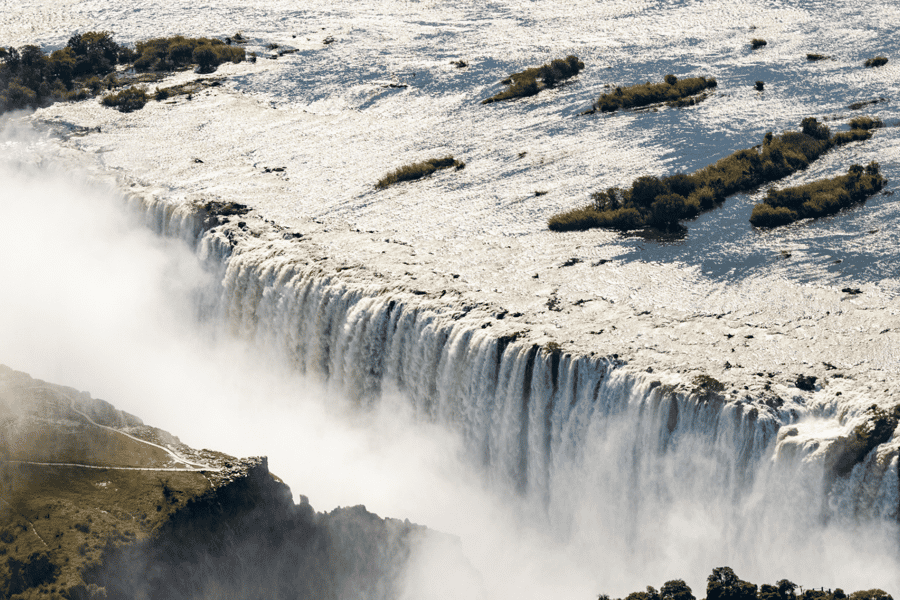
Witness the majestic Vic Falls from above
The best time to visit Victoria Falls
Victoria Falls is a year-round destination. The best time for you to go depends on what you want to do, how willing you are to contend with the crowds, and the water levels you’d like to experience.
February to May
Following the summer rains, the Zambezi River is positively brimming and Victoria Falls are at their most powerful. Peaking between March and April, the ‘high water season’ offers the most spectacular and dramatic cascades. It’s easy to see why the Falls’ local name translates to the ‘Smoke that Thunders’ at this time of year and the rising mists can be seen from almost 50 kilometres away! It is advisable to wear waterproof gear and bring suitable dry packs for cameras and other electronic equipment. Temperatures during this time typically fall between 25° and 30°C and rainbows are frequently seen on sunny days, while ‘moonbows’ can be spotted during the full moon (do a little research to see when it will be while planning your trip). If there is a downside, it’s that the mist can sometimes block out a clear view of the Falls themselves.
June to August
During these months, the region enjoys dry, sunny weather with typical daytime temperatures somewhere between 20° and 25°C. Victoria Falls are still experiencing a strong flow, particularly in June, although this gradually subsides, reducing the spray and improving visibility. As a result, you can clearly see the Falls, as well as the incredible gorge and rock formations, and snap away happily without worrying about water on the lens. This is peak safari season in southern Africa so Victoria Falls also experiences especially high amounts of visitors between July and August. It’s also the prime time for adventure activities as the water levels have reduced enough for rafting to take place safely, while the Devil’s Pool is typically open by mid-August – although, you will need to cross over into Zambia to enjoy a dip.
September to November
During these months, you might experience temperatures of between 30° and 35°C with some days in October reaching up to 40°C. This is also when Victoria Falls are at their lowest – between October and November, the Zambian side may almost dry up completely but Zimbabwe’s portion still retains flow in several cataracts. During these months, you can enjoy impressive views of the exposed rockface and gorge, while white water rafting is at its most thrilling with speedy rapids to take on. A short journey over to the Zambian side will also afford you with the chance to swim in the Devil’s Pool (typically between late-August and December). You’ll also have fewer tourists to contend with at this time of the year.
December to January
These months are regarded as the rainy season, which brings hot, humid weather and afternoon thunderstorms. During this period, the landscape becomes wonderfully lush and green and river levels start to rise, although the Falls are yet to reach their peak. Heavy rains can occasionally disrupt certain activities and by January, the spray gets so powerful that activities like tours to Livingstone Island close. If you don’t mind the humidity and significant spray, this time of year offers a more intimate, uncrowded experience of the Falls while birders will also be pleased by the many migratory species that arrive.
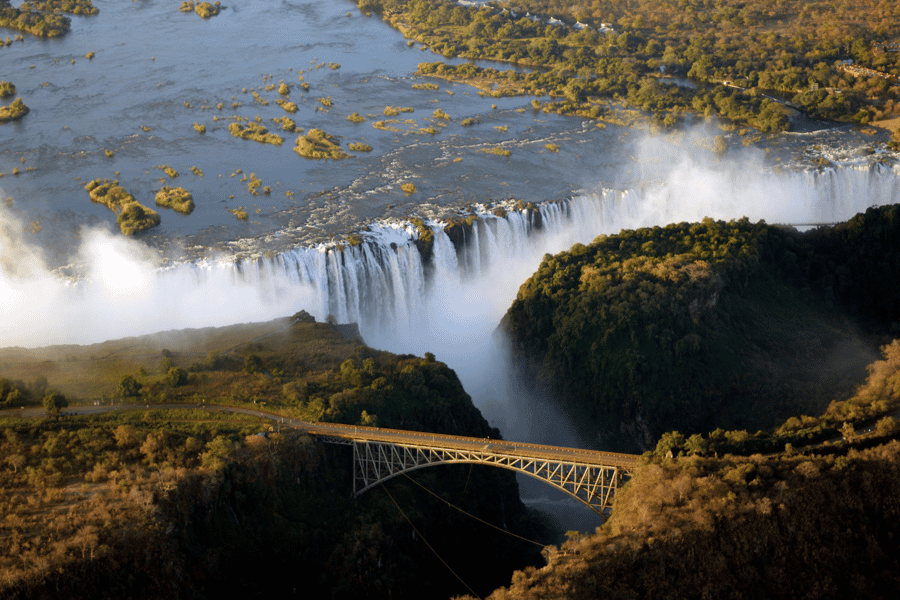
Take a helicopter flight in Vic Falls
Activities at Victoria Falls
There are a number of ways to explore Victoria Falls, revelling in their beauty or indulging your adventurous side.
Explore its viewpoints
In Zimbabwe, Victoria Falls can be enjoyed from no less than 16 viewpoints that can easily be explored on your own or on a guided tour. One of the first lookouts on the Zimbabwean side is the Devil’s Cataract Viewpoint where the far-western cascade of the Falls plunges over 70 metres into the chasm below. A short descent through the rainforest will award you with one of the most powerful and close-up views of the Falls and you’ll feel the ground tremble and hear the deafening roar of gallons upon gallons of water spilling over the edge. This is a prime location for spotting rainbows forming in the mist, but needless to say, you will get wet!
Further along the trail, you’ll reach a number of viewpoints that face the Main Falls – Victoria Falls’ largest single curtain of continuously falling water. This is a particularly breathtaking sight when the river is in full flood (although very misty) but when the water levels are lower, you’ll enjoy clear views of the rocky ledges and further upstream. This spot is especially excellent for photography in the late afternoon when the sun hits the Falls from behind you.
At the very end of the rainforest trail, you’ll emerge onto Danger Point, an entirely unfenced rocky outcrop. You’ll be rewarded with striking views of the entire width of Victoria Falls, sweeping all the way from Devil’s Cataract to the Zambian side, as well as a heart-thumping look into the Boiling Pot (a turbulent whirlpool at the base of the Falls). During the dry season, Danger Point is a relatively splash-free zone with unparalleled views.
Fly overhead in a helicopter
Known rather whimsically as the ‘Flight of the Angels’, this 15-minute journey reveals staggering views of the full breadth of the Falls before they rejoin the Zambezi River, the zig-zagging gorges and surrounding parks from the air. A longer, half-hour flight will take you over the river islands and rapids, and into the gorge itself. This is undoubtedly one of the best ways to grasp the full scale of Victoria Falls. Or, for the even more adventurous, opt for a tandem microlight flight!
Go white water rafting
Offered as both a half- and full-day activity, white water rafting below Victoria Falls is a truly epic experience. If you choose the full-day option, you’ll conquer the first 10 rapids in the morning before enjoying lunch on the banks of the Zambezi River, while the afternoon will see you braving rapids 11 to 21. With names like the ‘Gnashing Jaws of Death’ and the ‘Devil’s Toilet Bowl’, you’ll surely be in for an adventure…
Bungee jump / gorge swing
For the ultimate adrenaline rush, make your way to the Victoria Falls Bridge, which, standing at 111 metres high, is home to one of the tallest bungee jumps in the world. Alternatively, opt to do the giant swing through Batoka Gorge. You will freefall for about three seconds, covering around 70 metres, before swinging through the air with sensational views in every direction (if you can keep your eyes open!).
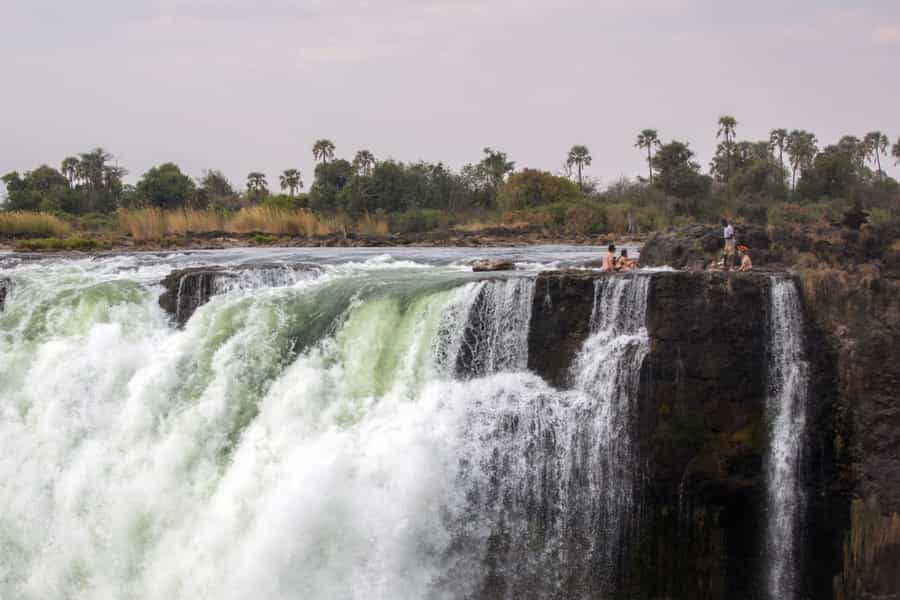
Swim in the famed Devil’s Pool in Vic Falls
Take a dip in Devil’s / Angels’ Pool
For this activity, you’ll need to cross the foot bridge into Zambia before travelling by boat to Livingstone Island. After a tour of the island, you’ll inch your way across the Zambezi River before submerging yourself in the waters of Devil’s Pool, an entirely natural ‘infinity’ pool on the edge of the waterfall. You can even take a peek over the edge and into the gorge some 108 metres below. The experience is usually available between August and January (water levels dependent) while the upstream Angel’s Pool is open to visitors between mid-March and mid-June.
Take a boat cruise
Exploring the Zambezi River by boat, whether in the peace of the morning or at sunset as the waters turn into liquid gold, is magical. Keep your eyes peeled for elephant, hippo, giraffe and an endless parade of birdlife along the banks. You could also do a little sightseeing by canoe for an even closer look at the ecosystem.
Visit a local village
Pay a visit to a local village and learn about everyday life in southern Africa, spend time at a school or clinic, or enjoy a traditional dance and music performance. You can also take a wander around craft markets and art galleries – why not pick up your choice of high-quality Zimbabwean stone sculptures, jewelry or textiles?
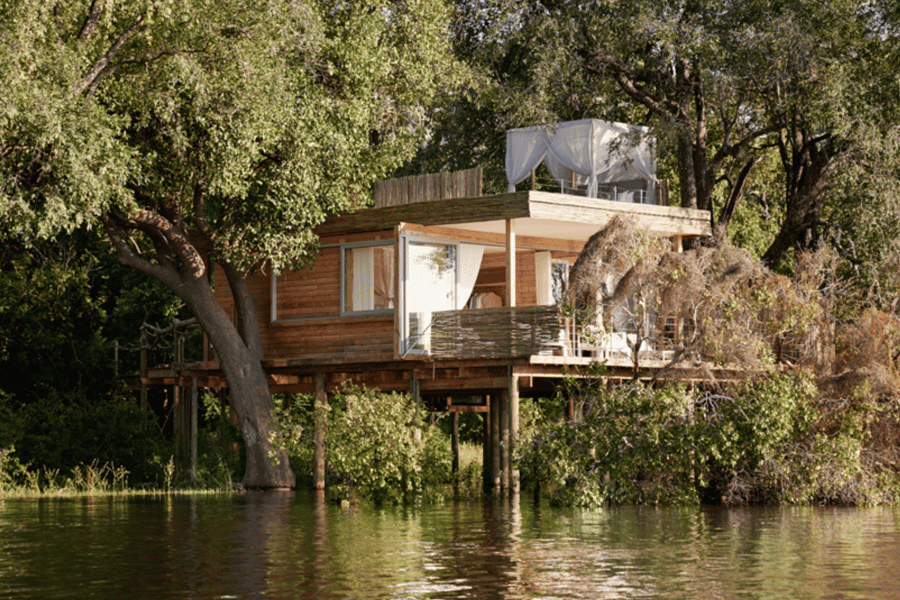
Victoria Falls River Lodge Island Treehouses
Where to stay
Victoria Falls in Zimbabwe has no shortage of fabulous places to stay, from the uber-luxe to the more rustic and down-to-Earth. Peruse some of our favourites and get acquainted with accommodations in Vic Falls and the vicinity.
Victoria Falls River Lodge Island Treehouses
Built on its very own island just upstream from Victoria Falls, this collection of supremely luxury treehouses are the last word in exclusivity. Stunning views of the Zambezi River are yours to be had from bed or your private plunge pool. You couldn’t be better positioned to enjoy the many pursuits on offer in the region, from heli flights to river cruises.
Matetsi River Lodge
You’ll be blown away by 15 kilometres of private river frontage at this glamorous lodge in its own game reserve. You’ll feel like the Zambezi River is all yours to explore, while still having fantastic access to all the activities of Victoria Falls. Heaven!
Stanley and Livingstone Boutique Hotel
Set within a private game reserve just a short drive away from the town of Victoria Falls, Stanley and Livingstone Boutique Hotel offers plenty of style and comfort. It’s an idyllic spot to catch your breath and enjoy a little peace and quiet in between the many activities available.

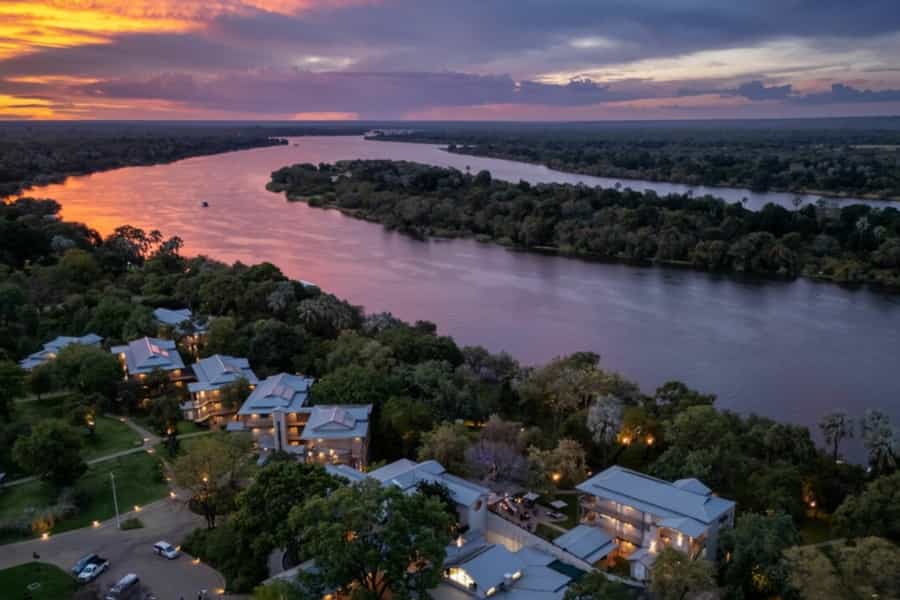
The Palm River Hotel, Victoria Falls
The Palm River Hotel
A mere four kilometres upstream from the precipitous Victoria Falls (you can even hear the roar from your room), The Palm is an utter delight with equally impressive design and eco-credentials. Meals can be enjoyed in the company of hippo and elephant by the river, while each room enjoys the same stunning river view.
Ilala Lodge
Just a 15-minute walk from Victoria Falls’ many viewpoints, Ilala Lodge has all the perks of a hotel combined with the tranquillity of a beautiful garden setting – you may even spot an elephant ambling across the grass. You literally couldn’t be closer to the Falls and its many adrenaline-inducing pursuits.

A note on Zambia
In order to enjoy a dip in the Devil’s or Angel’s Pool, you’ll need to cross the bridge into Zambia. This is quite easily done by applying for the KAZA Univusa, which covers entry into both countries for up to 30 days, while also allowing a day trip into Chobe National Park in Botswana. It costs approximately $50 and can be organised upon arrival in Zimbabwe or online.
A 1.6-kilometre-long drop-off point for volumes of water, Victoria Falls is superlative in every sense of the word. It’s no wonder that it attracts around 350,000 international visitors each year. In this blog, we’ve covered everything from the best time to visit to just what to do when you get there, but if you just have to know more, take a look at our blog on Victoria Falls from both sides.

Latest blogs


As seen in