Travel and Leaisure Worlds Best Awards for number 1 tour operator in the world 2024 and number 2 tour operator in the world 2025
We're one of the World's Best Tour Operators!
Voted No.1 in 2024 and No.2 in 2025 by Travel+Leisure
Destinations

Where to go in Ecuador

Ecuador is a country with many faces from sky-brushing volcanoes to the juicy Amazon to the wildlife of the Galapagos Islands. We say, do it all!


Quito

Sandwich your adventures with a city-slicking break in exuberant capital city, Quito.
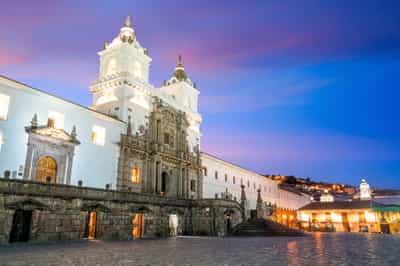
Ecuador’s capital city is one of Latin America’s coolest, hippest and most happening hubs. The stage is set firstly by the landscape: flanked by two active volcanoes on one side and the Amazon basin on the other, it’s a dramatic and powerful setting with views to die for. Then there’s the town itself. From the 16th-century Old Town, one of the best-preserved examples of colonial architecture on the continent and the first UNESCO city in the world, to the graffitied walls and murals of bohemian La Floriesta (via a few pastel palaces and shamanistic healers), the streets are alive and bustling. On a typical day, roam the old town’s 200 churches, convents and monasteries, watching the hawkers with their wares and the fourth-generation hatmakers busy at work, before dining at industrial Laboratorio for themed cocktails and experiential courses. End with a cleanse at a traditional curanderas (healer) and a pisco sour on the roof terrace of your hotel, watching the sun set over this extraordinary city.

Galapagos

Think differently about the world in Darwin’s centre of evolution, a place of intrigue, magic and pure delight.
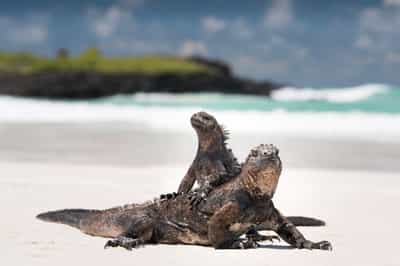
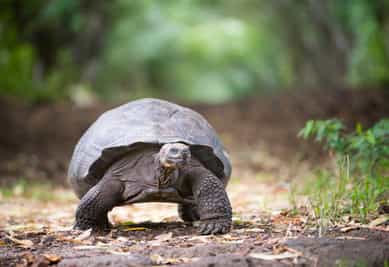
There are certain experiences in the world truly deserving of the phrase ‘jaw-dropping’ and a trip to the Galapagos Islands hovers very close to the top. Known as Darwin’s ‘Enchanted Isles’, these biodiverse hotspots are the subject of countless nature documentaries – yet somehow, they surpass every expectation, every time. Formed by volcanoes forcing their way through the surface of the ocean, the 13 islands – and many more miniscule islets – are located 960 kilometres off the coast of Ecuador and are alternately sun-baked and mist-drenched, inhabited and uninhabited. Most famous for the giant tortoises that lumber across the land, the unique ecosystem hides so much more and many of the species are found nowhere else on earth. Above the waves, spot sunning Galapagos penguins and fur seals, comedic blue-footed boobies and magnificent crimson-throated frigatebirds, whilst below, things only get more flamboyant with trumpet-fish, chocolate-chip sea stars, sunfish (the heaviest fish in the world, no less) and orcas, whales and dolphins. And we haven’t even mentioned the snow-white beaches, volcanoes to climb, divine chocolate, or river cruises…

Cotopaxi

Explore the King of the Andes and its surrounding grasslands that thrum with wildlife and adventure.
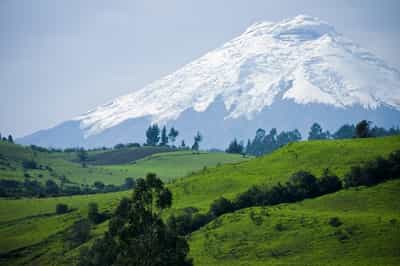
Almost totally symmetrical, with a gargantuan, cone-shaped crown that pierces the clouds and strokes the cerulean sky, Cotopaxi is the tallest active volcano in the world and quite a sight. Beneath its watchful eye is the 32,000-hectare wilderness of Cotopaxi National Park, a moorland streaked with wildlife, waterfalls and wavering mists. Surprisingly, this wild land is a mere one-and-a-half hours outside Ecuador’s capital, Quito, but is without a doubt worthy of more than a day trip. Spend two or three days exploring the walking trails and meandering through unusual flora, with only wild vicuñas (a type of llama) for company; catch sight of pumas as they skulk in the undergrowth; mountain bike to long-forgotten waterfalls and cool off in the glacial water; and horse-ride across the grasslands whilst Andean gulls chatter overhead. Most epic of all, however, is the chance to witness Cotopaxi’s chagra culture, a traditional cowboy lifestyle dependent on cattle and horses that has ruled this part of the country for centuries.

The Ecuadorian Amazon

A steamy hotbed of biodiversity and the pinnacle of Ecuadorian wilderness.
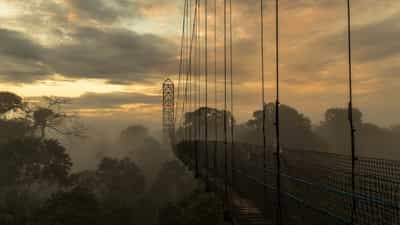
The single largest tropical rainforest in the world, not to mention one of the most iconic, the Amazon is a nirvana of wildlife, plants, and pure, untouched wilderness. Occupying almost half of the country, Ecuador’s section, el Oriente, is in fact only a sliver (around 2%) of the entire forest yet home to 1600 species of birds, 350 reptiles, 300 mammals and 800 fish. Raging, chocolate-pot rivers hide pink river dolphins and giant river otters, whilst the canopies are alive with the twitterings and chatterings of monkeys, sloths, toucans, capybaras and more magical wildlife than you could shake a pair of binoculars at. For visitors, there are several national parks and forest reserves in the wilderness, each offering total immersion into the rainforest. In many places, local guides are becoming more common as they become involved with eco-tourism, and their knowledge of the flora and fauna is truly unrivalled. For you, that means sightings of rare kingfishers, swooping between the trees, explorations of untouched corners by dugout canoe, and the best spots to see the iconic caimans.

The Cloud Forest

A magical hum of emerald-hued trees, low-lying mists and rewarding activities.
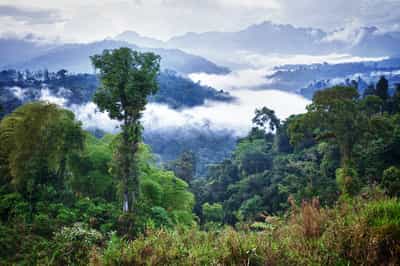
Travel north west from Ecuador’s capital, Quito, and you’ll hit the Andean Highlands, a land of luscious, pristine cloud forest where nature runs wild. Sitting at a breathtaking 2000-metres (minimum) above sea level and almost bang on the equator, the ‘clouds’ are formed by cooling humid air from the Amazon, and this particular section is one of the most diverse cloud forests on the planet. Vertiginous and almost inaccessible to humans, it’s a safe haven for critters of all shapes and sizes as well as some seriously interesting flora. Today, much of the terrain is protected by private reserves and a handful of thoughtful eco-lodges host guests every year. Visit and be one of them to spot the wild and wonderful birdlife (hummingbirds are the star of the show), ascend to the very tip of the canopy on an aerial tour, hike and swim by cellophane-clear waterfalls, mountain bike through the thriving ecosystem, and gawp at delicate orchids and glowing fungi…

Avenue of the Volcanoes

The tallest of volcanoes and the smallest of villages in this alpine wonderland.
Running like a knobbly spine down the centre of Ecuador are eight volcanic peaks. The fertile valley between them is known as the ‘Avenue of the Volcanoes’, a term coined by explorer Alexander von Humboldt in 1802 when he first laid eyes on the cloud-swept peaks. The name stuck fast and over the years, explorers, adventurers and intrepid outdoorsmen have marvelled at the beauty of the landscape - and quaked in their boots at the thought of tackling one of the peaks standing above the snowline of 4,900-metres! But it’s not all about hiking poles and studs and the shamrock-green valley, with its waterfalls and mountain lakes, is ripe for an outdoorsy few days filled with kayaking, walking and thermal baths. For adrenalin levels somewhere in between the two, tackle the Devil’s Nose. A section of railway that links Quito to Guayaquil, it’s one of the most famous sights in Ecuador and the track consists of switchback hairpins zig-zagging across the sheer rock-face. We’ll leave the rest as a surprise.

Otavalo

A startling blend of culture and alfresco adventures in a bucolic landscape.
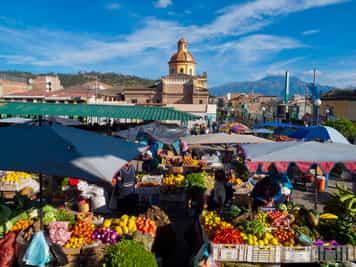
Ecuador might be famous for its wow-worthy biodiversity and wildlife, but head north of Quito into the Andean Highlands and you’ll discover an equally captivating world of culture and indigenous identity. The burg town of Otavalo is the centre of it all, thanks mostly to its legendary market organised by the wealthy Otavaleño Indians. Stalls are piled high with the best of Ecuadorian craftsmanship, from gloves and rugs to intricate tapestries and elaborate hammocks, and, as well as picking up a souvenir or two, it’s a fascinating place to learn about the complex society from the poncho-clad artisans. Further afield, the highlands are all lake-filled craters and volcanic peaks, the hillsides adorned with village specks each specialising in their own cottage industry. Fill your boots (or should that be suitcase?) in the market, then put your lungs to the test on the stone-flagged tracks of the extinct Cuicocha volcano, gaze at the sacred waters of Peguche Waterfall, or ride horseback through the wildflowers, passing only lone cowboys and their cattle…

San Cristobal

Swim with sea lions, spot marine iguanas and enjoy the postcard-perfect beaches of this Pacific haven.
The easternmost island in the archipelago, San Cristobal is a melee of volcanic peaks, juicy vegetation and idyllic Pacific beaches. The exotically-named Baquerizo Moreno is the capital of the entire archipelago, but the seaside promenade, and chilled-out surfers and snorkelers lend it a laidback, tropical vibe. And the wildlife highlights? Isla Lobos and Kicker Rock offer incredible underwater explorations with sea lions pirouetting in the water at both, and, if you’re lucky, hammerhead sharks at Kicker. Beach-wise, Cerro Brujo takes the crown for the most heavenly in Galapagos, its powder-soft sands dotted with great egrets and blue herons. At La Loberia, first prize goes to the marine iguanas. In the interior, check out the tortoises at La Galapaguera, a fascinating man-made breeding program, and watch the frigatebirds showering the salt from their feathers at El Junco lagoon. Oh, and keep your camera primed for the Chatham mockingbird, a Cristobal special that isn’t found anywhere else in the world.

Isla Santa Cruz

Adventurous activities and eclectic inland wildlife on the second-largest island in the archipelago.
If ever there was a ‘hub’ of the Galapagos, Isla Santa Cruz would be it. The second-largest of all the islands – and the one that completely disproves the myth that the Galapagos is uninhabited by humans – the main port, Puerto Ayora, is the start and end point for most boat and yacht trips, day excursions or longer. The Charles Darwin Research Station and the Information Centre are also here, and there’s an airport (on nearby Baltra) that supports inter-island flights, as well as back to mainland Ecuador. But, back to the fun stuff, which, on Santa Cruz, are the giant tortoises that roam wild in the forested highlands next to coffee farms and tiny villages. There is also an incredible network of lava tunnels to explore, the glorious, white-sand Tortuga Bay where marine iguanas float in the water and your neighbouring sunbathers might include pelicans and flamingo, and picturesque lagoons to kayak alongside blue herons and sea turtles. Some may tell you to give Santa Cruz a miss, but for those who stay longer, there’s a whole world to discover.

Isla Isabela

Bask in the equatorial sunshine of the largest Galapagos island and enjoy surreal scenery and swimming penguins.
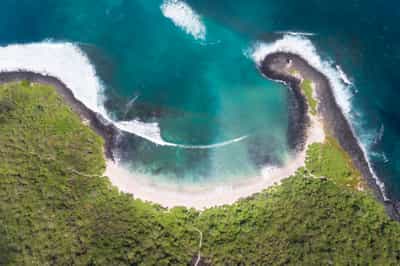
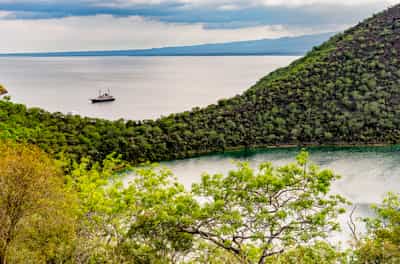
The youngest and largest of the Galapagos, Isabela was formed by the collision of six volcanoes. The crumbling line of rocks is rugged, striking and incredibly dramatic, and, to add a bit more excitement, five of the fiery craters are still active today. Resultantly, the scenery is a mass of twisty-turny lava flows almost entirely devoid of soil or vegetation, and, if you didn’t know better, you might wonder what all the fuss is about… And then, her secrets are revealed. Take a boat up to Tagus Cove, a natural harbour frequented by swash-buckling pirates and buccaneers, and watch the warblers, flycatchers and finches as they parade on by. Then there’s Elizabeth Lagoon and the Marielas Islets, a magnet for sea turtles, rays, pelicans and herons, the magnificent coral reef at Urbina Bay, a snorkeler’s paradise, and the enormous Sierra Negra volcano where hiking trails will lead you past spectacular views and short-eared owls. Last but not least are the Galapagos penguins, the only penguins found north of the equator and Isabela’s highlight. Take a dinghy along the cliffs, moor up in a sandy bay and watch as they tumble into the water and whizz through the waves.

Cuenca

Gaze through a window into the past in intriguing Cuenca, Ecuador’s quintessential historical city.
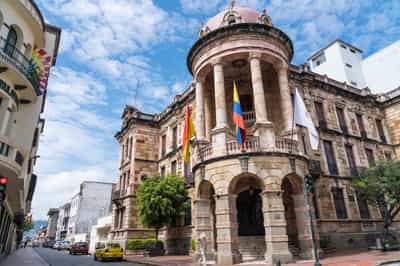
South of Quito, the Andes flatten out into gentle, undulating waves and the mountain vistas of the north are replaced by faraway scenes of burbling brooks and pastures green. This is the southern sierra, a tranquil land where life is laid-back and tourists are still a novelty. At its heart is the town of Cuenca, a beautifully-preserved example of almost 300 years of colonial rule with a UNESCO-designated city centre of cobbled streets and pastel-hued churches. The home of the panama hat (we challenge you to leave without one!), the town today remains a hub for artisans with ceramicists, jewellers and weavers lining the walkways. Beyond the town, the southern landscape unfolds in a unique glory, from the wild, lake-dotted moorlands of Cajas National Park to incredible Ingapirca, the country’s only major Inca ruins. Both are day-trippable from Cuenca and well-worth a visit in your journey around the sierra.

Guayaquil

Stop in this coastal town on your way to Galapagos – and stay for the restaurants and picture-perfect beaches.
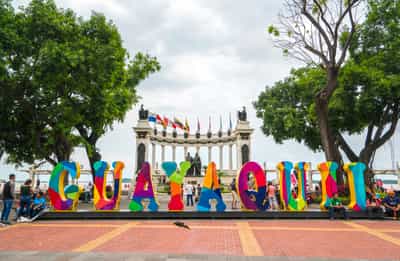
If Quito and Cuenca are romantic and ever-so-pretty, Guayaquil is the flamboyant older sister that definitely wants the limelight. The largest city in the country, it doesn’t hit the guidebooks with quite as much aplomb partly due to its gritty coastal ports and certainly won’t be winning any awards in a beauty contest. Recent years have, however, brought with them trendy restaurants and hotels and the uber-modern Malécon 2000 (the promenade) is the only place to be seen as the sun disappears and the sugar-laden boats jostle to dock. The other side of Guayaquil’s coin is the miles of wave-splashed golden beaches of the Pacific coast. Known as the ‘Route of the Sun’ this southern stretch of coastline is flop-and-drop heaven for holidaying Ecuadorians and visitors. Try Salinas or Playas for luxe resorts and relaxation with a capital R, or head a little further north and whale-watch at Puerto Lopez (visit from June to September for the best sightings), and dip into a world of kaleidoscopic birdlife on the Isla da Plata.
Where To Go
Pin Icon

Namibrand, Namibia