.jpg)
Planning Guides
Africa’s Top Unexplored Destinations
Put your adventure hat on…
Lesotho
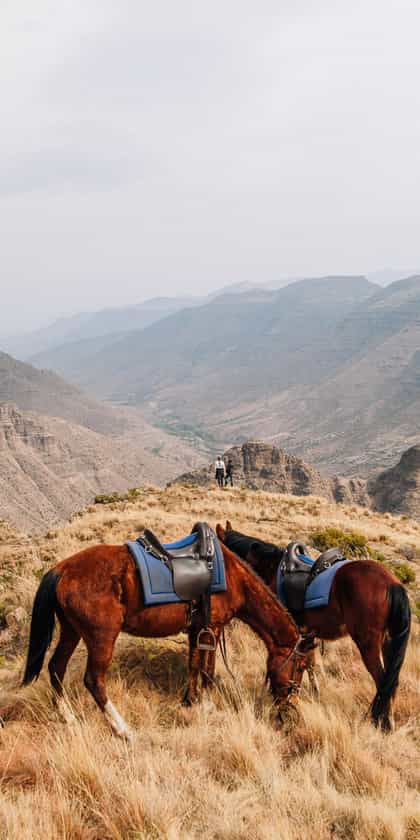
A tiny but mighty mountainous kingdom, expect invigorating scenery and epic hiking and horseback riding in Lesotho.

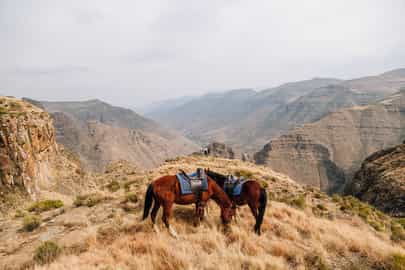
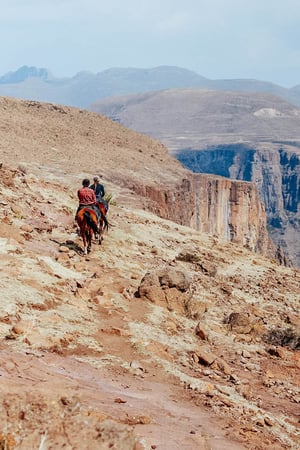
If we could say one thing about Lesotho, it would be that it’s astoundingly underrated. The tiny kingdom is in fact an independent country surrounded completely by South Africa, yet the two couldn’t be more different. Lesotho is a wild, mountainous place (the lowest altitude is 1400 metres above sea level, believe it or not!), with superlative-laden alpine scenery around every precipitous corner. Most travellers on a Lesotho holiday explore the country on multi-day treks through its dramatic hills and traditional villages, on foot or atop a hardy pony. But if you have a day or two either side, don’t leave in a rush – this is a place for taking it slow and enjoying the legendary hospitality and culture of the local Basotho people.

You might not know what to expect, but that’s the beauty of Lesotho. The magic is in its intrigue, and a Lesotho holiday is about spectacular scenery, new activities, warm people and discovering things you didn’t even know existed.

Horse racing is big in Lesotho. In fact, it could well be described as a way of life! If you happen to be visiting on a Saturday, head to Semonkong for one of the best races in the country, and join the crowds to watch the horses and riders jostle and "tripple" (that's like speed walking, for those less knowledgeable about matters equine) their way down the track.

You won’t find any fancy accommodation here; instead, you’ll be treated to cosy mountain lodges with hearty food and even heartier hospitality – and really, that’s better than all the sophistication in the world.
Start with a recommended trip or create one from scratch
Get advice and suggestions to make this your perfect trip.
or call us on: +1 (646) 542 0667
Mountainous Lesotho has some of the most extreme temperatures on the continent, with the mercury reaching plus-40 degrees in the height of summer (January and February), and snow lying on the ground in the depths of winter (June and July)! For general sightseeing, hiking and exploring, the autumn months of March, April and May, and the end of winter and into spring (September to November) are pleasant and balmy and show the kingdom at its best. If you decide to take the plunge and visit in summer to coincide with a trip around South Africa, you’ll be pleased to hear the humidity is low year-round and although the temperatures are scorching, it’s a bearable, dry heat. In winter (June, July and August), the days are cold but usually clear and sunny and it’s a great time of year for skiing – just remember a scarf and gloves!

Wet Season — a quieter time to visit
Wet Season — a good time to visit
Wet Season — a good time to visit
Dry Season — one of the best times to visit
Dry Season — one of the best times to visit
Dry Season — a good time to visit
Dry Season — a good time to visit
Dry Season — a good time to visit
Dry Season — one of the best times to visit
Dry Season — one of the best times to visit
Wet Season — a good time to visit
Wet Season — a quieter time to visit

Getting there Lesotho is completely landlocked by South Africa and, whether you travel by land or air, it will be the starting point. The easiest and most popular route is a one-hour flight from O R Tambo International Airport (JNB) in Johannesburg, landing at the Moshoeshoe I International Airport (MSU), which sits approximately 18 km west of the capital, Maseru. Lesotho can also be reached via multiple land borders should you be on a self-driving or privately-driven trip. Many require a 4WD vehicle including the most scenic route, Sani Pass, which leads out of the South African province of KwaZulu-Natal. Whether you fly or drive into Lesotho, there are no domestic flights once there and the best way to travel is by road or on a trekking or horseback journey (for the truly adventurous).
Health & Safety Please consult your personal physician and/or a travel clinic preferably 6 weeks prior to your departure. Vaccine requirements vary based on your country of origin and your travel itinerary and your previous vaccination history. It is best to consult with your physician or the CDC website for guidelines. Important vaccinations to consider and which may either be required or recommended are: Hepatitis A & B, tetanus, rabies and typhoid, among others. Yellow Fever There is no risk of Yellow Fever in Lesotho; however, vaccination is required for travellers who are arriving from, or have transited through, countries with risk of Yellow Fever transmission (e.g. Kenya, Uganda, Rwanda or elsewhere worldwide). This requirement can change unexpectedly, therefore, we recommend carrying a Yellow Fever card with you at all times. Communication Lesotho country code: +266 Calling overseas from Lesotho: From a landline dial 00 followed by the country code plus area code and number. e.g. USA: 00 1 910 795 1048 When calling from a cell phone dial + prefix followed by the country code plus area code and number. e.g. USA: + 1 910 795 1048 Cell phone service Wi-Fi is limited in Lesotho and it is advised to have a working sim card whilst you travel. It is possible to buy an e-sim online, which negates the need for a physical sim swap. However, you can also buy a local simcard (Vodacom or Econet) at the border or in Maseru.
Money The currency in Lesotho is the Lesotho Loti (LSL). ATMs are available in Lesotho, but if you aren’t spending much time in the capital or larger towns, it’s best to draw enough money to see you through. Please check with your bank for charges and advice when using international ATMs. VISA and Mastercard are the most widely accepted credit cards, while American Express has limited to no coverage. It is advisable to have some cash for smaller shops and for tipping. IMPORTANT: When bringing foreign currency (e.g. USD, GBP, EUR) into the country, be sure to bring the new format with no damage or marks. Gratuities Gratuities are not compulsory or expected; rather it is a reward for excellent service. If you are pleased with the service you receive, you are more than welcome to tip your guide or the staff. Tipping is usually done at the end of your stay. You may tip the staff individually, give the tip to the manager to distribute, or do both. Tips can be made in Lesotho Loti (LSL), USD, GBP or EUR. Gratuities suggestions: Safari camp or city lead guide: $15 - $20 per guest per day Transfer drivers (e.g. in cities or between the airport and hotel/lodge): $5 per guest per transfer Porter: $1 per bag Ranger or any “ancillary” guides on an ad-hoc basis for a specific activity: $5 - $10 per guest per activity General camp staff (put in a central box in each camp’s main area): $10 - $15 per guest per day Waitstaff in a city restaurant: 10% - 15% (large group may incur automatic service charge - please check)
Insurance It is a condition of booking that you carry the correct comprehensive travel and medical insurance to cover yourself, as well as any dependents/travelling companions for the duration of your trip. This insurance should include cover in respect of, but not limited to, the following eventualities: Compulsory Insurance: a. Emergency evacuation expenses b. Medical expenses c. Repatriation expenses Recommended Insurance: a. Cancellation or curtailment of trip b. Damage/theft/loss of personal luggage, money and goods
Visas As a general precaution, we recommend you make several copies of your travel-related documents (passport, traveller’s cheques, credit cards, itinerary, airline tickets, insurance cover, visas, etc). Leave one set at home, and bring another set with you, and place it in a location separate from your originals. Visitors from multiple countries are allowed to enter Lesotho for up to 14 days without a Visa. This includes residents of the UK, USA, Australia, Canada and South Africa. However, it is required for visitors to have a passport, which is valid for at least six months following the end of their trip. Visa requirements change regularly and it is best to contact your local Lesotho embassy regarding the most recent rules. Visa Central is also a good resource.
What to pack Climate The mountainous Kingdom of Lesotho experiences weather extremes quite unlike any other African country. These range from temperatures in the 40-plus category in the peak of summer while snow covers the slopes in winter - perfect for skiing. In between, there are more temperate months and, happily, humidity is never a problem. What to pack • Layers - long and short-sleeve shirts, shorts and trousers • Fleece and something windproof (just in case) • Sturdy hiking boots and comfortable sandals • Warm and cooler, breathable socks • Hat, sunscreen and sunglasses • Swimming costume • Money belt and day pack • Reusable water bottle • Toiletries - most lodges will provide shampoo, shower gel and soap • Spare batteries, plug adaptors and charging equipment • A good pair of Binoculars • Books or a fully loaded Kindle / iPad for siesta time Most camps and lodges will have a small medical and first aid kit, but we recommend bringing your own supply of essentials - cough medicine, plasters, vitamins, aspirin and paracetamol, and anything else you use on a regular basis. Camera Equipment (for the enthusiasts) • A telephoto lens (200/300mm) • Flash and fast film (400 ASA) for night photography • Lots of film (64,100,200,400 ASA) if you’re using an SLR cameras • Spare memory cards for digital cameras • Camera cleaning equipment and a good dust proof bag • Bring spare batteries as although you may recharge your batteries at the camps, charging capacity can be limited Luggage Please check with your airlines for the specific luggage restrictions relevant to your flight schedule. Many international airlines have a baggage allowance of 20kgs or more per person and commercial airlines generally permit two (2) pieces of checked luggage per person. The carry-on bag must be of such dimensions and weight as set by the airlines. Electricity Lesotho uses 220V, 50Hz AC, and sockets take mostly Type M plugs. It is best to bring an adapter/convertor combination.
Lesotho is a unique and fascinating country with multiple claims to fame. Known as the ‘Kingdom in the Sky’, it’s the only country in the world that sits entirely above 1,400 metres – and Lesotho boasts the Highest Pub in Africa at 2,874 metres. It’s also one of just three countries completely surrounded by another. Maletsunyane Falls at Semonkong is the world’s longest single-drop abseil, Sehlabathebe National Park holds one of Africa’s greatest concentrations of San rock art, and Afriski is the sole ski resort in southern Africa.
With proper planning and relevant precautions, there’s no reason why you can’t enjoy a safe trip to Lesotho. In urban areas, which you may transit briefly, there are relatively high levels of crime so ensure you follow your guide's instructions and avoid flashing any valuables. However, the rural highlands where you’ll spend most of your time, are significantly safer. Lesotho has one of the highest lightning-strike rates per square mile in the world, but your guide will be aware of the weather and impending storms when planning outdoor activities. The altitude may affect some travellers and medical facilities are basic, so comprehensive travel insurance with medical evacuation cover is essential. Same-sex relationships are technically illegal under colonial-era laws, though enforcement is rare and most LGBTQ+ travellers visit without difficulty, but discretion is sensible.
Lesotho is a country that warrants being outdoors as much as possible and the very best time to do so is from September to November and March to May. Enjoy temperate days, low rainfall and clear mountain light that makes the landscape look painted. Throughout spring (September to November), wildflowers spread across the meadows and, in early October, the Morija Arts & Cultural Festival arrives in a flurry of Basotho music, dance and crafts. The summer months (December to February) are warm and lush, but expect frequent thunderstorms that roll in fast. Winter (June to August), on the other hand, brings crystal-clear skies and skiing, but it’s excessively cold.
As an add-on to South Africa, spending two to five days in Lesotho works well. Two days gets you the classic Sani Pass experience, travelling from KwaZulu-Natal in a 4x4, with a stop at the Highest Pub in Africa, a village visit and a night in Lesotho. A four-day itinerary allows you time to traverse the Roof of Africa while five days or more opens up Semonkong and Maletsunyane Falls, abseiling and horseback riding, and meaningful time in the high villages.
Self-driving the Sani Pass is entirely possible, as long as you are using a 4x4 and have prior experience with such a vehicle, but we always recommend a guided drive instead. The overall experience is far superior with someone who knows the road at the wheel, with the ability to navigate the many hairpin bends, steep incline and sheer drop alongside. No matter who’s driving, a 4x4 is non-negotiable as the 9km gravel road is intermittently maintained and weather can change conditions quickly. The Lesotho side has been paved in recent years, making exit somewhat easier than entry. Both border posts operate from 6am to 6pm, with the South African side actively enforcing the closing time – miss it and you're stuck.
Despite being small and rather mountainous, Lesotho has a great deal to offer visitors. For first timers especially, horseback riding is a quintessential Lesotho experience, where hardy Basotho ponies take riders where 4x4s cannot go with the option to overnight in highland villages. Visits to villages like this give a heart to the rugged landscape, where you’ll get a feel for life lived at 2,500 metres. Standing at 192 metres high, Maletsunyane Falls at Semonkong is one of the highest single-drop waterfalls in southern Africa and holds a Guinness World Record for its impressive abseil. Linking Sani Pass to Butha-Buthe, the Roof of Africa drive is one of the world’s great mountain road trips, perfect for the adventurous.
Lesotho is a small mountain kingdom located within the border of South Africa, and one of only three countries in the world completely surrounded by another country. It borders the South African provinces of the Free State (to the north and west), KwaZulu-Natal (to the east) and the Eastern Cape (to the south). Lesotho covers about 30,360 square kilometres and is famous for being entirely above 1,400 metres, making it the country with the highest ‘low point’ on Earth.
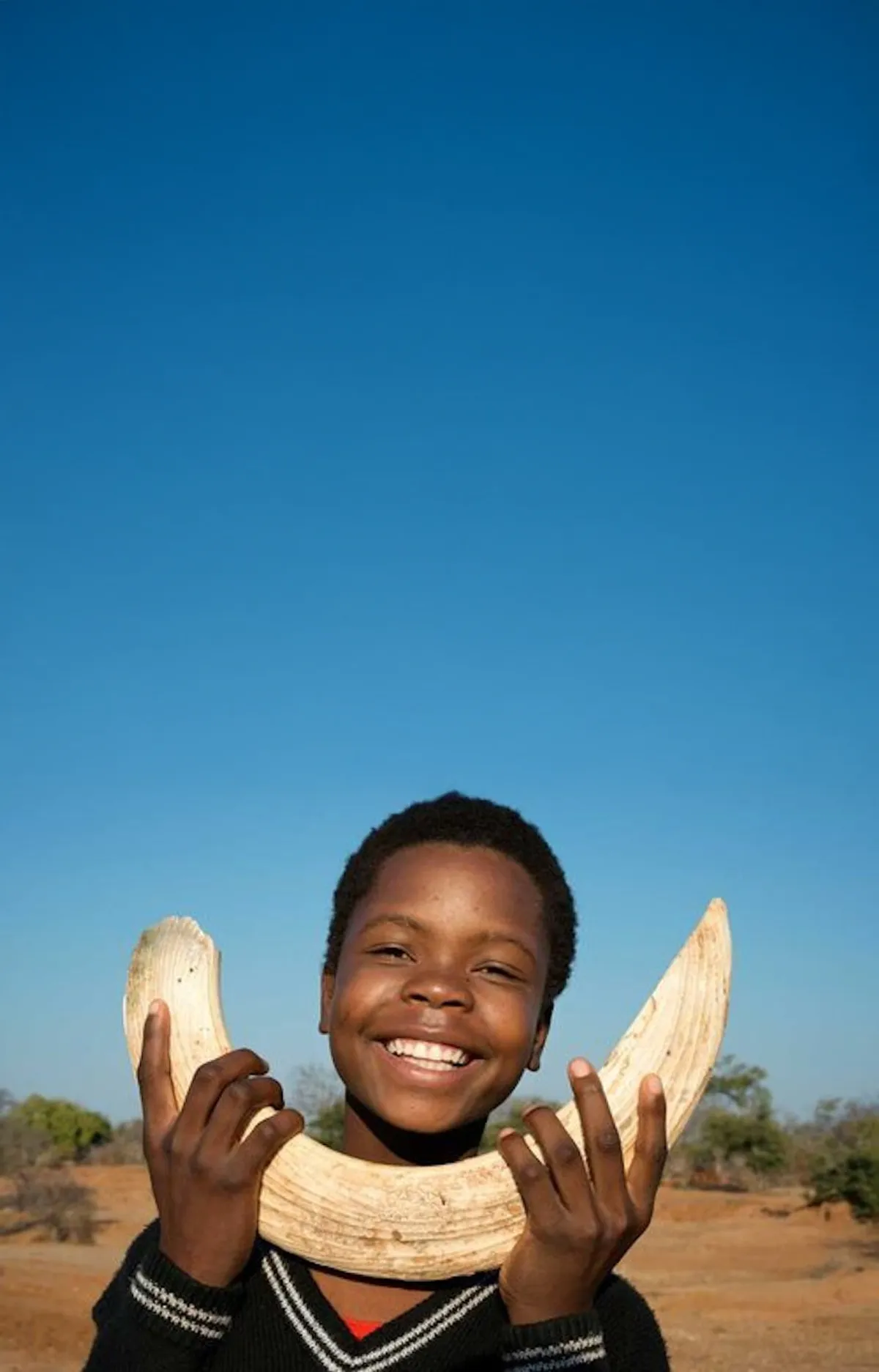
We’re big believers in leaving a positive impact in the countries in which we operate. We’re proud to donate $50 for every booking to projects focusing on female empowerment, tech education, conservation, and so much more.
Our dream is to empower our guests to travel with a purpose.
So far, we’ve donated $107,000 to projects across the globe.


Why travel with Timbuktu?

We've been crafting one-of-a-kind journeys since 2014 — over 2,500 trips across 40+ countries, each one built from scratch around your interests and dreams.

Our team only recommends places they've slept in, eaten in, and happily keep going back to. Condé Nast Traveler named 11 of them Top Travel Specialists in 2026, and Travel+Leisure made three A-List Advisors.

Travel+Leisure's readers voted us the World's No.1 Tour Operator in 2024 and No.2 in 2025 — the travel industry's biggest readers' award, judged by people who actually travel.

$50 from every booking goes to female empowerment, tech education, and conservation projects across the countries we love. We have donated $78,000 so far – and it's going up!
Your travel specialist is with you the whole way, dreaming up the trip, building the itinerary, checking you in, and answering the 2am question from the other side of the world..

We are rated 4.9 out of 5 from 1007 verified Feefo reviews. And these are the words of people who actually went, not us talking about ourselves.
11 Condé Nast Traveler Top Travel Specialists 2026

No. 1 & No. 2 Tour Operator in Travel + Leisure's Best Awards 2024 & 2025

Best Booking Platform in Women's Health Travel Awards 2025

Travel Specialist voted as Latin America A-List Travel Advisor 2025
"Timbuktu can take relatively complex and slightly amorphous travel plans and transform them into a well-organized, perfectly tailored trip."