We're one of the World's Best Tour Operators!
Named three years running in Travel+Leisure World's Best, including No.1 in 2024
Safari greats, coastal beauty spots & the allure of Cape Town (and its winelands!) are all yours on a spectacular South Africa trip.
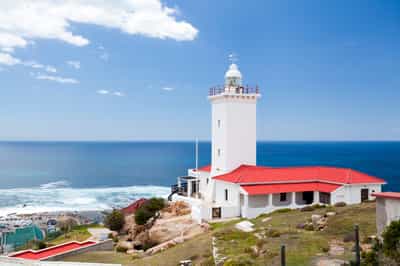
About 4 hours from Cape Town, and holding the oft-debated title of the ‘official’ start of the Garden Route, is Mossel Bay. A harbour town through and through, there’s something of an old-school seaside vibe around, with plenty of ice cream kiosks and fish and chip stands, lively restaurants, and the Point, a quaint promontory where afternoon strolls are mandatory. With a good range of places to stay ranging from budget to (relative) luxury, the town is popular with backpackers starting their Garden Route adventures, and surfers taking advantage of the gnarly waves. If you’re in town for a night or two, it’s one of the best spots along the Garden Route for shark cage diving, and if that’s your cup of tea, you might be interested in sky diving or sandboarding too. Otherwise, head to the beach, source a locally-distilled gin, and enjoy some R&R.
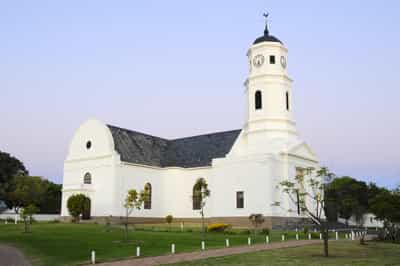
Founded in 1811, George is the largest city on the Garden Route and, surprisingly, the second largest in the Western Cape after Cape Town. Sitting smack bang between the Mother City and Port Elizabeth, it’s often considered the ‘capital’ of this treasured route and a good base for stocking up on supplies or from which to visit the star attractions further afield. The centre of the town, although sprinkled with a handful of pretty buildings, is functional more than anything and the real fun in George happens in the nearby golf resorts. Framed by the Outeniqua Mountains and surrounded by forests and lazy streams, they are luxurious and fun, and razzle-dazzle restaurants and spoiling spas are never far away. If you do enjoy a round or two, the courses are world-class and often play host to major events throughout the year, so you never know when you might find yourself practising your swing next to a PGA professional…
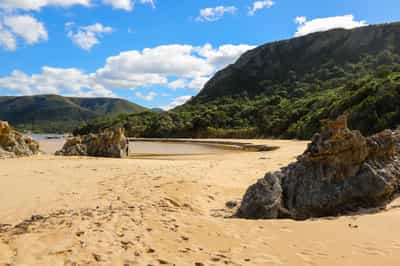
If you’ve heard of the Garden Route, then let us introduce you to Route 62 and the Klein Karoo. The ‘alternative’ to South Africa’s iconic costal drive, the Klein (or Little) Karoo offers a dramatic journey through the back country of South Africa, beginning from the town of Montagu and unspooling 290-kilometres to the east, through wildlife reserves and dust-blown towns. Characterised by wild, wonderful and colossal swathes of open countryside, there are orchards, vineyards, livestock farms and ostriches to peer at as you drive, but it’s the mountains that dominate the terrain, offering offer up vertiginous passes (and astounding views) to challenge any hire car. As could be expected, the peaks offer excellent hiking and walking trails, from the extreme to the gentle, however the charisma of the Klein Karoo really lies in its towns. From tea shops in converted Victorian gables and art-laden galleries to weavers, potteries and fruit farms, there’s treasure hiding in the unlikeliest of places – and that’s exactly the charm of this fascinating piece of hidden of South Africa.
One of the original nature reserves within the Greater Kruger region, Thornybush is wonderfully diverse in its landscape, a beautiful open savannah dotted with acacia trees that merge into riverine forest and offer a home to a whole host of wildlife. Thornybush has begun to rival the Sabi Sands in its leopard encounters and African-painted dogs are regularly sighted. Thornybush is also deeply committed to conservation efforts including in-depth studies on pangolins, the most endangered animal on Earth, while also working hand-in-hand with local communities. The reserve boasts a collection of gorgeous, high-end properties, which promise unparalleled hospitality and style, and expert guides who will unveil the hidden secrets of the bush.
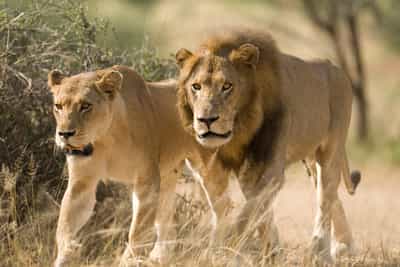
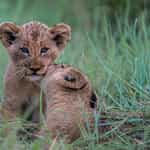
This 53,000-hectare reserve has achieved icon status in the Greater Kruger area, sharing an unfenced border with the national park, allowing the region’s incredible wildlife to move freely over miles of land. The reserve forms part of a bushveld region that was barely ever touched by humans, making it a genuine wilderness without the marks left by man. Most safari aficionados have no doubt heard of Timbavati’s white lions – after all, it’s the only place in the world where they occur regularly and completely naturally. Beyond these remarkable creatures, it is also home to the rest of the Big Five, as well as giraffe, wildebeest, cheetah and African-painted dogs. Most exploring is done in a game vehicle or on foot, between the marula and knobthorn trees that dot the grasslands. The reserve is also well-known for its conservation efforts, helping to protect white rhinos, pangolins and endangered birdlife. When you’re not safari-ing, there is a menu of stylish properties that ensure your comfort levels are always at 100%.
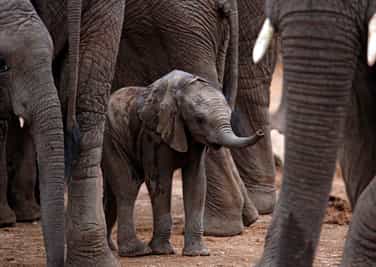
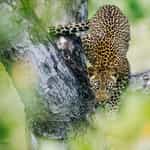
With 50 kilometres of unfenced border shared with the Kruger National Park, Sabi Sands Reserve forms part of an incredible labyrinth of natural pathways for the region’s iconic wildlife. It’s one of the most well-known and wildlife-filled reserves in the Greater Kruger area and sits just to the west of Kruger National Park. The reserve is so large it can be split into two and the northern section has the lion’s share of the more wallet-friendly lodges, which are scattered across a variety of smaller reserves. Much of the northern region is classic safari terrain: vast stretches of open grasslands dotted with acacia trees, where all manner of plains game roam, as well as elephant, buffalo and big cats on the prowl. Sabi Sands is most famous for its prolific leopard sightings, especially along the two rivers the reserve is named after.
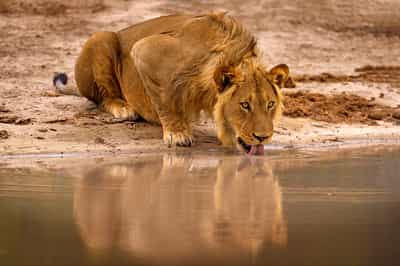
Meaning the ‘place of the stars’ in the local Shangaan language, Manyeleti encapsulates the wide open skies and spectacular wilderness of the Kruger, while remaining relatively undiscovered. Wedged between the more famous Timbavati and Sabi Sands reserves, and sharing an entirely fenceless border with the Kruger National Park, the plains game viewing is superb as well as the birdlife – there are over 450 species including African grey hornbills, southern carmine bee-eaters and the coveted kori bustard. The reserve is also known for its sightings of African-painted dogs and prides of lions, which are well-known by the guides. With less than 10 properties across 23,000 hectares, safaris in Manyeleti are intimate and authentic and guides take the time to explore the landscape in the finest detail on game drives and bush walks.
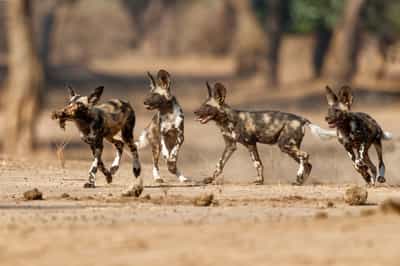
Sitting beneath the gaze of the distant Drakensberg Mountains, Makalali promises a stupendous safari with a real focus on conservation and sustainability. With just a handful of seriously stellar camps and lodges scattered across 26,000 hectares, your visit is guaranteed to be intimate and memorable, free of over-crowded waterholes or vehicles jostling for a look. Its most famous accommodation is, of course, Garonga, which sets the standard in these parts. The reserve has an array of habitats from savannah grasslands where zebras, wildebeest and antelope munch and big cats wait for their moment to pounce, to riverine forests, a favourite spot for elephants and elusive leopards. Being a private reserve, your safari will be enhanced by the chance to spy nocturnal wildlife on night drives or appreciate the smallest details on a bush walk. You may even be lucky enough to see both black and white rhinos!
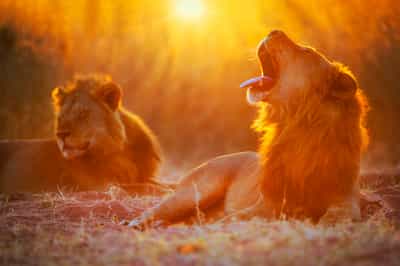
Sharing a fenceless border with the Kruger National Park, Klaserie is one of the largest privately owned reserves in South Africa, spanning a whopping 60,000 hectares. Diverse terrain and foliage provide a home for an incredible menagerie of animals from gentle plains game and secretive rhinos to big cats. The shimmering Klaserie River snakes its way through the vast terrain, where hippos and crocodiles dwell and elephants arrive in their numbers. Klaserie is beloved for its exclusive, off-the-beaten-track wilderness experience with only two vehicles allowed at an animal sighting at a time, and a fantastic array of bush walks on offer. Accommodation choices range from utterly luxurious to true bush-style lodges – and some even have the option of a sleepout beneath the stars, the sounds of the wild all around you. The Klaserie Reserve is also recognised for its outstanding conservation projects, protecting everything from the humble hornbill to rhinos.
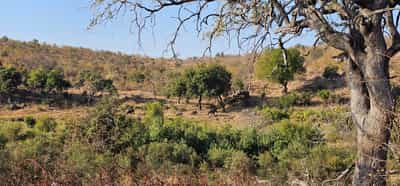
Spanning 9,000 hectares in the foothills of the Drakensberg Mountains, Karongwe is a small reserve at the very edge of the Greater Kruger area. Its undulating and diverse landscape makes an ideal home for a whole host of creatures including the Big Five as well as all sorts of antelope, giraffe and hippo. With over 360 bird species, the reserve is a twitcher’s paradise and you’ll spot everything from soaring Martial eagles to Little bee-eaters. Guests on the reserve can get involved in several conservation initiatives, including the chance to track and observe cheetah, or the highly effective anti-poaching programs. Accommodation-wise, you can choose from a variety of intimate camps and lodges from high luxury to family-friendly – and everything in between.
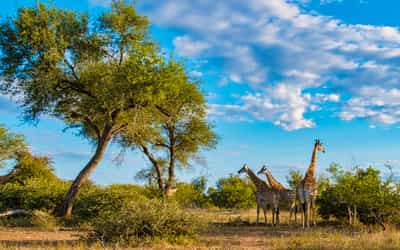
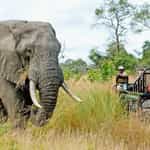
One of the oldest wildlife reserves in the world, the Kruger National Park spans two million hectares (it’s roughly the size of Wales) of veld and forest and is home to around 147 species of mammal and over 500 birds. Boasting a whopping 70% of the biodiversity, and only encompassing 1% of the total land mass, the ‘north’ is a tiny section at the very northernmost tip of the reserve. It’s worth noting, however, that while you will see plenty of elephants and buffalo, lion sightings are unlikely. The region is a twitcher’s paradise and you’ll find some of South Africa’s most sought-after birds up here including the rare Pel’s fishing owl. The landscape also has some stand-out features including a lush fever tree forest, Lanner Gorge – a favourite spot for sundowners – and Crooks Corner, the meeting place of South Africa, Mozambique and Zimbabwe with a rather shady past. Now owned by the original Makulele community, but leased out to various lodges, this corner of the Kruger also has a fascinating history to be discovered. With few road networks, bush walks are very special in this area, offering a real feel for the wild.
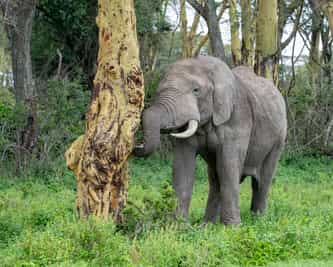
A UNESCO World Heritage Site known for its head-spinning wildlife and authentic safari experiences, the Kruger National Park is one of South Africa’s treasures. Bordered by the Crocodile River in the south, the Sabie River in the north and the rugged Lebombo Mountains in the east, the Southern Kruger is easily accessible through multiple gates and is one of the most popular sections of the park. In its sheltered valleys, there are trees rarely seen anywhere else in the Kruger including luscious Cape chestnuts, mountain seringa and lavender fever-berries, while the grasslands are peppered with granite kopjes, popular amongst klipspringer, baboon and rhino & leopard. The south has exceptional numbers of wildlife, attracted by its diverse landscapes and rivers and is particularly famed for its big cat sightings.
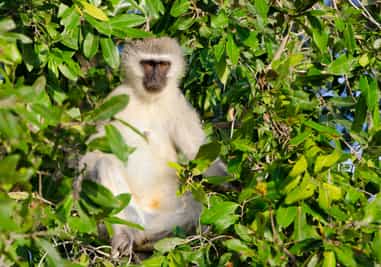
Once productive farmland, Balule Private Game Reserve is today 40,000 hectares of wilderness where all manner of creatures roam including the iconic Big Five. Entirely separate from the Kruger National Park, Balule is a conglomeration of private game farms and reserves, bisected by the ever-flowing Olifants River. The reserve is private, thus allowing off-roading game drives and you’ll often find yourself crunching through the bush in an open-sided game vehicle, feeling like nature couldn’t be closer. The wildlife is quite used to human visitors, making for outstanding photography, and, while the sightings maybe aren’t as prolific as some of Balule’s neighbours, your chances are fantastic for seeing elephants, buffalo and lions as well as the ‘Big Six’ of raptors. As for the choice of accommodation, there is everything from the most intimate, down-to-earth camps to wonderfully luxurious lodges.
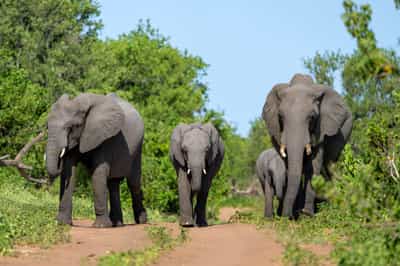
Supremely easy to access (you can even fly into the private airstrip), Kapama Private Game Reserve is a fenced-in wilderness area, separated from the vast expanse of the Kruger. Mostly made up of grasslands, forested riverbanks – it’s crossed by two winding waterways – and woodlands, Kapama is home to impressive amounts of wildlife including elephant, giraffe, zebra, buffalo and prides of lions. There are just six properties within the reserve, with amenities and styles to suit all tastes. As a private fenced reserve, Kapama extends your safari experience with night drives, boat cruises and guided bush walks, where you can get to know the landscape and its inhabitants in a far more intimate way. The reserve is home to around 350 species of birds, so keep your eyes peeled for beautiful flashes of colour as you explore.
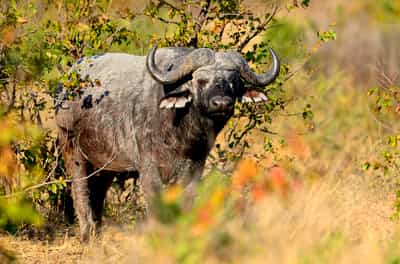
Surrounded on every side by beautiful wilderness, Hoedspruit serves up South African warmth with a good dollop of adventure. Whether you’re there as a stopover on your way to the Kruger or one of its many private reserves, or using the town as a resting spot between epic excursions into the countryside, there are plenty of places to stay. When it comes to the latter, choose to traverse the aptly-named Panorama Route, which will take you along the draw-dropping views of the Blyde River Canyon (the third largest in the world) and its many viewpoints, canyoning beside cascading waterfalls or hot air ballooning above it all. Hoedspruit and its surrounds are also well-known for fantastic bird watching, if you fancy a little more time with the wildlife.
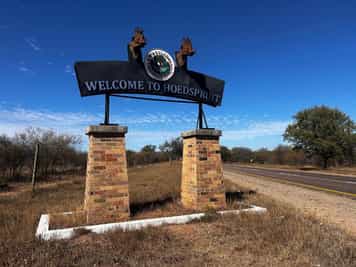
A quaint little town in South Africa’s Mpumalanga province, Hazyview is the gateway to some of the area’s most spectacular sights including the Kruger National Park and Greater Kruger area, which is about a 20-minute drive away (depending on where you’re headed, of course). Pre- or post-safari, there’s plenty more to do, especially for the outdoorsy, including white water rafting, ziplining and mountain biking. You can also enjoy the striking vistas along Blyde River Canyon and the Panorama Route at standout spots like God’s Window, the Three Rondavels and the intriguing Bourke’s Luck Potholes, and explore the region’s fascinating rock art. The area is also known for its stunning sunrises and sunsets, often shrouded in a hazy mist, which gave the town its name. Whilst you’re in Hazyview, there is also a collection of lovely restaurants and markets to explore.
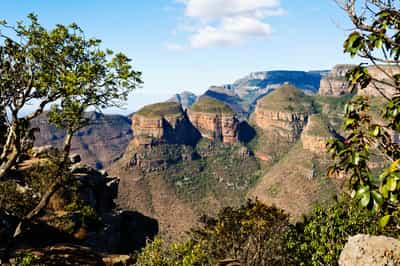
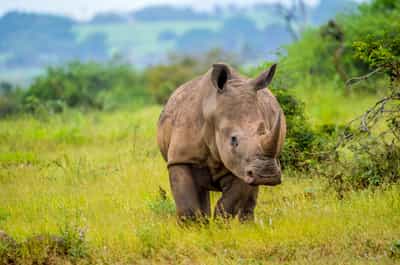
Africa's oldest proclaimed reserve is a testament triumph against all odds. Set in the heart of Zululand, this rolling landscape of thorny acacias and grassland valleys once served as the royal hunting grounds of King Shaka. Today, it's famous for bringing white rhinos back from the brink of extinction and hosts one of Africa's densest populations of both black and white rhino. The park's varied terrain, from the hilly thornveld of Hluhluwe in the north to the more open plains of Imfolozi in the south, creates diverse habitats perfect for the Big Five and a supporting cast of plains game, topped with exceptional birding opportunities.
A pristine coastal wilderness where four lakes connect to the Indian Ocean through an intricate system of channels, Kosi Bay is a slice of Africa untouched by time. Here, gin-clear waters host traditional Thonga fish traps – delicate wooden structures that have remained unchanged for generations. The surrounding coastal forest harbors rare palm groves and birds found nowhere else in South Africa, while the protected waters offer sanctuary to sea turtles, dolphins, and a kaleidoscope of tropical fish.
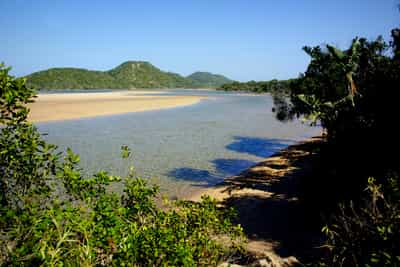
Stretching along 220 kilometres of pristine coastline, iSimangaliso lives up to its isiZulu name meaning ‘miracle and wonder’. This UNESCO World Heritage site is an intricate mosaic of habitats, from coastal dunes and coral reefs to grasslands and wetlands. Lake St Lucia forms the park's centerpiece – Africa's largest estuarine system, home to 800 hippos and 1,200 crocodiles. The coastal waters host migrating whales and nesting turtles, while inland sections are home to leopards, elephants, and over 520 bird species. It's a place where you might spot a whale from forest-clad dunes or watch hippos sunbathing on pristine beaches in a single day.
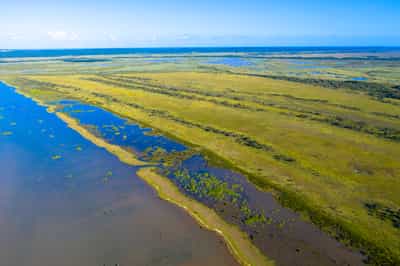
Aptly named 'Well Found', this 37,000-hectare wilderness emerged from humble farmland in 1993 to become one of the Waterberg's most remarkable conservation success stories. Mother Nature has reclaimed her territory with gusto - internal fences have vanished, ancient migratory paths have reopened, and wildlife now roams freely across the reserve. From rolling hills to dramatic gorges, it showcases the rich tapestry of Limpopo's wild heart. While you might share your encounters with fellow safari-goers, the stunning variety of creatures - from tiny steenbok to lumbering elephants - makes every drive a proper adventure.
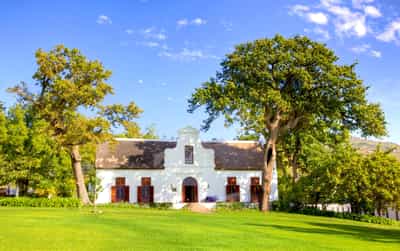
South Africa's third-oldest town sits at the foot of the Langeberg Mountains in the heart of the Overberg, and it is, in the best possible way, exactly what it looks like: oak-lined streets, whitewashed walls, thatch roofs, gardens spilling over fences, and a pace that hasn't been in any particular hurry since 1743. The Drostdy Museum anchors the heritage end of things – a beautifully preserved magistrate's complex with yellowwood floors and cow-dung kitchen finishes that no restoration project would dare invent. But the town is lived-in and unstuffy, with good restaurants, art galleries and pottery studios tucked between the historic buildings. Bontebok National Park lies minutes away, its fynbos plains grazed by the once near-extinct bontebok and Cape mountain zebra, while the Marloth Nature Reserve offers everything from a riverside stroll to a demanding six-day traverse of the Langeberg ridge.

Tucked away in the Overberg, a three-hour drive from Cape Town, this coastal reserve remains gloriously under the radar. The setting is dramatic: towering white dunes sweep down to a pristine 70-kilometre shoreline, while inland, the De Hoop Vlei – South Africa's oldest Ramsar wetland – shimmers with flamingos and pelicans. From June to November, southern right whales arrive from Antarctica to calve in the protected waters, with up to 350 visible at once from the heights of Koppie Alleen. The Potberg cliffs shelter the Western Cape's last remaining colony of Cape vultures.


Namibrand, Namibia