Travel and Leisure Worlds Best Awards for number 1 tour operator in the world 2024 and number 2 tour operator in the world 2025
We're one of the World's Best Tour Operators!
Voted No.1 in 2024 and No.2 in 2025 by Travel+Leisure
Experiences

Walking safari experiences

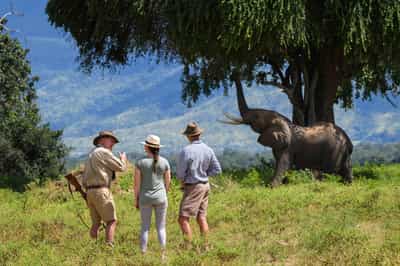
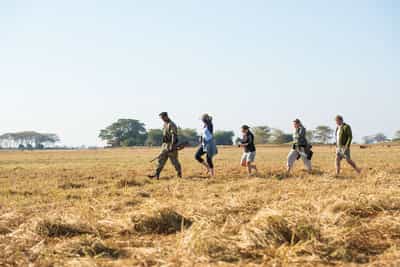
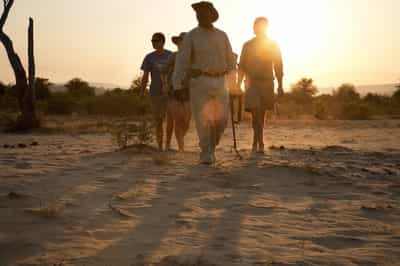
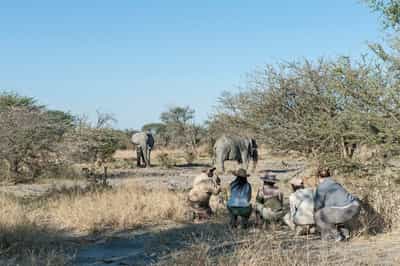
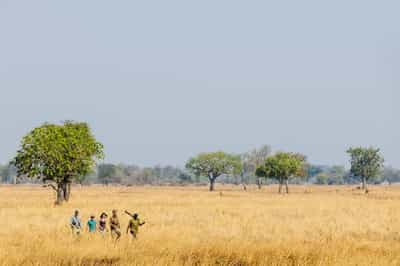
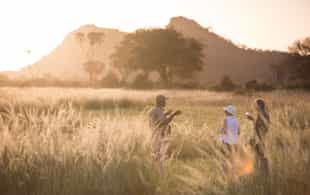
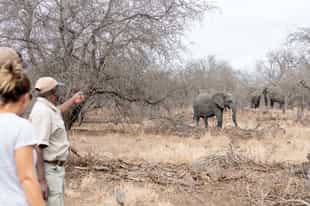
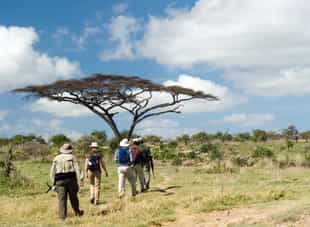
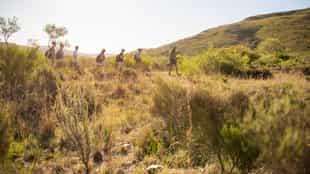
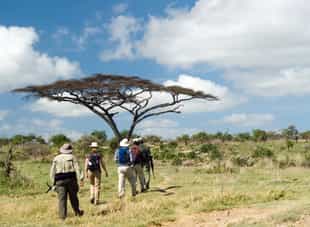
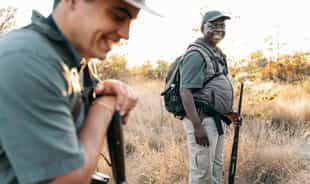
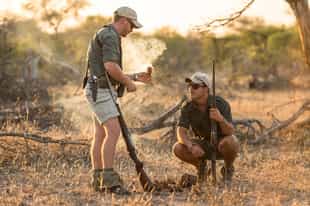
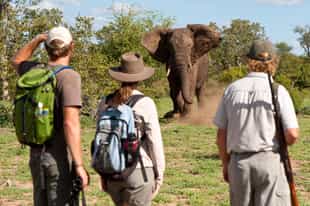
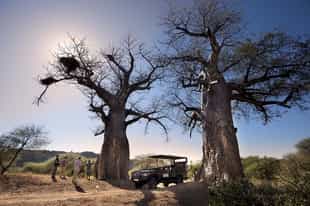
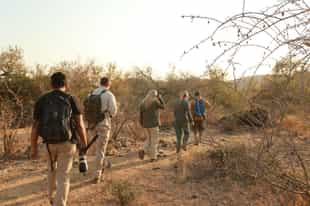
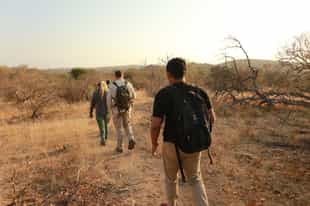
There's no more intimate way to explore the wilderness than on foot, with only a pair of binos and an expert guide. Test your stamina on a heart-pumping, camp-to-camp expedition spanning several days, or take a leisurely morning stroll that ends back at camp before lunch. For us, foot safaris are all about appreciating the little moments – the call of a francolin, the fresh smell of elephants nearby, the alarm call of a kudu, or lions roaring in the distance. At Timbuktu, our favourites include the undisputed king of the walking safari, Zambia, with Botswana and southern Tanzania a close second.
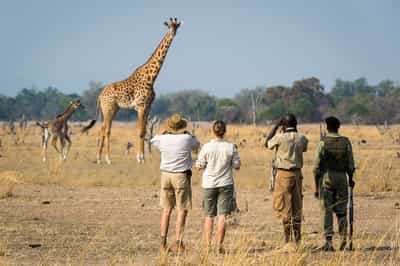
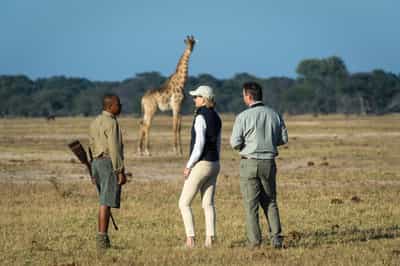
Go on a guided walking safari in South Luangwa

Stride out among the animals and experience the bush from their perspective
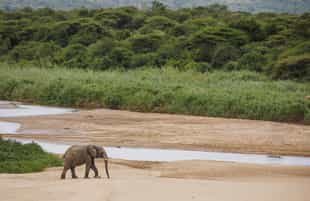
Pioneered by the legendary conservationist Norman Carr in the 1950s, South Luangwa is the birthplace of the walking safari. You'll be led by a park ranger and expert guide, trained to decipher the tiniest detail and predict an animal's movements, often leading to moments unique to a walking safari. And your guide has a bank of knowledge to go with every discovery. Along the way, you'll cross rivers in between herds of elephant and spy on leopard dozing in a tree, stopping occasionally to examine the handiwork of a dung beetle, admire the birds, or for a well-earned cup of tea. Seeing wildlife undisturbed and in their own element, from the smallest critters to the biggest, this is a walking safari in South Luangwa. Leave at first light to catch the animals at their most active and you'll be out for around four hours. For the most comfortable and lucrative conditions, June to September is the best time to go. Don't miss this Timbuktu favourite!

Go on a guided walking safari in Hwange

As one of the oldest wildernesses in Africa, Hwange is certainly worth taking a closer look and that's exactly what you'll do on a walking safari. Hwange's diversity of landscapes - from the water-logged pans to wind-swept Kalahari sands, and the wildlife that roams between them is staggering. Your sure-footed guide will lead you on a journey of following tracks, listening for calls (and learning what they mean) and examining the tiniest details to learn their secrets. And you're bound to encounter the stars of Hwange, the elephant who march grandly across the plains and, sometimes, through camp! After refreshments and a spot of sky-gazing, you'll return to base.

Go on a guided walking safari in Mana Pools

In Zimbabwe, elephant reign supreme and nowhere more so than Mana Pools, which occupies prime land beside the Zambezi River. Apart from the hazy blue forests of Ana trees, the area is rather sparsely vegetated, making it perfect for a walking safari with few hiding spots. Your guide is highly trained in understanding wildlife dynamics and how to find the myriad animals, while remaining mostly undetected. Using the clues left behind by wildlife, you may be walking quietly through the forest when an elephant stands on its back legs to reach the treetop bounty or follow a pack of African painted dog on their travels, sometimes getting within a few meters. Much of the wildlife is quite used to humans tramping through the park! Stop for chilled drinks while a herd of buffalo grazes downwind before returning to camp. The driest, safest and most rewarding time for a walking safari is between May and September.

Track wildlife on a guided walking safari in Kafue

As Zambia's largest park, Kafue may seem more suited to all-day game drives, but walking safaris are one of its hidden gems...Picture strolling across the flood plains in the early morning light without another soul around for miles, heaven! With your seasoned guide leading the way, put your walking boots to good use as you explore this exquisite wilderness, spying huge herds of red lechwe, cheetah speeding to catch their prey and learning to read the signs these creatures leave behind. Without the rumble of an engine or clues given over walkie-talkie, you'll get back to the roots of a safari. The best time to see the most wildlife is, of course, the dry season (May to October) and September is especially good for avid birders.

Spot wildlife on a Nyerere National Park walk

The Selous is the largest game reserve in Africa and indeed the world. The reserve is named after the famous hunter and military scout who was killed here by a German sniper’s bullet during WW I. Kenyan conservationist Richard Bonham made walking safaris here the gold standard, exploring the place in the 1980s with the most intrepid of clients. Walking in the Selous has always been about a state of mind and not body or the distance covered; it is an opportunity to exercise the senses, to unload the burden of modern contraptions and the yoke of occupational stress.

Track rhino on foot with an armed guide in Matobo

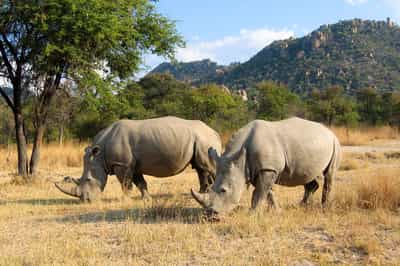
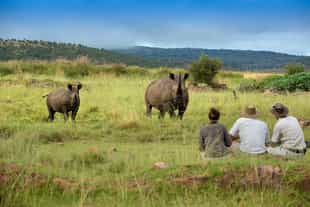
A tiny park in Zimbabwe's south, Matobo may not have appeared on your radar before, but it happens to be one of the last bastions of wild black and white rhino. With an armed guide to lead the way, you'll set out by foot or 4x4 to explore the lush, forested landscape of Matobo Hills where rhino roam amongst the trees and craggy sentinels. Whether it's an hour or four, it's worth spending the time to find these tough-skinned creatures and watching as they enjoy their protected home. It's not every day you have the chance to get this close to a rhino!

Discover smaller wildlife on a Savuti bush walk

Join your all-seeing guide as you learn to follow the scent of trampled grasses and tracks imprinted into the earth on a captivating bush walk. Leaving camp in the coolness of the morning, there's no better way to take a deeper look at this microcosm of nature. Eye out in-the-process birds nests and spot their brightly coloured builders - don't miss the flight of a lilac breasted roller, watch the scuttle of a beetle amongst the bark of a Marula tree and learn how to follow the hoofprints of a warthog who may just burst out of its burrow. You could even spy an African painted dog scampering across the sand!

Walking safaris in Luambe National Park

Discover the real magic of Luambe on foot, away from the thrum of an engine.
Luambe is simply made for a walking safari, be it an active morning leg stretch or a gentle afternoon stroll. When you step off the vehicle, it’s time to learn about the smaller creatures of the bush, the way they interact and what happens behind the scenes. And believe us, there’s a lot to learn and it’s endlessly fascinating.

Explore Odzala's rainforests on a guided walk

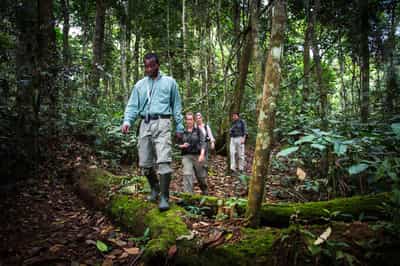
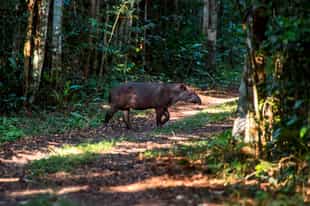
As far as you can get from the beaten track, the forests of Odzala are lush and home to over 100 species of mammal and 400 species of birdlife, best explored on foot. Head off with a private guide, who knows this forest like their own home, to explore groves of palms and towering trees, cross stretches of savannah, and walk beside quiet streams, keeping your eyes peeled for the 'Forest Five' - bongo, western lowland gorilla, forest elephant and buffalo, and the giant forest hog. Have your camera and binos at the ready to capture these creatures in action and, depending on the time of day, enjoy a cooling dip in the stream or sit with your feet in the water as you sip on a sundowner.
Previous Next
-89 - -60 of 100 experiences
}
Where To Go
Pin Icon

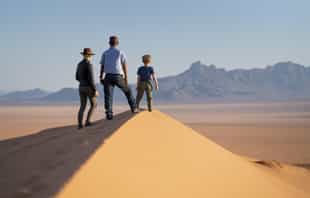
Namibrand, Namibia