Champagne trips and tours
Champagne
Champagne

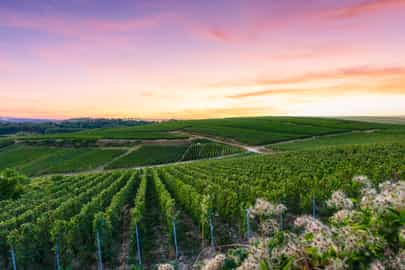
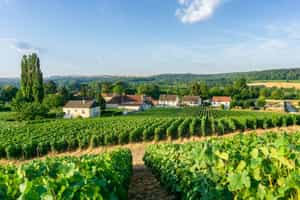
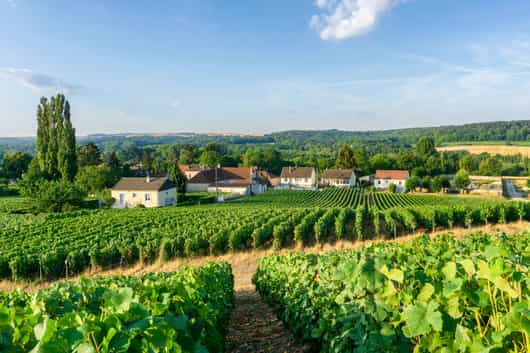
Chalk is the whole story here. It drains the vineyards, it gives the wine its nerve, and it made the cellars – pyramid-shaped quarries first cut by the Gallo-Romans in the third century, worked for a thousand years after, then joined into a labyrinth beneath the Saint-Nicaise hill in Reims. Down there it's a steady 11°C, pitch dark, and the quiet is total. Above ground, Reims Cathedral has crowned twenty-five French kings and now holds Chagall's deep-blue windows in the apse behind the altar. Half an hour south in Épernay, the Avenue de Champagne runs barely a mile of nineteenth-century mansions with around 200 million bottles resting beneath the tarmac, which is why people who live here call it the most expensive street in the world. Then come the growers. Some 16,000 families farm nine-tenths of the vines, and the small ones bottling their own are where this region gets properly interesting: one village, one plot, a person who can point at the row your glass came from. The big houses sell consistency. The growers sell place. Give both an afternoon.
Start with a recommended trip or create one from scratch
Get advice and suggestions to make this your perfect trip.
or call us on: +1 (646) 542 0667
Champagne is best approached with a clear diary and someone else doing the driving. Start in Reims, where French kings were crowned beneath the cathedral's 2,300 statues, then follow the vines to Épernay's Avenue de Champagne, where the grandes marques line up like debutantes. Head down into the chalk cellars of Moët & Chandon for a tasting (stay on for dinner at the Maison), or visit a family-owned estate to blend a cuvée of your very own. Prefer smaller producers? Pedal between vineyard villages on a private bike tour and taste with families who've worked the same slopes for generations. The cellars hover around 10°C all year. Bring a jumper. Leave room for one more glass.

That first mouthful taken in the cellar itself, eleven degrees and thirty metres below the street, where the wine has sat in the dark for years waiting for you. It does rather spoil the supermarket stuff forever.

Drive two hours south to the Côte des Bar, where a quarter of all Champagne's vines grow on the same Kimmeridgian rock as Chablis and nobody makes a fuss about it. Les Riceys is the only commune in France entitled to three appellations, one of them a still pink wine so scarce it barely leaves the village. Renoir summered twenty minutes up the road at Essoyes, and the studio he built at the end of the garden is still standing.

Champagne doesn't look like Burgundy and won't pretend to. Much of it is flat cereal country, and Reims lost roughly 80 per cent of its buildings in the First World War, so the city you walk through is a rebuilt one (the Art Deco that went up in its place is rather good, mind). The scenery here is underground.
Winter Season — a quieter time to visit
Around 22 January, villages across the Marne honour Saint Vincent, patron saint of winegrowers, with processions, Mass and a long, lively lunch.
Some smaller houses and growers close for part of the month and restaurants take their own holidays, so book tastings well ahead.
Pruning is under way, and smoke curls from the wheelbarrow braziers growers push between the rows to burn their vine cuttings.
A low winter sun sets Marc Chagall's sapphire-blue windows glowing in Reims Cathedral, and you'll share the nave with a handful of locals.
Winter Season — a quieter time to visit
Still wintry at 8°C / 46°F, with damp, misty days and the odd dusting of snow across the Montagne de Reims.
Common cranes begin their return migration in late February, and the skies over Lac du Der fill with bugling V-formations heading north-east.
A steaming bowl of potée champenoise, the region's smoked pork, cabbage and root vegetable stew, makes a fine case for a long lunch.
Quiet cellars mean more time with the people who make the wine, and small growers along the Côte des Blancs often pour for you themselves.
Early Spring Season — a good time to visit
Spring edges in with 12°C / 54°F afternoons, blustery showers and noticeably longer days by the end of the month.
Growers finish pruning and tie the canes to the wires by hand, a painstaking job you can watch from almost any vineyard lane.
Hotel rates stay gentle until Easter, so March rewards the early bird with good-value rooms in Reims before the season hits its stride.
Spring Season — a good time to visit
April in Champagne is fresh and changeable, around 16°C / 61°F by day, with chilly nights and the vines just waking up.
Budburst arrives around mid-April, and pale green tips unfurl across some 34,000 hectares of Champagne vineyards.
Pedal the flat towpath beside the Marne from Épernay to Aÿ, pausing at the pinot noir village where Bollinger has made wine since 1829.
Late frost is every grower's nightmare, and on the coldest nights you might spot candles or wind machines flickering among the vines.
Late Spring Season — one of the best times to visit
May is one of the best times to visit Champagne: 19°C / 66°F days, lime-green vineyards and evenings that stretch well past 9pm.
The Fêtes Johanniques fill Reims with a medieval market, jousting and a coronation parade in honour of Joan of Arc, usually at the very end of May.
Regalia returns in late May, a free ten-minute show of light and music projected onto the west front of Reims Cathedral after dark.
Terraces reopen along Épernay's Avenue de Champagne, so you can sip a glass outside the grand houses whose cellars run right beneath your feet.
On 7 May, Reims marks the anniversary of Germany's surrender in 1945, signed in a schoolroom now preserved as the Musée de la Reddition.
Early Summer Season — one of the best times to visit
June is the region's sweet spot: warm at 23°C / 73°F, with around 16 hours of daylight and far fewer visitors than at harvest time.
The vines flower in June, and growers reckon on roughly 100 days from bloom to harvest (ask anyone in a village bar for their guess).
Hike the beech and oak woods of the Montagne de Reims regional park to the Phare de Verzenay, a lighthouse marooned in a sea of vines since 1909.
The Flâneries Musicales de Reims brings classical concerts to basilicas, parks and grand townhouses from mid-June into July.
Long, light evenings suit a picnic above Hautvillers, the hillside village where Dom Pérignon lies buried in the abbey church.
Peak Summer Season — one of the best times to visit
Champagne in July is warm and bright at around 25°C / 77°F, though heatwaves now push past 32°C / 90°F with growing regularity.
On 14 July, Épernay's Soirée Blanche invites you to picnic along the Avenue de Champagne, dressed head to toe in white.
Head south to the Côte des Bar, quieter and closer to Burgundy, where Les Riceys makes a rare still rosé you'll struggle to find at home.
Essoyes, the Aube village where Renoir spent his summers, lets you peek into his studio and wander the riverbanks that fill his canvases.
Peak Summer Season — a good time to visit
Warm at 25°C / 77°F, with sultry afternoons, the odd thunderstorm and, in recent years, an ever-earlier start to the Champagne harvest.
The Route du Champagne en Fête takes over a cluster of Côte des Bar villages on the first weekend of August, with a flute, a booklet and free tastings in the cellars.
Harvest is creeping forward: in 2026, picking opened on 8 August at Montgueux, the earliest date ever recorded in Champagne.
Walk down 116 steps into Pommery's chalk galleries, some 30 metres underground, where it stays cellar-cool however hot the day above.
Many family growers take their holidays before picking begins, so expect shuttered doors and "fermé" signs in the smaller villages.
Early Autumn Season — one of the best times to visit
September is Champagne harvest season, with mellow 21°C / 70°F days, cool mornings and whole villages smelling of crushed grapes.
Every grape in Champagne is picked by hand, and around 100,000 seasonal pickers swarm the slopes with secateurs and plastic crates.
Presses run day and night in Côte des Blancs villages such as Cramant and Avize, and the sweet smell of fresh juice hangs in the streets.
The end of picking brings the cochelet, a boisterous harvest supper where growers and pickers eat, drink and sing well into the night.
Autumn Season — one of the best times to visit
October in Champagne is crisp and golden, around 16°C / 61°F, with mist pooling in the Marne valley and the vines turning amber and rust.
The vineyards change colour, the Côte des Blancs glowing butter-yellow whilst the pinot noir slopes around Bouzy blush russet.
Autumn cranes pour into Lac du Der from mid-October, and the Crane and Migration Festival fills late October with guided dawn and dusk outings.
Champagne Day falls on the fourth Friday of October, a cast-iron excuse to open something vintage.
Late Autumn Season — a good time to visit
Cool and often damp at around 10°C / 50°F, with bare vines, early dusk and the occasional bright, frosty morning.
Crane numbers peak at Lac du Der in November, and on 3 November 2019 counters logged 268,120 birds, a world record for a single site.
The Montier Photo Festival fills Montier-en-Der with wildlife and nature photography over the third weekend of November.
The Reims Christmas market opens in late November, with 150 chalets on the Hautes Promenades and a 55-metre Ferris wheel on Place d'Erlon.
Winter Season — a good time to visit
Champagne in December is cold and dark, around 7°C / 45°F, with little sunshine but plenty of sparkle in the towns.
Most houses close on Christmas Day and 31 December, and plenty of restaurants shut for their own festive break, so check before you go.
Habits de Lumière turns Épernay's Avenue de Champagne into a swirl of projections, champagne bars and fireworks in mid-December (hotels book up a year ahead).
Dip a biscuit rose de Reims into a glass of brut, as the city has done since Maison Fossier started baking the pink biscuits in 1756.
Mulled wine and hot chestnuts taste better at the Reims Christmas market, open until just after Christmas, with the cathedral lit up beside you.


Why travel with Timbuktu?

We've been crafting one-of-a-kind journeys since 2014 — over 2,500 trips across 40+ countries, each one built from scratch around your interests and dreams.

Our team only recommends places they've slept in, eaten in, and happily keep going back to. Condé Nast Traveler named 11 of them Top Travel Specialists in 2026, and Travel+Leisure made three A-List Advisors.

Travel+Leisure's readers voted us the World's No.1 Tour Operator in 2024 and No.2 in 2025 — the travel industry's biggest readers' award, judged by people who actually travel.

$50 from every booking goes to female empowerment, tech education, and conservation projects across the countries we love. We have donated $107,000 so far – and it's going up!

Your travel specialist is with you the whole way, dreaming up the trip, building the itinerary, checking you in, and answering the 2am question from the other side of the world..

We are rated 4.9 out of 5 from 1011 verified Feefo reviews. And these are the words of people who actually went, not us talking about ourselves.
11 Condé Nast Traveler Top Travel Specialists 2026

No. 1 & No. 2 Tour Operator in Travel + Leisure's Best Awards 2024 & 2025

Best Booking Platform in Women's Health Travel Awards 2025

Travel Specialist voted as Latin America A-List Travel Advisor 2025

"Timbuktu can take relatively complex and slightly amorphous travel plans and transform them into a well-organized, perfectly tailored trip."