France

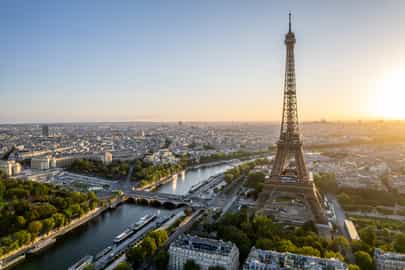
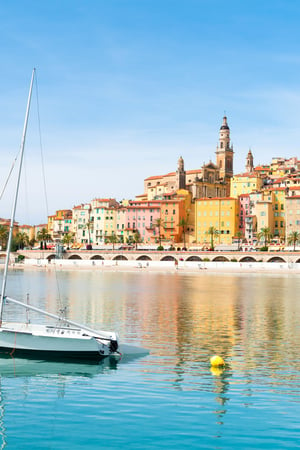
The subject of song and verse, paintings and film, and enduring wanderlust, France is officially the world’s most visited country. A place where making food and wine exceptional is serious business, grandeur exists in the scenery as much as it does the châteaux, and life is for the living – and living well. Paris is, of course, at the centre of it all with its enthralling history and cool, cultured people. But once you’ve walked the city flat, there is even more to discover beyond the Champs Elysees. Fall in love with lavender-scented Provence and its fairytale villages, sip and swill your way through the wine regions, jet-set with the best of them on the Riviera, and unravel centuries of history as you do it all. From skiing in the Alps to sunbathing beside the Mediterranean, and all the castles, grapes and gardens in between, France never fails to amaze its visitors. There’s only one thing left to say, “Vive la France”!

It doesn’t matter if this is your first or fiftieth time visiting France, there will always be something to surprise and delight.

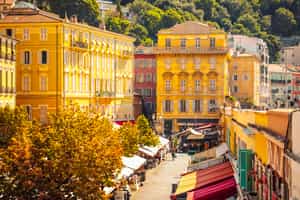
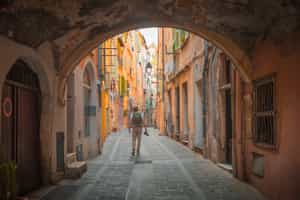
If you want somewhere rather unique to go, climb into the Riviera's back country, where villages like Coaraze and Sainte-Agnès cling to the rock half an hour above the beaches, all worn cobbles, sleeping cats and views right back down to the sea.

The entire country slows down in August when small businesses hang handwritten "fermeture annuelle" signs and entire neighbourhoods empty out. If you’re visiting then, expect a rather different atmosphere.
Start with a recommended trip or create one from scratch
Get advice and suggestions to make this your perfect trip.
or call us on: +1 (646) 542 0667
,url-https%3A%2F%2Fassets.waybird.com%2Fcdn-cgi%2Fimage%2Fwidth%3D12%2Cformat%3Dauto%2Fhttps%3A%2F%2Fassets.waybird.com%2Fimages%2Fmap%2Fpin-primary-outlined.png(4.002122353202365,49.02809951390908),url-https%3A%2F%2Fassets.waybird.com%2Fcdn-cgi%2Fimage%2Fwidth%3D12%2Cformat%3Dauto%2Fhttps%3A%2F%2Fassets.waybird.com%2Fimages%2Fmap%2Fpin-primary-outlined.png(6.2119864841556955,44.015597262066365),url-https%3A%2F%2Fassets.waybird.com%2Fcdn-cgi%2Fimage%2Fwidth%3D12%2Cformat%3Dauto%2Fhttps%3A%2F%2Fassets.waybird.com%2Fimages%2Fmap%2Fpin-primary-outlined.png(6.643350217106188,43.2602664876291),url-https%3A%2F%2Fassets.waybird.com%2Fcdn-cgi%2Fimage%2Fwidth%3D12%2Cformat%3Dauto%2Fhttps%3A%2F%2Fassets.waybird.com%2Fimages%2Fmap%2Fpin-primary-outlined.png(5.02694490118601,47.32346370052703),url-https%3A%2F%2Fassets.waybird.com%2Fcdn-cgi%2Fimage%2Fwidth%3D12%2Cformat%3Dauto%2Fhttps%3A%2F%2Fassets.waybird.com%2Fimages%2Fmap%2Fpin-primary-outlined.png(-0.580600852123022,44.839451347105026),url-https%3A%2F%2Fassets.waybird.com%2Fcdn-cgi%2Fimage%2Fwidth%3D12%2Cformat%3Dauto%2Fhttps%3A%2F%2Fassets.waybird.com%2Fimages%2Fmap%2Fpin-primary-outlined.png(-0.6899990073174611,49.32864043775063),url-https%3A%2F%2Fassets.waybird.com%2Fcdn-cgi%2Fimage%2Fwidth%3D12%2Cformat%3Dauto%2Fhttps%3A%2F%2Fassets.waybird.com%2Fimages%2Fmap%2Fpin-primary-outlined.png(7.267267355519977,43.70513042559456),url-https%3A%2F%2Fassets.waybird.com%2Fcdn-cgi%2Fimage%2Fwidth%3D12%2Cformat%3Dauto%2Fhttps%3A%2F%2Fassets.waybird.com%2Fimages%2Fmap%2Fpin-primary-outlined.png(7.125101356663386,43.58078366009172),url-https%3A%2F%2Fassets.waybird.com%2Fcdn-cgi%2Fimage%2Fwidth%3D12%2Cformat%3Dauto%2Fhttps%3A%2F%2Fassets.waybird.com%2Fimages%2Fmap%2Fpin-primary-outlined.png(6.640456513269914,43.26835184590872),url-https%3A%2F%2Fassets.waybird.com%2Fcdn-cgi%2Fimage%2Fwidth%3D12%2Cformat%3Dauto%2Fhttps%3A%2F%2Fassets.waybird.com%2Fimages%2Fmap%2Fpin-primary-outlined.png(6.9896375629895635,43.54985539155005),url-https%3A%2F%2Fassets.waybird.com%2Fcdn-cgi%2Fimage%2Fwidth%3D12%2Cformat%3Dauto%2Fhttps%3A%2F%2Fassets.waybird.com%2Fimages%2Fmap%2Fpin-primary-outlined.png(7.350936558139122,43.73333900477543)/auto/600x400?access_token=pk.eyJ1IjoidGltYnVrdHV0cmF2ZWwiLCJhIjoiY2poMGw1eHpkMmRkbDJ6bW8xYWZ5OGpjYyJ9.PYvAO7lUJ40SOpGvwmQLqw&attribution=false&logo=false)
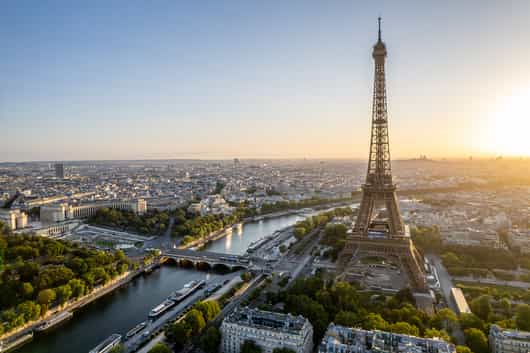
France
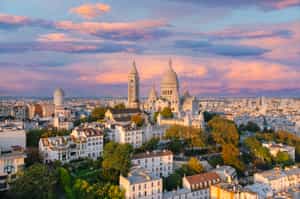
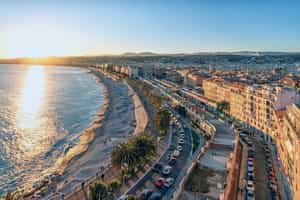
Postcard-perfect architecture, world-class food and wine and all that unapologetic, effortless glamour.
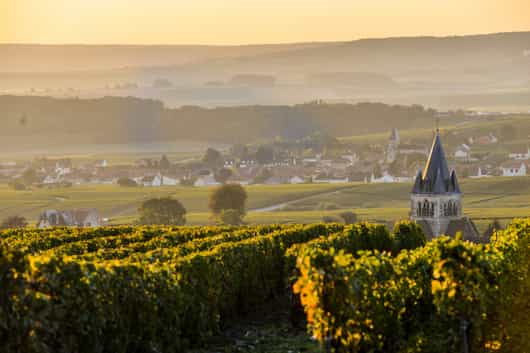
France
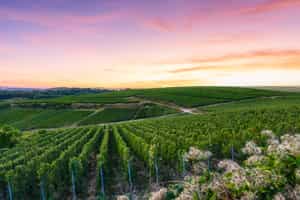
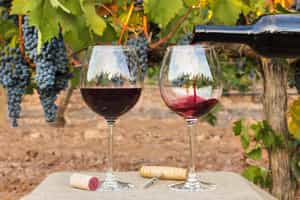
Roman chalk pits thirty metres down, a cathedral that crowned kings on the ground above, and several hundred million bottles quietly improving in between.
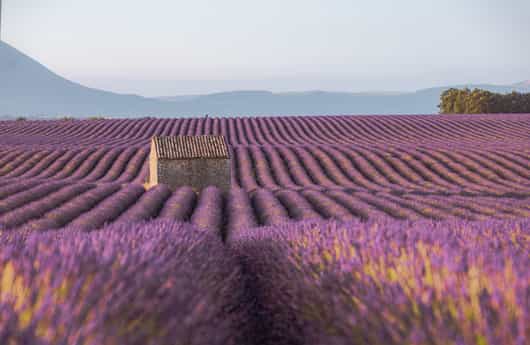
France
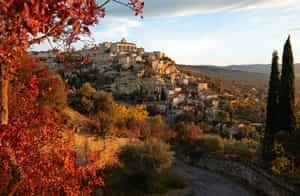
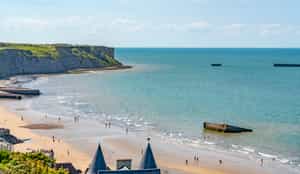
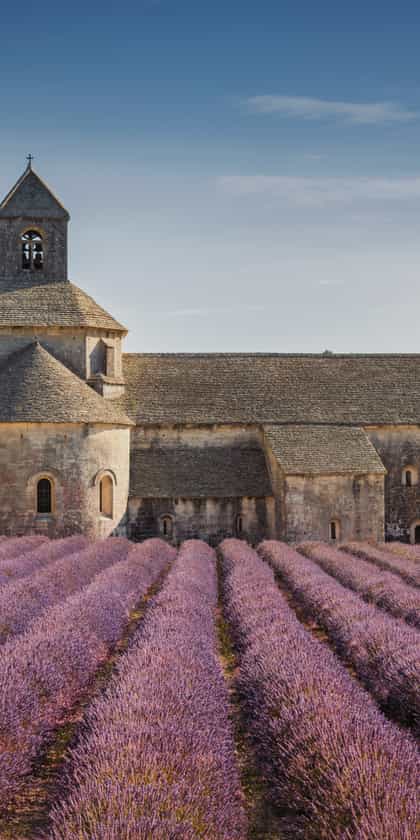
An aromatic wonderland where lavender whispers sweet nothings to the olive groves, and the light seems to dance with an artist's touch.
France changes character with the calendar. May, June and September get the best of it, with gardens and vineyards at their peak, a warm sea and the space to enjoy both. July and August turn the Mediterranean coast into a party of hot days, late dinners and beach clubs in full swing. Spring belongs to the Loire châteaux and the fountains at Versailles. Autumn belongs to the grape harvest in Champagne, Burgundy and Bordeaux. Winter splits neatly between deep snow in the Alps and bright, near-empty days on the Riviera. There isn't a month without something worth travelling for. Tell your specialist when you can go and they will point you at the right corner of the country.

Winter Season — a quieter time to visit
Cold, bright and quiet. The Alps are deep in snow whilst the Riviera holds 13°C afternoons under clear blue skies.
This is the best-value ski month of the year. The snow is cold and dry, the lifts are quiet, and the same chalet costs a fraction of what it will in February.
Paris is at its emptiest. The Louvre runs far below its summer numbers and the late openings on Wednesday and Friday are quieter still, so you can stand in front of the big paintings without a scrum.
From late January the hillsides behind the Riviera villages turn acid yellow as the mimosa opens, running inland towards Grasse.
Provence is clear, cold and almost empty, and the truffle markets are the reason to come. Richerenches on Saturday mornings, Carpentras on Fridays, boot lids up and the smell filling the street.
Winter Season — a quieter time to visit
Milder than January and noticeably brighter. The mistral blows hard through Provence and scours the sky to a hard, empty blue within a couple of hours.
Nice gives itself over to carnival for three weeks. Illuminated floats fill Place Masséna at night and, on the Promenade des Anglais, costumed performers throw flowers into the crowd.
Snow depth in the Alps is at its most dependable of the whole season, mid-altitude resorts included. Do book early, as the best chalets go a year ahead.
Paris, the Loire Valley and Burgundy are quiet and inexpensive. Cellar visits without queues, restaurant tables on a whim, hotel rates at half their May level.
Early Spring Season — a good time to visit
Spring arrives. Daylight passes twelve hours at the equinox, the cities warm up ever so slightly and high-altitude Alpine snow is still deep.
Spring skiing is the most civilised of the season: long days, settled weather, short queues and forgiving snow. Ski the morning, then give the afternoon to a terrace.
Paris blossoms in sequence and almost nobody plans for it. Magnolias open in the Jardin du Luxembourg and the Palais Royal, then the cherries take over at the Jardin des Plantes and around the Trocadéro.
The Loire Valley wakes up. Châteaux come off their winter hours, the gardens are cut back and ready, and you get the grand rooms almost to yourself.
Spring Season — a good time to visit
Green, blossoming and changeable. Warm one day and wet the next, so pack for two seasons and you'll be fine.
The fountains at Versailles start up again in the first days of April and the difference is total. Water in every basin, music through the groves, Le Nôtre's design doing exactly what it was built to do.
The Loire Valley hits its spring stride. Villandry's geometry fills with tulips, Chenonceau sits out over the Cher and Chaumont opens its international garden festival. Two châteaux a day is plenty.
Alpine resorts hold their closing weekends mid-month and they are gloriously silly. Fancy dress descents, bands on the snow, pond-skimming and the season's last chairlift.
Normandy before the season is a quiet pleasure. The Étretat cliffs without the queue, Honfleur's harbour to yourself, the landing beaches walked in near silence. Cold wind off the Channel, hot cider in Honfleur. Fair swap.
Late Spring Season — one of the best times to visit
One of the best months of the year. Gardens are at their peak, the coast is uncrowded and nothing is yet too hot.
Provence turns red before it turns purple. Poppies take over the fields around the Luberon and irises flower on the plain below the hilltop villages. Lavender is still a month away.
Cannes takes the film festival and Monaco takes the Grand Prix, back to back at the end of the month. Both are a spectacle if you go on purpose, and rooms along the coast are worth booking well ahead.
Saint-Tropez is at its most likeable now, before the yachts arrive. The Place des Lices market belongs to locals again and restaurants will find you a table without a fight.
Early Summer Season — one of the best times to visit
The strongest month across most of the country. Light in the Paris sky until nearly half past ten, the Mediterranean up to 22°C, and French schools not yet broken up, so the Riviera is still calm.
Lavender begins. The Valensole plateau starts to colour from mid-June and the Luberon peaks in the last week, with the rows below Sénanque abbey going over at the same time. Early, uncrowded and worth the drive.
Fête de la Musique falls on 21 June and the entire country plays. Free concerts in Parisian courtyards, bands in the squares of the Provençal villages, nothing to book and nothing to pay.
Normandy marks the D-Day anniversary on 6 June, with ceremonies across the five landing beaches, the American cemetery at Colleville-sur-Mer and parachute drops at Sainte-Mère-Église.
The Alps reopen for summer. Wildflowers peak, the Mer de Glace train restarts and the high refuges open progressively through the month.
Summer Season — a good time to visit
Hot, bright and firmly in season. The Riviera is the sunniest (and busiest) corner of France and the sea is properly warm.
Bastille Day on the 14th is worth building a trip around. The parade comes down the Champs-Élysées in the morning and fireworks go up over the Eiffel Tower at night.
Lavender peaks. Valensole is at its best in the first half of the month and Sault, higher and later, holds on until the end of July.
Paris Plages lays sand and loungers along the Seine, and there are now three supervised swimming spots in the river itself. Swimming in the Seine was a joke for a century.
Peak Summer Season — a quieter time to visit
The warmest sea of the year, in the mid-20s off Nice and swimmable the whole way up the Atlantic coast.
Paris in August is the contrarian pick and a good one. Rates soften, queues shorten, Paris Plages is running and the city finally breathes.
Sault holds its lavender festival on 15 August, when the high plateau is still standing and everywhere lower has been cut.
The Alps are at peak hiking season, with the refuges fully staffed, wildflowers still going at altitude and nights cool enough to sleep well.
Early Autumn Season — one of the best times to visit
Warm, golden and quiet. The sea off Nice is still 22°C and the light turns low and generous.
French schools go back on 1 September and the country empties overnight. Beaches that were shoulder to shoulder in August have space by the second week, and the sea is warmer than it was in June.
The vendanges take over Champagne, Burgundy and Bordeaux. Harvest lunches, open cellars and a mood in the villages you cannot manufacture.
Here is the surprise: the Atlantic and the Channel are at their warmest in September. Arcachon and the long beaches of Normandy are better now than at any point in the summer.
Autumn Season — a good time to visit
Autumn colour in the north, and a Riviera sea still close to 20°C, which almost nobody expects.
Burgundy and Bordeaux are the pitch. Vineyards turn copper and gold, the last parcels come in, and the cellars are quieter and more generous than at any other point in the year.
Paris harvests its own vineyard mid-month at the Fête des Vendanges de Montmartre, running since 1934, with parades, food stalls up the hill and fireworks over the Clos.
October is the last month the Loire Valley is fully open, so this is when to take in Villandry, Chenonceau, Chambord and Chaumont on one trip. Autumn colour along the river is the bonus nobody sells.
Provence is at its calmest. The hilltop villages belong to their residents again, the markets are unhurried and the olive harvest begins in the Vallée des Baux.
Late Autumn Season — a quieter time to visit
Quiet, cosy and excellent value. Paris, Burgundy and Champagne carry the month, and flights and hotels sit at their annual low.
Beaune stages Les Trois Glorieuses on the third weekend, Burgundy's biggest wine event by a distance
Provence reopens its truffle markets mid-month and the first ones are the liveliest of the whole season.
The Alpine season opens, with the highest resorts turning their lifts on around 21 November. The cheapest lift pass and the emptiest piste of the whole winter.
Winter Season — a good time to visit
Festive and snowy. The Alps fill in above the valleys whilst the Riviera stays mild and bright.
Paris does Christmas properly. Markets and lights the length of the Champs-Élysées, the department store windows on Boulevard Haussmann drawing crowds three deep, ice rinks in the squares and the whole city smelling of vin chaud and roasting chestnuts.
Provence keeps a Christmas of its own, a long way from tinsel. Santons and living nativities in the villages, the shepherds' midnight mass at Les Baux-de-Provence, and the treize desserts laid out on Christmas Eve, all thirteen of which you must try!
December is the biggest oyster month in France by a distance, so Arcachon and the Normandy beds are worth a detour.

International flights
Paris is one of the easiest cities in Europe to reach from the US. Non-stops run from more than a dozen airports, Boston and New York to Atlanta, Chicago, Dallas, Houston, Denver, LA, San Francisco and Seattle amongst them, at around seven and a half hours from the East Coast and closer to eleven from the West. Nearly all of them fly overnight, so you land at Charles de Gaulle somewhere around breakfast (a shower and a coffee will fix most of it). Book as far ahead as you comfortably can, because fares climb steeply from about three months out. If the south is where you're headed, look at the seasonal non-stops into Nice from New York and Newark in high summer. Skipping a European connection with your luggage is worth a small premium. Just ask and we'll take a look with you.
Trains, once you've landed
Here's the bit most first-timers miss: Charles de Gaulle has its own TGV station, upstairs from Terminal 2. You can step off a red-eye and be in Bordeaux, Avignon or Lyon by lunchtime without setting foot in Paris.
One useful correction, too. The Interrail Pass you've probably read about is for European residents. Yours is the Eurail Pass: same trains, different paperwork, available at every age with reduced fares for under-27s and seniors, and children under 12 travelling free with an adult. It earns its keep if you're stitching together four or five cities. For a simple two-stop trip, advance point-to-point tickets bought a couple of months early usually come in cheaper. Either way, reserve your TGV seats. A pass buys you the journey, not the seat, and the Paris-Nice run sells out.
Self-drive
Your home driving licence is valid in France for visits under ninety days, so no special permit is legally required. We'd still carry an International Driving Permit (about twenty dollars from AAA, sorted in an afternoon) because rental desks and the occasional gendarme like the French translation.
Speak to your own doctor or a travel clinic around six weeks before you fly, since what's recommended depends on your country of origin, your itinerary and what you've already had. The CDC website is a sound starting point. No vaccinations are required to enter France, and for a city-and-countryside trip you're unlikely to need anything beyond your routine jabs being up to date. Ask about tick-borne encephalitis only if you're planning serious hiking in the forests of Alsace or the eastern Alps, where ticks are a genuine (if small) risk between spring and autumn.
Tap water is safe to drink everywhere in France, including from the cast-iron Wallace fountains dotted around Paris. If a tap or fountain is signed eau non potable, that's the one to skip. Restaurants will bring you a jug of tap water free of charge if you ask for une carafe d'eau, which saves you a few euros on every meal and a small mountain of plastic over a fortnight.
Safety
France is a safe country to travel in, and violent crime against visitors is rare. Pickpocketing, though, is a real and organised business in the big cities. Keep a hand on your bag on the Paris metro (line 1 and the RER B from the airport are favourite hunting grounds), at Gare du Nord, and in the crush outside Sacré-Coeur, the Louvre and the Eiffel Tower. The usual street routines run in the tourist hubs too: friendship bracelets pressed onto your wrist on the Montmartre steps, a "found" gold ring offered along the Seine, a clipboard petition that turns into a crowd around your pockets, and the shell game that nobody has ever won. Walk on, politely and without stopping.
On arrival, use the official taxi rank at Charles de Gaulle or Orly, where the flat fare into Paris is posted on a sign. Anyone approaching you inside the terminal offering a lift is not offering you that price.
Communication
France's country code is +33. Dialling a French number from overseas, drop the leading zero: 01 45 67 89 01 becomes +33 1 45 67 89 01.
Calling home from France, dial 00, then the country code, area code and number, so 00 1 [area code] [number] for the US. From a mobile, the + symbol does the same job: +1 [area code] [number]. Coverage is good across the country and thin in the odd Alpine valley, and a prepaid eSIM bought before you leave costs a fraction of most US roaming plans.
One number worth saving before you go: 112 reaches emergency services anywhere in France, in English, free from any phone. Hopefully you'll never use it.
Most European countries use the Euro, the only ones that don’t are Bulgaria, Czech Republic, Denmark, Hungary, Poland, Romania and Sweden. We recommend international mobile banking with either Revolut, Monzo or Wise which lets you spend money around the world with low exchange rates and no transaction fees. The apps categorise your transactions helping you budget giving you instant notifications to your mobile which helps you keep track of your spending and quickly detects any unauthorized or fraudulent transactions. Gratuities are not compulsory or expected; rather it is a reward for excellent service. If you are pleased with the service you receive, you are more than welcome to tip the staff. Tipping is usually done at the end of your stay. For porters it is customary to tip €1 per bag (or the local equivalent). You may tip the staff individually, give the tip to the manager or host to distribute, or do both. Restaurants on average expect a 10% to 15% if it is not included in the bill. When it comes to drivers and tour guides, it all depends on the experience, average is 10% or more.
It is a condition of booking that you carry the correct comprehensive travel and medical insurance to cover yourself, as well as any dependents/travelling companions for the duration of your trip. This insurance should include cover in respect of, but not limited to, the following eventualities: Compulsory Insurance: • Emergency evacuation expenses • Medical expenses • Repatriation expenses Recommended Insurance: • Cancellation or curtailment of trip • Damage/theft/loss of personal luggage, money and goods
Schengen Entry/Exit System (EES)
Since April 2026, every non-EU passport holder entering the Schengen area is logged on the Entry/Exit System, the digital border record that replaced the old passport stamp. Your first arrival takes a few extra minutes.
Anyone 12 or over has their passport scanned, gives fingerprints, has a photo taken and answers a few simple questions about the trip. Under-12s are photographed only. It's free, there's nothing to arrange in advance, and your record then stands for three years, so later trips move faster. EU, EEA and Swiss passport holders are exempt, as are airside connections where you never clear border control.
One thing worth knowing: you're registered by the first Schengen country you land in, not your final destination. Connect through Amsterdam en route to Nice and you'll do it there.
Allow an extra hour on that first landing. After that, you're waved through.
• Passport • Layers - long and short sleeve tops and trousers • Day and evening outfits • A warm fleece, jumper or cardigan • A lightweight waterproof jacket • Comfortable shoes • Flip-flops • Swimming costumes • Underwear and socks • Nightwear • A hat or cap • Sunglasses • Sunscreen – a must! • Water bottle • Toiletries – most hotels will provide shampoo, shower gel and soap • Plug adaptors and charging equipment • Books or a fully loaded Kindle / iPad for siesta time • Small first aid kit - cough medicine, rehydration sachets, plasters, vitamins, aspirin and paracetamol, and anything else you use on a regular basis. Electricity European plugs and outlets are varied. The most common outlets in Europe include Type C, E, F, and G. These outlets are typically used with devices that have a voltage of 220-240V. To ensure you don’t get stuck in a country without a reliable way to charge your phone or laptop, we recommend bringing a universal power adapter that will work in all European countries, except for Italy which has three associated plug types - C, F and L. L is the plug type which has three round pins and operates on a 230V supply voltage. Luggage Please check with your airlines for the specific luggage restrictions relevant to your flight schedule. Many international airlines have a baggage allowance of 20kgs or more per person. The carry-on bag must be of such dimensions and weight as set by the airlines. If soft bag has a shoulder strap, take it off before checking luggage in.

We’re big believers in leaving a positive impact in the countries in which we operate. We’re proud to donate $50 for every booking to projects focusing on female empowerment, tech education, conservation, and so much more.
Our dream is to empower our guests to travel with a purpose.
So far, we’ve donated $107,000 to projects across the globe.


Why travel with Timbuktu?

We've been crafting one-of-a-kind journeys since 2014 — over 2,500 trips across 40+ countries, each one built from scratch around your interests and dreams.

Our team only recommends places they've slept in, eaten in, and happily keep going back to. Condé Nast Traveler named 11 of them Top Travel Specialists in 2026, and Travel+Leisure made three A-List Advisors.

Travel+Leisure's readers voted us the World's No.1 Tour Operator in 2024 and No.2 in 2025 — the travel industry's biggest readers' award, judged by people who actually travel.

$50 from every booking goes to female empowerment, tech education, and conservation projects across the countries we love. We have donated $78,000 so far – and it's going up!

Your travel specialist is with you the whole way, dreaming up the trip, building the itinerary, checking you in, and answering the 2am question from the other side of the world..

We are rated 4.9 out of 5 from 1001 verified Feefo reviews. And these are the words of people who actually went, not us talking about ourselves.
11 Condé Nast Traveler Top Travel Specialists 2026

No. 1 & No. 2 Tour Operator in Travel + Leisure's Best Awards 2024 & 2025

Best Booking Platform in Women's Health Travel Awards 2025

Travel Specialist voted as Latin America A-List Travel Advisor 2025

"Timbuktu can take relatively complex and slightly amorphous travel plans and transform them into a well-organized, perfectly tailored trip."