We're one of the World's Best Tour Operators!
Named three years running in Travel+Leisure World's Best, including No.1 in 2024
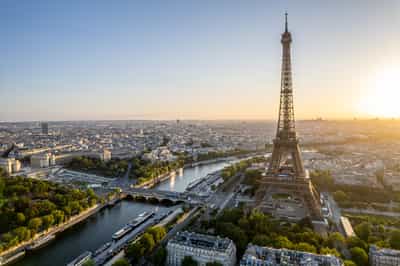
If ever there was a city that conjured beauty, romance, postcard-perfect architecture and, of course, exquisite food and wine (and some exceptional locations in which to enjoy them both), it’s Paris. Practically speaking, the city is made up of 20 arrondissements (neighbourhoods) that spiral out from the medieval Île de la Cité like one of the country’s infamous escargots. As you walk, each neighbourhood reveals just what makes it special… On the Right Bank of the Seine, once the home of the aristocracy, you’ll find mansion-lined boulevards, the Louvre, trendy galleries and walkable streets in Marais, the Champs Elysees, and in the heart, Montmartre and the gleaming Sacre Couer. On the Left Bank it’s all about the buzzing Latin Quarter and the Sorbonne, chicer-than-chic Saint-Germain-des-Prés and of course, the Eiffel Tower. Choose one, start wandering, and always stay longer than planned.
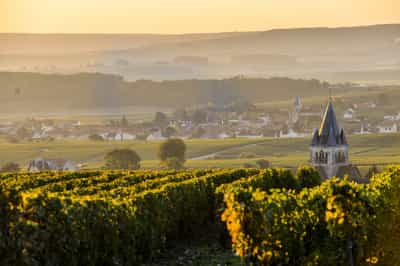
Chalk is the whole story here. It drains the vineyards, it gives the wine its nerve, and it made the cellars – pyramid-shaped quarries first cut by the Gallo-Romans in the third century, worked for a thousand years after, then joined into a labyrinth beneath the Saint-Nicaise hill in Reims. Down there it's a steady 11°C, pitch dark, and the quiet is total. Above ground, Reims Cathedral has crowned twenty-five French kings and now holds Chagall's deep-blue windows in the apse behind the altar. Half an hour south in Épernay, the Avenue de Champagne runs barely a mile of nineteenth-century mansions with around 200 million bottles resting beneath the tarmac, which is why people who live here call it the most expensive street in the world. Then come the growers. Some 16,000 families farm nine-tenths of the vines, and the small ones bottling their own are where this region gets properly interesting: one village, one plot, a person who can point at the row your glass came from. The big houses sell consistency. The growers sell place. Give both an afternoon.
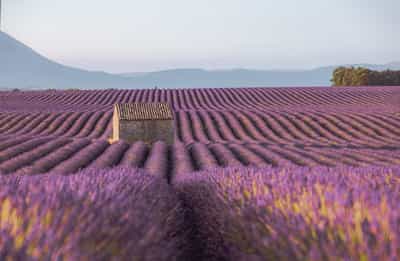
In Provence, the sun has a standing reservation and the art of living well is practically a competitive sport. This slice of southern France is a sensory overload in the best possible way – a place where the light is so magical it bewitched the likes of Van Gogh and Cézanne, and the air is perfumed with lavender, thyme, and freshly baked baguettes. From the craggy peaks of the Alpilles to the flamingo-dotted wetlands of the Camargue, Provence is a land of startling contrasts. Roman ruins rub shoulders with mediaeval villages perched precariously on hilltops, while markets burst with a kaleidoscope of local produce. And let's not forget the coastline, where the Mediterranean sparkles like a spilled bottle of Pastis, inviting you to dive in and leave your worries on the sun-baked shore.
Synonymous with everything and everyone from Matisse and Picasso to Grace Kelly, Carey Grant and Slim Aarons’ indolently glamorous scenes at the Hotel du Cap-Eden-Roc’s swimming pool, the French Riviera just has something about it. From humble beginnings, the Riviera today stretches from Hyères to the Italian border, oscillating beautifully and brilliantly between the ritz and glitz of Cannes and Monaco and their superyachts and designer dens, Nice's Baroque old town and Belle Époque buildings, and the medieval hill villages of Eze, Mougins and Saint-Paul-de-Vence. Add to that some of the most astoundingly gorgeous hotels, restaurants, rooftop bars and people you’ve ever seen, and you’ve got a heady playground to explore and enjoy, the glittering Mediterranean your ever-present companion.
.jpg)
Burgundy’s vineyards have been around for centuries, first tended by Benedictine monks and now producing wines revered even in the world’s most sought-after cellars. Winding like a flaxen ribbon across Burgundy, the UNESCO-recognised Côte d'Or is made up of over 1,000 plots or ‘climats’, where the grapes are entirely unique from one hillside to the next. But Burgundy’s allure doesn’t only lie in its terroir. Across the region, let yourself be swept up by medieval towns, fairytale castles and ancient, creaking abbeys. When it comes to exploring, the Voie des Vignes is a rather handy route of around 80km, linking major towns like Beaune (famed for its charity wine auction) and Dijon with its charming half-timbered houses and namesake mustard, of course. You could seek out and sip on as many Grands Crus as possible, or set your sights on Burgundy’s little-known villages like Vézelay – one of the most beautiful in France. We say, pick a spot, settle in and wait for Burgundy to charm your socks off.
.jpg)
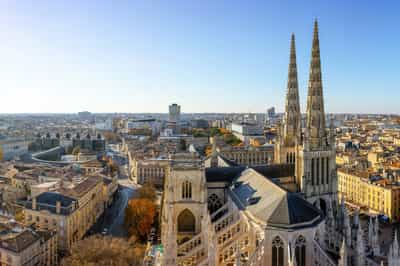
Think Bordeaux, think wine – and you wouldn’t be wrong! With more than 50 AOC appellations and almost 7,000 châteaux scattered across the beautiful Gironde, this is one of the greatest wine regions on earth and a fabulous introduction to French grapes. Begin with a few days in Bordeaux itself and wander the historic UNESCO-listed centre before picking one of the 45 Michelin-recognised restaurants to dine in. Then, head to the countryside. On the right of the Dordogne River, you’ll find hilly countryside, medieval villages, Merlot and Cabernet Franc, whilst the left is characterised by the chateaux of the Médoc and Cabernet Sauvignon. Away from the wine, there’s plenty for adventurers and families too, from biking, hiking and horse-riding to oyster-tasting and dune-exploring at the Atlantic Coast.
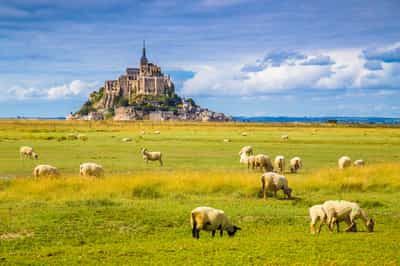
The light and dramatic cliffs that captured Monet’s attention, beaches that hold the poignancy of D-Day and iconic Mont-Saint-Michel, a medieval abbey trapped on an island – Normandy is as rich in history as it is in beauty. Although a little touristy, Bayeux makes a top-notch base and before diverting day trips take over entirely, stop to admire its 11th-century tapestry narrating the Battle of Hastings. You could easily spend days exploring the coastline, paying sombre respects at Omaha Beach or the American Cemetery, breathing in the glorious sea air at Honfleur’s painting-worthy harbour and enjoying a bowl of ocean-fresh oysters. Head inland into the shamrock-hued countryside to wander amongst Monet’s own garden and water-lily pond, sample Normandy’s beloved cheeses (and visit the villages they’re named after) and admire the striking Gothic cathedral of Rouen. Normandy is many things all at once, each more arresting than the next.
Part of Italy until 1860 and annexed by France just 166 years ago, the architecture of Nice is more than reminiscent of Italy with its Baroque churches, beautiful terracotta facades and remains of Roman Baths at the Musée d’Archéologie. But then comes the unmistakable French-ness: the colourful Vieille Ville or Old Town, full of higgledy-piggledy buildings and sun-drenched squares lined with cafés and croissants; the Cours Saleya Market that fills every morning with flowers and food stalls; and the unmistakable scent of socca, a Nicois snack of chickpea pancakes sprinkled with olive oil and black pepper. And of course, there’s the Promenade des Anglais, the long seafront walkway that, despite being built by the English in the 1820s, is the place for that most French of pastimes: a gentle, après dinner stroll.
.jpg)
Encircled by Vauban's magnificent 17th-century sea walls and overlooking Port Vauban, the largest marina in Europe, Antibes is a little more down to earth than the rest of the Riviera… the relaxed little sister who doesn’t take herself too seriously perhaps? The covered market on Cours Masséna, stalls overflowing with cheese, olives and Provençal herbs, attracts locals by the bucket-load and the tiny terrace cafés tucked between the stalls feel a world away from the marina. For culturalists, Château Grimaldi, now the Musée Picasso after his famous four-month residency in 1946, is an excellent afternoon and if you’re looking for some well-earned beach time, head south of town. There’s Cap d'Antibes, a pine-fringed headland of coastal paths and crumbling Belle Époque villas, and Juan-les-Pins, just around the headland, with its sandy beaches and eponymous jazz festival.
.jpg)
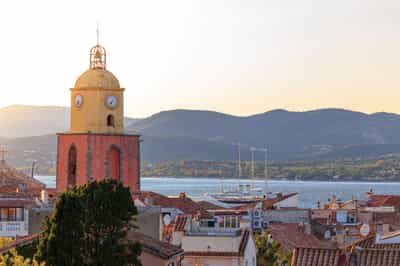
There might be shopping, parties, beach clubs and more rosé than you could possibly imagine, but St Tropez still has a great deal of charm. On Tuesday and Saturday mornings, the Place des Lices hosts a market of flowers, food and local hats; locals still play pétanque in the square; and the Musée de l'Annonciade has a wonderful Post-Impressionist collection to spend a few hours with. Don't leave without seeking out a tarte tropézienne, a cream-filled brioche invented in 1955 and named, reportedly, by Brigitte Bardot herself. And when you need a break from the marina, duck into La Ponche, the old fishing quarter tucked just behind the port, where the streets are narrow enough to touch both walls and the mornings are blissfully quiet.
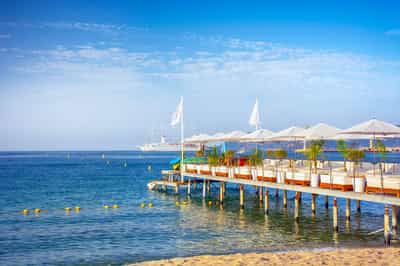
Best known for the star-studded film festival on the Croisette every May, Cannes is synonymous with a dizzyingly well-heeled crowd and that fabulous, palm-lined promenade. But, away from the pizzazz, there’s actually quite a lot to do in the other eleven months of the year. In Le Suquet, the lively old quarter, the narrow streets offer up tiny restaurants and views of the Mediterranean from the top of every staircase. Back down at sea level, take your position on the Croisette for the best people watching in Europe before dipping into the boutiques of the Rue d’Antibes and seeking out still-warm flatbreads and tapenade at the Marché Forville. For a change of pace entirely, take the ferry (and a picnic) to the Lerins Islands of Sainte-Marguerite and Saint-Honorat, sparkling, traffic-free gems of pristine forests, clear waters and, on Saint-Honorat, a community of 5th Century Cistercian monks.
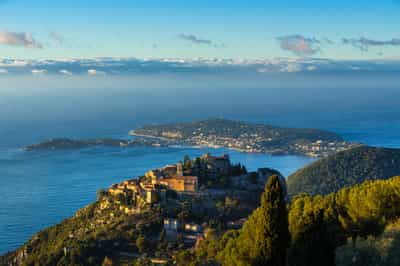
Just a short, hairpin-bend drive back from the coast, the hill villages of the Riviera's hinterland or ‘arrière-pays niçois’ feel like an entirely different country. Saint-Paul-de-Vence is the best known: ramparts guarding a warren of art galleries, the Fondation Maeght's Miró sculptures, and La Colombe d'Or, where Picasso and Chagall are said to have settled their bar tabs with paintings that still hang on its walls. Èze clings to its rock in a way that seems faintly implausible, all cactus gardens and views over a cobalt sea. Gourdon does much the same trick 760 metres up, looking clean across to Corsica on the clearest days. Then there's Grasse, which smells like nowhere else on earth (three centuries of perfumers will do that), distilling jasmine and rose into scent, the harvest in full, heady swing each August. Tourrettes-sur-Loup, the self-styled Cité des Violettes, throws its own flower festival every March. Bring good shoes and an empty stomach – you'll need it for the socca.


Namibrand, Namibia