Where to go gorilla trekking: Uganda or Rwanda?
Both Uganda and Rwanda offer outstanding mountain gorilla trekking. Permits cost USD
1,500 in Rwanda and USD 800 in Uganda and both countries deliver a near-guaranteed
sighting. Choose Rwanda if you want the easiest, quickest trek (the trailhead is roughly a 2 to
3 hour drive from Kigali airport) and a seamless, luxurious experience that pairs very well
with a Kenya or Tanzania safari; and choose Uganda if you’d prefer something more
adventurous and off-the-beaten-track. Bwindi Impenetrable Forest is home to roughly half of
all mountain gorillas left in the wild, and Uganda combines naturally with chimpanzee
tracking and a wider safari circuit.
We think it’s safe to say that no other wildlife experience comes close to spending time with
the mighty mountain gorilla – and the good news is that this is one conservation story
heading in the right direction. The latest census puts the wild gorilla population at over 1,000,
up from a low of around 240 in the 1980s. Mountain gorillas live in just two great forests: the
Virunga Mountains, straddling the border of Rwanda (Volcanoes National Park), Uganda
(Mgahinga National Park) and the DRC; and Uganda’s Bwindi Impenetrable Forest, where
roughly half the world’s mountain gorillas are found. So, when it comes to booking a gorilla
safari, the decision really comes down to two countries: Rwanda and Uganda. Here’s our
guide to choosing between them…
Note: Virunga National Park in the DRC is currently closed to guests until further notice.
| Rwanda | Uganda | |
|---|---|---|
| Park | Volcanoes National Park | Bwindi Impenetrable Forest |
| Permit cost (foreign non-resident) | USD 1,500 | USD 800 |
| Habituated gorilla families | ~12 | 20+ |
| Drive from Kigali | 2–3 hours | 3–4 hours (with border crossing) |
| Trek terrain | Open volcanic slopes | Dense rainforest |
| Best paired with | Kenya or Tanzania safari & beach | Uganda’s wider safari circuit; chimp tracking |
| Trip style | Polished, accessible, luxury | Adventurous, off-the-beaten-track |
How do I get to gorilla trekking in Rwanda or Uganda?
The short answer: both countries are easiest reached via Kigali International Airport in
Rwanda.
Flights to Kigali have become much more accessible (and cheaper) in recent years and your
best bet is to fly in from Nairobi in Kenya. For a gorilla safari in Rwanda, you’ll hop in a car
and transfer for 2 to 3 hours to the foothills of Volcanoes National Park, where all gorilla
treks begin. To get to Bwindi in Uganda, it’s a 3 to 4 hour road transfer from Kigali with a
border crossing, or if you fly to Entebbe, it’s a 9 to 10 hour drive (but we would recommend
breaking the journey – more about that later!).
How much does a gorilla trekking permit cost?
The short answer: USD 1,500 per person in Rwanda and USD 800 per person in Uganda,
with one permit valid for a single day and one hour in the company of the gorillas.
Both countries require visitors to have a permit for gorilla trekking, and the number of
permits available each year fluctuates depending on conservation needs and tourism quotas.
One permit is valid for one day and one hour with the gorillas. Rwanda is the most expensive
country to visit, with permits costing USD 1500. High numbers are issued, but they get
booked quickly so you’ll need to plan in advance. A permit for gorilla trekking in Uganda
costs USD 800, but these costs are both subject to change, so please double check with your
travel specialist before you travel.
Will I definitely see the gorillas?
The short answer: sightings are never technically guaranteed, but in practice they’re very,
very reliable.
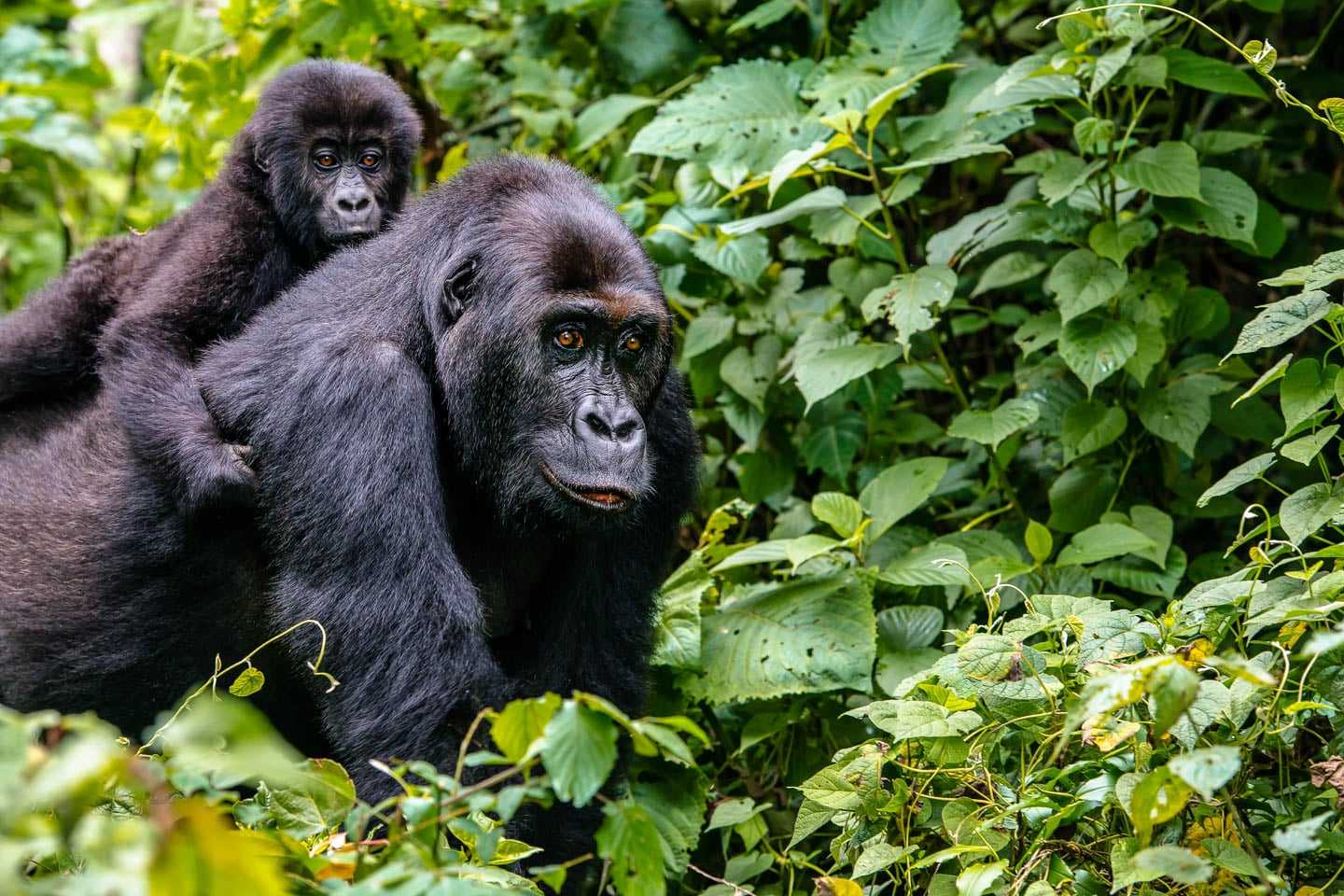
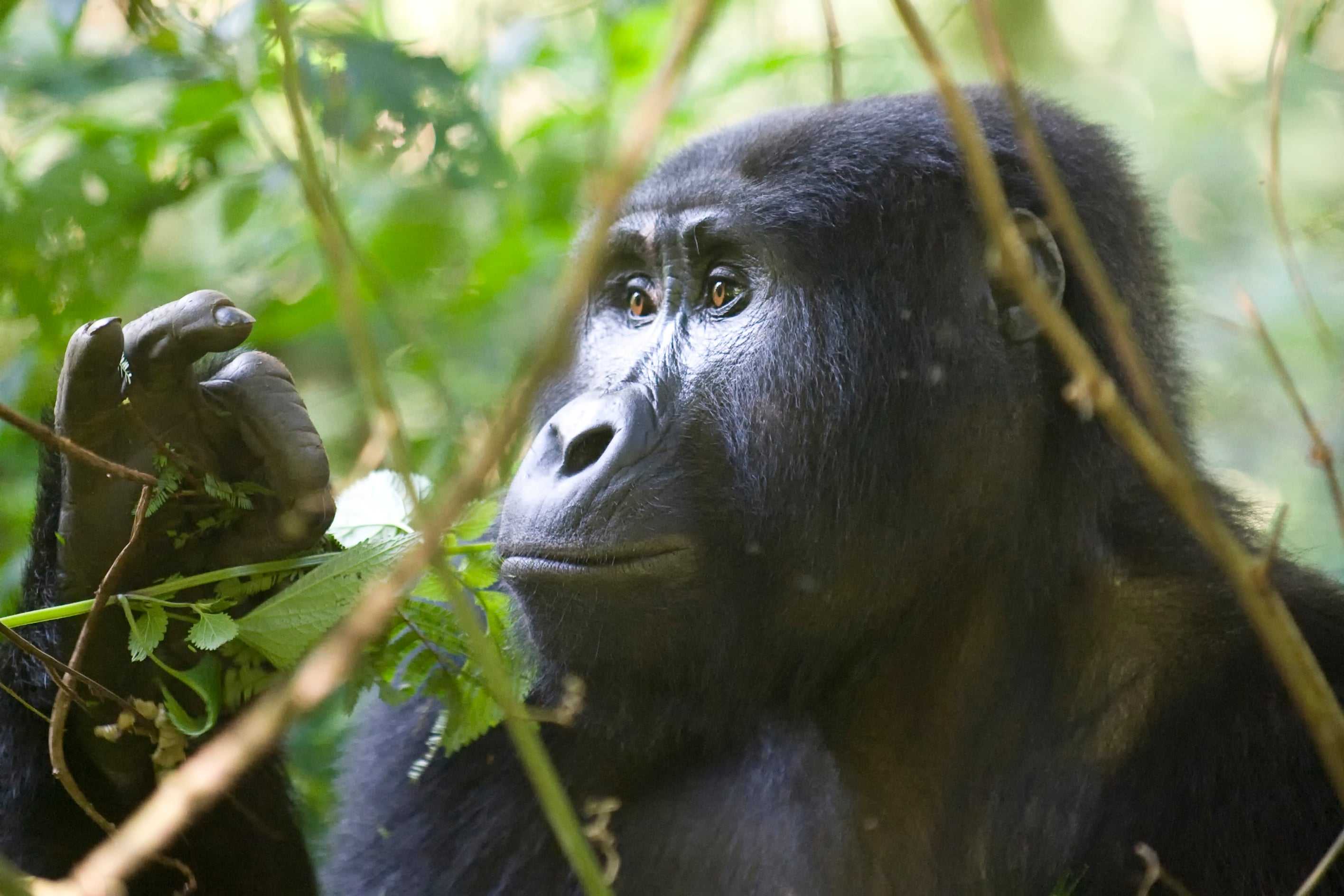
Out of all the remaining gorillas in the wild, a proportion of families are habituated and
available for gorilla trekking. In Rwanda, this is around 12 families and in Uganda there are
c.20 families, spread across four sectors of Bwindi Impenetrable Forest (Bwindi (Buhoma,
Ruhija, Rushaga and Nkuringo), but the numbers do change depending on research needs.
Each family can have anything from 9 to 39 members. Early in the morning, trackers will
head into the mountains to locate each family, meaning your chances of seeing the gorillas
are extremely high – but we can’t promise anything!

How fit do I need to be for gorilla trekking?
The short answer: reasonable hiking fitness will see most travellers through, though treks
can range from a gentle hour to an intrepid eight-hour trek.
The honest answer is that it really depends on which gorilla family you’re tracking. Some
habituated groups stay close to the park edge and can be reached in under an hour; others
wander deep into the forest and require more effort, often uphill through thick undergrowth
(that’s where a pair of gloves comes in useful!). Rangers usually try to match guests with a
group that suits their fitness level. Bwindi is notoriously dense (its full name, “Impenetrable
Forest”, is real!), so if mobility is a concern, Volcanoes National Park’s more open volcanic
slopes can be the easier choice. Porters are available at both parks for around USD 25 per
trek, and we recommend hiring one whether you need help with your bag or not as the
income goes directly into the surrounding communities.


When is the best time to go gorilla trekking?
The short answer: the dry seasons of June to September, and December to February offer
the most pleasant trekking conditions, but mountain gorillas can be tracked year-round.
The gorillas don’t migrate, so they’re there in every month of the year. The long rains (March
to May) and short rains (October to November) can make forest trails muddy, slippery and
slow going, but they also coincide with lower visitor numbers and (sometimes) discounted
permits. June to September is the dry high season, but it can get busy so you’ll need to book
months in advance. December to February is similarly dry but a touch quieter.
Our Timbuktu top tip: if budget matters more than dry feet, the shoulder months of April,
May and November can be a savvy choice.
Where should I stay? The best lodges for gorilla trekking
The short answer: both countries offer a strong choice of mid-range and top-end lodges,
with Uganda generally a touch more affordable than Rwanda.
In both Rwanda, the lodges are clustered around Volcanoes National Park. A long standing
Timbuktu favourite is Wilderness Sabyinyo and there are also some fabulous, all-out luxury
options like Singita Kwitonda and One&Only Gorilla’s Nest as well as newer options on the
scene like the female-owned Amakoro Songa. Volcanoes is also the home of the unique, pod-
like Bisate Lodge and it’s conservation-focused little sister, Bisate Reserve, that can be
booked on an exclusive-use basis.
In the Bwindi Impenetrable Forest in Uganda, top choices include Bwindi Lodge and Gorilla
Forest Lodge, whilst Mahogany Springs is a lovely, welcoming lower-budget alternative. The
newest lodge on the scene, Erebero Hills, is an architectural masterpiece on the northern edge of the forest and set to rival Rwanda’s most luxurious options. For a little more detail, have a
look at our Top Lodges for Gorilla Trekking blog article here.


What else can I see?
The short answer: Rwanda combines well with a Kenya or Tanzania safari, while Uganda is
a fantastic safari destination in its own right.
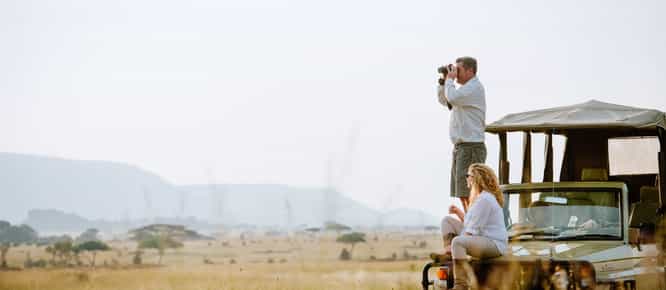
Gorilla trekking in Rwanda pairs excellently with a safari in Kenya or Tanzania. Rwanda is
small, the transport links to both countries are good and you’ll probably only spend two to
three days with the gorillas. For Kenya, try the Gorillas & Gameparks itinerary – and add soe
time at the beach on the Kenyan coast for the ultimate post-trekking R&R, and in Tanzania,
Gorillas, Ngorongoro & the Serengeti is a highlights reels of East Africa.
Uganda, however, is a fantastic safari destination in its own right. Our Classic Uganda Gorilla
Safari combines Bwindi with Queen Elizabeth National Park and Murchison Falls, as well as
some time in Kibale for chimpanzee trekking (and breaking up that long journey from
Entebbe). For something a little more off the beaten track, add in time in the Kidepo Valley,
or pop over to Zanzibar if you’re craving some sun, sea and sand!

What about the Democratic Republic of Congo (DRC)?
The short answer: we don’t currently send guests to the Democratic Republic of Congo for
gorilla trekking, due to the ongoing security situation in the east of the country.
For many years this article also covered the DRC as our third mountain gorilla trekking
option, and we’d send a small but adventurous handful of guests to Virunga National Park
each year. Sadly, that has now changed and tourism in Virunga has been operating only
intermittently since 2018, with the park closing fully on several occasions amid the wider
security situation in eastern Congo. The conservation work continues, but we don’t currently
include the DRC on our gorilla trekking trips. Things have improved before and may well do
so again so if the Virunga experience is something you have your heart set on, do drop us a
line and we’ll let you know the latest.
Uganda or Rwanda? Our verdict
So, there we have it – the pros and cons of each destination. If we had to sum it up in a few
short words, this is what we would say: if your gorilla safari is a small part of a bigger trip in
East Africa, pick Rwanda for its ease and fantastic connections. If you’re looking for an off-
the-beaten-track safari experience in an unusual country (and the chance to go chimpanzee
trekking), head to Uganda and try something new…
Latest blogs


As seen in