Africa Is Not a Country: The Best Countries to Visit, by Travel Type
“Africa is not a country.” Most of us know that, of course, but knowing it and picturing it are two very different things. This is a continent of 54 nations, thousands of languages, and landscapes that shift from one extreme to the next as you cross its vast landscapes, from Saharan dune fields to misty, mountainous, gorilla-filled forests, and further on, to reefs so vivid they could have swum straight out of Finding Nemo.
At Timbuktu, we know there is no single “best of Africa”, and the best African destination for your trip depends entirely on what you’re visiting for.
So our team set out to give anyone wondering where to go their answer, with this useful ‘African Trip Index ‘.
Taking every country on the continent, we analysed their offerings across six different ways of travelling, from a classic Big Five safari to a family holiday, so you can see exactly which countries offer the type of trip you actually want.
The results make the “Africa is not a country” case better than we can explain, because the country that wins for honeymooners is nowhere near the top for an intrepid adventure, and the most abundant waters are not in the country with the richest plains.
Africa is diverse, so read on below for where to go for each kind of trip, the reasons why, and a wildcard our specialists would book themselves.
The full rankings
| Country | Size (km2) | Safari Rank | Land Species | Endemic Land | % Protected Land | Marine Rank | Marine Species | Endemic Marine | % Protected Water | Adventure Rank | Mountains | Adventure Activities | Adventure Score | Family Rank | Family Hotels | Kids Activities | Malaria Risk | Honeymoon Rank | Adult-Only Hotels | Stargazing Radiance | Honeymoon Activities | Luxury Rank | Private Jets | Fine Dining | Michelin Hotels |
|---|---|---|---|---|---|---|---|---|---|---|---|---|---|---|---|---|---|---|---|---|---|---|---|---|---|
| Algeria | 919595 | 40 | 950 | 95 | 4.66% | 31 | 828 | 11 | 0.07% | 18 | 6,404 | 12 | 0.24 | 8 | 37 | 46 | No Malaria | 28 | 6 | 0.293 | 4 | 22 | 1 | 0 | 0 |
| Angola | 481400 | 10 | 2784 | 191 | 10.76% | 16 | 1362 | 27 | 0.00% | 30 | 608 | 5 | 0.19 | 34 | 6 | 6 | All Areas | 23 | 2 | 0.055 | 3 | 10 | 3 | 0 | 1 |
| Benin | 44310 | 23 | 1528 | 3 | 36.11% | 34 | 1194 | 0 | 0.79% | 34 | 13 | 10 | 0.20 | 25 | 26 | 7 | All Areas | 10 | 10 | 0.055 | 1 | 16 | 0 | 0 | 1 |
| Botswana | 224990 | 21 | 1740 | 11 | 27.59% | 43 | 280 | 1 | 0.00% | 17 | 11 | 332 | 0.48 | 17 | 13 | 39 | Some Areas | 2 | 16 | 0.022 | 11 | 12 | 2 | 0 | 1 |
| Burundi | 10361 | 38 | 1478 | 26 | 7.64% | 50 | 214 | 0 | 0.00% | 35 | 503 | 16 | 0.10 | 37 | 4 | 4 | All Areas | 41 | 0 | 0.035 | 0 | 27 | 0 | 0 | 0 |
| Cabo Verde | 183955 | 45 | 225 | 25 | 17.62% | 25 | 1120 | 88 | 0.14% | 23 | 319 | 122 | 0.22 | 7 | 19 | 82 | No Malaria | 11 | 10 | 0.329 | 25 | 27 | 0 | 0 | 0 |
| Cameroon | 1558 | 6 | 2995 | 301 | 10.99% | 16 | 1275 | 3 | 11.43% | 29 | 612 | 8 | 0.19 | 31 | 13 | 6 | All Areas | 15 | 7 | 0.029 | 0 | 27 | 0 | 0 | 0 |
| Central African Republic | 240535 | 21 | 1924 | 28 | 14.85% | 47 | 224 | 1 | 0.00% | 47 | 77 | 0 | 0.07 | 43 | 1 | 1 | All Areas | 28 | 0 | 0.001 | 0 | 27 | 0 | 0 | 0 |
| Chad | 496082 | 36 | 1164 | 6 | 20.96% | 48 | 247 | 0 | 0.00% | 32 | 681 | 7 | 0.13 | 44 | 0 | 1 | All Areas | 34 | 0 | 0.006 | 0 | Not Included | – | – | – |
| Comoros | 0863 | 34 | 331 | 63 | 33.72% | 13 | 1781 | 6 | 0.38% | 42 | 132 | 1 | 0.15 | 44 | 0 | 1 | All Areas | 40 | 0 | 0.032 | 0 | 27 | 0 | 0 | 0 |
| Congo, Republic | 132300 | 17 | 2015 | 53 | 14.95% | 15 | 1219 | 11 | 14.07% | 44 | 87 | 1 | 0.11 | Not Included | – | – | – | 47 | 0 | 0.092 | 0 | 27 | 0 | 0 | 0 |
| Cote d’Ivoire | 9300 | 18 | 1952 | 27 | 22.86% | 28 | 1246 | 1 | 0.16% | 31 | 156 | 4 | 0.24 | 30 | 18 | 4 | All Areas | 34 | 6 | 0.152 | 0 | 14 | 1 | 0 | 1 |
| Djibouti | 387050 | 50 | 574 | 3 | 1.57% | 20 | 1756 | 1 | 0.17% | 25 | 589 | 6 | 0.23 | 34 | 11 | 2 | All Areas | 45 | 1 | 0.109 | 0 | 22 | 1 | 0 | 0 |
| Egypt | 10831 | 32 | 990 | 69 | 13.12% | 5 | 2088 | 31 | 5.07% | 3 | 1,551 | 2608 | 0.53 | 2 | 299 | 1136 | No Malaria | 8 | 31 | 0.779 | 183 | 3 | 19 | 0 | 21 |
| Equatorial Guinea | 45000 | 27 | 1217 | 44 | 18.99% | 29 | 1161 | 2 | 0.27% | 45 | 14 | 1 | 0.12 | 41 | 3 | 1 | All Areas | 49 | 0 | 0.201 | 0 | 27 | 0 | 0 | 0 |
| Eritrea | 7090 | 47 | 965 | 13 | 0.00% | 39 | 966 | 1 | 0.00% | 37 | 870 | 4 | 0.08 | Not Included | – | – | – | 31 | 0 | 0.005 | 0 | 27 | 0 | 0 | 0 |
| Eswatini | 426400 | 41 | 1486 | 12 | 4.25% | 41 | 231 | 9 | 0.00% | Not Included | – | – | – | 22 | 8 | 11 | Some Areas | 46 | 0 | 0.217 | 3 | 27 | 0 | 0 | 0 |
Source: Timbuktu Travel analysis, data correct as of March 2026. Countries where the FCDO recommends against all but essential travel were excluded from the study.
| Country | Size (km2) | Safari Rank | Land Species | Endemic Land | % Protected Land | Marine Rank | Marine Species | Endemic Marine | % Protected Water | Adventure Rank | Mountains | Adventure Activities | Adventure Score | Family Rank | Family Hotels | Kids Activities | Malaria Risk | Honeymoon Rank | Adult-Only Hotels | Stargazing Radiance | Honeymoon Activities | Luxury Rank | Private Jets | Fine Dining | Michelin Hotels |
|---|---|---|---|---|---|---|---|---|---|---|---|---|---|---|---|---|---|---|---|---|---|---|---|---|---|
| Ethiopia | 103733 | 12 | 2093 | 192 | 17.03% | 34 | 326 | 4 | 0.94% | 10 | 1,400 | 455 | 0.28 | 10 | 54 | 127 | Some Areas | 5 | 10 | 0.016 | 3 | 16 | 0 | 0 | 1 |
| Gabon | 4748 | 16 | 1882 | 113 | 22.65% | 18 | 1217 | 5 | 26.81% | 40 | 132 | 3 | 0.16 | 38 | 4 | 2 | All Areas | 44 | 0 | 0.075 | 1 | 22 | 1 | 0 | 0 |
| Gambia | 92098 | 46 | 1162 | 1 | 7.69% | 26 | 1287 | 0 | 0.69% | 32 | 0 | 18 | 0.22 | 24 | 19 | 38 | All Areas | 25 | 7 | 0.138 | 1 | 27 | 0 | 0 | 0 |
| Ghana | 95312 | 19 | 2007 | 36 | 15.30% | 27 | 1286 | 1 | 0.01% | 18 | 110 | 274 | 0.33 | 17 | 73 | 47 | All Areas | 21 | 10 | 0.378 | 2 | 21 | 2 | 0 | 0 |
| Guinea | 13948 | 13 | 1908 | 94 | 42.56% | 21 | 1260 | 4 | 0.64% | 36 | 383 | 1 | 0.17 | 46 | 2 | 0 | All Areas | 37 | 0 | 0.022 | 0 | 22 | 1 | 0 | 0 |
| Guinea-Bissau | 124500 | 39 | 1097 | 2 | 26.19% | 23 | 1258 | 0 | 9.13% | 46 | 38 | 0 | 0.13 | 41 | 7 | 0 | All Areas | 36 | 0 | 0.010 | 0 | 27 | 0 | 0 | 0 |
| Kenya | 224081 | 4 | 3116 | 217 | 13.95% | 7 | 2344 | 10 | 0.69% | 5 | 406 | 2954 | 0.50 | 6 | 110 | 832 | Some Areas | 2 | 22 | 0.063 | 126 | 4 | 13 | 4 | 11 |
| Lesotho | 11721 | 42 | 761 | 6 | 23.43% | 42 | 150 | 10 | 0.00% | 20 | 722 | 28 | 0.24 | 15 | 13 | 4 | No Malaria | 41 | 0 | 0.056 | 1 | 27 | 0 | 0 | 0 |
| Liberia | 43390 | 30 | 1554 | 33 | 4.03% | 34 | 1199 | 1 | 0.11% | 39 | 99 | 90 | 0.12 | 33 | 2 | 52 | All Areas | 20 | 0 | 0.014 | 16 | 27 | 0 | 0 | 0 |
| Libya | 679750 | 47 | 606 | 48 | 0.13% | 37 | 639 | 3 | 0.63% | 43 | 250 | 2 | 0.05 | 27 | 0 | 2 | No Malaria | 48 | 0 | 0.185 | 0 | 27 | 0 | 0 | 0 |
| Madagascar | 227044 | 10 | 2340 | 1817 | 12.83% | 2 | 2519 | 123 | 1.35% | 12 | 1,044 | 95 | 0.32 | 14 | 108 | 98 | All Areas | 7 | 2 | 0.005 | 24 | 27 | 0 | 0 | 0 |
| Malawi | 45747 | 6 | 2264 | 191 | 23.06% | 44 | 272 | 1 | 0.00% | 22 | 578 | 9 | 0.26 | 28 | 18 | 10 | All Areas | 39 | 0 | 0.052 | 2 | 27 | 0 | 0 | 0 |
| Mauritania | 398000 | 49 | 880 | 3 | 0.62% | 14 | 1366 | 2 | 3.70% | 27 | 1,412 | 4 | 0.18 | 31 | 8 | 1 | Some Areas | 27 | 1 | 0.006 | 0 | 27 | 0 | 0 | 0 |
| Mauritius | 0860 | 44 | 338 | 83 | 4.96% | 10 | 2082 | 56 | 0.00% | 11 | 112 | 90 | 0.57 | 9 | 10 | 229 | No Malaria | 12 | 10 | 2.028 | 101 | 6 | 0 | 4 | 14 |
| Morocco | 172410 | 35 | 1068 | 176 | 2.14% | 11 | 1492 | 26 | 0.27% | 1 | 9,103 | 5706 | 0.54 | 1 | 378 | 2074 | No Malaria | 6 | 62 | 0.461 | 278 | 1 | 13 | 10 | 78 |
| Mozambique | 309110 | 5 | 2646 | 92 | 29.51% | 3 | 2734 | 22 | 2.15% | 14 | 1,738 | 30 | 0.31 | 21 | 28 | 39 | All Areas | 32 | 0 | 0.033 | 7 | 16 | 0 | 0 | 1 |
| Namibia | 319158 | 9 | 1953 | 111 | 39.92% | 24 | 1156 | 5 | 1.69% | 6 | 642 | 258 | 0.46 | 13 | 18 | 105 | Some Areas | 19 | 0 | 0.015 | 19 | 7 | 3 | 0 | 5 |
Source: Timbuktu Travel analysis, data correct as of March 2026. Countries where the FCDO recommends against all but essential travel were excluded from the study.
| Country | Size (km2) | Safari Rank | Land Species | Endemic Land | % Protected Land | Marine Rank | Marine Species | Endemic Marine | % Protected Water | Adventure Rank | Mountains | Adventure Activities | Adventure Score | Family Rank | Family Hotels | Kids Activities | Malaria Risk | Honeymoon Rank | Adult-Only Hotels | Stargazing Radiance | Honeymoon Activities | Luxury Rank | Private Jets | Fine Dining | Michelin Hotels |
|---|---|---|---|---|---|---|---|---|---|---|---|---|---|---|---|---|---|---|---|---|---|---|---|---|---|
| Nigeria | 357055 | 15 | 2542 | 72 | 13.96% | 22 | 1322 | 4 | 0.02% | 12 | 1,697 | 20 | 0.32 | 17 | 190 | 22 | All Areas | 15 | 21 | 0.277 | 1 | 20 | 6 | 0 | 0 |
| Rwanda | 10169 | 26 | 1472 | 93 | 9.09% | 49 | 229 | 0 | 0.00% | 9 | 185 | 376 | 0.46 | 17 | 39 | 63 | All Areas | 26 | 4 | 0.183 | 9 | 10 | 1 | 0 | 4 |
| Sao Tome and Principe | 0390 | 36 | 266 | 64 | 31.73% | 29 | 865 | 12 | 0.01% | 37 | 48 | 11 | 0.17 | 34 | 3 | 15 | All Areas | 43 | 1 | 0.288 | 3 | 27 | 0 | 0 | 0 |
| Senegal | 75955 | 29 | 1461 | 6 | 27.46% | 8 | 1488 | 17 | 3.08% | 24 | 17 | 60 | 0.27 | 16 | 58 | 55 | All Areas | 21 | 4 | 0.081 | 7 | 8 | 4 | 0 | 3 |
| Seychelles | 0175 | 20 | 745 | 386 | 68.12% | 3 | 2181 | 20 | 32.61% | 21 | 54 | 14 | 0.44 | 11 | 4 | 98 | No Malaria | 17 | 8 | 0.399 | 48 | 9 | 0 | 3 | 9 |
| Sierra Leone | 28090 | 25 | 1602 | 39 | 12.59% | 19 | 1251 | 5 | 1.69% | 41 | 154 | 2 | 0.15 | 39 | 3 | 3 | All Areas | 32 | 0 | 0.015 | 1 | 27 | 0 | 0 | 0 |
| Somalia | 246201 | 32 | 1404 | 99 | 0.00% | 9 | 2332 | 24 | 0.00% | Not Included | – | – | – | 47 | 0 | 0 | All Areas | 28 | 0 | 0.005 | 0 | 27 | 0 | 0 | 0 |
| South Africa | 471445 | 2 | 4201 | 1409 | 9.66% | 1 | 2843 | 229 | 15.43% | 2 | 5,841 | 1417 | 0.59 | 4 | 331 | 1133 | Some Areas | 4 | 90 | 0.287 | 349 | 2 | 24 | 2 | 66 |
| South Sudan | 250357 | 28 | 1545 | 9 | 15.42% | 45 | 238 | 1 | 0.00% | Not Included | – | – | – | 39 | 10 | 0 | All Areas | 23 | 1 | 0.002 | 0 | 27 | 0 | 0 | 0 |
| Sudan | 717143 | 30 | 1775 | 24 | 2.78% | 12 | 1614 | 1 | 17.02% | 27 | 1,886 | 1 | 0.19 | Not Included | – | – | – | Not Included | – | – | – | 27 | 0 | 0 | 0 |
| Tanzania | 365287 | 1 | 4140 | 582 | 39.94% | 6 | 2386 | 19 | 2.31% | 4 | 556 | 3232 | 0.48 | 5 | 157 | 1242 | Some Areas | 1 | 43 | 0.029 | 127 | 5 | 16 | 0 | 12 |
| Togo | 21925 | 24 | 1518 | 8 | 27.93% | 33 | 1205 | 0 | 0.65% | 26 | 127 | 17 | 0.24 | 29 | 20 | 3 | All Areas | 37 | 2 | 0.109 | 0 | Not Included | – | – | – |
| Tunisia | 63560 | 42 | 772 | 66 | 7.88% | 32 | 778 | 2 | 1.11% | 8 | 1,031 | 197 | 0.42 | 3 | 87 | 89 | No Malaria | 13 | 13 | 0.632 | 18 | 13 | 0 | 0 | 5 |
| Uganda | 93650 | 8 | 2750 | 104 | 16.06% | 46 | 293 | 0 | 0.00% | 7 | 671 | 694 | 0.38 | 12 | 120 | 269 | All Areas | 9 | 5 | 0.043 | 35 | 22 | 1 | 0 | 0 |
| Zambia | 290585 | 2 | 2669 | 68 | 41.27% | 38 | 327 | 5 | 0.00% | 15 | 164 | 250 | 0.43 | 22 | 20 | 34 | All Areas | 18 | 2 | 0.037 | 8 | 15 | 0 | 1 | 1 |
| Zimbabwe | 150872 | 14 | 2198 | 40 | 28.29% | 40 | 316 | 2 | 0.00% | 16 | 494 | 457 | 0.29 | 25 | 8 | 66 | All Areas | 13 | 2 | 0.031 | 15 | 16 | 0 | 0 | 1 |
Source: Timbuktu Travel analysis, data correct as of March 2026. Countries where the FCDO recommends against all but essential travel were excluded from the study.
Key findings:
- South Africa is in a league of its own. It’s the only country to rank in the top five for all six types of trip, and the top three for four of them. Nowhere else on the continent comes close for all-around appeal.
- Every region has its speciality. Southern Africa rules for a land safari, the Indian Ocean islands own marine life, North Africa wins for families, and East Africa is perfect honeymoon country.
- Islands punch well above their size. The Indian Ocean islands average a top-seven finish for marine life, far ahead of any mainland region.
- Morocco is the continent’s great all-rounder for non-safari travel. It is the only country to come first in three separate categories: adventure, family, and luxury, because North Africa offers something completely different from the savannah. It is a strong reminder that Africa is riads, souks, and the Atlas Mountains as much as it is lions and elephants.
- Madagascar is a wildlife world of its own. The island is home to 1,817 species found nowhere else on earth – more than any other country in the study, and still 29% more than South Africa in second.
- Seychelles leads the way on conservation. It protects more than 68% of its territory, the highest share of any country in the study, and well ahead of the next.

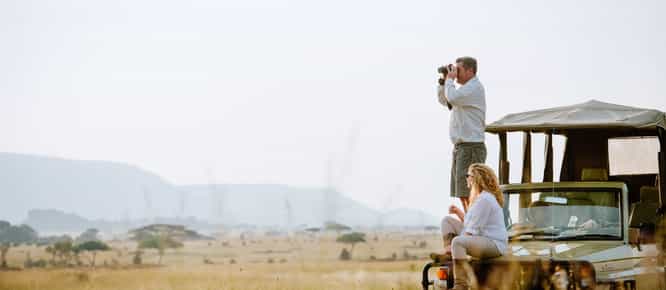
Best countries in Africa for a safari
A land safari is the trip most people picture when they think of Africa: game drives across open country looking for wildlife from the iconic Big Five down to rare African wild dog and the smaller animals that a lot of people overlook.
We have scored each country on the animals it is home to, the species found nowhere else, and how much of the land is set aside as protected wilderness.

#1 Tanzania
Tanzania takes first place, which is not overly surprising as it is home to the Serengeti. This is where the Great Migration takes place, the yearly movement of more than a million wildebeest that ranks among the greatest wildlife spectacles anywhere on Earth.
With around 4,140 animal species and close to 40% of the country protected for game viewing, the depth and sheer variety of wildlife in Tanzania is staggering. Alongside the Serengeti, visit the Ngorongoro Crater, a single collapsed volcano where the Big Five live side by side with hundreds of antelope, zebra, birds and plenty of smaller species, too.
#2 South Africa
South Africa shares second position, but on raw biodiversity, it actually comes out top, with roughly 4,201 animal species and more than 1,400 of them found nowhere else. Kruger National Park is the natural base for a land safari here, one of the continent’s great reserves and a gentle introduction to the Big Five.
The real selling point for South Africa is that a land safari combines beautifully with everything else South Africa offers, from the Cape Winelands to the Garden Route, so it suits travellers who want more than just animals.
#2 Zambia
Zambia ties for second place and is often the choice for a second or third safari (but that’s definitely not to say you can’t visit for your first time!).. More than 41% of the country is protected for wildlife viewing and conservation, one of the highest shares in the whole study, and Zambia is definitely wilder and quieter than the other headline names.
This is where walking safari was invented, specifically in the South Luangwa. On a walking safari, you’ll leave the vehicle and follow the wildlife on foot alongside some of the best guides in Africa.

Timbuktu’s wildcard: Botswana
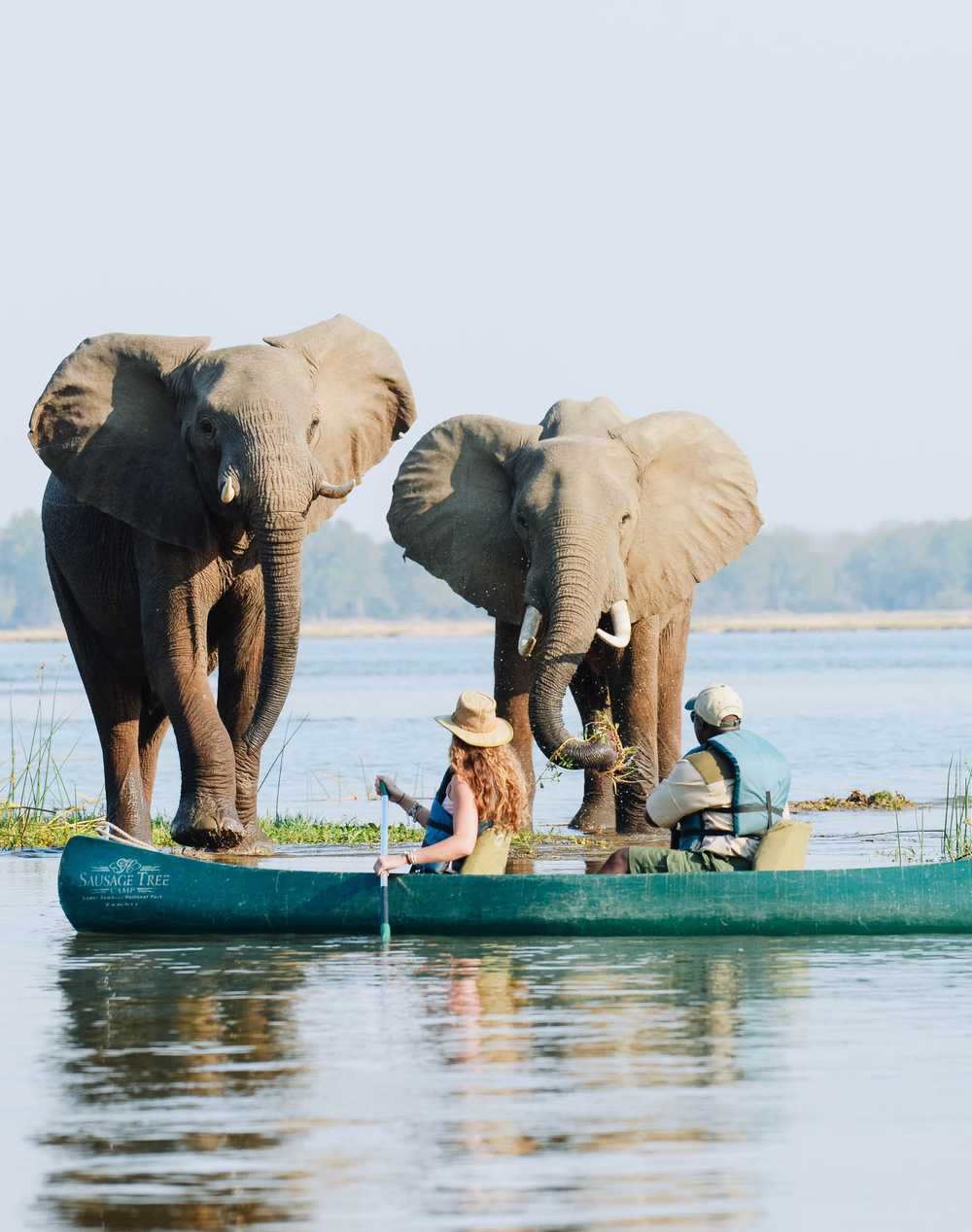
Kevin Zimmerman, Travel Specialist at Timbuktu, suggests Botswana as one of the best countries on the continent for a safari, particularly the Okavango Delta. He says: “The Okavango Delta is the largest wetland wilderness on the continent and one of the most pristine and beautiful landscapes for wildlife viewing. Botswana finished outside the land-safari top three, partly because it holds fewer species overall than the big safari giants, but the concentration of wildlife is extraordinary. Botswana has also built a low-volume, high-quality tourism model, and more than a quarter of the country is protected by a government that takes conservation seriously. Poling through the Delta in a mokoro, the traditional dugout canoe, is one of the most distinctive things you can do on safari.”


Best countries in Africa for a marine safari
A marine safari is different in that you’ll swap your 4×4 jeep for the water, snorkelling over reefs, diving with turtles and dugongs, and watching out for sharks and whales.
We scored countries on the richness of their marine life, the sea creatures found nowhere else, and how much of their territory is protected.

#1 South Africa
South Africa leads here – the same country that gives you must-see land mammals in Kruger also gives you world-class wildlife in the water. It has the richest marine life in the study, with around 2,843 species, and more than 200 of them are found nowhere else. What makes it particularly special is that two oceans meet at its southern tip, meaning the coast shifts from cold kelp forest to warm-water reef as you travel along it.
#2 Madagascar
Madagascar comes second, as a result of impressive endemism. The world’s fourth-largest island is home to a huge share of wildlife that lives nowhere else on earth, and that holds true under the surface as much as above it. Although the island is better known for lemurs and baobabs, around 2,519 marine species, including more than 120 endemics, can be found in Madagascar, and Nosy Be is a great base for exploring wildlife in the Indian Ocean.
#3 Mozambique
Mozambique ties for third and is a fantastic bush-and-beach destination, with around 2,734 marine species in its warm Indian Ocean waters. It is known for whale sharks and dugongs, and the Bazaruto and Benguerra islands deliver reef and white sand without the crowds.
#3 Seychelles
Seychelles shares third but gets its position on a different strength: protection. Roughly a third of its territory is safeguarded, comfortably the highest of any country near the top of this category. Scattered across more than 115 granite and coral islands, from Mahé and Praslin to the giant tortoises of Frégate, it is a true story of conservation and one that marine wildlife lovers should discover.

Timbuktu’s wildcard: Kenya
Annie Irankunda, our travel specialist based in East Africa, recommends Watamu on Kenya’s beautiful Indian Ocean Coastline. She says: “Watamu Marine National Park is one of East Africa’s great marine conservation success stories and decades of work has helped safeguard coral reefs, sea turtle populations, dolphins and an extraordinary diversity of tropical fish. Many people are surprised at just how much marine life exists here and divers regularly encounter green and hawksbill turtles, dolphins, eagle rays, moray eels, octopus and kaleidoscopic schools of tropical reef fish.”


Best countries in Africa for adventure travel
At the active end of things, Africa has bucket loads to offer those looking for adventure travel: mountains to climb, deserts to cross, rivers to raft, and the setup to do it safely.
We scored countries on their mountains, the spread of adventurous and extreme activities, and a specialist rating of each country’s capacity for adventure tourism.

#1 Morocco
Morocco comes first in the adventure stakes, with more logged mountains and more adventurous things to do than anywhere else in the study. The Atlas Mountains loom over the middle of the country, offering trekking routes through Berber villages on the way up to its crown jewel, Mount Toubkal, the highest mountain in North Africa. Beyond its peaks, Morocco offers the Sahara, a coastline of excellent surf, and the bustling towns of Marrakesh and Fes.
#2 South Africa
South Africa is second and probably the most flexible single country for an active trip, scoring highest of the top three on its adventure-capacity rating – ATTA’s evaluation of a country’s potential and capacity for adventure tourism.
For active travellers, the Drakensberg is for serious hiking, the Garden Route runs from the world’s highest commercial bungee jump to ziplines through the forest canopy, and of course, there’s Cape Town and the iconic Table Mountain for thrills with very easy access.
#3 Egypt
Egypt takes third place, with one of the highest scores of adventurous and extreme activities anywhere in the study. The country’s adventure appeal is the contrast, too – serious diving and snorkelling on the Red Sea, exhilarating desert trips among the dunes, and the chance to explore the ancient sites along the Nile.

Timbuktu’s wildcard: Zambia
Jonty Medcalf, Head of Sales, says: “I’d point to Zambia for the adventure wildcard. Just outside Livingstone, in the south of the country, the Zambezi River tips over Victoria Falls creating one of the world’s greatest and spectacular gorges. The white-water rafting on the Zambezi is fantastic and the seasonal Devil’s Pool, sitting right on the lip of the falls, is exhilarating! You can also bungee jump or take to the skies in a microlight, completing the adventurous picture. Zambia finished mid-table for the breadth of activities on offer, but for adrenaline in genuine wilderness, very few countries compete.”


Best African countries for a family holiday
A family trip gets judged on different things: places to stay that work with children, plenty to keep them busy, and as few health worries as possible.
We scored countries on family-friendly hotels, the number of well-rated activities for children, and malaria risk, which carried significant weight.

#1 Morocco
Morocco comes first, and being malaria-free is a big reason why. The country also has the most family-friendly hotels and the best-rated children’s activities in the entire study, from the rooftops and souks of Marrakesh to camel rides at the edge of the desert and a day exploring the Atlas Mountains (gently!).
#2 Egypt
Egypt is second and is also malaria-free. For little minds, few places make history feel this much like an adventure: the pyramids and tombs are awe-inspiring, a Nile cruise is fun and entertaining while keeping family logistics painless, and the Red Sea coast adds easy snorkelling for older children.
#3 Tunisia
Tunisia takes third. Again, it’s malaria-free, and offers a good amount of family-friendly hotels and things to do for little people. Along with this, the country offers families a good mix of Mediterranean beaches, Roman ruins, and the Sahara is within reach.

Timbuktu’s wildcard: Kenya
Jenna Coiley, Travel Specialist at Timbuktu, recommends Kenya for an excellent family trip. She says, “Kenya sits outside the ranked top three because, unlike the North African leaders, parts of it carry a malaria risk – although it is completely safe for families who prepare with the right medication. But for a family set on a real safari, Kenya delivers. The Masai Mara offers reliable big-game viewing, plenty of conservancies and lodges are set up specifically for children, and the welcome is warm enough to win over the most reluctant traveller. With sensible planning and precautions, it is a ‘first’ safari that children remember for the rest of their lives.”


Best African countries for a honeymoon
For a honeymoon, we considered the things that transform a good trip into one full of love. A trip of romance and seclusion with adults-only places to stay, standout once-in-a-lifetime experiences, and the dark, starry skies that make an evening one to remember.

#1 Tanzania
Tanzania comes first, thanks to its plentiful bush-and-beach offerings. You can spend the first half of your trip watching animals in the Serengeti from an intimate, private camp and the second half barefoot on Zanzibar Island, holding hands as the sun sets over the ocean. Few honeymoons swing from high drama to total switch-off this neatly.
#2 Kenya
Kenya shares second and pulls off the same romantic pairing with its own geography: the Masai Mara for the safari, then the white sand of the Swahili coast around Diani Beach to slow right down. It has the most adults-only stays of the joint runners-up, so privacy is easy to arrange.
#2 Botswana
Botswana ties for second on its stargazing ability, offering the lowest radiance levels of any of the countries in the top three. As for exclusivity, the Okavango Delta is built around small, remote camps where it can feel as though the wilderness is yours, under some of the darkest, star-filled skies in the region.

Timbuktu’s wildcard: Namibia
Kristin Jessup, Travel Specialist, says: “I’d choose Namibia for any couple looking for something more unique on a honeymoon. It has the darkest skies of any country in this group, which makes the stargazing extraordinary, and the towering dunes at Sossusvlei put on a real show at sunrise. Climb a dune at first light, then spend the day tracking desert-adapted wildlife. It is romantic in an unexpected, slightly wild way.”


Best African countries for luxury travel
Luxury here means the high-end made effortless: private jets on the ground, celebrated restaurants, and the kind of hotels that win international recognition. That’s why we scored countries based on top-tier dining, Michelin Guide-listed hotels, and private jet availability.

#1 Morocco
Morocco leads, with more Michelin Guide-listed hotels than any country in the study and a fine-dining scene to match. Its palace riads are a kind of luxury you won’t find anywhere else in Africa (or the world for that matter!), hidden discreetly behind medina walls. Perhaps unsurprising considering that Marrakesh has drawn travellers looking for glamour with a bit of substance for decades.
#2 South Africa
South Africa is second, and is the base of more private jets than anywhere else in the study, which says plenty about who already holidays there. The Cape Winelands handle the destination dining, Cape Town brings the design hotels, and the luxury lodges around Kruger are among the most polished on the continent.
#3 Egypt
Egypt takes third, where its signature indulgence is a beautifully run Nile cruise .There really is nothing like floating past ancient wonders from the deck of a private boat. A solid count of based jets and Michelin Guide-listed hotels backs up the ranking.

Timbuktu’s wildcard: Rwanda
Joanna Rigby-Jones, Travel Specialist recommends Rwanda as a wildcard luxury pick. She says: “Rwanda has become one of Africa’s most sought-after high-end destinations. It scores lower on raw counts of jets and restaurants, but it has built a whole model of low-impact, high-value tourism around its mountain gorillas, with a small number of exceptional lodges looking onto Volcanoes National Park, including Singita Kwitonda and One&Only Gorilla’s Nest. Tracking a gorilla family through the forest and then coming back to real luxury is about as rare as travel gets.”

Methodology
We analysed all of Africa’s countries across a variety of travel types and for a range of factors relating to each, using credible external data. Extra weighting was given to what we deemed the most important factor under each travel type.
Data is correct as of March 2026. Countries where the FCDO recommends against all but essential travel were excluded from the study.
Africa travel: your questions answered
Is Africa a country or a continent?
Africa is a continent made up of 54 countries, each with its own cultures, landscapes, and wildlife. Treating it as a single destination is the mistake this study is designed to correct.
What is the best country in Africa for a first safari?
For a classic land safari, Tanzania ranked first in our study, as a result of being home to the Serengeti, the Great Migration, and the Ngorongoro Crater. South Africa is a strong alternative if you want safari alongside cities, coast, and wine.
Which African country is best for families?
Morocco ranked first for families, helped by being malaria-free, having the most family-friendly hotels, and the widest choice of children’s activities. Egypt and Tunisia followed for similar reasons.
Where should I go in Africa for a honeymoon?
Tanzania topped our honeymoon ranking for its bush-and-beach pairing of the Serengeti and Zanzibar. Kenya and Botswana came joint second, and our specialists’ wildcard is Namibia for its dark skies, dramatic dunes and wildly remote setting.
Which African country has the best marine life?
South Africa has the richest marine biodiversity in our study, followed by Madagascar. Mozambique and Seychelles came joint third, with Seychelles standing out for the share of its waters that are protected.
When is the best time to visit Africa?
It depends on the country and the experience, from the migration season in East Africa to the dry-season game viewing in southern Africa. Our specialists plan around the timing that suits your specific trip.
Plan your trip to Africa
Africa is not one destination, and the right country depends on the trip you want. Whether that is a first safari, a barefoot honeymoon, or a family adventure, our specialists have been there and can build it around you. Start planning your tailor-made African trip.
Latest blogs


As seen in