The best time to visit Tanzania
 With expert insights from Jenna Coiley, Travel Specialist
When is the best time to visit Tanzania? It’s a good question – and like most good questions a tricky one to answer, mainly because different areas in Tanzania have different attractions at different times of the year. There really is no right or wrong time to visit this well-loved country but as a rule of thumb, the dry season (from late June to October) is the most popular time for a Tanzania safari with all the trimmings.
During this dry season, animals congregate near water sources putting predators and prey in close proximity and making for some exciting game viewing. As a by-product of the water shortages the vegetation thins, thus improving visibility of animals. One important thing to bear in mind, however, is the crowding that can occur in certain reserves during these favourable periods. Should you wish to avoid other tourists, consider visiting Tanzania during the green season, usually from March to May, or even the short dry season from the end of December to February.
Below is a brief summary of some of our favourite Tanzanian parks and their seasonal perks. Hopefully this will simplify your planning process, whilst illuminating a few of the lesser-known regions…
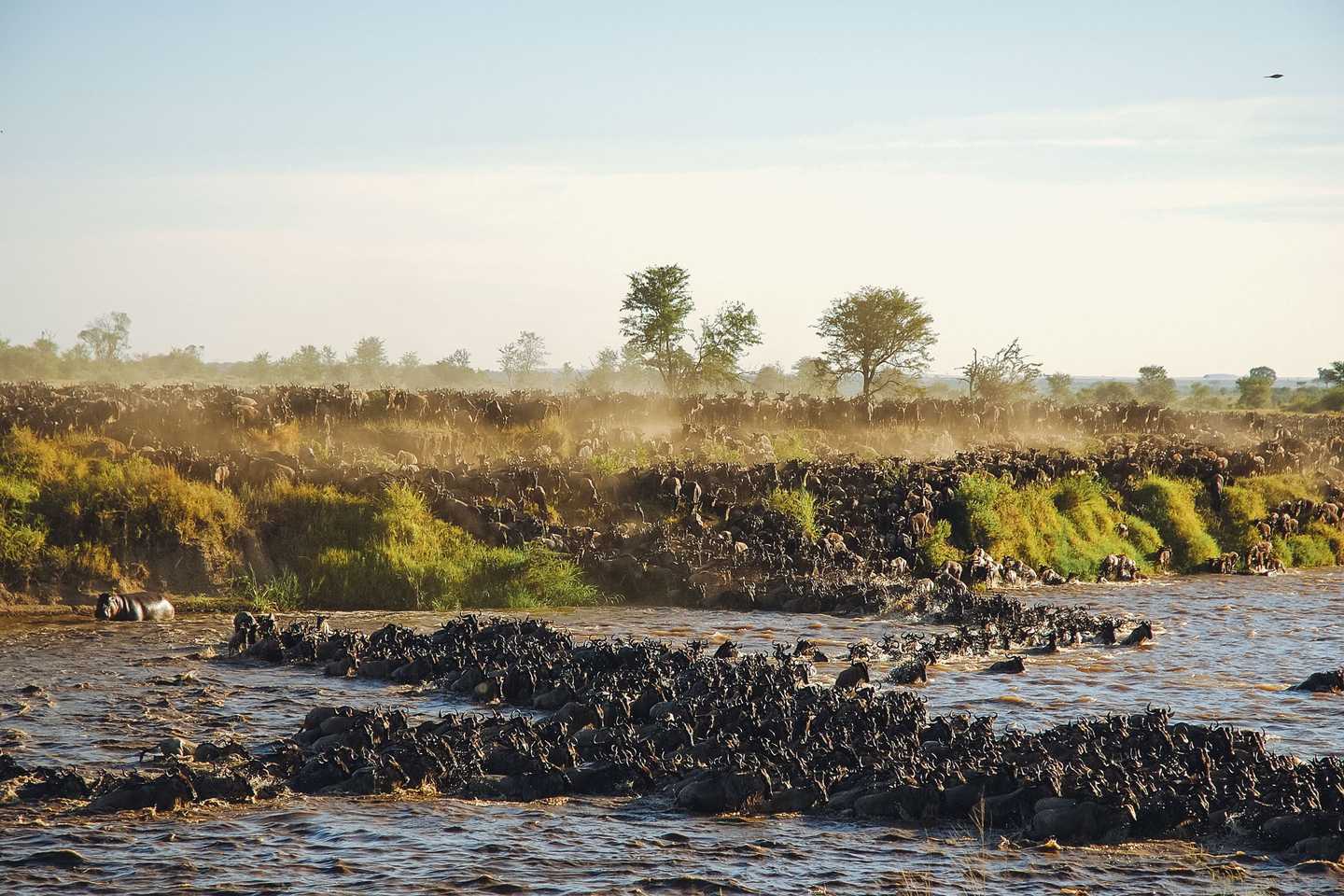
Experience the famous Great Migration in the Serengeti
Serengeti National Park
This national park needs no introduction. The Serengeti National Park contains exceptional game in high densities year-round, although peak time is during the dry season from June to September. If you’re visiting during this time and searching for the wildebeest of the Great Migration, your best chances of seeing them are in the western regions of the park in May and June at a camp like Singita Faru Faru Lodge or Ubuntu Migraton Camp, or in the northern section of the park for the famous river crossings. Camps like Lamai Serengeti, Olakira Migration Camp or Serian’s Serengeti North will fit the bill perfectly here. The Great Migration is always high on any safari enthusiast’s bucket list and planning a visit to coincide with the spectacle is popular so do book in advance!
Late January and into February and March is the wildebeest calving season in the southern Serengeti, which provides high excitement as lion and cheetah descend on the fragile and naive newborns. Although action-packed, these scenes are not for the faint of heart. Try staying at either Kimondo Migration Camp or Lake Masek Tented Camp for the best views.
The height of the wet season is March and April and causes the usually crowded Serengeti to empty, offering an intimate experience with the wildlife. You can expect rain showers, but they are usually short and sharp and certainly don’t last for hours. Another plus at this time of year is the return of migratory bird species, a big drawcard for all the twitchers out there.
“The Serengeti gets talked about as a single destination but it’s really four or five completely different experiences depending on when you go. Calving season in February is the one I find hardest to describe — 500,000 births in a matter of weeks, with every predator in the ecosystem responding. Book at least 12 months ahead for the river crossings in high season, and consider the green season if you want the Serengeti almost entirely to yourself.”
— Jenna Coiley, Africa travel specialist
Tempted by a visit to the Serengeti? Explore some of our top trips right here.

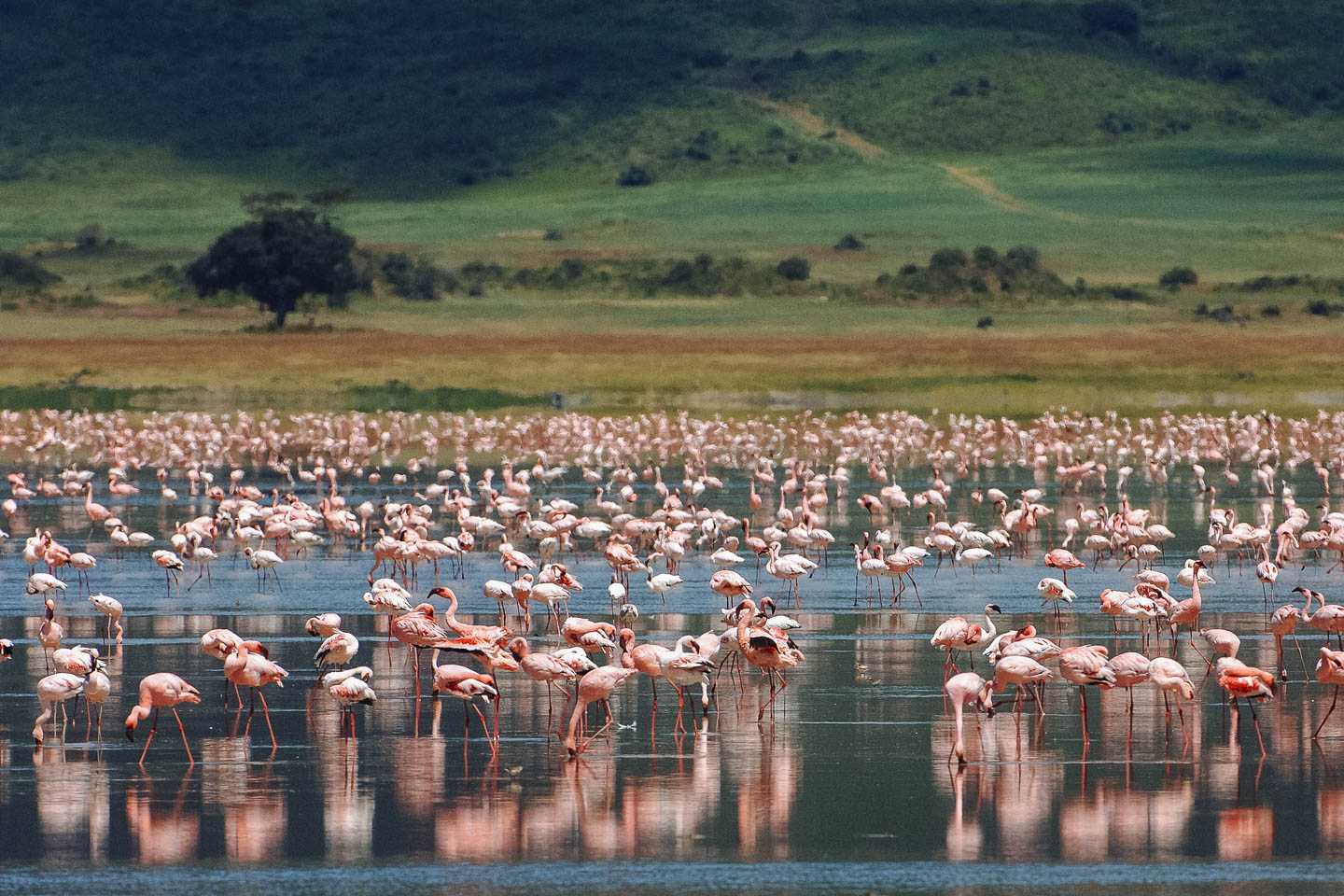
Explore the Ngorongoro Crater, Africa’s Garden of Eden
Ngorongoro National Park
Ngorongoro’s dry season (June to October) is usually considered the best time to visit as temperatures are cooler and there is little chance of rain. The lack of rain means that the vegetation is thinner and animals, such as the shy black rhino, are easier to spot. The flip side of unbelievable game viewing in “Africa’s Eden”? Expect more than a few vehicles in the main sections of the crater…
The green season (November to May), which is considerably less crowded, is still a great time to view animals. For the most part, the wet season is simply an afternoon shower with slightly heavier rain in March, April and May – just make sure to choose a lodge like The Highlands or the Ngorongoro Crater Lodge that is fully enclosed! During this season, migratory bird species return creating a kaleidoscope of colour. Generally, game is more spread out because of the abundance of water and vegetation making it a little more difficult to find them, however this should not be a deterrent. Even during the wet season, there are few places on earth that can compete with Ngorongoro’s game viewing.
“Ngorongoro is one of the few places where I’d say the dry season trade-off is worth genuinely thinking about. Yes, June to October gives you thinner vegetation and easier rhino sightings — but the vehicle numbers in the crater can be significant. If crowds bother you, the green season here is still extraordinary game viewing. The wildlife doesn’t disappear; it just spreads out a little.”
— Jenna Coiley, Africa travel specialist
You can find some of our favourite Ngorongoro trips here and if you’re interested in some of the lodges, check them out here.

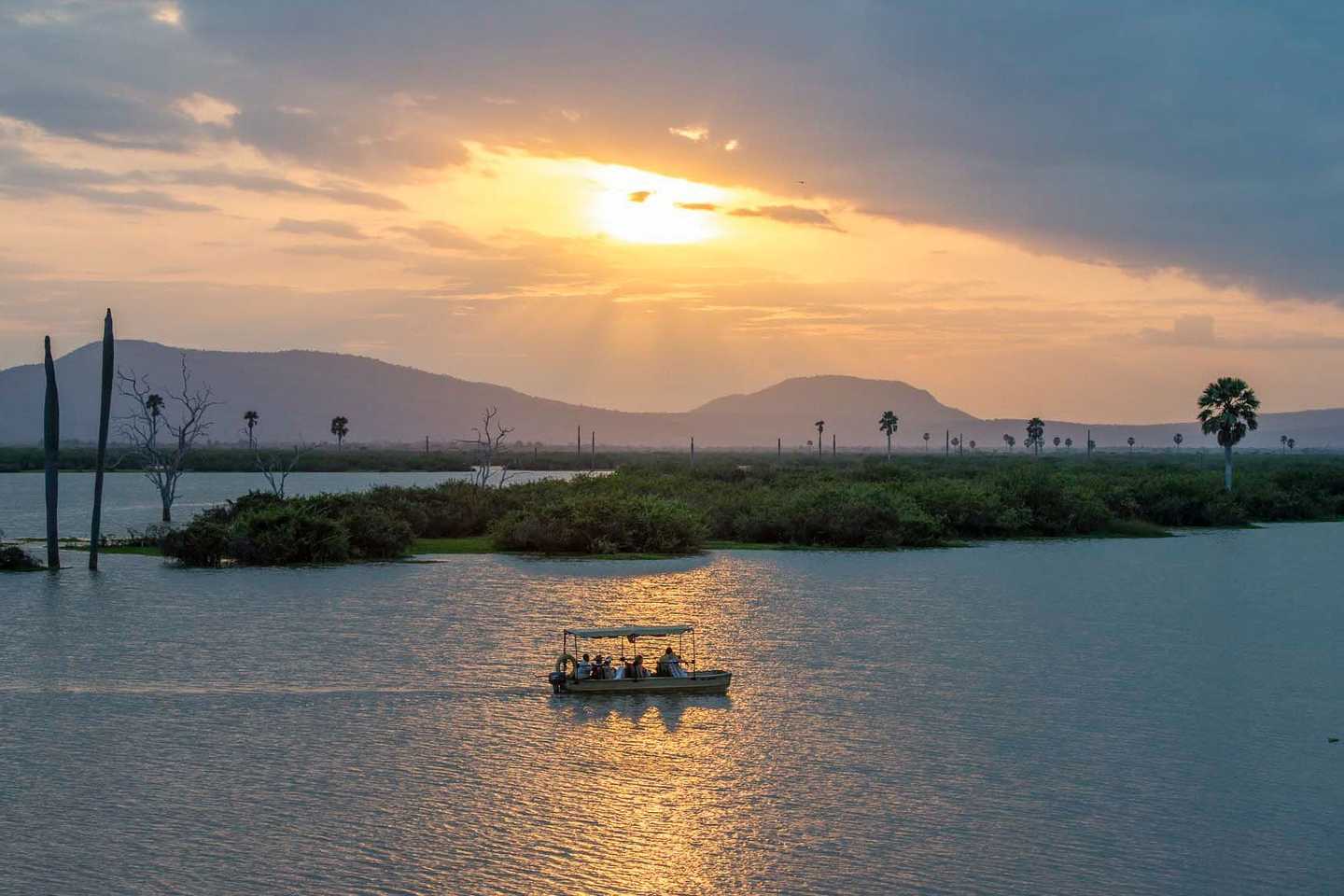
Enjoy a sunset boat safari in the Selous
Selous Game Reserve
Selous Game Reserve’s dry, cooler months (June to November) make for excellent big cat and wild dog sightings. There is less water in the waterholes at this time of year and animals congregate around any remaining sources, making for incredible sightings. In fact, lion sightings are almost guaranteed! The wild dogs usually den from June to August making these the best months to spot the rare and highly endangered species.
The seasonality regarding game viewing in this area is quite clear, with animals spreading out during the wet season (March to May) and the heaviest rains falling in the months of March and April. Although you may be slightly more restricted in activities (and choice of camps – many close during these months), all is not lost as this is the birthing season and the time for migratory bird species to return.
“The Selous in June is where I’d send anyone serious about wild dog. They’re denning, the pups are out, and if your guide knows the territory, you can spend real time with a pack — not a snatched sighting from a distance. The boat safaris on the Rufiji River at this time of year are also exceptional: hippo, croc, incredible birdlife, all from the water.”
— Jenna Coiley, Africa travel specialist
Visiting the Selous combines well with Ruaha, also in the south of Tanzania, or even Katavi in the west, and some time at the coast. View our most popular trips here.

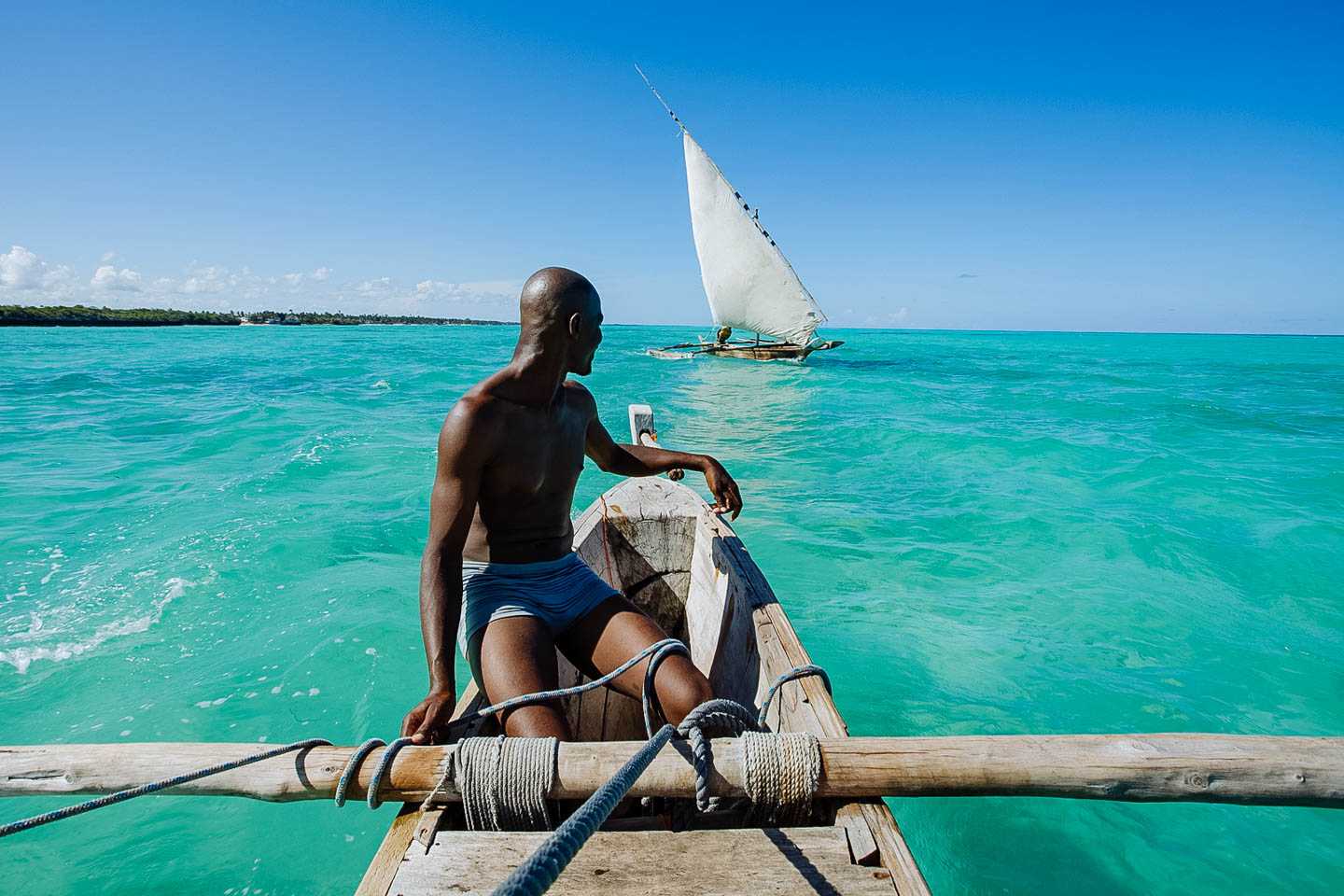
Swim in the crystal-clear waters of Zanzibar
Zanzibar island
A Zanzibar (or Mafia or Pemba!) Island adventure is best experienced from June to October, when the climate is cool and dry. Within this period, August and September have the best water clarity of 25 or more meters, offering incredible snorkelling conditions and whale viewing potential. It is important to bear in mind that some of the island restaurants will be closed during the Muslim festival of Ramadan, which occurs during the months of June and July, so check before booking if this is of concern.
December to February is also a lovely time to visit Zanzibar and her neighbouring islands, and it’s hot and dry with temperatures reaching into the 40 degrees celsius range. The wet season arrives in March and lasts until May. Water clarity is not as productive during this period and humidity can be a factor of concern when you are not in the water.
“August and September are the sweet spot for Zanzibar — the water clarity is at its peak, whale shark season is running, and the weather is reliably dry. I always remind people to check whether Ramadan falls during June or July before they book, because some restaurants close and it’s worth knowing in advance. For December visitors, it’s hot and beautiful — just be prepared for the heat if you’re coming straight from the bush.”
— Jenna Coiley, Africa travel specialist
It’s possible to add a stop at the Tanzanian Coast to almost any trip in the country – have a peek at some of the top options including Zanzibar, or head slightly more off the beaten track to Mafia Island.


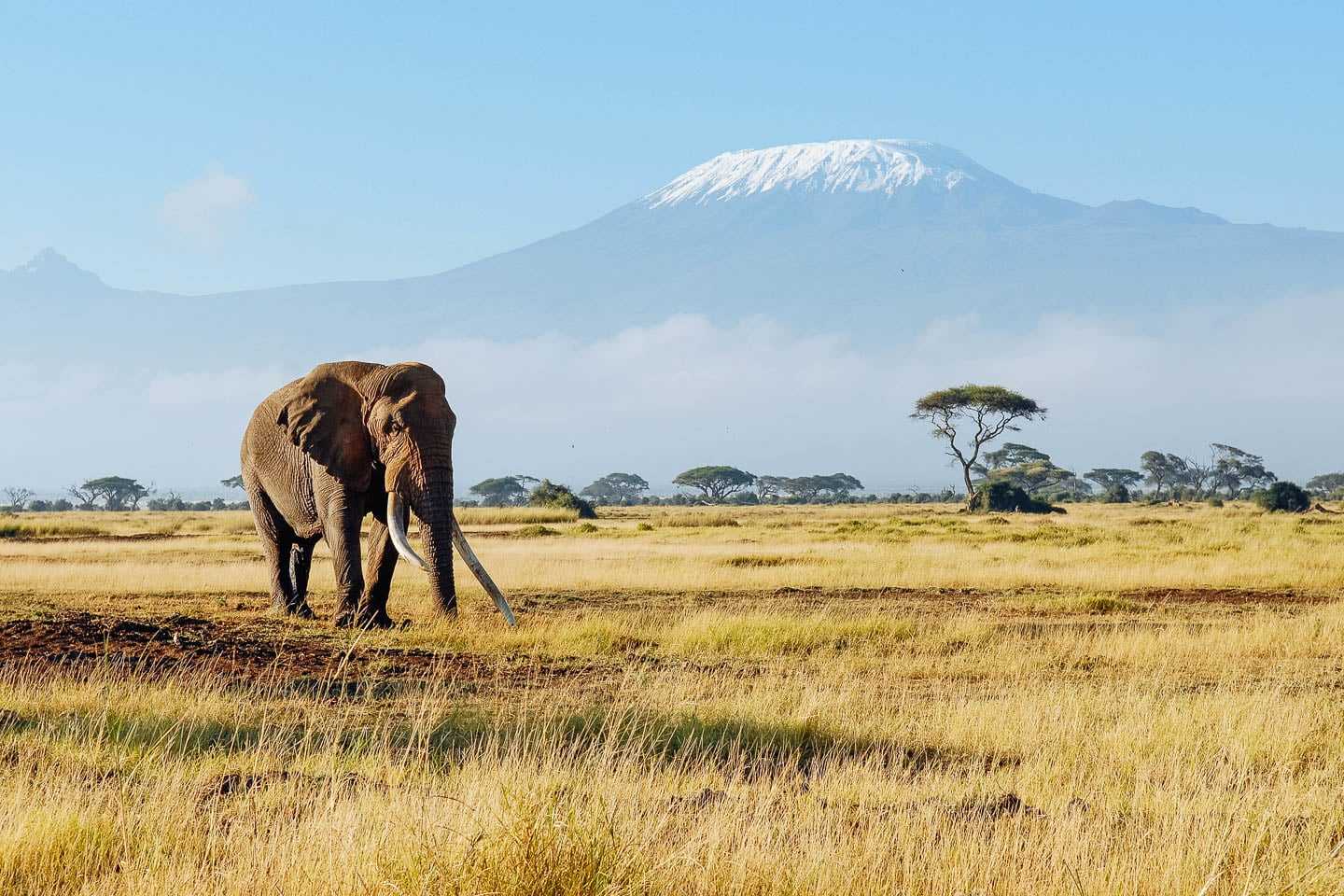
Come face to face with gentle giants in Kilimanjaro
Mount Kilimanjaro
Kilimanjaro conditions can be quite variable throughout the year, but the best weather for climbing probably occurs from July to October when the skies are warm and clear. This is in stark contrast to other times of year, specifically April to May and November to mid-December, when rain, mud, ice and fog can detract from the overall experience, and in extreme cases can increase the risks for climbers. Remember, however, that weather conditions on the mountain vary dramatically from year to year and we will always take advice from our operators on the ground.
“Kilimanjaro is the one where I always say: don’t try to time it around everything else. July to October is the most reliable window, but the mountain does what it wants regardless of the calendar. Work with an operator who has current conditions from guides on the ground, and build flexibility into your schedule around the summit attempt if you can.”
— Jenna Coiley, Africa travel specialist
Fancy a challenge and scaling Africa’s highest mountain? Here’s how to do it.

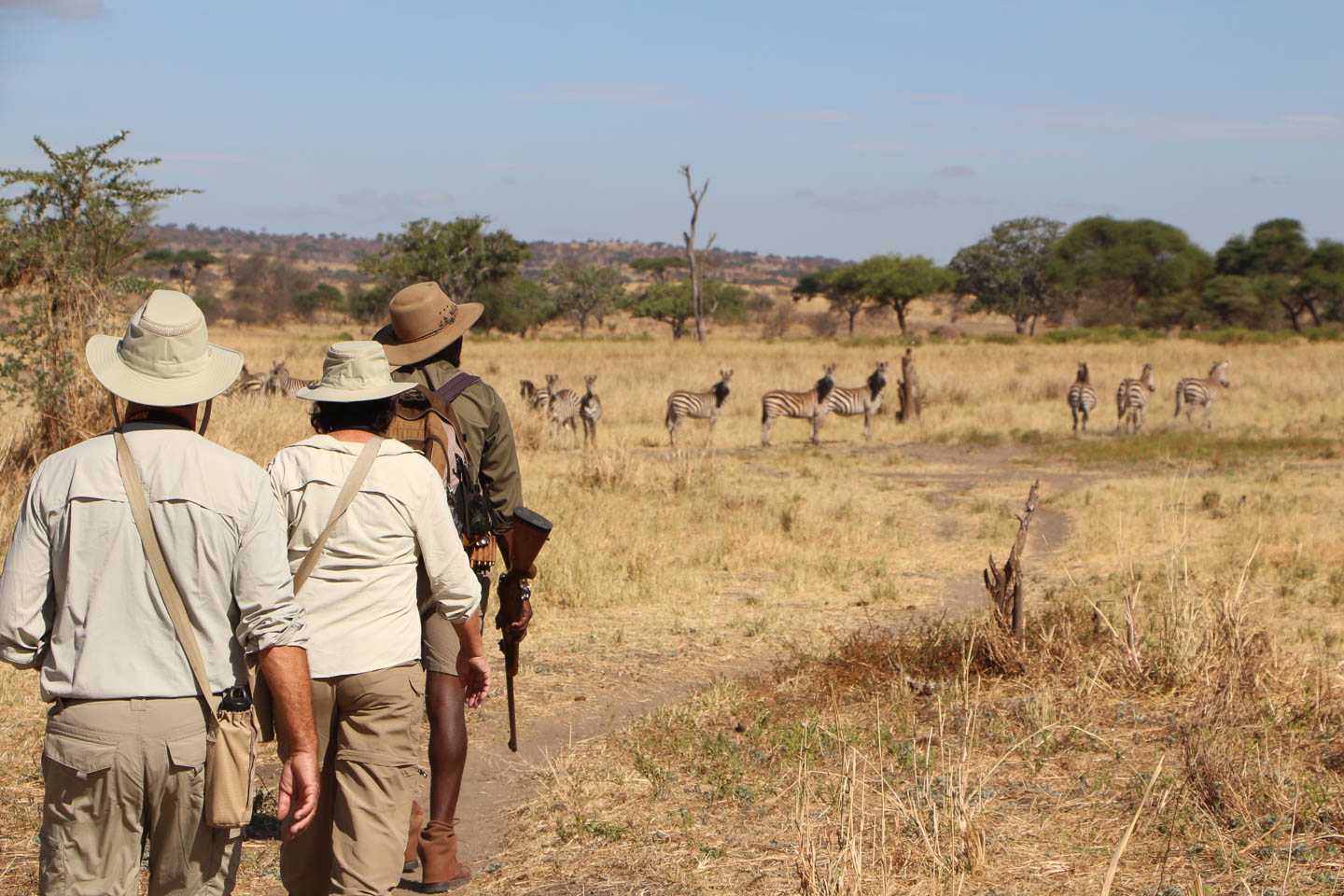
Go on a walking safari in Tarangire National Park
Tarangire National Park
Tarangire National Park’s game viewing is at its best during the dry season (June to November). The scarcity of water draws in species from far and wide to seek solace along the Tarangire River. This popular season is, of course, a crowd pleaser but a good way to escape the crowds is to stay in the southern parts of the reserve, which offers a more intimate experience. Oliver’s Camp and Sanctuary Swala are two good options here.
The wet season does not produce the same level of animal interactions and the rains replenish the water sources, thickening the vegetation and causing the different species to disperse. For some there is also the issue of getting wet during the months of March and April. There are, however, also positives for this time of year – the crowds are gone, the general game viewing is still good and migratory bird species have moved back into the area.
“Tarangire in the dry season is one of the most reliably spectacular parks in Tanzania — the elephant herds on the river are extraordinary. The trick to avoiding the crowds is to stay in the south of the reserve, at somewhere like Oliver’s Camp, where the concession gives you walking and fly-camping options that the main park doesn’t. That’s where the real magic happens.”
— Jenna Coiley, Africa travel specialist
Tarangire combines well with other parks and reserves in northern Tanzania – have a look at these trips as a starting point and feel free to add any other destination you fancy.

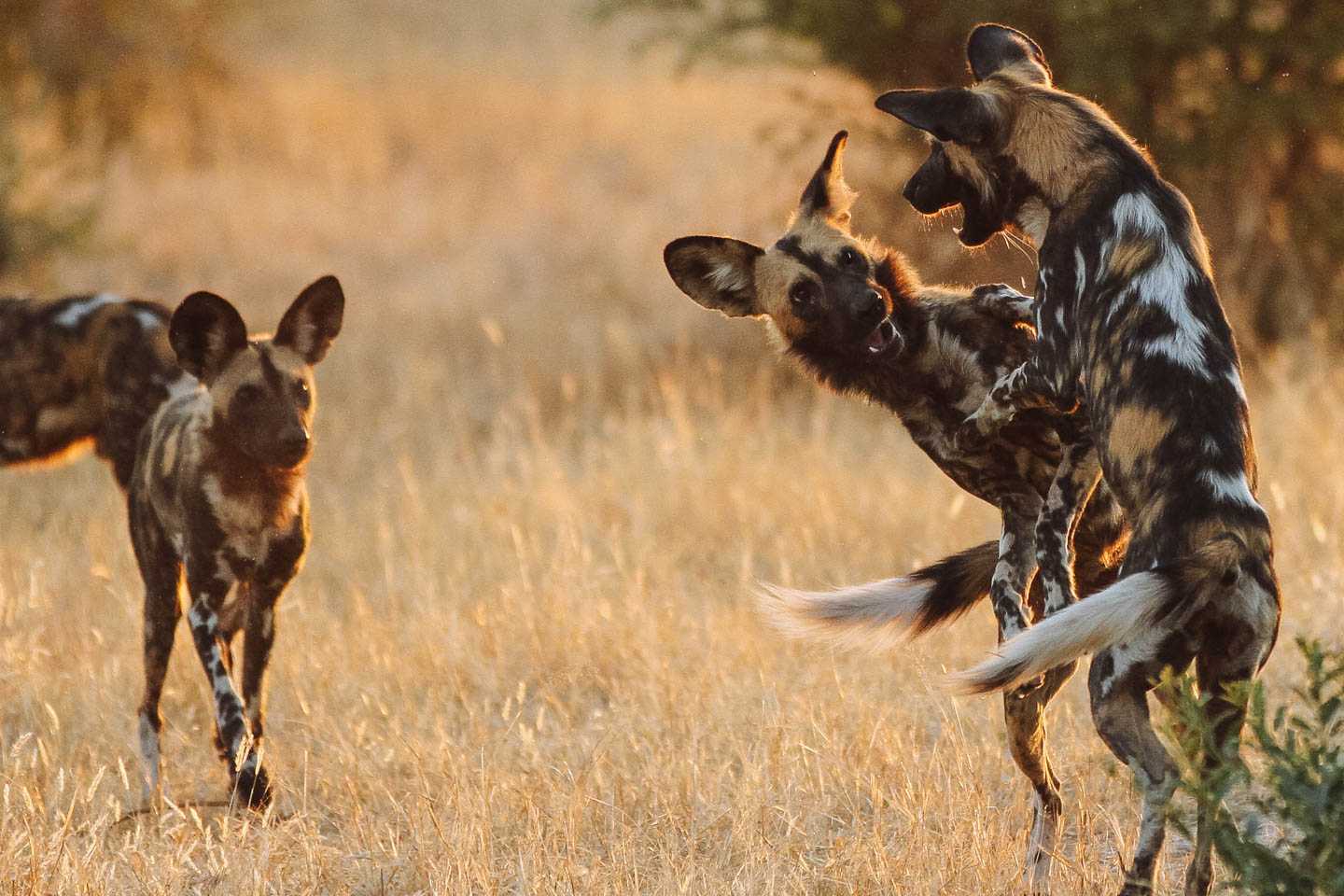
Watch wild dogs play in Ruaha
Ruaha National Park
The best time to visit Ruaha National Park is, like most of the parks and reserves in Tanzania, in the dry months of June to October when the vegetation is thinner and the weather is a tad cooler. Like the Selous, the wild dogs of the area den from June to August, presenting greater opportunity to view these charismatic animals, and the lion and big cat sightings at this time of year are phenomenal. This is also a good time of year to try a walking safari as the grass is shorter – and the temperatures cooler. For the best walking safaris, we highly recommend staying at either Kwihala Camp or Kichaka Frontier Camp.
The wet season arrives in November, signalling the return of migratory bird species, and continues until March. Humidity levels can be high and temperatures can also climb during this time. Many camps close in Ruaha during the green season months, but others stay open. Speak to us for details if you fancy trying it out!
“Ruaha is where I send people who want Tanzania without the Serengeti crowds. The lion prides are enormous — this park holds around ten percent of the world’s population — and the walking safaris in the dry season are genuinely exceptional. The grass is short, the temperatures are manageable, and you’re often the only vehicle anywhere near the sighting.”
— Jenna Coiley, Africa travel specialist
Our favourite trips to Ruaha can be found here– and don’t forget, adding on some time at either Zanzibar or one of the neighbouring islands is easy!

Latest blogs


As seen in