.jpg)
Planning Guides
Carola finds bliss in Bhutan and Nepal
The people are the greatest treasure of all
Nepal
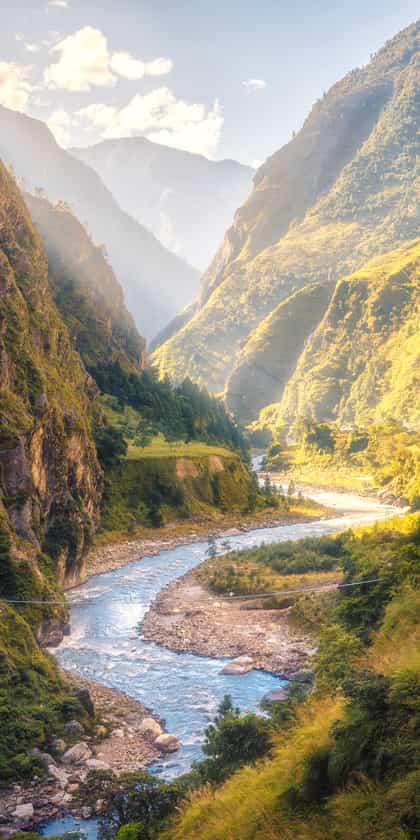
Dizzying in the very best way, a trip to Nepal combines mountain treks, wildlife wonders & a whole lot of temples.

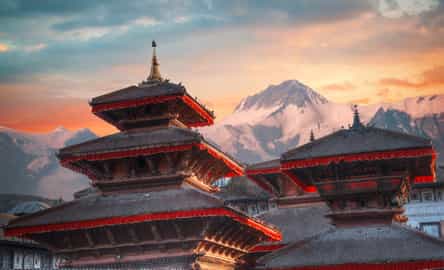
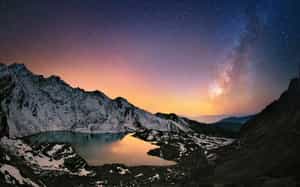
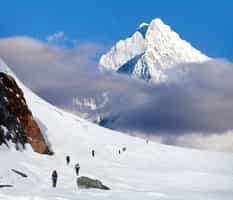
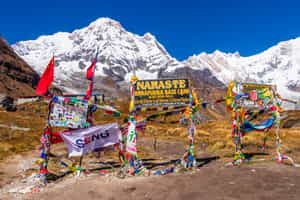
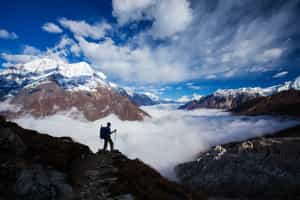
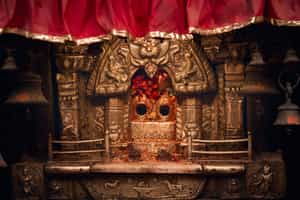
Nepal might be small compared to its neighbours, but it’s anything but a dot on the map. A vertical country where you can go from 60 metres above sea level to 8,848 metres without ever leaving the same time zone, it’s also built a little like a layer cake: steamy Tarai plains, forested mid-hills, and then the full-on icy peaks of the Himalayas rising in that photogenic way they do along the northern edge. And it’s not just the scenery that’s as diverse as a well-stocked spice rack. A Nepal trip can be everything and anything you want it to be, from temple-hopping in the royal cities of the Kathmandu Valley to lazy days in lakeside Pokhara, all combined with a little wildlife-watching in the lowland wilderness of Chitwan. And then comes the piece de résistance: the walking. Everest and Annapurna are the big names, but the real joy is choosing how you discover these magical mountains, from comfort-led, shorter routes and epic viewpoints, to quieter regions like Langtang or Manaslu where the trails feel more local, the culture more Tibetan-influenced, and the days are shaped by tea stops and Buddhist rituals.

Of course there’s the hiking, but Nepal lets you choose your own holiday: culture, wildlife, spirituality, big-mountain drama, temple-hopping… You name it and we’ll plan it.

Did you know that Nepal’s rafting scene is legendary? The country is threaded with rivers that are made for adventure and among them is the Trishuli, famously doubling as a surprisingly fun way to travel towards Chitwan.

There’s just something about mornings in Nepal – that crisp early morning light and cool temperatures are magnificent. Plan your big panorama moments early in the day, then spend afternoons on the markets, cafés, massages and boat rides.
Start with a recommended trip or create one from scratch
Get advice and suggestions to make this your perfect trip.
or call us on: +1 (646) 542 0667
,url-https%3A%2F%2Fassets.waybird.com%2Fcdn-cgi%2Fimage%2Fwidth%3D12%2Cformat%3Dauto%2Fhttps%3A%2F%2Fassets.waybird.com%2Fimages%2Fmap%2Fpin-primary-outlined.png(83.85494683278866,28.99069913633549),url-https%3A%2F%2Fassets.waybird.com%2Fcdn-cgi%2Fimage%2Fwidth%3D12%2Cformat%3Dauto%2Fhttps%3A%2F%2Fassets.waybird.com%2Fimages%2Fmap%2Fpin-primary-outlined.png(83.9628461,28.2060369),url-https%3A%2F%2Fassets.waybird.com%2Fcdn-cgi%2Fimage%2Fwidth%3D12%2Cformat%3Dauto%2Fhttps%3A%2F%2Fassets.waybird.com%2Fimages%2Fmap%2Fpin-primary-outlined.png(85.3239605,27.7172453),url-https%3A%2F%2Fassets.waybird.com%2Fcdn-cgi%2Fimage%2Fwidth%3D12%2Cformat%3Dauto%2Fhttps%3A%2F%2Fassets.waybird.com%2Fimages%2Fmap%2Fpin-primary-outlined.png(84.49356775739176,27.57643552077712),url-https%3A%2F%2Fassets.waybird.com%2Fcdn-cgi%2Fimage%2Fwidth%3D12%2Cformat%3Dauto%2Fhttps%3A%2F%2Fassets.waybird.com%2Fimages%2Fmap%2Fpin-primary-outlined.png(81.4265179967336,28.4427329856835),url-https%3A%2F%2Fassets.waybird.com%2Fcdn-cgi%2Fimage%2Fwidth%3D12%2Cformat%3Dauto%2Fhttps%3A%2F%2Fassets.waybird.com%2Fimages%2Fmap%2Fpin-primary-outlined.png(85.62213438140945,28.208292714918457),url-https%3A%2F%2Fassets.waybird.com%2Fcdn-cgi%2Fimage%2Fwidth%3D12%2Cformat%3Dauto%2Fhttps%3A%2F%2Fassets.waybird.com%2Fimages%2Fmap%2Fpin-primary-outlined.png(86.82819877323311,27.97494446856862),url-https%3A%2F%2Fassets.waybird.com%2Fcdn-cgi%2Fimage%2Fwidth%3D12%2Cformat%3Dauto%2Fhttps%3A%2F%2Fassets.waybird.com%2Fimages%2Fmap%2Fpin-primary-outlined.png(82.74130115091586,27.94042023889983),url-https%3A%2F%2Fassets.waybird.com%2Fcdn-cgi%2Fimage%2Fwidth%3D12%2Cformat%3Dauto%2Fhttps%3A%2F%2Fassets.waybird.com%2Fimages%2Fmap%2Fpin-primary-outlined.png(85.3433796455178,27.6865276615778),url-https%3A%2F%2Fassets.waybird.com%2Fcdn-cgi%2Fimage%2Fwidth%3D12%2Cformat%3Dauto%2Fhttps%3A%2F%2Fassets.waybird.com%2Fimages%2Fmap%2Fpin-primary-outlined.png(85.3433803190158,27.686527964262364),url-https%3A%2F%2Fassets.waybird.com%2Fcdn-cgi%2Fimage%2Fwidth%3D12%2Cformat%3Dauto%2Fhttps%3A%2F%2Fassets.waybird.com%2Fimages%2Fmap%2Fpin-primary-outlined.png(85.3243524223932,27.659895438146),url-https%3A%2F%2Fassets.waybird.com%2Fcdn-cgi%2Fimage%2Fwidth%3D12%2Cformat%3Dauto%2Fhttps%3A%2F%2Fassets.waybird.com%2Fimages%2Fmap%2Fpin-primary-outlined.png(85.42729877278663,27.6756481907116)/auto/600x400?access_token=pk.eyJ1IjoidGltYnVrdHV0cmF2ZWwiLCJhIjoiY2poMGw1eHpkMmRkbDJ6bW8xYWZ5OGpjYyJ9.PYvAO7lUJ40SOpGvwmQLqw&attribution=false&logo=false)
Nepal
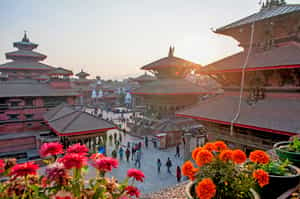
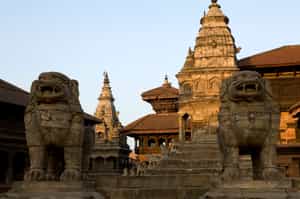
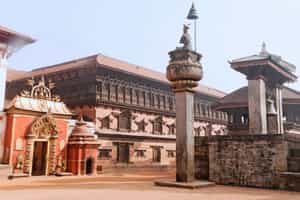
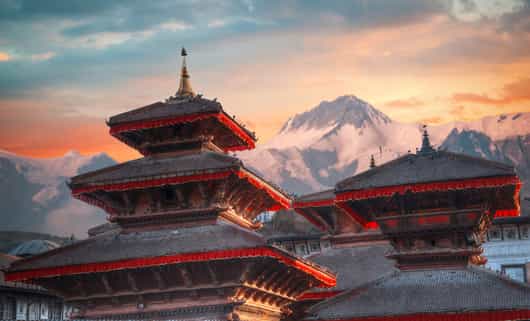
Three royal cities, a skyline of stupas, and details that will make you slow your pace (happily).
Nepal
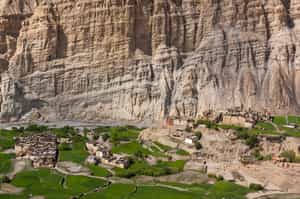
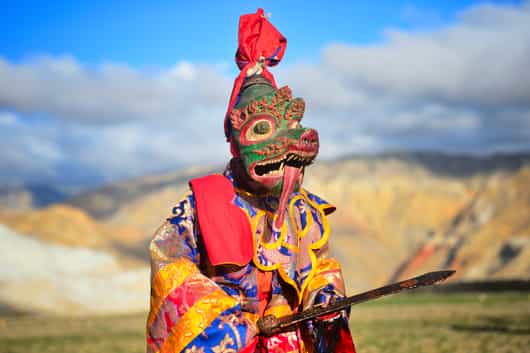
A forbidden kingdom of ancient caves and windswept desert beauty beyond the clouds.
Nepal
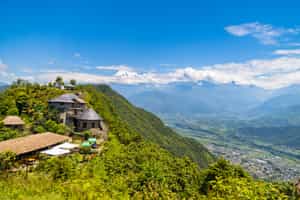
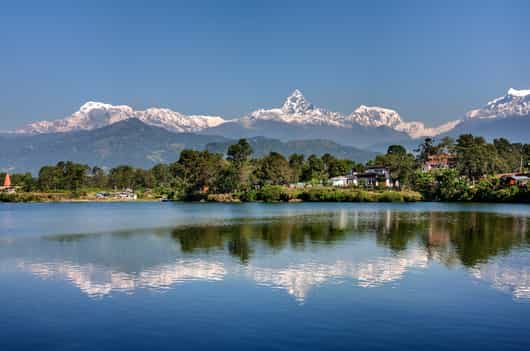
A lakeside base for Annapurna, with excellent cafés and zero pressure.
Nepal is spectacular year-round, but October and November are the undisputed sweet spot — the air is crystal clear, every major trek is in prime condition, and the festivals of Dashain and Tihar bring the whole country alive with colour and warmth. December and January are cold but brilliantly sharp, with uncrowded trails and some of the best wildlife viewing in Chitwan, where freshly cut grasslands make rhino and tiger sightings far easier. Spring arrives in March with rhododendrons blazing across the hillsides, and by April every high pass is open and the paragliding in Pokhara is at its absolute best. The monsoon rolls in from mid-June and while it rules out most trekking, Upper Mustang sits in a rain shadow and is arguably at its finest — especially if you time it for the Tiji Festival. By late September the skies are clearing, the crowds haven't arrived yet, and you'll have Nepal's trails and temples almost to yourself.

Dry Season — a good time to visit
Expect staggering visibility from Annapurna to Everest – it’s some of the best you’ll find all year. This makes scenic mountain flights from Kathmandu to the Everest region reliable and rather spectacular.
Winter trekking is still possible on Poon Hill, which sits at just 3,210 metres-above-sea-level. The trail remains dry and firm below 2,500m and views of the snow-capped peaks are stunning.
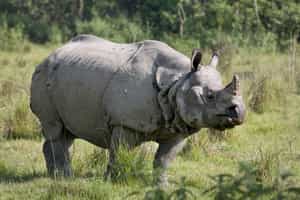
Towards the end of January, the annual grass cut takes place in Chitwan, dramatically improving wildlife viewing including one-horned rhinos while endangered gharial crocodiles can be seen in great numbers on canoeing safaris as they enjoy the winter sun.
Dry Season — a good time to visit
This is the month for safaris in Nepal with dwindling water sources, which leads to congregating rhinos and more likely tiger sightings in Bardia, against the crimson background of blooming Flame of the Forest trees.
Losar (Tibetan New Year) occurs in early February, marked by traditional masked dances and monastery rituals, while the deeply spiritual Maha Shivaratri takes place around mid-February.
Exceedingly clear skies make this a fantastic time to enjoy a helicopter flight to Everest Base Camp, including a hearty breakfast at the Everest View Hotel (3880 m) or Kongde Lodge (4250 m).
Paragliding sessions in Pokhara may be shorter than peak thermal months, but the payoff of crystal-clear mountain views and fewer fellow flyers is well worth it.
Dry Season — one of the best times to visit
The pilgrimage to base camps begins in earnest – the sun is shining, rhododendrons are blooming and the atmosphere is electric.
March is a top-tier time for wildlife viewing, from tracking Bengal tigers on the prowl for a mate in Bardia National Park to spotting sunbathing red pandas in eastern Nepal.
White water rafting season begins on the Trisuli and Sun Koshi. Water levels are low but steadily rising, making conditions ideal for first-timers and families.
In early March, the Festival of Colours (Holi) explodes across Nepal, where locals toss coloured powder and water at each other – and visitors are very welcome to join in.
Dry Season — one of the best times to visit
April is a hard-to-beat month for trekking with every major high pass open and enjoying the finest spring weather – rhododendrons are at their height, painting the hillsides crimson, pink and white. It’s important to know that you certainly won’t have the
Taking place in mid-April, Bisket Jatra celebrates Nepali New Year in Bhaktapur with extraordinary energy and passion.
April brings the most stable winds, strongest thermals and clearest skies of the year, making it a perfect time for paragliding in Pokhara. Flights can last up to 30 minutes!
If you cope well with rising temperatures, this is one of the most fruitful months for a safari in Chitwan or Bardia National Park.
Dry Season — a quieter time to visit
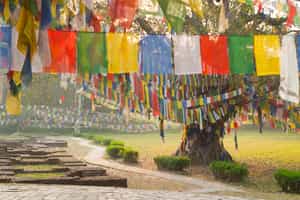
In early May, Lumbini becomes a site of great pilgrimage during the time of Buddha Jayanti, and you’ll have the chance to witness grand ceremonies and butter lamp offerings.
In mid-May, the Tiji Festival takes place in Upper Mustang – undoubtedly one of the most authentic cultural events in Nepal. Sitting in the Tibetan rain shadow, the weather here is idyllic with stunning mountain views.
As the monsoon approaches, the crowds begin to thin while trekking conditions remain good for those willing to handle occasional afternoon showers.
Wet Season — a quieter time to visit
Around mid-June, the monsoon arrives in Nepal, cutting tourist numbers in half and transforming the landscapes into a sea of green. The change in Kathmandu’s air quality is staggering, but road conditions can make travel tricky.
Thanks to its location in the Annapuran rain shadow, Upper Mustang receives a fraction of the rainfall. Days are pleasant, skies are clear and trails are lush and beautiful.
The rains also bring about Ropain (Rice Planting Festival) across Nepal, where women plant rice seedlings amidst a joyful community atmosphere. And visitors are very welcome to kick off their shoes and join in!
Wet Season — a quieter time to visit
Nepal’s monsoon reaches its peak: wildlife parks are closed, major trails are impassable and paragliding in Pokhara is essentially cancelled.
July happens to be a fantastic month for trekking in Upper Mustang, its location in a rain shadow providing dry but scenic trails.
Tourist numbers are at an all-time low, leaving historic sights and streets fairly empty. However, you need to prepare for possible schedule changes due to road closures or flight delays.
Wet Season — a quieter time to visit
Nepali locals celebrate the August full moon in the medieval walled city of Lo Manthang, when riders in traditional dress race dazzlingly decorated horses through the streets.
Hardcore birders may choose to brave the elements in search of monsoon ‘specials’ like cuckoos, minivets and more.
As the monsoon rains really start to decrease towards the end of the month, visitors can witness one of Nepal’s most unique festivals: Gai Jatra in Kathmandu’s Durbar Square and Bhaktapur Durbar Square host the most impressive celebrations.
Wet Season — a good time to visit
Planning a visit in late September will likely reward you with clear skies and trails (all major trekking routes re-open) at a fraction of the peak season prices.
If you’re up for an adventure, Nepal’s rivers run at impressive post-monsoon levels, making for epic white-water rafting, while paragliding, canyoning and bungee jumping in Pokhara becomes possible once again.
September marks the beginning of the autumn raptor migration, where incredible numbers wing their way across Kali Gandaki Valley – and up to 20 species can be spotted.
Indra Jatra takes place towards the end of September – a week-long festival at the forefront of Kathmandu’s cultural calendar. Expect masked Lakhe dances, traditional music and a glimpse of the Living Goddess Kumari’s procession through the city.
Dry Season — one of the best times to visit
Trekking is phenomenal with dry, scenic trails and cloud-free mountain vistas. If you’re heading for Everest Base Camp, time it right to include the Mani Rimdu Festival in your itinerary but be aware that advanced booking is required.
Reliable thermals and unbelievably clear skies make this a fantastic time for paragliding in Pokhara, as well as ultralight or helicopter flights.
Sublime weather makes all safaris possible – jeep, canoe, walking, rafting – where tigers emerge, one-horned rhinos frequent diminishing waterholes and Gangetic dolphins concentrate in Bardia’s rivers.
Dashain celebrations take place in mid-October, a time when the entire country reunites, but many shops and restaurants close on the main day (10th day of festival) – so plan accordingly.
Dry Season — one of the best times to visit
Birding reaches an absolute zenith with a full complement of migratory species and dazzling native birds. In fact, this is considered by many to be the finest time for birdwatching on the Indian Subcontinent.
With fewer tourists than October, while the air clarity and trail conditions remain fabulous, this is an ideal time for trekking in Nepal.
For the adventurous, white water rafting is outstanding (although pretty chilly towards the end of November) and stable thermals promise superb paragliding.
On the wildlife side of things, tiger sightings are reliably good and the autumn window for tracking red panda is in its final stretch.
Dry Season — a good time to visit
December is cold, especially the higher you go. However, the visibility is astounding so why not head to the Nagarkot View Tower for a 180-degree panorama of all 8 Himalayan ranges?
Morning fog in Chitwan and Bardia can be a challenge, but once it clears, you’ll be in for a memorable all-day safari with a high chance of rhino sightings.
If you long for those high-altitude views (but not spending too long in the winter temperatures), make the most of lower tourist numbers with a helicopter flight to Everest Base Camp.
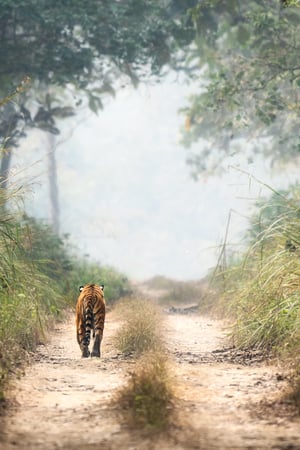
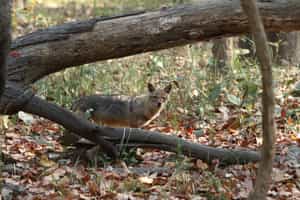
For something wilder, Bardia National Park in the remote far west offers Nepal's best chance of seeing a Bengal tiger. The experience is different from African safaris: dense jungle rather than open savannah, sightings earned through patience and sharp-eyed guides rather than herds on the horizon. A rhino crashing through elephant grass ten meters away, or fresh tiger pugmarks on a walking safari, delivers a visceral thrill that's hard to replicate elsewhere.

While there are no direct flights from Europe or the USA to Kathmandu, connections are fairly straightforward. For the most part, flights via Doha or Dubai are preferred but, for those travelling from the US’ West Coast, it’s worth considering connections through Hong Kong, Bangkok or Singapore.
Tribhuvan International Airport in Kathmandu is perpetually busy and you’ll need to allow at least an hour to clear arrivals. Once through, keep an eye out for your driver, who will be holding a sign with your name on it.
Vaccinations
A trip to Nepal requires some preparation but nothing that should put you off.
Please consult your personal physician and/or a travel clinic preferably 6 to 8 weeks prior to your departure. Vaccine requirements vary based on your country of origin, your travel itinerary and previous vaccination history. It is best to consult with your physician or the CDC website for guidelines.
Important vaccinations to consider include Hepatitis A and Typhoid. Depending on when you’re visiting Nepal, it may also be necessary to vaccinate against Japanese Encephalitis.
Altitude
If you're heading to the mountains—and why wouldn't you—altitude sickness is a real consideration above 2,500 meters. The Everest region, Annapurna, Langtang all involve significant elevation. The golden rule is to ascend slowly, stay hydrated, and listen to your body. Diamox (acetazolamide) can help with acclimatization; discuss it with your doctor beforehand.
We build proper acclimatization time into all our mountain itineraries. This isn't something to rush.
Food and water
Stick to bottled or purified water. Ice in Kathmandu's better restaurants is generally fine; in smaller towns, skip it. The food is wonderful—dal bhat will become your daily ritual—but ease in gently. Momos from a busy street stall are usually fine; that mystery meat from an empty one at 3pm, less so.
Money & gratuities
Nepal’s main currency is the Nepalese Rupee (NPR). It is predominantly a cash economy, especially outside of Kathmandu. While ATMs are plentiful in the capital and larger towns like Pokhara, it’s best to carry all the cash you’ll need (plus a buffer) when on a trek or safari, or in smaller towns.
Cards are accepted in higher-end hotels and restaurants, but often with a surcharge. US Dollars can be useful for visa fees and as an emergency backup, while Euros and Pounds can be easily exchanged in Kathmandu.
Gratuities
Tipping is customary and highly appreciated in Nepal. And we can suggest the following:
Insurance
It is a condition of booking that you carry the correct comprehensive travel and medical insurance to cover yourself, as well as any dependents/travelling companions for the duration of your trip. This insurance should include cover in respect of, but not limited to, the following eventualities:
Compulsory Insurance:
a. Emergency evacuation expenses
b. Medical expenses
c. Repatriation expenses
Recommended Insurance:
a. Cancellation or curtailment of trip
b. Damage/theft/loss of personal luggage, money and goods"
Most nationalities including the US, UK, EU, Canada and Australian passport holders can obtain a visa on arrival at Tribhuvan International Airport. You will need the following:
Fees
You can also apply online in advance through Nepal's Department of Immigration website, which can speed things up slightly on arrival.
Climate
Nepal spans from steamy lowland jungle to the highest peaks on earth, so packing depends entirely on where you're going. Here are a few universal truths:
Layers
Even in Kathmandu, mornings and evenings can be cool, especially October through March. In the mountains, temperatures swing wildly between sunshine and shade, day and night. Think merino base layers, a decent fleece, and a packable down jacket.
Footwear
If you're trekking, proper broken-in hiking boots are essential. For temple visits and wandering Kathmandu, you’ll need something comfortable that slips on and off easily—you'll be removing shoes constantly.
Sun Protection
The high-altitude sun is no joke. Good sunglasses (UV protection, not just stylish), a wide-brimmed hat, and strong sunscreen are necessities.
The Essentials
Don't Bother Bringing
Trekking gear you don't already own. Kathmandu's Thamel district is stuffed with outdoor shops selling (or renting) everything from sleeping bags to down jackets at a fraction of Western prices. Quality varies, but you can kit yourself out affordably if needed.
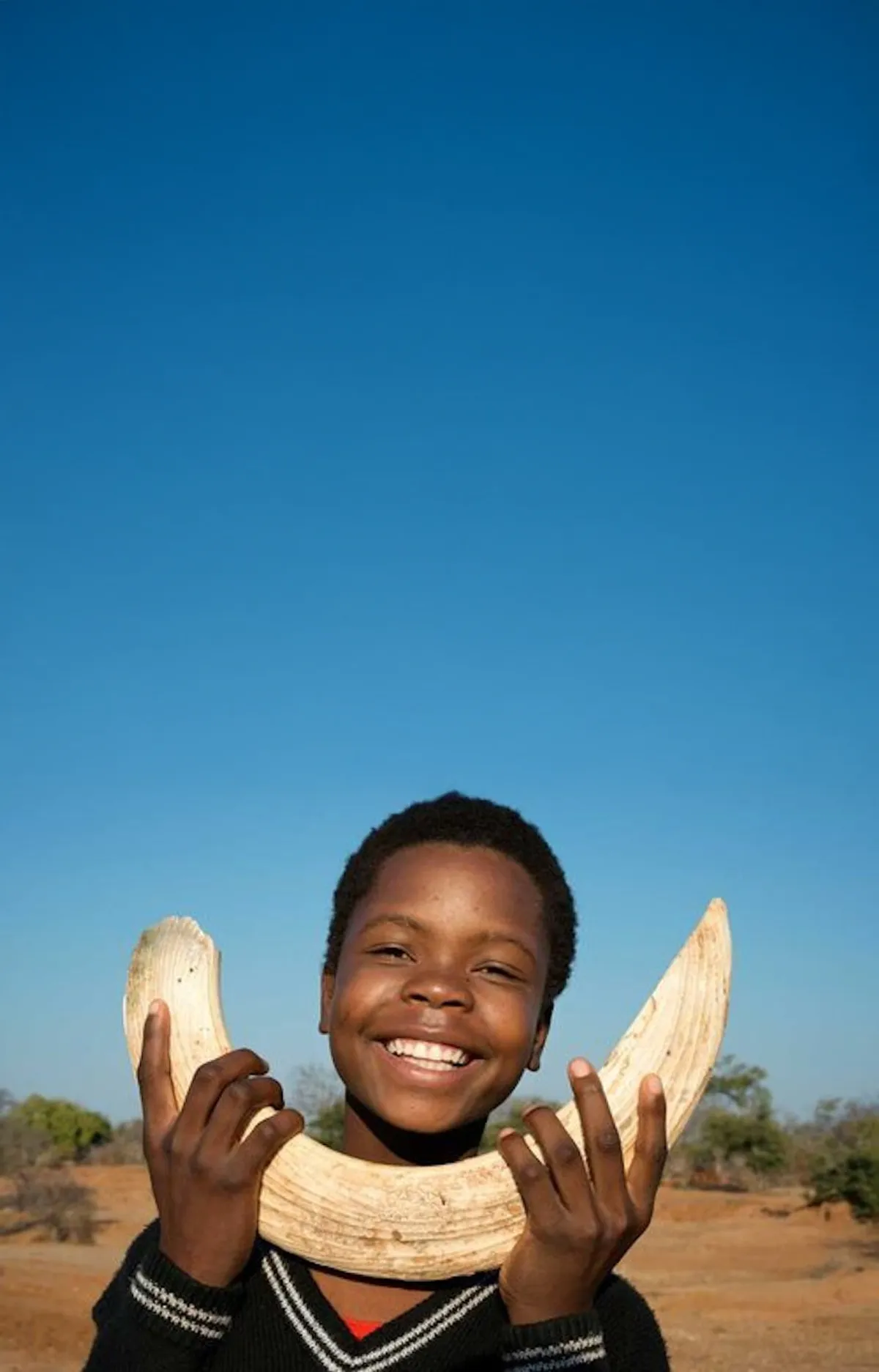
We’re big believers in leaving a positive impact in the countries in which we operate. We’re proud to donate $50 for every booking to projects focusing on female empowerment, tech education, conservation, and so much more.
Our dream is to empower our guests to travel with a purpose.
So far, we’ve donated $107,000 to projects across the globe.


Why travel with Timbuktu?

We've been crafting one-of-a-kind journeys since 2014 — over 2,500 trips across 40+ countries, each one built from scratch around your interests and dreams.

Our team only recommends places they've slept in, eaten in, and happily keep going back to. Condé Nast Traveler named 11 of them Top Travel Specialists in 2026, and Travel+Leisure made three A-List Advisors.

Travel+Leisure's readers voted us the World's No.1 Tour Operator in 2024 and No.2 in 2025 — the travel industry's biggest readers' award, judged by people who actually travel.

$50 from every booking goes to female empowerment, tech education, and conservation projects across the countries we love. We have donated $78,000 so far – and it's going up!

Your travel specialist is with you the whole way, dreaming up the trip, building the itinerary, checking you in, and answering the 2am question from the other side of the world..

We are rated 4.9 out of 5 from 1007 verified Feefo reviews. And these are the words of people who actually went, not us talking about ourselves.
11 Condé Nast Traveler Top Travel Specialists 2026

No. 1 & No. 2 Tour Operator in Travel + Leisure's Best Awards 2024 & 2025

Best Booking Platform in Women's Health Travel Awards 2025

Travel Specialist voted as Latin America A-List Travel Advisor 2025
"Timbuktu can take relatively complex and slightly amorphous travel plans and transform them into a well-organized, perfectly tailored trip."